
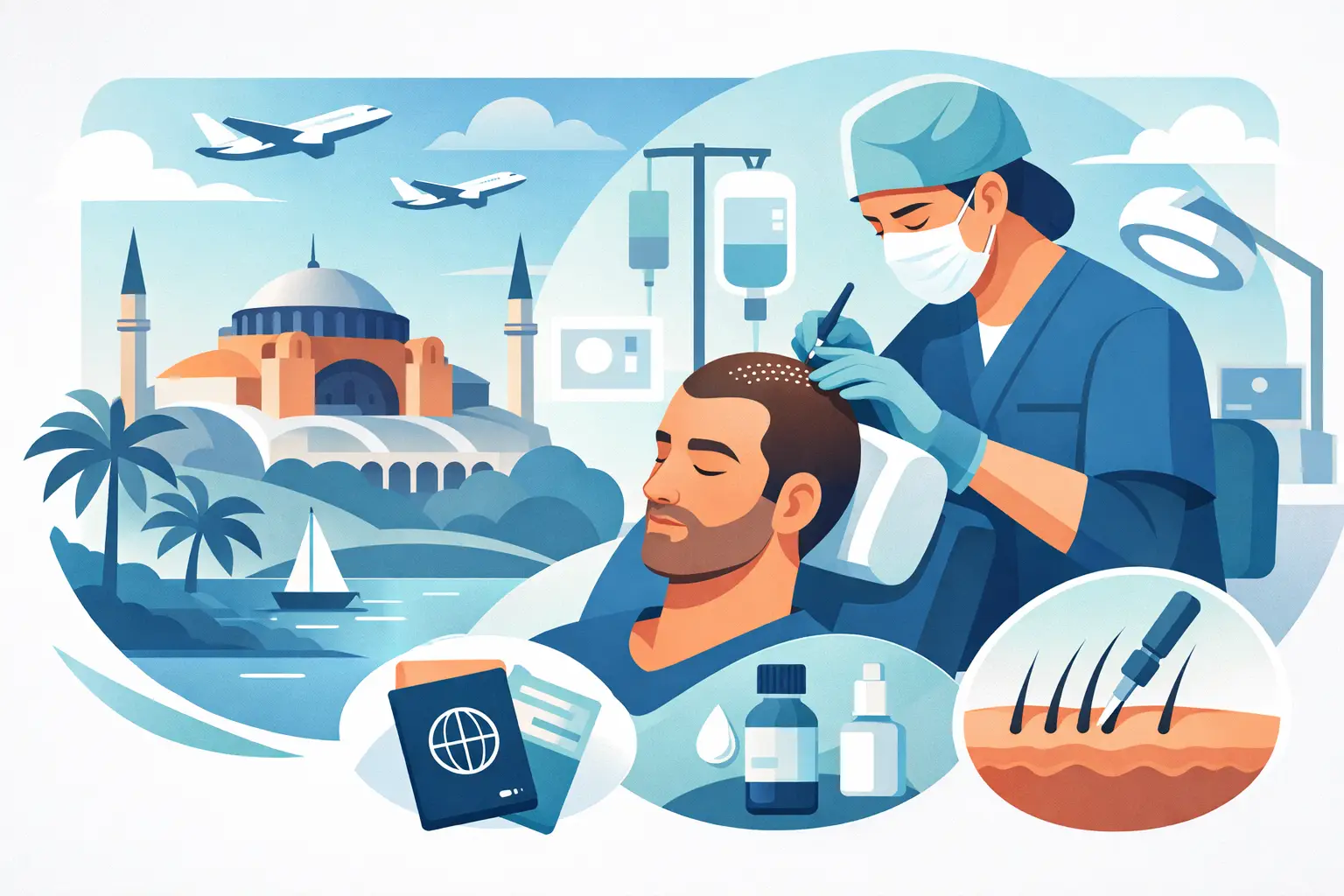
A hair transplant in Turkey can cost a fraction of what many US patients are quoted at home, but the price gap is only part of the story. The real reason medical tourism Turkey hair transplant demand keeps growing is the combination of experienced surgical teams, high case volume, and travel-friendly treatment packages. For patients, that creates a real opportunity. It also creates a market where strong clinics stand out and weak operators hide behind marketing.
Why medical tourism Turkey hair transplant is so popular
Turkey has built a serious international reputation in hair restoration because the market matured quickly and competitively. Clinics in Istanbul and other major cities treat large numbers of international patients every week, which means many teams have developed efficient systems around consultation, surgery, hospitality, and follow-up.
That efficiency matters. Patients are not just buying a procedure. They are buying a process that includes airport coordination, hotel stays, interpreter support, treatment planning, and aftercare. In the best cases, the experience feels organized and medically grounded. In the worst cases, it feels like a tourism package wrapped around a surgery.
This is where expectations need to be realistic. Turkey offers excellent value, but value is not the same as bargain hunting. If a clinic competes only on the lowest price, the patient may end up compromising on surgeon involvement, graft planning, donor area protection, or post-operative support.
What patients are actually looking for
Most international patients considering a hair transplant abroad are trying to solve three problems at once. They want a natural-looking result, they want to avoid overpaying, and they want confidence in the clinic they choose. Turkey often meets those goals better than many patients expect, especially when they work with providers that treat hair restoration as a medical service rather than a high-volume cosmetic transaction.
The strongest clinics usually communicate clearly about candidacy, graft estimates, technique, timeline, and limitations. They do not promise unrealistic density in one session. They explain whether the patient is suitable for FUE, DHI, or another approach, and they assess the donor area with long-term planning in mind.
Patients also want practical support. Many are flying in for only a few days, often without prior experience in international healthcare. That makes responsive coordination just as important as the procedure itself. A clinic may have an impressive social media presence, but if communication is vague before surgery, it is often worse after surgery.
Cost matters, but context matters more
One reason medical tourism Turkey hair transplant treatment attracts US and international patients is affordability. Compared with many private clinics in the United States or Western Europe, pricing in Turkey is often substantially lower. That difference can make treatment accessible for patients who would otherwise postpone it for years.
Still, cost should be evaluated in context. Ask what the price includes, who performs each stage of the procedure, how many grafts are realistically planned, and what happens if you need support once you return home. Some packages include transfers, accommodation, medications, and follow-up materials. Others look cheaper at first and become less attractive once the details are clear.
A low price can be reasonable when a clinic benefits from operating scale, local cost advantages, and efficient international patient systems. A suspiciously low price can also signal limited physician oversight or assembly-line scheduling. Those are not the same thing.
How to evaluate a Turkish hair transplant clinic
The first question is not “How many grafts do I get?” It is “Who is responsible for my treatment?” In reputable clinics, the surgeon plays a visible role in consultation, hairline design, planning, and clinical supervision. In weaker setups, the brand is visible but the medical accountability is not.
Look closely at before-and-after results, but do not stop there. Good results should show consistency across different hair types, stages of hair loss, and lighting conditions. Overly polished photos can hide weak density or poor hairline design.
The consultation process is also revealing. A strong clinic asks for clear photos, reviews your age and pattern of loss, discusses medication history, and talks honestly about what can and cannot be achieved. If every patient somehow receives the same recommendation, that is usually a sales process, not a treatment plan.
Patients should also ask about accreditation, infection control protocols, anesthesia standards, and aftercare instructions. Hair transplantation is common, but it is still surgery. That distinction matters.
Techniques and why the right choice depends on the patient
Most patients comparing Turkey clinics will encounter FUE and DHI. Both are established methods, and neither is automatically better in every case. The right choice depends on the patient’s hair characteristics, pattern of loss, donor quality, and treatment goals.
FUE is widely used because it allows follicular units to be extracted individually, typically with less visible scarring than older strip methods. DHI, often presented as more advanced, can be useful in certain cases, especially when the implantation process is being emphasized. But marketing language around technique can be exaggerated.
What matters more than the label is how well the clinic plans the procedure. A poor hairline designed with a premium technique is still a poor result. Likewise, overharvesting the donor area can create long-term cosmetic problems no matter how modern the instrumentation sounds.
The risks patients should not ignore
Hair transplant tourism can work very well, but it is not risk-free. The biggest problems usually come from overpromising, weak patient selection, and poor clinical oversight. Some patients are approved too quickly, given inflated graft numbers, or pushed into surgery when medical therapy or delay would be the better option.
There is also the issue of recovery. Swelling, redness, scabbing, and shedding are normal parts of the process, but patients need to know what is normal and what is not after they fly home. Clear post-op guidance, direct communication channels, and realistic timelines are essential.
Another risk is emotional rather than medical. Patients often expect a quick transformation. In reality, visible growth takes months, and final results may take close to a year. A trustworthy provider sets that expectation early.
Why coordination is part of quality
For international patients, quality is not only what happens in the operating room. It is how well the entire journey is managed from first inquiry to follow-up. That includes pre-screening, scheduling, travel planning, airport pickup, translation support, medication guidance, and post-treatment communication.
This is where experienced healthcare facilitators can add real value. The best partners do more than forward leads to clinics. They help patients compare credible options, reduce confusion, and move through the process with better visibility and less risk. For providers, that same operational structure improves lead quality, conversion efficiency, and patient satisfaction.
DGS Healthcare operates in that space with a focus on both patient access and measurable provider growth, which reflects what the market increasingly demands – better outcomes, better coordination, and fewer gaps between marketing and care delivery.
Who is a good candidate for treatment abroad
Not every patient should book a flight immediately after seeing a package offer online. A good candidate for overseas treatment is someone who has stable enough hair loss for planning, realistic expectations about density and timeline, and the willingness to follow aftercare properly once back home.
Patients with complex medical histories, uncertain diagnoses, or unrealistic expectations may need more cautious evaluation. The right clinic will say that. A provider worth trusting is willing to lose a sale rather than approve the wrong patient.
For many people, though, Turkey remains a strong option because the market offers access to experienced teams and cost structures that make treatment more attainable. The key is choosing based on medical standards, not just marketing confidence.
What a smart decision looks like
A smart decision is rarely the cheapest quote or the flashiest clinic. It is the option where medical credibility, communication quality, treatment planning, and total value line up. Patients should feel informed, not rushed. Providers should be transparent, not evasive.
Medical tourism works best when healthcare comes first and travel convenience follows it, not the other way around. If you are considering a hair transplant in Turkey, take the extra time to verify who will treat you, how they plan your case, and what support will still be available once you are back home. That extra diligence often makes the difference between a procedure you simply booked and a result you are genuinely glad you pursued.
Related guides

Healthcare Content Compliance Guide for Growth
A high-performing treatment page can generate international patient inquiries within hours. It can also create material risk if…

Turkey Hospitals vs Local Hospitals Compared
A lower procedure quote can get a patient’s attention. It should not make the decision on its own.…

Patient Experience That Drives Trust and Growth
A patient who has already uploaded medical records, compared providers, and arranged time away from work is not…