

Could a single procedure free you from daily glasses and contacts?
At ONE CLINIC in Istanbul, Turkey, an advanced procedure replaces the cloudy natural lens with an artificial intraocular lens to restore clear vision for the patient.
The approach uses modern technology to create a tailored treatment plan that suits each person’s eye health. Patients often regain the ability to see at different distances without constant reliance on contact lenses or glasses.
This option also serves as a reliable cataract treatment for aging adults who face common vision problems. Recovery time is short, and most people return to normal life within days.
Understanding these advantages helps patients weigh long-term benefits, reduced need for corrective eyewear, and improved overall eye health.
Key Takeaways
- ONE CLINIC in Istanbul offers advanced smart lenses that replace the natural lens.
- The procedure aims to reduce reliance on glasses and contact lenses.
- It provides tailored plans based on each patient’s eye health.
- Recovery is relatively quick, letting most return to daily activities soon.
- The treatment works well for cataract patients and people seeking lasting vision improvement.
Understanding What Is Smart Lens Surgery?
In Turkey, many eye specialists use the term smart lens to describe a multifocal intraocular implant. Dr. Yusuf Avni Yılmaz at Anadolu Health Center explains that this label is local, while international medical texts call it a multifocal intraocular lens.
The implant replaces the natural lens to correct refractive errors that cause blurry near and distance vision. This approach is often performed during cataract care and aims to reduce reliance on glasses.
The procedure is precise, not a universal cure for all eye problems. Every patient needs a full evaluation so specialists can match the right lenses to each eye’s anatomy and visual goals.
Clinically proven, this treatment has helped many patients regain clearer sight and a more active, glasses-free life. Understanding the realistic outcomes helps people decide on long-term eye health.
| Term Used | Typical Use | Key Benefit | Candidacy |
|---|---|---|---|
| Smart lens | Local name in Turkey | Restores near and distance vision | Requires full eye evaluation |
| Multifocal intraocular lens | Global clinical term | Reduces need for glasses | Suitable for many cataract patients |
| Lens surgery | Procedure during cataract care | Corrects specific refractive errors | Not ideal for all eye problems |
The Science Behind Intraocular Lens Technology
Today’s intraocular devices combine flexible acrylics with precise optics to restore clear sight at multiple distances.
How the device mimics natural focus
The intraocular lens is engineered to imitate the natural lens in both shape and movement. Made from silicone or acrylic, the material folds for gentle insertion through a small incision.
These lenses designed with tiny hinges let the eye change focus naturally. Ciliary muscles contract and relax to shift the implant, giving patients clearer near and far vision.
Filtering harmful blue light
Many smart lenses include coatings that filter blue wavelengths. This reduces eye strain from screens and bright environments.
The technology also lowers glare and halos, improvements over older cataract approaches that used simple monofocal implants. Each implant is chosen to match the patient’s anatomy and long-term eye health.
- The implant material allows folding for small-incision placement.
- Lenses designed to move with natural muscle action aid multi-distance sight.
- Blue-light filtering protects the eye and improves comfort.
Common Varieties of Modern Lenses
Modern implant choices let patients match visual needs to daily routines with fewer trade-offs. Each lens type offers a different balance of distance, near, and intermediate vision so people can pick an option that fits work, hobbies, and life.
Monofocal and Multifocal Options
Monofocal implants give clear sight at one set distance and often suit patients who want crisp driving vision or focused reading ability.
Multifocal designs split focus across near, intermediate, and far, reducing the need for glasses for many daily tasks.
Benefits of Toric Lenses
Toric implants are made to correct astigmatism. They address an irregular corneal curve to sharpen blurry vision and improve contrast for routine activities.
Extended Depth of Focus
EDOF lenses provide a smooth, continuous range of vision. Patients notice easier transitions between distances and fewer visual interruptions than with older options.
- Monofocal: best for single-distance clarity.
- Multifocal: reduces need for glasses contact lenses in many cases.
- Toric: corrects astigmatism for sharper sight.
- EDOF: continuous focus across multiple distances.
Choosing the right implant ensures each patient receives a personalized treatment plan that addresses their vision problems and daily routine.
Determining Your Candidacy for the Procedure
A clear evaluation helps the surgeon match each person with the right option for better daily sight.
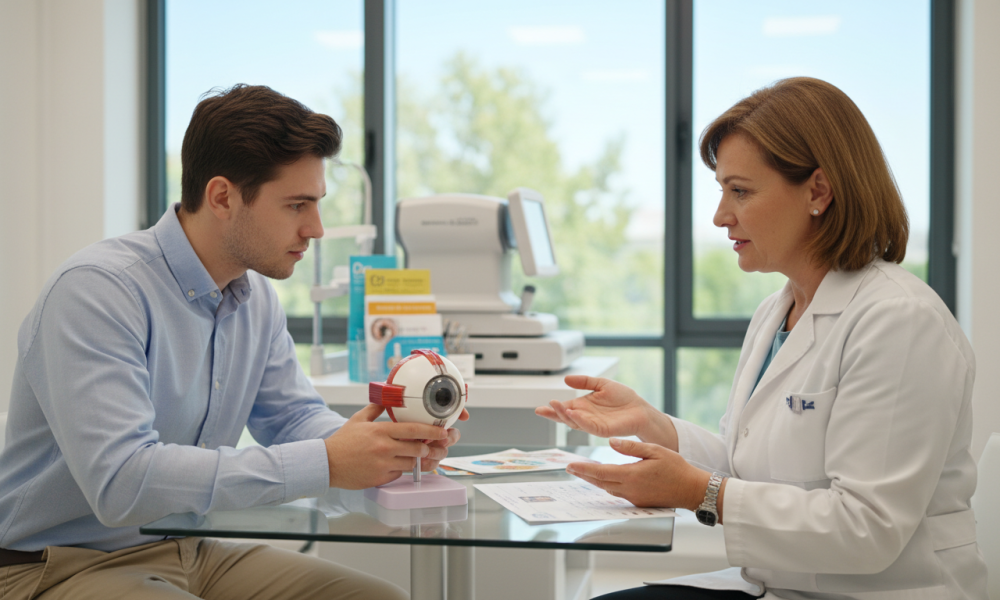
A full eye exam is essential. Specialists check the cornea, measure the natural lens, and review overall eye health.
- Adults over 40 with age-related changes or a cataract often qualify.
- Contact lenses must be stopped at least two weeks before testing to ensure accurate corneal measurements.
- Surgeons assess other conditions; macular degeneration or glaucoma may exclude patients from this treatment.
- Discussion of goals—clear near, intermediate, or distance sight—helps pick lenses designed for daily needs.
- Good general health supports a smoother recovery and better outcomes from the procedure.
| Candidate Profile | Key Check | Recommended Action |
|---|---|---|
| Age 40+ with presbyopia | Comprehensive refraction and corneal stability | Consider multifocal or EDOF lens |
| Cataract present | Clouded natural lens confirmed | Replace lens to restore vision |
| Contact lens user | Stop contact lenses 2+ weeks | Retest cornea before final plan |
| Existing retinal or optic disease | Macular or glaucoma signs | Alternative treatments recommended |
After testing, the doctor explains which lens option suits the patient and outlines the next steps for treatment and eye health.
What to Expect During Surgery and Recovery
The treatment is done quickly, often in under half an hour per eye, with minimal discomfort. Local anesthesia keeps the patient calm while the team works precisely.
Most patients notice clearer vision within days, though full healing can take several weeks depending on existing conditions. Following instructions helps the lens settle and improves success.
Post-Operative Care and Eye Protection
Simple steps after the procedure make a big difference.
- Use prescribed eye drops for 2 weeks to a month to prevent infection and reduce inflammation.
- Avoid rubbing the eyes for at least two weeks to protect the implant and aid recovery.
- Wear UV-protective sunglasses for at least two weeks to shield the eye from direct sunlight.
- Limit screen time and attend all follow-up visits so clinicians can track healing and address problems fast.
“Adhering to post-op guidance gives most patients a smooth recovery and a marked reduction in the need for glasses.”
The clinic team supports each patient through follow-up care. For those exploring related options, see more on corneal transplant choices at corneal transplant options.
Future Advancements in Vision Correction
Researchers are designing new intraocular implants that adapt to eye movement for a more natural visual experience.

Ongoing studies target presbyopia and myopia to expand who benefits from this treatment. Engineers aim for lenses that shift focus as the eye moves, giving clearer near vision and distance sight with fewer compromises.
Multifocal lenses have set the stage. Their success supports work on implants that deliver simultaneous near and far vision while reducing the need glasses for daily life.
Developers also plan faster recovery times so improved vision returns within days for many patients. Safer materials and smarter coatings promise fewer side effects and better long-term eye health.
- The next generation will respond to muscle signals for precise focus.
- Improved designs may help people with a wider range of conditions, including cataract and refractive errors.
- Clinical advances aim to lower complications and streamline post-op care, like shorter eye drops regimens.
“Advances in implant technology will expand treatment options and improve quality of life for more patients.”
Conclusion
Conclusion
Many patients find that a single procedure restores clearer sight and cuts daily reliance on glasses and contacts. A well-chosen smart lens can deliver stable vision at multiple distances and address common refractive problems.
The operation is efficient and safe when a qualified team guides each patient. Proper follow-up care and the right aftercare routine help secure long-term eye health and the full advantages of the treatment.
As technology advances, smart lenses will further improve quality of life. Anyone considering this procedure should consult a specialist to see if this treatment fits their needs and health goals.
FAQ
What does smart lens procedure replace in the eye?
The operation removes the cloudy natural lens—commonly affected by cataract—and replaces it with an intraocular lens (IOL). Modern IOLs can correct distance, intermediate, and near vision so many people reduce or eliminate dependence on glasses and contact lenses after healing.
How do advanced intraocular lenses mimic natural focus?
New lens designs use multiple optical zones or extended-depth-of-focus technology to shift focus across distances. Some multifocal and accommodating lenses allow clearer vision at near and far without the eye having to change shape, mimicking the eye’s natural focusing ability.
Are there lens options to correct astigmatism?
Yes. Toric IOLs correct corneal astigmatism and improve uncorrected distance vision. They’re often combined with multifocal or extended-depth-of-focus designs to address both astigmatism and reduced near vision.
How long does it take to recover and resume normal activities?
Most patients notice improved vision within days. Full visual stability may take a few weeks. Eye drops and brief activity limits—avoiding heavy lifting or eye rubbing—are common during recovery to support healing and reduce risk of complications.
What follow-up care is typical after implantation?
Follow-up visits confirm healing and visual outcomes. Doctors prescribe antibiotic and anti-inflammatory eye drops for days to weeks. Protective eyewear or an eye shield may be advised initially to prevent accidental injury.
Can the procedure prevent or treat cataracts?
Replacing the natural lens with an IOL is the standard treatment for cataracts. When done electively before advanced cataract development, it can also serve as a refractive solution to reduce dependence on glasses.
Will the new lenses block harmful light?
Many IOLs include blue-light filtering to reduce retinal exposure. Specific filtering properties vary by brand and model; surgeons discuss options to balance protection with color perception and visual quality.
Who is an appropriate candidate for lens replacement?
Ideal candidates include people with cataracts, significant refractive error, or presbyopia who seek reduced reliance on glasses. Good overall eye health and realistic expectations are important; some retinal or corneal conditions may limit benefits.
What are common risks and how successful is the treatment?
Most procedures are highly successful, but risks include infection, inflammation, residual refractive error, or need for further corrective procedures. Surgeons screen patients and manage risks with modern techniques and postoperative care.
How do multifocal and extended-depth-of-focus lenses differ?
Multifocal lenses create distinct focal zones for near and far vision, which can cause halos for some people. Extended-depth-of-focus lenses provide a continuous range of clear vision with fewer visual disturbances, though individual results vary.
Can lenses be adjusted after implantation if vision isn’t ideal?
If refraction remains, options include laser vision correction, piggyback IOLs, or lens exchange in select cases. Many minor refractive issues can be corrected without major surgery.
How does the procedure affect life for cancer patients or survivors?
For people undergoing cancer treatment, timing and coordination with oncologists matter—especially when systemic therapies affect healing or immunity. Restoring vision can improve quality of life; clinicians tailor plans to individual health needs.
Are there non-surgical alternatives to lens replacement?
Non-surgical choices include glasses, multifocal contact lenses, or corneal refractive surgery for some refractive errors. However, only lens replacement directly treats cataracts and offers a long-term reduction in dependence on corrective eyewear.
What future advancements are expected in intraocular lens technology?
Ongoing research focuses on adjustable IOLs, improved materials, enhanced blue-light filtering, and better presbyopia correction. These innovations aim to increase visual quality, personalize outcomes, and shorten recovery time.
Related guides
How Long Does a Dental Implant Procedure Take?
Curious if the journey to a restored smile will fit your life? Many patients wonder about the full…

Best Hair Transplant in Istanbul,Turkey
Could one clinic end years of worry and restore your confidence with a clear, tailored plan?Dr. Serkan Aygin…

What is Zygomatic Dental Implant?
Could anchoring into the cheekbone restore a confident smile when the upper jaw can’t?Zygomatic dental implants offer an…