
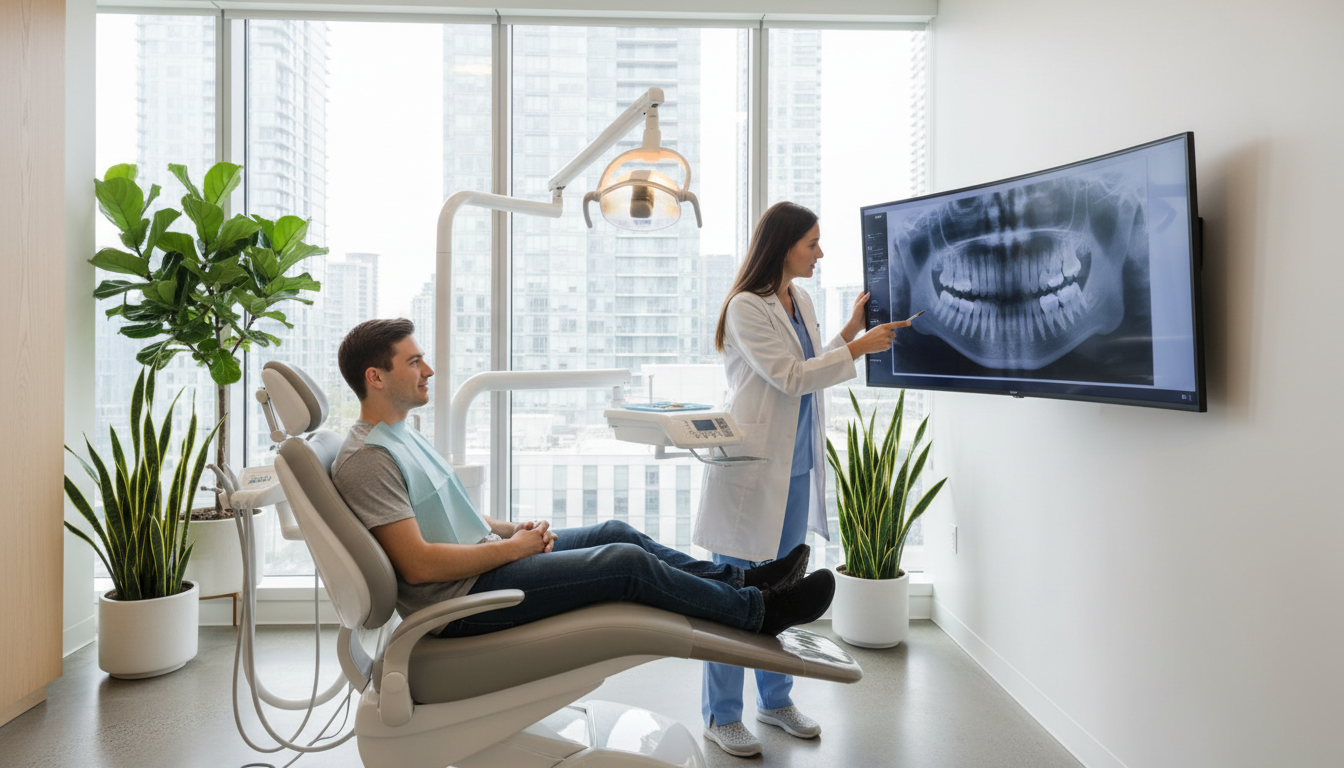
For many patients facing extensive tooth loss, the path forward feels uncertain. The Toronto Hybrid Dental Treatment represents a major advance in restorative care that aims to rebuild both chewing ability and a natural smile.
It offers a stable, implant-supported foundation for complex cases where traditional options fall short. Clinicians use this method to blend durable support with aesthetic results, helping people regain everyday comfort and social confidence.
This guide reviews the clinical evolution and historical roots of the procedure and explains why it became a cornerstone of modern oral rehabilitation. Readers will find clear, compassionate guidance to help them weigh long-term options for function and appearance.
Key Takeaways
- The approach gives strong implant-supported support for severe tooth loss.
- It balances function with aesthetic outcomes for everyday life.
- Clinicians developed it over years of clinical refinement.
- Understanding nuances helps patients make informed choices.
- The method offers a compassionate route to long-term oral rehabilitation.
Understanding Toronto Hybrid Dental Treatment
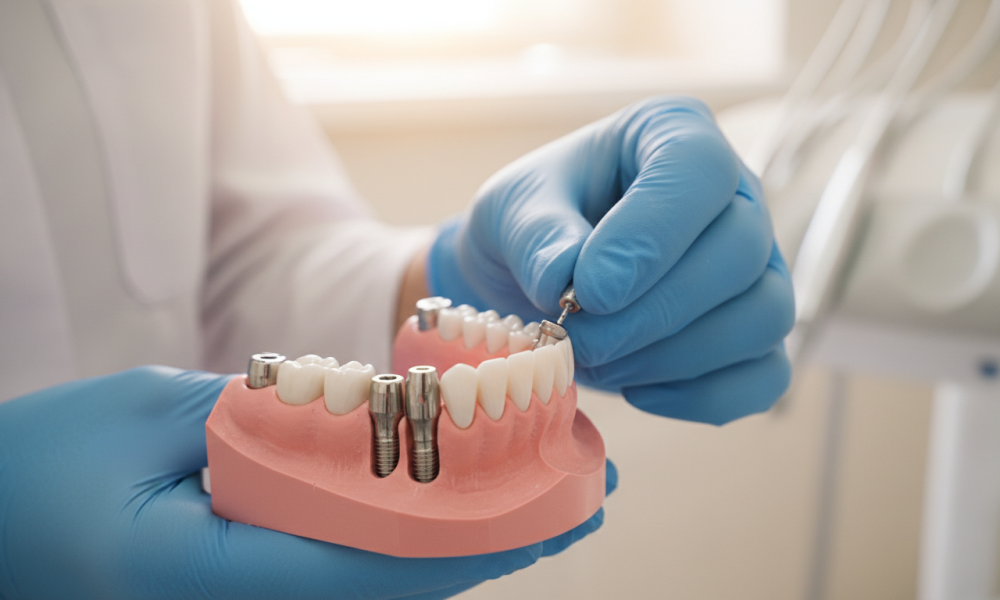
The abutment-hybrid overdenture blends a screwed-in mesostructure with milled abutments to create a robust foundation for full-arch prosthetic rehabilitation.
Definition: This design uses implant-supported prostheses anchored by a fixed mesostructure. Crowns are cemented over individualized abutments, offering the look of dental prostheses with the stability of implant restorations.
Defining the Abutment-Hybrid Overdenture
The technique serves as an appealing method restoring function and aesthetics for patients who are partially edentulous or fully edentulous.
- Uses dental implants and a screwed mesostructure with milled abutments.
- Combines retrievability of screws with the polish of cement-retained implant crowns.
- Functions as a hybrid overdenture alternative to traditional partial dentures.
Historical Origins of the Toronto Bridge
Early clinical experimental work by Professor George Zarb in the 1980s coined the term toronto bridge. Later, in 1988, Lewis et al. advanced cemented implant restorations to manage aesthetics with tilted implants.
| Feature | Benefit | Clinical Note |
|---|---|---|
| Screwed mesostructure | High stability and retrievability | Allows maintenance without removing crowns |
| Milled abutments | Precise fit and better occlusion | Improves long-term implant restorations |
| Cement-retained crowns | Superior aesthetics | Originally popularized by Lewis et al. (1988) |
Evolution of Implant Prosthodontics
What once began as clinical experimental trials now guides routine implant-supported prostheses for complex cases.
The field of implant prosthodontics has grown rapidly. Researchers compared screw-retained and cement-retained implant designs to improve outcomes. Studies shaped choices about different types of anchorage and finish methods.
As implant dentistry advanced, clinicians refined workflows for full-arch care. The toronto prosthesis and related concepts influenced modern protocols for prosthetic rehabilitation. Digital tools now boost precision for fixed dental restorations.
- Clinical experimental work established long-term protocols.
- Comparative analyses guide selection among implant restorations.
- Improved accuracy increases durability of dental prostheses.
| Development | Impact | Clinical Note |
|---|---|---|
| Clinical experimental studies | Foundation for protocols | Led to predictable implant restorations |
| Fixed dental prostheses evolution | Better function and aesthetics | Supports long-term prosthetic rehabilitation |
| Digital workflows | Higher precision | Improves outcomes for implant-supported prostheses |
Clinical Indications for Full Arch Rehabilitation
Complex cases with limited bone height call for prosthetic strategies that prioritize stability and hygiene. Full arch solutions suit patients who are partially edentulous or fully edentulous and need a permanent option.
Restoring Function for Partially and Fully Edentulous Patients
A 63-year-old man with mandibular prognathism and a fully edentulous mandible underwent prosthetic rehabilitation fully using seven externally hexed dental implants. This approach showed that the toronto prosthesis can restore chewing and speech in severe bone loss.
Indications include:
- Patients candidates hybrid overdentures who seek a fixed partial solution.
- Those with limited bone height needing implant supported full arch restorations.
- Cases where correction of implant emergence profiles improves outcomes.
The method restoring patients who are candidates hybrid overdentures demands careful planning. Surgeons and prosthodontists select components to ensure hygiene, function, and long-term success.
The Role of Mesostructures in Modern Dentistry
A precisely milled mesostructure transforms complex implant layouts into predictable, serviceable restorations.
The mesostructure acts as a critical link in implant prosthodontics. It lets clinicians align individual crowns accurately in full-arch cases. Precise fit reduces stress on implants and improves chewing function.
In modern practice, the toronto bridge design uses a milled mesostructure to support cementation of multiple suprastructures. Separating the mesostructure from final crowns gives teams more control over angulation and emergence profiles.
This design philosophy helps manage challenging implant angulation. When implants are tilted or uneven, the mesostructure corrects alignment before crowns are placed. That makes maintenance easier and lowers complication risk.
- Stability: Provides a rigid base for multiple crowns.
- Flexibility: Allows retrievability and easier repairs.
- Longevity: Improves success rates in implant dentistry.
| Feature | Clinical Advantage | Maintenance Note |
|---|---|---|
| Milled mesostructure | Precise fit for multi-unit prostheses | Facilitates passive fit checks |
| Separated crowns | Improved aesthetics and screw access | Allows crown replacement without disturbing base |
| Angulation management | Corrects implant tilt for better occlusion | Reduces need for complex surgical grafting |
| Retrievability | Supports long-term care planning | Simplifies repairs and hygiene |
Comparing Screw-Retained and Cement-Retained Approaches
Choosing the right retention affects function, maintenance, and long-term success.
Advantages of Retrievability
Screw-retained implant restorations allow easy access for repairs and hygiene.
They reduce chair time when components need removal.
Retrievability helps manage complications without disturbing the whole prosthesis.
This is useful for implant-supported prostheses that require periodic servicing.
Benefits of Cemented Interfaces
Cement-retained implant fixedcomponents deliver superior aesthetics.
A polished emergence profile often improves patient satisfaction.
Well-managed cement joints lower visible margins and can mimic natural gingiva.
Clinicians must control the marginal opening to protect peri-implant tissues.
Combining Techniques for Optimal Results
The toronto prosthesis blends both methods to balance appearance and serviceability.
An implant fixed partial approach can use a screw base with cemented crowns.
This hybrid design supports a fixed partial denture that is easier to adjust over years follow-up new studies.
Careful planning of passive fit reduces stress on dental implants and surrounding bone.
| Feature | Primary Benefit | Clinical Note |
|---|---|---|
| Screw-retained design | Retrievability for maintenance | Ideal when repairs are likely |
| Cement-retained crowns | Improved aesthetics | Requires careful cement removal |
| Combined framework | Balance of function and look | Common in implant prosthodontics for complex arches |
| Marginal management | Protects soft tissue | Essential for long-term implant restorations |
Surgical Considerations for Edentulous Patients
When treating a fully edentulous mandible, surgeons combine biomechanical strategy with patient-centered risk assessment.
Before any operation, a full medical review guides safe prosthetic rehabilitation. Blood disorders, medications, and prior surgeries change perioperative planning.
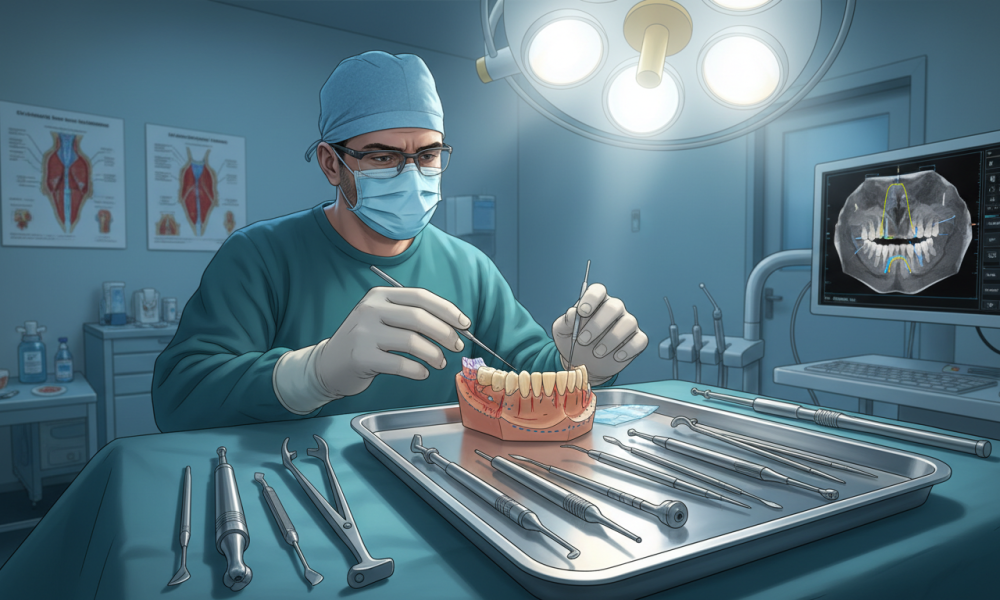
In one case, a broken surgical bur revealed unusually dense bone. During follow-up, clinicians diagnosed haemophilia. This discovery did not prevent successful placement of treated dental implants.
Key clinical points:
- Thorough screening supports prosthetic rehabilitation fully and helps predict bleeding risk.
- Surgeons must prepare for equipment failure when working on a rehabilitation fully edentulous jaw.
- Using dental implants using a single-phase technique can ease healing and reduce visits.
- Prioritizing implant stability drives long-term success for an edentulous mandible treated with implants.
| Challenge | Action | Outcome |
|---|---|---|
| Dense bone / broken bur | Immediate management and tool change | Procedure completed |
| Undiagnosed haemophilia | Post-op hematology consult | Safe healing with precautions |
| Complex reconstruction | Single-phase implants when suitable | Comfortable recovery |
Careful planning and multidisciplinary care show that even patients with health conditions can benefit from advanced approaches. Learn more about options for prosthetic rehabilitation at prosthetic rehabilitation.
Achieving Passive Fit in Complex Restorations
Achieving passive fit begins with design choices that respect implant angles and biological limits. In complex full arch care, the mesostructure is often sectioned into three pieces where implants share congruent axes. This reduces stress and helps the framework settle without force.
Managing Implant Angulation and Marginal Opening
Practical steps:
- Section the mesostructure so each segment aligns with grouped implant axes and avoids distortion.
- Combine screw-retained implant restorations with a cement-retained implant fixed interface to ease repairs and preserve soft tissue.
- Adjust crowns individually on the mesostructure to control marginal opening and protect peri-implant crevices.
Precision at the implant fixed partial interface matters for bone health. Even small inaccuracies can create micro-movement and inflammation.
| Action | Benefit | Note |
|---|---|---|
| Three-piece mesostructure | Passive fit | Compensates angulation |
| Individual crown seating | Reduced marginal opening | Improves hygiene |
| Combined retention | Retrievability and aesthetics | Balances function and maintenance |
Clinicians must verify passive fit with careful try-ins, radiographs, and occlusal checks. The toronto prosthesis and toronto bridge concepts guide these steps to produce reliable implant restorations and a stable fixed partial denture.
Aesthetic Benefits and Soft Tissue Mimicry
Pink ceramic glazing on a milled mesostructure recreates natural gum color and contour, giving the final restoration a life-like appearance.
Fixed dental prostheses that use pink ceramic blend the prosthetic base with surrounding tissue. This approach reduces visible transitions and improves patient confidence.
Focusing on passive fit of each crown secures healthy margins. Good fit helps prevent food traps and supports gum health around a fixed partial restoration.
The toronto prosthesis concept supports a technique restoring function and aesthetics. In one case, functional mandibular retrusion improved prognathism and enhanced facial balance after prosthetic rehabilitation.
| Feature | Aesthetic Benefit | Clinical Note |
|---|---|---|
| Pink ceramic mesostructure | Natural gum mimicry | Improves emergence profile and smile blend |
| Passive fit crowns | Cleaner margins | Facilitates soft tissue maintenance |
| High-quality materials | Long-term color stability | Durable and wear-resistant finish |
Long-Term Maintenance and Oral Hygiene
Longevity begins the day the prosthesis is placed, with follow-up and cleaning guiding outcomes. Regular check-ups confirm the integrity of the implant-supported prosthesis and the health of surrounding tissues.
Passive fit of the framework lowers stress on dental implants and helps prevent long-term bone loss. Studies with up to 10 years follow-up new designs show that consistent care improves survival and comfort for implant-supported prostheses.
Patients should maintain daily hygiene routines that clean interproximal spaces and prosthetic margins. The design of fixed partial dentures often allows easier access than traditional partial dentures, making home care more effective.
- Schedule professional reviews every 6–12 months to check screws, occlusion, and soft tissue.
- Use interdental brushes and floss designed for implant-supported restorations.
- Arrange regular professional cleaning to remove plaque and protect gum tissue.
Choosing an implant supported fixed partial solution usually improves bite stability and oral health. With a strict maintenance schedule, patients can expect durable, functional results and better quality of life over years.
Conclusion
Ultimately, this method offers a dependable route to restore function and appearance in complex full arch cases. The toronto bridge remains an appealing method in implant prosthodontics for patients who need a stable, long-term solution.
Clinicians favor the combined screw-and-cement design because it balances retrievability with polished aesthetics. As a proven approach in clinical experimental literature, the device provides a reliable method restoring patients and supports predictable prosthetic rehabilitation.
The guide aims to make the options clear for patients candidates hybrid overdentures. By understanding this appealing method restoring and the steps for restoring patients candidates, people can decide with confidence about long-term care and quality of life.
FAQ
What is a Toronto prosthesis and how does it differ from other full-arch solutions?
The Toronto prosthesis is a fixed, implant-supported full-arch restoration that combines a rigid substructure with denture teeth and pink acrylic to mimic soft tissue. Compared with conventional full-arch bridges, it often uses a mesostructure to connect implants and support the prosthetic teeth, offering easier repair and better adaptation for large tissue gaps.
Who is a good candidate for a fixed full-arch prosthesis versus an implant overdenture?
Good candidates for a fixed full-arch restoration include patients seeking fixed teeth, adequate bone volume for implants, and those who prioritize chewing function and aesthetics. Overdentures suit patients who need fewer implants, want easier hygiene access, or prefer a removable option. Clinical factors, medical history, and patient preference guide the final recommendation.
What are the main differences between screw-retained and cement-retained implant restorations?
Screw-retained restorations allow retrievability for maintenance, reduce the risk of residual cement, and permit easier adjustments. Cement-retained restorations often provide improved aesthetics and passive fit but carry a risk of cement-induced peri-implantitis if excess cement remains. Hybrid approaches use both concepts to balance access, aesthetics, and long-term care.
How does a mesostructure improve the outcome of a full-arch prosthesis?
A mesostructure acts as an intermediate framework between implants and the visible prosthetic teeth. It helps distribute forces, allows better passive fit across multiple implants, and simplifies repair or replacement of the superstructure. This reduces mechanical complications and improves long-term stability.
What surgical considerations matter for fully edentulous mandible rehabilitation?
Important considerations include implant number and position, bone quality and quantity, need for bone grafting or sinus lifts, and managing implant angulation to support passive fit. Preoperative planning with CBCT imaging and digital workflows improves predictability and reduces intraoperative surprises.
How is passive fit achieved in complex multi-implant restorations?
Passive fit results from accurate impressions or digital scans, precise laboratory workflows, verification frameworks during try-in, and careful torque sequencing during placement. Managing implant angulation and controlling marginal openings are essential to avoid stress on implants and the prosthesis.
What are common maintenance requirements after receiving an implant-supported full-arch prosthesis?
Maintenance includes daily oral hygiene around the prosthesis, regular professional cleanings, periodic torque checks of abutment screws, and monitoring peri-implant tissues. Patients should attend scheduled follow-ups to detect wear, fracture, or biological changes early.
How do implant-supported restorations recreate natural soft-tissue contours and aesthetics?
Aesthetic outcomes rely on careful prosthetic design, emergence profile shaping, appropriate pink acrylic or ceramic for tissue mimicry, and soft-tissue management at surgery. Skilled lab work and provisional restorations help sculpt the tissue for more natural-looking results.
Can implant prostheses be used for partially edentulous cases as well as fully edentulous jaws?
Yes. Implant-supported fixed partial dentures and single implant restorations solve partial edentulism, while full-arch solutions address complete tooth loss. Treatment planning tailors implant number and prosthesis type to the patient’s specific clinical needs.
What are the long-term success rates and follow-up expectations for implant-supported full-arch prostheses?
Long-term studies show high survival rates when proper surgical and prosthetic protocols are followed. Regular follow-up over years is necessary to monitor bone levels, soft tissue health, and mechanical components. Early detection of complications preserves function and extends prosthesis lifespan.
Related guides
How Long Does a Dental Implant Procedure Take?
Curious if the journey to a restored smile will fit your life? Many patients wonder about the full…
Best Hair Transplant in Istanbul,Turkey
Could one clinic end years of worry and restore your confidence with a clear, tailored plan?Dr. Serkan Aygin…
What is Zygomatic Dental Implant?
Could anchoring into the cheekbone restore a confident smile when the upper jaw can’t?Zygomatic dental implants offer an…