
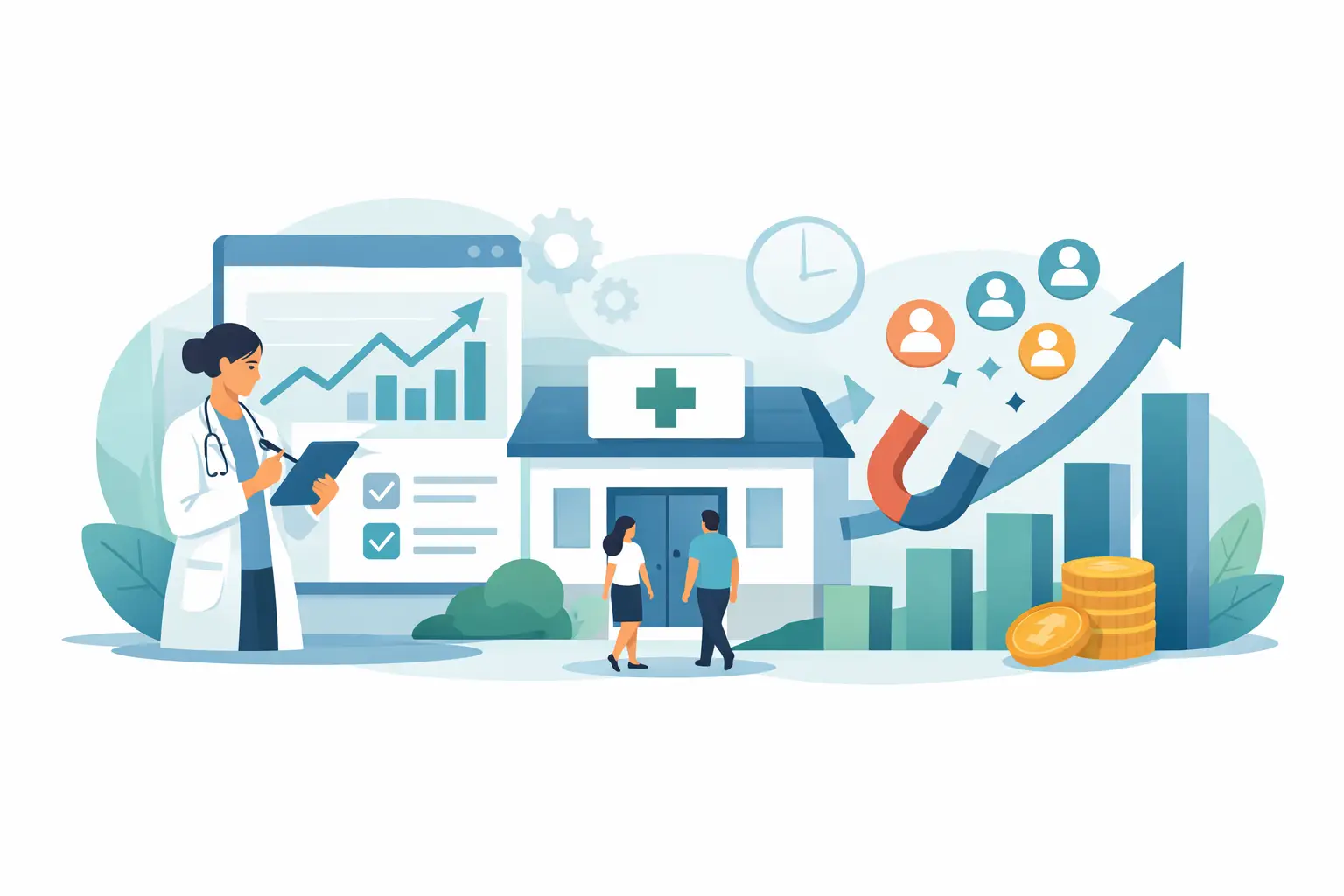
A clinic can generate a high volume of inquiries and still miss revenue targets if too many potential patients drop off between first contact and booked consultation. That gap is why so many healthcare leaders ask how to improve clinic conversion rates without simply increasing ad spend. The answer usually is not one tactic. It is a system that reduces hesitation, shortens response time, and gives patients enough confidence to move forward.
For clinics serving domestic patients, the stakes are already high. For clinics competing for international patients or medical tourism cases, the stakes are even higher. A delayed callback, a vague treatment explanation, or a poorly handled price conversation can send a patient to another provider in minutes. Conversion rate improvement is not only a marketing issue. It sits across operations, sales, technology, and patient experience.
How to improve clinic conversion rates starts with the real bottleneck
Many clinics assume they have a lead generation problem when they actually have a conversion problem. If website traffic is healthy, paid campaigns are producing inquiries, or referral volume is stable, then the next question is simple: what happens after a patient raises a hand?
This is where leadership teams need clean visibility. You need to know how many leads are coming in, how quickly they are being contacted, how many are qualified, how many book consultations, how many show up, and how many accept treatment. Without that funnel view, teams tend to blame marketing, call center staff, pricing, or competition based on instinct instead of evidence.
The strongest clinics break conversion down into stages. They look at inquiry-to-contact, contact-to-consultation, consultation-to-treatment plan acceptance, and treatment plan acceptance-to-payment or procedure booking. Each stage has different friction points, and each one requires a different fix.
Speed matters more than most clinics think
Healthcare decisions are emotional, time-sensitive, and trust-dependent. That makes response time one of the most practical ways to improve performance.
When a patient submits a form or sends a message, they are often comparing several clinics at once. If your team takes six hours to respond and another clinic replies in ten minutes, the faster provider has a major advantage before any clinical discussion begins. This is especially true for cosmetic, dental, fertility, bariatric, and elective procedures, where patients tend to shop actively and expect quick answers.
Faster follow-up does not mean rushed or generic communication. It means having a system. Leads should route instantly to the right team. Calls should be attempted quickly. If there is no answer, follow-up should continue across phone, email, text, or messaging apps based on the patient’s location and preference. A clinic that responds quickly but inconsistently will still leak opportunity.
In practice, many clinics improve conversion simply by tightening the first 30 minutes after inquiry. That one operational adjustment can outperform a major increase in media budget.
Trust is the real conversion engine
Patients do not convert because a website looks polished. They convert because they believe the clinic is credible, responsive, safe, and capable of delivering the outcome they need.
That belief is built in layers. Clinical credentials matter. Physician profiles matter. Accreditation matters. Testimonials matter. Before-and-after evidence can matter in the right specialties, as long as it is presented ethically and compliantly. Clear treatment pathways matter too. Patients want to understand what happens next, what the likely timeline is, and who will guide them.
For international patients, trust requires even more structure. They are not only evaluating treatment quality. They are evaluating travel logistics, language support, cost transparency, safety, aftercare, and whether the clinic can manage a process that feels unfamiliar. If your messaging focuses only on medical excellence but ignores these practical concerns, conversion rates will suffer.
This is where a partnership-driven approach makes a difference. A clinic must communicate that it can support the patient from inquiry to arrival to aftercare, not just perform the procedure.
Reduce uncertainty at the first point of contact
The first conversation should not feel like a hard sell, but it also should not feel vague. Staff need to answer the questions that actually block decisions. Am I a candidate? What does the treatment involve? How long will it take? What is the approximate cost? What documentation is needed? How soon can I be seen?
If the team cannot answer these points clearly, patients often disengage. If the team answers them with confidence and empathy, the path to consultation becomes much easier.
Your website should support conversion, not just traffic
A clinic website often performs well as a brochure and poorly as a sales asset. It may look professional while failing to move users toward action.
To improve website conversion, the path from interest to inquiry must be obvious. Service pages should explain the treatment clearly, present physician and facility credibility, address common concerns, and make next steps easy. Contact forms should ask for what is necessary, not everything the clinic might want to know. Overly long forms create abandonment.
Call buttons, appointment requests, and messaging options should be visible without forcing users to hunt for them. Mobile experience matters just as much as desktop, often more. If pages load slowly, forms break on mobile, or international users struggle to contact the clinic, conversion drops before your team even has a chance to engage.
Content also needs to match patient intent. Someone searching for a specific treatment wants clear answers, not broad brand language. Someone comparing treatment abroad wants reassurance on safety, savings, and process. The more closely the page matches that intent, the stronger the conversion outcome tends to be.
Better conversion often depends on better lead qualification
Not every lead should move through the same process. Clinics lose efficiency when high-intent patients wait behind low-fit inquiries, or when teams spend too much time chasing leads that were never likely to convert.
Effective qualification is not about rejecting patients quickly. It is about routing them correctly. A patient seeking a complex surgical procedure needs a different workflow from someone asking for general pricing. An international patient considering treatment in Turkey needs different support from a local patient booking a first dermatology visit.
Qualification criteria should cover treatment interest, urgency, budget range, clinical suitability, geography, and readiness to speak with a coordinator or physician. When these details are captured early and entered into a CRM properly, teams can prioritize follow-up and personalize communication.
This is one area where many clinics underperform. They collect lead data but do not organize it in a way that supports sales action. That creates slow responses, repeated questions, and missed opportunities.
Conversion rates rise when call center and sales teams work like patient advisors
Healthcare sales is not retail sales. The language, timing, and tone need more care. Patients are evaluating a deeply personal decision, often with fear, urgency, or financial concern in the background.
High-performing conversion teams know how to balance reassurance with direction. They listen well, explain next steps simply, and keep momentum moving. They do not overload the patient with information too early, but they also do not leave major concerns unanswered.
Training matters here. Scripts help with consistency, but rigid scripts can lower trust if they sound mechanical. Teams need frameworks, objection-handling practice, and enough medical context to communicate accurately without overstepping clinical boundaries.
The best conversion teams also understand follow-up cadence. Some patients convert on the first call. Others need several touches, especially for higher-ticket procedures or overseas care. If follow-up ends too soon, conversion stays low. If follow-up becomes pushy, trust erodes. The right balance depends on specialty, lead source, and patient profile.
Pricing transparency is delicate but necessary
One of the fastest ways to lose a lead is to make pricing feel evasive. At the same time, healthcare pricing is not always simple, especially when final treatment plans depend on consultation, diagnostics, or physician review.
That is why clinics need a middle ground. Give enough pricing guidance to help patients assess feasibility, but frame it properly. Estimated ranges, package inclusions, financing options, and consultation fees can all support conversion when explained clearly.
For medical tourism, package clarity becomes even more important. Patients want to know whether the quote includes hospital fees, physician fees, accommodations, transfers, interpreters, and aftercare. If those details are unclear, price comparisons become harder and trust weakens.
Technology should make follow-up tighter, not more complicated
Technology only improves conversion when it removes gaps. A CRM should show lead source, inquiry history, next action, and conversion stage in one place. Automation can support reminders, task assignments, and lead routing, but it should not replace thoughtful human communication.
Reporting is equally important. Clinics should track which channels produce booked consultations, which coordinators convert best, where no-shows are highest, and which specialties have the longest sales cycles. Once those patterns are visible, improvement becomes much more precise.
This is where an integrated growth model becomes valuable. Marketing, sales support, patient coordination, and technology should work together rather than operate in separate silos. DGS Healthcare has built its approach around that reality because clinic growth depends on more than lead generation alone.
How to improve clinic conversion rates over time
The clinics that win do not treat conversion as a one-time project. They review calls, test landing pages, refine forms, improve coordinator training, and measure outcomes consistently. They also accept that not every specialty converts the same way. A fertility patient, a cosmetic surgery patient, and an orthopedic patient may all require different trust signals and different follow-up models.
That is the real answer to how to improve clinic conversion rates: build a patient acquisition system that is fast, credible, measurable, and operationally disciplined. When marketing promise and patient experience align, conversion improves naturally. And when patients feel informed, guided, and confident, growth becomes much easier to sustain.
The strongest clinics are not always the loudest in the market. They are the ones that make it easy for the right patient to say yes.
Related guides
Healthcare Content Compliance Guide for Growth
A high-performing treatment page can generate international patient inquiries within hours. It can also create material risk if…
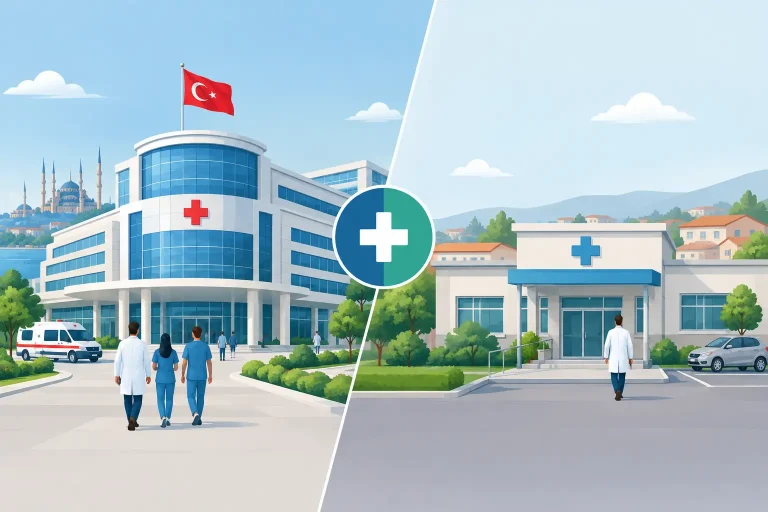
Turkey Hospitals vs Local Hospitals Compared
A lower procedure quote can get a patient’s attention. It should not make the decision on its own.…

Patient Experience That Drives Trust and Growth
A patient who has already uploaded medical records, compared providers, and arranged time away from work is not…