
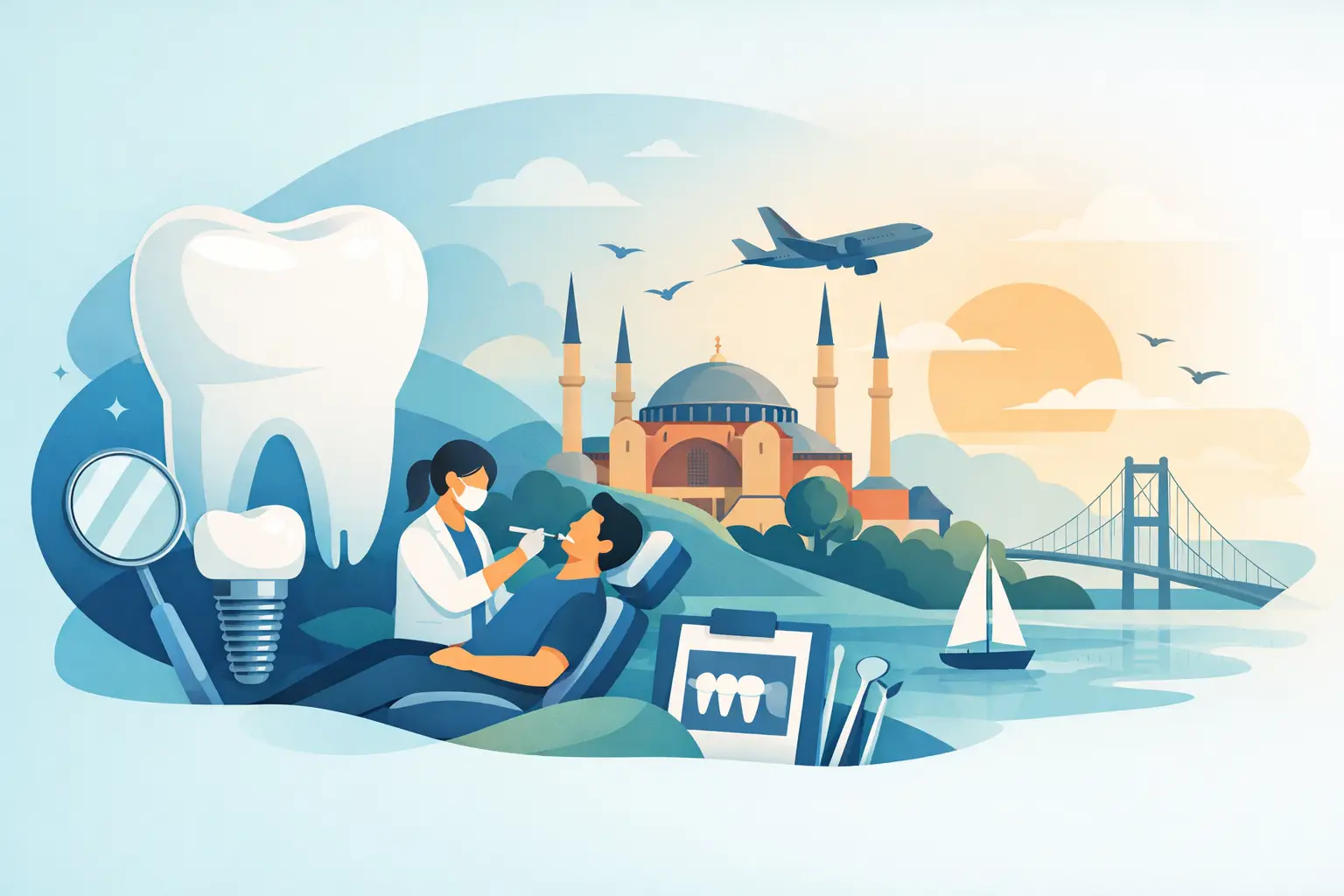
A full-mouth quote of $25,000 in the US versus a fraction of that in Istanbul gets attention fast. That is why medical tourism Turkey dental treatment has become a serious consideration for patients who want implants, veneers, crowns, or full smile restoration without compromising clinical quality. The appeal is real, but smart decisions depend on more than finding a low package price.
Turkey has earned a strong position in dental travel because it combines modern private clinics, internationally oriented providers, experienced dentists, and a healthcare ecosystem built to serve overseas patients. For many Americans, the value is not only lower cost. It is also access, speed, and coordinated service. Patients who might wait months, or postpone treatment entirely because of cost, can often secure consultations, travel planning, and treatment scheduling much faster.
Why medical tourism Turkey dental care keeps growing
Dental work is one of the most price-sensitive categories in healthcare. Insurance coverage in the US is often limited, especially for cosmetic or implant-related procedures. Even medically necessary restorative treatment can leave patients with significant out-of-pocket costs. Turkey steps into that gap with private-sector capacity designed for international demand.
The strongest clinics do more than advertise affordability. They invest in digital imaging, in-house labs, multilingual case coordination, and treatment planning built around short travel windows. That matters because dental tourists are not only buying a procedure. They are buying organization, predictability, and confidence that someone is managing the process from airport arrival to follow-up.
Patients are also responding to a broader shift in how healthcare is purchased. People now compare providers internationally, read outcomes, ask about materials, and expect responsiveness. Dental travel is no longer a fringe option. It is a consumer-led healthcare decision, and Turkey has positioned itself well in that market.
What treatments patients usually seek in Turkey
The most common demand centers on implants, crowns, veneers, smile design, and full-mouth rehabilitation. Implants are a major driver because US pricing can be prohibitive, especially when bone grafting, sinus lift procedures, or multiple restorations are involved. Turkey often offers a much more attainable route for patients who need several implants or full-arch work.
Cosmetic dentistry is another major category. Veneers and zirconium crowns are popular among patients who want visible aesthetic change at a lower total investment. Some clinics package these treatments aggressively, which can be helpful for budgeting, but patients should be cautious about speed-based sales tactics. Cosmetic dentistry is not one-size-fits-all, and good outcomes depend on case selection, bite evaluation, gum health, and long-term planning.
For restorative cases, Turkey can be especially attractive when treatment requires multiple disciplines. A clinic that can coordinate prosthodontic planning, surgery, radiology, and lab work under one roof creates a much smoother patient experience.
Cost matters, but value is the real comparison
The headline advantage is cost. In many cases, patients can save substantially compared with US private dental fees. That said, the cheapest quote is not automatically the best value. Price can vary based on implant brand, crown material, laboratory quality, sedation, diagnostics, hotel arrangements, and the experience level of the dentist.
This is where many patients make the wrong comparison. They see two packages for the same number of crowns or implants and assume they are equivalent. Often they are not. The quality of materials, digital planning standards, sterilization protocols, and aftercare support can differ significantly. If one clinic uses lower-grade materials or compresses treatment too aggressively, a lower upfront price may lead to revisions later.
A better question is this: what is included clinically and operationally, and how does that affect outcome risk? The right partner helps patients compare real value, not just promotional numbers.
How to evaluate a Turkey dental clinic properly
The clinic should be assessed the way any serious healthcare provider would be assessed. Start with dentist credentials, case experience, and the clinic’s ability to show consistent work in the treatment category you need. A provider excellent at cosmetic veneers may not be the best choice for advanced implant rehabilitation.
Ask how treatment is planned. Does the clinic rely on recent imaging, oral examination, and a documented case review before confirming a final approach? Or does it promise a fixed result from a few photos sent over messaging apps? Early estimates are normal, but definitive treatment planning should be clinically grounded.
It is also worth asking who performs each part of the treatment. In larger organizations, the consultation may be handled by an international coordinator while surgery and prosthetics are completed by different clinicians. That is not a problem if roles are clear and well managed. It becomes a problem when responsibility is vague.
Operational capability matters too. International patients need reliable scheduling, airport transfers, accommodation guidance, language support, and structured communication. In practice, this is where a lot of medical tourism experiences succeed or fail. A technically competent clinic can still create stress if coordination is weak.
The trade-offs patients should understand before booking
Turkey dental travel is not ideal for every case. Some procedures need staged treatment over several months. Implants, for example, often require healing time between placement and final restoration, unless the patient is a candidate for a same-day or immediate-load approach. Patients need realistic expectations about how many visits may be required.
There is also the issue of follow-up. If you return home and need an adjustment, who handles it? Some clinics provide remote guidance and warranty terms, but warranties are only useful if the practical support behind them is strong. Patients should clarify what happens if a crown chips, a bite feels off, or healing is slower than expected.
Another trade-off is treatment intensity. Some clinics market dramatic smile makeovers in very short timeframes. While that may be appropriate in selected cases, fast cosmetic work can sometimes mean over-preparation of healthy teeth or limited time for proper functional testing. Good dentistry balances appearance, durability, and biological preservation.
Why facilitation matters in medical tourism Turkey dental cases
Most patients are not experts in healthcare procurement, international travel coordination, or dental case evaluation. They need more than a clinic name and a flight suggestion. They need a process that reduces uncertainty and helps them avoid expensive mistakes.
That is where a structured medical tourism model adds value. A capable facilitator does not simply pass along leads. It qualifies the patient’s goals, matches the case to the right provider, verifies service readiness, supports communication, and creates a clearer path from inquiry to treatment and aftercare. For patients, that means less confusion. For clinics and hospital groups, it means stronger conversion quality and better-aligned cases.
This dual focus is increasingly important in a competitive market. Providers that want sustainable international growth need more than visibility. They need patient acquisition systems, responsive sales workflows, multilingual support, and technology that supports follow-through. DGS Healthcare operates in that space by combining patient access, provider growth strategy, and treatment facilitation into one connected model.
What US patients should ask before committing
Before booking flights, patients should request a clear treatment proposal, material details, expected timeline, estimated number of visits, and post-treatment guidance. They should also ask whether the quoted plan might change after in-person diagnostics and what the likely reasons would be.
It is equally important to ask practical questions. Who is your point of contact before and during travel? What happens if your arrival is delayed? How are emergencies handled? Is there a written record of recommendations and consent? Strong providers answer these questions comfortably because they treat international patient management as part of care, not as an afterthought.
For more complex cases, a patient may also benefit from sharing records with a local dentist at home before departure. That extra step can provide perspective and help with continuity after returning to the US.
Is Turkey the right dental tourism choice for you?
For many patients, yes – especially those facing high US costs, long delays, or treatment plans that feel financially out of reach. Turkey offers a compelling combination of affordability, experience, and infrastructure. But the right decision depends on your treatment type, health status, travel flexibility, and willingness to follow a structured care plan.
If your case is straightforward and your clinic is carefully vetted, the experience can be highly efficient and cost-effective. If your case is medically complex, functionally demanding, or likely to require significant follow-up, then provider selection and planning become even more important than price. That is the difference between a good deal and a good outcome.
The best dental travel decisions are made with clear eyes. Focus on clinical standards, coordination quality, and long-term results, and Turkey can be more than an affordable option – it can be a well-managed path to treatment that finally gets done.
Related guides

Healthcare Content Compliance Guide for Growth
A high-performing treatment page can generate international patient inquiries within hours. It can also create material risk if…

Turkey Hospitals vs Local Hospitals Compared
A lower procedure quote can get a patient’s attention. It should not make the decision on its own.…

Patient Experience That Drives Trust and Growth
A patient who has already uploaded medical records, compared providers, and arranged time away from work is not…