
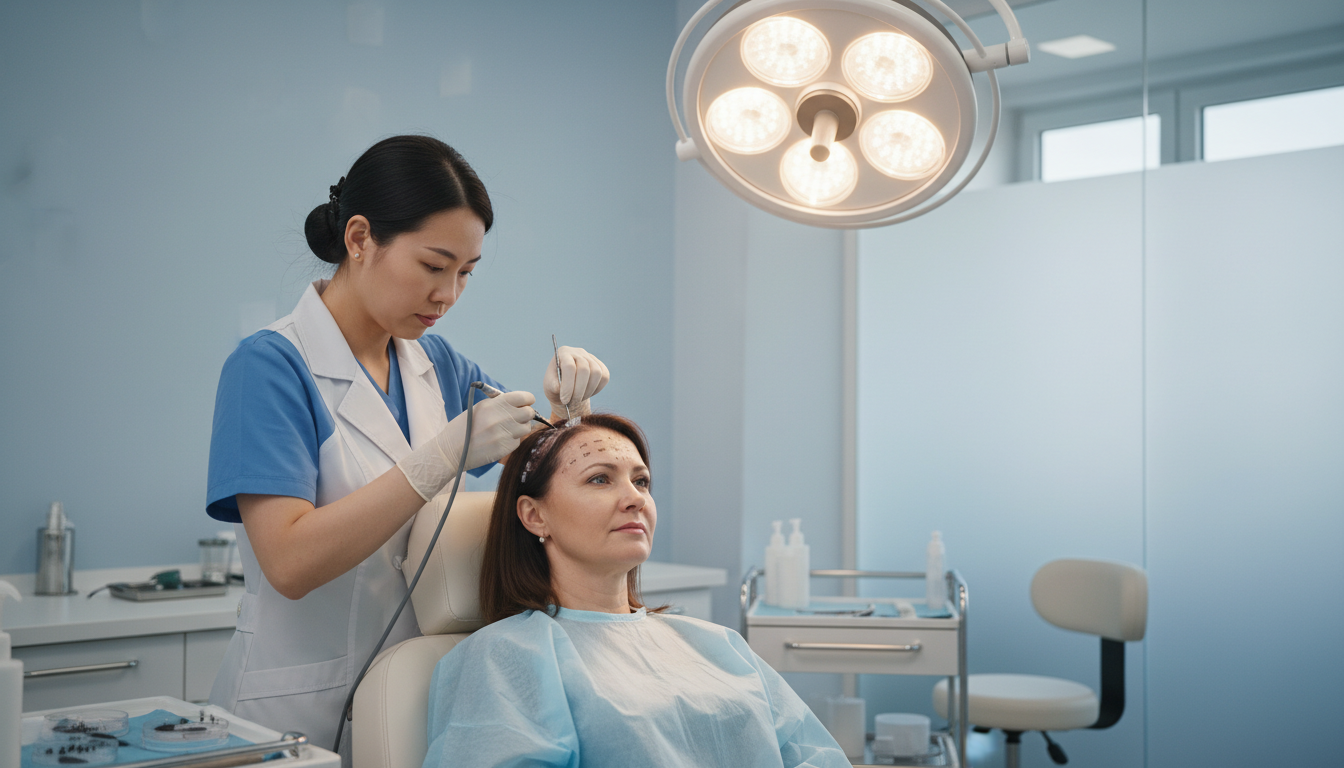
Could restoring scalp density change how someone sees themselves? Many women live with thinning that affects identity and confidence. This guide explores how modern restoration can help.
Hair loss touches millions worldwide and can feel deeply personal. Minimally invasive techniques now allow natural-looking results with careful planning.
Surgeons focus on the individual cause of loss and design a tailored approach. The goal is a soft, seamless blend so the new growth matches existing strands.
Choosing a skilled team matters: informed patients who understand the process and realistic outcomes report higher satisfaction. This article offers clear medical insight, practical steps, and compassionate guidance to start that journey.
Key Takeaways
- Thinning affects identity and self-esteem for many women.
- Modern procedures are minimally invasive and aim for natural density.
- Understanding the cause of loss is vital for good outcomes.
- Experienced surgeons prioritize seamless, youthful results.
- Informed patients have better satisfaction and long-term confidence.
Understanding Female Hair Loss
Pinpointing the main drivers of scalp thinning helps guide effective treatment. Many causes exist, and recognizing them early improves outcomes.
Common Causes of Thinning
Female pattern or androgenetic alopecia affects about half of women by middle age.
Hormonal changes—pregnancy, menopause, or thyroid issues—often trigger significant loss. Traction alopecia results from tight styles and can be prevented with gentler care.
Recognizing Early Signs
Look for a widening part, less ponytail volume, or diffuse scalp thinning near the crown. Autoimmune alopecia areata shows round patches and needs a different plan than pattern loss.
Stress and low iron or vitamin D can worsen thinning and should be assessed by a clinician.
| Cause | Typical Sign | Suggested Next Step |
|---|---|---|
| Female pattern (androgenetic) | Diffuse thinning at part and crown | Medical evaluation and long-term management |
| Hormonal or medical conditions | Sudden shedding or pattern change | Blood tests and endocrine review |
| Traction or autoimmune | Localized loss or round patches | Modify styling; consult dermatology |
“Early attention gives the best chance to preserve density and restore confidence.”
The Science Behind Female Hair Transplant
Understanding how relocated follicles resist the changes that cause thinning is central to success.
Why transplanted follicles work: grafted units come from donor zones that are typically resistant to the hormones driving hair loss. This means transplanted follicles often keep growing long term.
Dihydrotestosterone (DHT) is the main hormone that miniaturizes follicles over time. In many women, loss is diffuse rather than patterned like in men, so surgeons plan grafts to blend density naturally.
Precision matters. Tools such as the Ziering Scope let teams dissect donor tissue under high magnification. That preserves follicular integrity and improves graft survival during the procedure.
“Successful transplantation restores density while matching natural growth patterns.”
Patients should learn how follicles behave in different scalp environments. For more on realistic expectations and restoration options, see female hair transplant and restoration.
Identifying Ideal Candidates for Restoration
Identifying predictable patterns of loss is the first step toward a safe, effective restoration plan. A focused medical evaluation helps separate those ready for surgery from those who need medical care first.
Medical Evaluation and Diagnosis
The initial consultation includes a scalp exam and review of medical conditions. Clinicians use trichoscopy, blood tests, and sometimes a scalp biopsy to find the cause of hair loss.
Assessment of the donor area matters. Unlike men, many women show diffuse thinning that can limit donor hair availability. Surgeons check donor density and follicle quality before planning any procedure.
- Stabilize active loss before surgery to protect long-term results.
- Localized thinning or traction-related loss often yields the best transplant outcomes.
- Set realistic expectations: one operation may not restore original density.
| Candidate Feature | Favors Surgery | Needs Further Care |
|---|---|---|
| Pattern of loss | Predictable, localized thinning | Rapid, diffuse shedding |
| Donor area | Robust donor hair and stable follicles | Low density or diffuse donor loss |
| Medical workup | Normal labs; treatable causes ruled out | Active medical conditions or nutrient deficiencies |
“Careful candidate selection prevents overharvesting and supports natural-looking results.”
Comparing Follicular Unit Transplantation and Extraction
The right harvesting method balances donor density, scarring, and recovery preferences. Patients and surgeons weigh how many follicular units are needed, and how visible the donor area will be after surgery.
Benefits of the Strip Method
Follicular Unit Transplantation (FUT) removes a thin strip of scalp to harvest many units in a single session. This approach often yields a higher number of quality follicles at once.
The strip method can be discreet for women because it usually avoids shaving the donor area. With microscopic dissection, each unit is handled precisely to improve survival after transplantation.
Advantages of Individual Extraction
Follicular Unit Extraction (FUE) uses small punch tools to remove units one at a time. It leaves tiny, circular scars rather than a linear scar.
FUE may require shaving the back of the scalp, which some patients find concerning. Still, it is minimally invasive and useful when donor area shape or prior surgeries matter.
Choosing the Right Technique
Choice depends on the extent of loss, donor density, and patient priorities. Surgeons must assess the donor area and discuss visible scarring, session size, and long-term goals.
“Both methods can restore density; the best plan is tailored to the individual’s pattern and needs.”
- FUT: high yield per session, discreet recovery without full shaving.
- FUE: avoids linear scar, may need partial shaving of the donor area.
- Microscopic dissection improves graft survival in both methods.
Designing a Natural Female Hairline
A well-crafted hairline depends on subtle transitions and attention to growth direction.
The typical female hairline is softer and more rounded than the sharper lines in men. Surgeons plan a gentle forehead-to-scalp transition to avoid a rigid look.
Key techniques include placing finer hairs from the lower occipital donor area and angling grafts to match the natural pattern at the part. Correctly recreating the directional split at the part prevents an artificial appearance.
Because the central segment is hard to build to high densities, some patients need a follow-up surgery for touch-ups. Careful use of donor follicles and staged procedures preserves the donor area and improves long-term results.
The aim is harmony, not a uniform line. By integrating grafts with existing hair and planning density realistically, the procedure can make results indistinguishable from natural growth and boost confidence.
“Design focused on texture, angle, and balance creates a lasting, natural frame for the face.”
Addressing Specific Areas Beyond the Scalp
When re-growing hair beyond the scalp, surgeons adapt strategy to match local skin and growth angles. These procedures demand careful donor selection and precise placement to create a natural look.
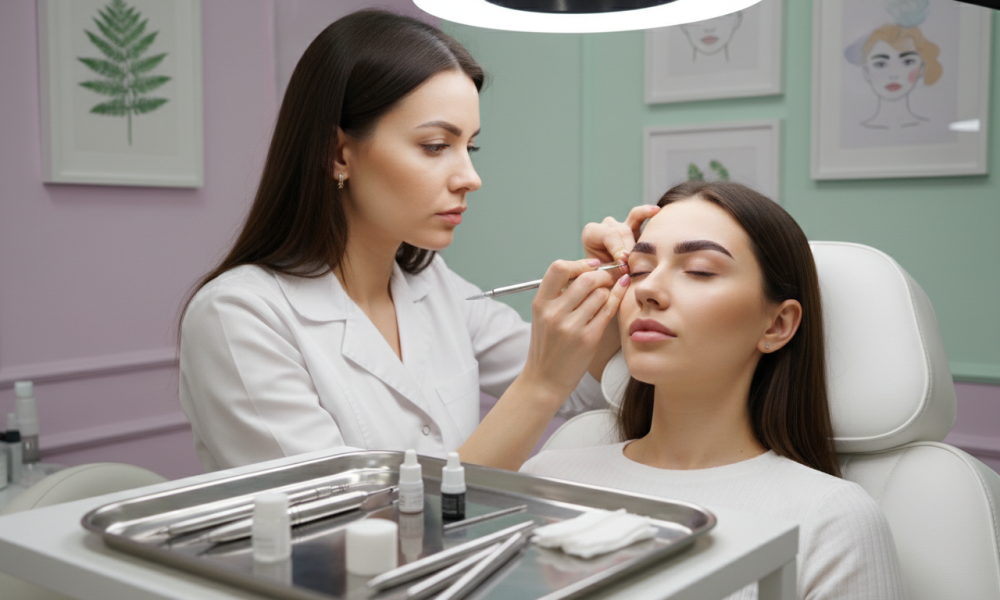
Eyebrow Restoration Techniques
Eyebrow restoration uses single follicles placed at the correct angle and curl to mimic natural brow hairs. Surgeons select donor units that match texture and curve.
Many women seek this for thinning from over-plucking, aging, or alopecia. Meticulous extraction and low-density placement create a soft, realistic outcome.
Pubic Hair Considerations
Pubic restoration is private and often follows trauma, surgery, or hair removal. Skin thickness and hair direction differ from the scalp, so technique must change.
Experience matters: surgeons use flat-angle implants and careful donor choice so transplanted follicles grow in the correct direction. Discuss goals clearly at consultation to align expectations.
“Restoration beyond the scalp restores form and comfort; technique and donor selection determine the result.”
Preparing for Your Surgical Procedure
A calm, step-by-step plan helps patients approach surgery with clear expectations and less anxiety.
Start with a thorough consultation. The surgeon reviews medical history, discusses long-term goals for hair loss, and explains the planned procedure. Patients should ask questions about timing, graft counts, and likely recovery.
Follow pre-operative instructions closely. That may include stopping medications that increase bleeding and arranging time off work. It is wise to line up support at home for the first days after the operation.
- Medications: surgeons often prescribe antibiotics and pain relief to ease recovery.
- Activity: avoid heavy exertion for at least one week to prevent graft dislodgement.
- Care: follow post-op scalp care, sleep with the head elevated, and attend follow-up visits.
| Task | When | Why | Patient Action |
|---|---|---|---|
| Medical review | Before procedure | Identify risks and plan safely | Provide full health history |
| Medication check | 1–2 weeks prior | Reduce bleeding risk | Stop or adjust drugs as advised |
| Recovery planning | Pre-op | Ensure rest and support | Arrange time off and a helper |
| Early care | Days 0–7 | Protect grafts and reduce swelling | Follow dressing and sleep guidance |
“Clear steps before and after surgery create the best setting for lasting results.”
For details on international options and care pathways, consider resources such as hair transplant in Turkey.
Navigating the Recovery Timeline
Recovery follows a predictable path, with clear stages from immediate care to long-term growth.
Post-Operative Care and Healing
The first week often brings mild swelling or bruising on the scalp. Sleep with the head elevated to reduce swelling and protect grafts.
Transplanted hair usually sheds within two to three weeks. This shedding is normal and part of the growth cycle.
New growth typically appears between three and four months. Most women see steady improvement, with full density after about one year.
“Patience and careful care after the procedure help secure lasting, natural results.”
| Timeline | What to Expect | Patient Action |
|---|---|---|
| Days 0–7 | Swelling, scabs, tender donor back area | Sleep elevated; avoid touching or picking |
| Weeks 2–4 | Transplanted hair sheds; scalp looks normalizing | Follow wound care; attend follow-up visit |
| 3–12 months | New follicles grow; density improves | Monitor growth; plan any staged procedures |
Follow-up appointments let the surgeon monitor both the donor area and new growth. By following instructions, patients protect follicles and improve long-term outcomes.
Managing Expectations and Long-Term Results
Expectations set before surgery shape how success is judged after a year of growth. Results from hair transplants are permanent, but visible improvement often unfolds slowly.
The transplant process usually shows new growth between three and four months. Full density and texture become clearer near month twelve.
Realistic planning means accepting that density depends on donor follicles and prior loss. Some patients choose a second session to reach their desired fullness.
Long-term success rests on surgeon skill and donor quality. Open communication with the team helps address concerns and refine goals over time.
- View the procedure as a lasting investment in appearance.
- Know the hair will grow and can be styled like original hair.
- Plan follow-up reviews to monitor progress and consider touch-ups.
“Patience and clear expectations lead to the most satisfying long-term results.”
| Aspect | What to Expect | When | Patient Tip |
|---|---|---|---|
| Growth timeline | Shedding then gradual regrowth | 3–12 months | Track photos monthly |
| Final density | Depends on donor supply | ~12 months | Discuss staged options |
| Maintenance | Monitor progressive loss | Ongoing | Keep follow-up care |
Selecting a Qualified Hair Restoration Specialist
Choosing the right specialist shapes both the medical outcome and the patient’s long-term confidence.
Start with credentials. Look for a board-certified surgeon who lists clear experience with female pattern thinning and restoration.
Schedule a thorough consultation. A good surgeon explains risks, benefits, and expected results in plain terms. They will assess your donor area and existing hair to shape a realistic plan.
Review before-and-after photos and patient testimonials to judge artistry and technical skill. Use the ISHRS member search to find qualified specialists near you.
- Prioritize surgeons who preserve donor density and avoid visible thinning in the back of the scalp.
- Ask about tools and techniques—some teams use advanced microscopes to protect follicular units during dissection.
- Confirm follow-up care and staged options if fuller restoration requires more than one procedure.
| What to Check | Why It Matters | Patient Action |
|---|---|---|
| Board certification and ISHRS membership | Shows formal training and adherence to standards | Verify credentials and membership |
| Documented experience with women | Female patterns differ from men; technique must adapt | Request case examples and ask about outcomes |
| Donor-area strategy and microscope use | Protects grafts and long-term donor health | Ask how donor sampling is measured and preserved |
“Selecting a specialist with deep restoration experience gives patients the best chance for a natural, lasting result.”
Conclusion
Successful outcomes come from combining expert technique with honest communication and patient patience. Restoration offers a long-term option for those facing the emotional and physical effects of thinning.
By understanding unique patterns of loss and selecting a qualified specialist, patients can reach natural-looking, lasting density. Modern surgical methods help grafts blend with existing strands and allow normal styling choices.
The path from consultation to full recovery takes time, but the change in confidence can be profound. Prioritize health, ask clear questions, and seek expert guidance to ensure a safe, effective experience.
FAQ
What causes thinning in women’s scalp hair?
Thinning often stems from a mix of hormonal changes, genetic pattern hair loss, medical conditions such as thyroid disorders or autoimmune alopecia, nutritional deficiencies, and certain medications. A dermatologist or hair restoration specialist evaluates history, blood tests, and scalp exam to pinpoint the cause and guide treatment.
How can early signs of loss be recognized?
Early signs include gradual widening of the part, more hair in the brush, visible scalp through normally covered areas, and shorter, miniaturized follicles. Noticing these changes early helps start treatments like topical minoxidil, hormone management, or referral for transplantation assessment.
What scientific principles underlie follicle transplantation?
Transplantation moves healthy follicular units from a donor zone with strong growth to thin areas. Donor follicles retain their resistance to the pattern that caused loss, allowing long-term survival when placed carefully into recipient sites that mimic natural hair angle and density.
Who is an ideal candidate for restoration surgery?
Ideal candidates have stable donor hair, realistic expectations, and a treatable pattern of loss. Those with active scalp disease, unstable medical issues, or insufficient donor supply may need alternative therapies. A full medical evaluation and scalp assessment determine suitability.
What does the medical evaluation include?
The evaluation reviews medical history, medications, family history of pattern loss, and performs scalp and donor-area exams. Blood tests may check iron, thyroid, and hormone levels. Imaging or biopsy is rare but used when diagnosis is unclear.
What are the benefits of the strip (FUT) method?
The strip technique yields a high number of grafts in a single session and can be efficient for patients needing large coverage. It preserves follicle integrity and may cost less per graft. A linear scar forms at the donor site but can be concealed under longer styles.
What advantages does individual extraction (FUE) offer?
Follicular unit extraction leaves tiny dot scars rather than a linear scar, allowing shorter hairstyles. It allows selective harvesting from broader donor areas and often has quicker healing and less post-op discomfort, though sessions may be longer for large graft counts.
How is the right technique chosen?
Choice depends on donor quality, scalp laxity, desired style, graft needs, and patient preference. Surgeons balance scar considerations, graft yield, and long-term plan. A personalized consultation guides the decision.
How is a natural hairline designed?
A natural hairline follows age-appropriate placement, irregular patterning, and softer frontal density. Surgeons place single-hair follicular units at the front and vary angulation to match native growth. The goal is subtle restoration that suits facial features and lifestyle.
Can restoration address areas beyond the scalp like brows?
Yes. Eyebrow restoration uses careful single-unit transplantation to recreate shape and direction. It requires precise design and often fewer grafts. Results need regular trimming and may require touch-ups to refine density and symmetry.
Are there considerations for pubic-area reconstruction?
Pubic-area procedures require special planning for hair direction, texture match, and sensitivity. Donor selection and conservative graft placement are essential. Discussion includes risks, healing, and realistic expectations for density and appearance.
How should patients prepare for surgery?
Preparation includes stopping blood-thinning medications as advised, avoiding certain supplements, arranging transportation and aftercare, and following pre-op scalp hygiene. Smoking cessation improves healing. The clinic provides a clear checklist tailored to the chosen technique.
What is the typical recovery timeline?
Immediate recovery spans days for swelling and crusting; most return to routine activities within a week. Transplanted hairs often shed in weeks, then new growth appears around 3–4 months, with noticeable improvement by 6–9 months and final results by 12–18 months.
What post-operative care is essential for healing?
Post-op instructions cover gentle washing, avoiding strenuous activity, sleep positioning, and medications to prevent infection and manage pain. Follow-up visits monitor graft survival and address concerns. Adhering to care reduces complications and supports long-term success.
How should patients manage long-term expectations?
Transplantation improves density where grafts are placed but does not stop future pattern loss. Maintenance treatments like topical therapies or hormone management may be needed. Realistic goals, staged procedures, and ongoing care help sustain natural-looking results.
How can someone choose a qualified restoration specialist?
Look for board-certified dermatologists or plastic surgeons with focused hair-restoration training, transparent before-and-after photos, patient testimonials, and an evidence-based approach. An in-person consultation should include a clear plan, risks, costs, and follow-up strategy.
Related guides
How Long Does a Dental Implant Procedure Take?
Curious if the journey to a restored smile will fit your life? Many patients wonder about the full…

Best Hair Transplant in Istanbul,Turkey
Could one clinic end years of worry and restore your confidence with a clear, tailored plan?Dr. Serkan Aygin…

What is Zygomatic Dental Implant?
Could anchoring into the cheekbone restore a confident smile when the upper jaw can’t?Zygomatic dental implants offer an…