
Could a short, outpatient procedure change how you think about losing weight?
This option offers a non-surgical route to weight loss that may help people who have tried diet and exercise without lasting success. The device is placed by endoscopy under light anesthesia and usually takes about 15–20 minutes at facilities like University of Utah Health.
Patients typically keep the device in place for six months. During that time, the balloon fills part of the stomach so people feel fuller faster and eat less. The goal is to jump-start weight loss while a doctor guides lifestyle changes.
Care teams pair the balloon procedure with a support program that tracks progress, manages early symptoms, and plans for removal and recovery. For many, this is a temporary solution that avoids risks linked to bariatric surgery yet still requires long-term commitment to diet, exercise, and behavior change.
Key Takeaways
- The treatment is a non-surgical, outpatient option for weight loss.
- Placement uses endoscopy and light anesthesia and takes minutes.
- The device stays for about six months to help reduce calorie intake.
- Success depends on follow-up care, diet, exercise, and support.
- It offers a temporary solution for patients who need a less invasive option than bariatric surgery.
Understanding the Gastric Balloon Procedure
This section explains how the device works and the main types available so readers can make an informed choice.
How the Device Works
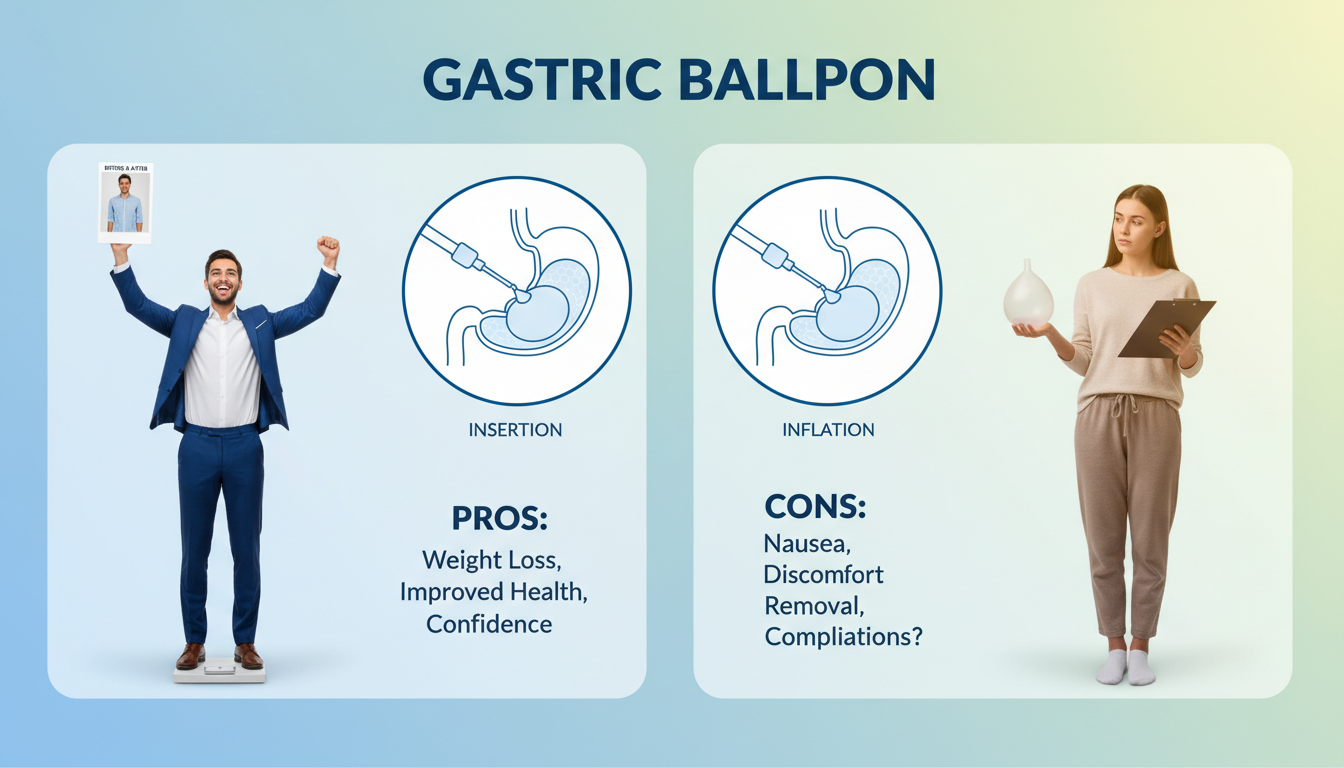
The device is placed by endoscopy while the patient is awake but sedated. A deflated device enters the stomach and a clinician fills it with saline. This reduces usable volume so meals feel smaller.
The implant slows gastric emptying, which increases satiety and supports early weight loss. Medical teams monitor the patient closely to confirm correct position and comfort.
Types of Balloons
Most designs use soft, non-toxic silicone chosen for durability and safety in the body. Some are single inflated units; others use dual chambers or adjustable fill.
- All types are temporary; scheduled removal after set months keeps risk low.
- Choice depends on goals, anatomy, and how aggressively a clinician wants to manage weight loss.
Evaluating Gastric Balloon Pros and Cons
Clinical data often reports a 10–15% drop in total body weight after a six-month treatment period.
This option delivers meaningful weight loss without major surgery, making it suitable for people who can’t or won’t pursue bariatric surgery. The device reduces stomach volume so meals feel smaller and results appear within months.
Still, the change is temporary. Patients must adopt lasting lifestyle changes to avoid weight regain after removal. Success ties closely to adherence to diet, activity, and support programs.
Short-term effects often include nausea and mild discomfort, especially in the first days. Less common risks are ulceration or deflation; these should be discussed with a provider before choosing this option.
- Non-surgical, outpatient placement; lower immediate risk than surgery.
- Average 10–15% total body weight loss over six months.
- Temporary device—requires planning for removal and long-term maintenance.
- Outcomes depend on commitment to a structured diet and exercise plan.
| Aspect | Typical Result | Consideration |
|---|---|---|
| Weight loss | 10–15% total body weight at ~6 months | Depends on follow-up care and lifestyle changes |
| Procedure type | Outpatient, non-surgical | Lower perioperative risk vs bariatric surgery |
| Side effects / risks | Nausea, discomfort; rare ulceration or deflation | Requires medical monitoring and prompt reporting of symptoms |
| Long-term outlook | Tool to support behavior change | Not a permanent fix without lifestyle commitment |
Determining Your Eligibility for the Procedure
Deciding if this option is right starts with a careful medical review.
Eligibility begins with a clinical assessment of BMI, past weight loss attempts, and overall health. Typical candidates have a BMI between 27 and 40 and have not reached goals through diet exercise alone. A doctor will also review any conditions that make bariatric surgery risky.

Who Benefits Most
Those who benefit most are people committed to change but who need extra help to lose weight. The procedure is often offered when diet exercise alone has not worked.
- Assessment by a doctor includes health history, prior weight loss efforts, and readiness to follow a program.
- People medically unsafe for bariatric surgery may find this a safer alternative to manage obesity.
- Motivation to adopt a new diet and exercise routine is critical for lasting loss.
- The device serves as a temporary tool to support long-term lifestyle changes—not a quick fix.
Working closely with your provider helps confirm whether current health, habits, and goals align with the expected outcomes of the procedure.
What to Expect During the Placement Process
Arrival at the endoscopy unit marks the start of a brief, well-monitored visit focused on comfort and safety.
The visit at University of Utah Health typically takes 15–30 minutes. A trained care team reviews consent, monitors vitals, and gives light anesthesia so the patient feels relaxed.
The provider uses an endoscope to guide the silicone device into the stomach. The actual placement takes only a few minutes. Once in place, the team inflates the balloon to a set volume to help with early weight loss.
Most patients recover in the unit and go home the same day. The team gives clear written and verbal instructions for the first days of recovery and how to report any concerns.
- Continuous monitoring by an experienced care team during the procedure.
- Endoscopy-guided placement with light sedation and quick in-room time.
- Same-day discharge with recovery tips and follow-up planning for removal after months in place.
| Step | Typical Time | What to Expect |
|---|---|---|
| Preparation | 10–15 minutes | Vitals, consent, light anesthesia |
| Placement | Minutes (within 15–30 min visit) | Endoscopy guidance, silicone device positioned and filled |
| Recovery | 30–60 minutes | Observation, discharge instructions, follow-up care |
Managing Recovery and Initial Side Effects
Early recovery emphasizes symptom control, steady diet changes, and close follow-up with your care team.
Managing Nausea
Mild nausea and stomach cramping are common for the first 2–3 days as the body adjusts to the device. Patients often receive short-term medications to reduce nausea and make the recovery more comfortable.
Contact your provider if symptoms worsen, persist beyond a few days, or you develop fever or severe pain. Prompt reporting helps prevent rare complications and keeps recovery on track.
Dietary Adjustments
Start with clear liquids for the first 24–72 hours, then move to thick liquids and purees as tolerated. Gradual steps let the stomach adapt while supporting early weight loss goals.
By week two most patients begin soft solids, then a regular healthy diet guided by a nutrition plan. Early lifestyle changes set the foundation for long-term weight loss success.
- Follow the care team’s instructions to reduce side effects like nausea and discomfort.
- Plan a few days off work to rest and hydrate while symptoms settle.
- Use prescribed anti-nausea meds and report persistent symptoms promptly.
- Remember that removal happens later; focus now on safe recovery and diet steps.
| Recovery Aspect | Typical Timeline | Care Tip |
|---|---|---|
| Nausea & cramping | 48–72 hours | Take prescribed meds; rest and sip clear fluids |
| Diet progression | Clear liquids → purees → soft solids (2–14 days) | Advance slowly; follow nutrition guidance for best results |
| Return to routine | Few days off work recommended | Resume light exercise as tolerated; avoid heavy lifting at first |
| Long-term goal | Months (until removal) | Adopt lifestyle changes to preserve weight loss |
Comparing the Balloon to Surgical Alternatives
Choosing a path for weight loss means weighing short-term ease against long-term permanence.

The temporary device is non-surgical and reversible, so it avoids permanent changes to the stomach. Recovery time is shorter and immediate risks are lower than for major operations.
Surgery delivers durable anatomical change and often greater long-term weight loss. For some patients with severe obesity, that permanence is medically necessary.
“Both approaches can work. The right choice depends on health status, goals, and willingness to make lasting lifestyle changes.”
- Less invasive option: quicker recovery, reversible, fewer early risks.
- Surgical option: more permanent results, longer hospital stay, higher initial risk.
- Both require commitment to diet, activity, and follow-up care to preserve results.
| Feature | Non-surgical device | Bariatric surgery |
|---|---|---|
| Invasiveness | Outpatient procedure, no permanent anatomy change | Operative, alters stomach or intestines |
| Recovery | Days to a week for most | Weeks to months with higher initial downtime |
| Long-term results | Dependent on behavior; device removed after months | Often sustained weight loss if medically successful |
| Risk profile | Lower peri-procedure risk; possible nausea, side effects | Higher surgical risk; potential complications but lasting effect |
Talk with your provider about risks, expected results, and which option fits your health. For more on costs and options abroad, see affordable surgical options.
The Role of Lifestyle Changes in Your Success
Long-term success depends far more on daily habits than on any temporary device. The procedure is a tool to start progress, not the finish line.
Nutritional Support
Registered dietitians build a meal plan that fits daily life and reduces calorie intake without extreme restriction.
The one-year Weight Management Program at University of Utah Health pairs medical care with practical diet coaching to help people keep weight off after removal.
Exercise Physiology
Exercise coaches create realistic routines that increase activity safely. Small, consistent moves deliver big weight loss results over time.
Behavioral Coaching
Behavioral support addresses triggers, stress eating, and habit change. This coaching helps patients who struggled with diet exercise alone to learn new coping skills.
“Success is measured not just by the number on the scale, but by positive changes to overall health.”
- Work with a doctor and team for a tailored plan.
- Engage fully with nutrition, exercise, and coaching for lasting loss.
- Call 801-587-3656 to learn about the program and schedule an appointment.
Life After the Removal of the Device
Removal marks a new chapter: the tool is gone, but the work continues.
The outpatient removal procedure is short—usually under 20 minutes—and most patients go home the same day. Recovery is brief, and side effects such as mild nausea tend to fade quickly. The clinical team stays involved to monitor symptoms and answer questions during the transition.
Life after removal tests your commitment to lifestyle changes learned during the program. Many people keep losing weight when they stick with nutrition plans, regular activity, and behavioral support.
It is normal to feel mixed emotions as the device comes out. Expect ongoing follow-up, which helps prevent the return of prior health conditions linked to obesity and supports steady progress.
- Short, safe removal: outpatient visit, less than 20 minutes.
- Continued support: medical monitoring and coaching to sustain results.
- Long-term focus: skills in diet and exercise are the real drivers of lasting weight loss.
| Post-removal Aspect | What to Expect | Care Tip |
|---|---|---|
| Procedure time | <20 minutes outpatient | Plan for a brief recovery period at home |
| Short-term effects | Mild nausea, minimal discomfort | Report persistent symptoms to your provider |
| Weight trajectory | Many continue to lose weight after removal | Maintain program habits and follow-up visits |
| Support | Ongoing coaching and monitoring | Engage with nutrition and behavior teams for best results |
“The device was a beginning; lasting change came from new daily habits.”
Conclusion
This non-surgical option, serves as a focused, time-limited aid for meaningful weight loss. It can help patients who have struggled with diet and exercise by creating an early window of progress while teams teach new habits.
Understand the pros cons carefully: short-term side effects are common, and long-term success depends on lasting lifestyle changes after removal. Surgery may still suit those who need a permanent solution, but this approach can be a safer alternative for many facing obesity.
University of Utah Health supports each patient from placement through follow-up. Reach out to learn if this balloon option fits your goals and to start a plan for sustained health and weight loss.
FAQ
What is the procedure and how does the device help with weight loss?
The device is placed in the stomach using an endoscope, usually under light sedation. It takes up space so people feel full sooner, which helps reduce calorie intake. Placement and removal take about 15–30 minutes each, and the device is intended as a temporary tool to support diet, exercise, and behavior change over several months.
Who is a good candidate for this non-surgical option?
Candidates are adults with mild to moderate obesity who have not achieved desired results with diet and exercise alone. People should be medically evaluated by a bariatric team to rule out contraindications such as prior stomach surgery, large hiatal hernia, or certain psychiatric conditions. A commitment to lifestyle change and follow-up care is essential.
What types of devices are available and how do they differ?
There are saline-filled silicone devices placed endoscopically and air-filled or adjustable versions. Some require removal after six months; others are designed for up to 12 months. Choice depends on medical history, goals, and provider recommendation.
What side effects can occur after placement and how long do they last?
Common early effects include nausea, vomiting, abdominal cramping and reflux. These symptoms typically peak in the first few days to two weeks and improve with medications and dietary adjustments. Serious complications are rare but include balloon deflation, obstruction, or ulceration.
Will this substitute for bariatric surgery?
This option is less invasive and reversible, but it usually yields smaller and shorter-term weight loss than bariatric surgery such as gastric bypass or sleeve gastrectomy. It may be appropriate for those who want a temporary, lower-risk intervention or are not surgical candidates.
What happens during the placement and removal appointments?
Placement uses endoscopy with sedation; the doctor inserts the collapsed device, then fills it if required. Removal is similar and often uses an endoscopic snare to deflate and extract the device. Both visits include monitoring and brief recovery time.
How should people manage nausea and discomfort at home?
Providers usually prescribe anti-nausea and pain medications. Start with clear liquids, progress to pureed foods, then soft solids as advised. Rest, hydration, and small frequent meals help. Contact your doctor if vomiting is persistent or severe.
What dietary changes are required while the device is in place?
A staged diet begins with liquids, advances to soft foods, then regular balanced meals focusing on protein, vegetables, and controlled portions. Avoid carbonated drinks and large meals. Regular nutrition counseling improves outcomes.
How important is exercise and behavioral coaching for success?
Exercise and behavioral support are crucial. Combining structured physical activity, nutrition education, and coaching leads to better weight loss and maintenance than the device alone. Many programs include regular follow-up with dietitians, physiologists, and therapists.
What results can people typically expect while the device is in place?
Average weight loss varies; many lose a meaningful percentage of excess weight over six to twelve months when combined with a comprehensive program. Individual results depend on adherence to diet, activity, and follow-up care.
Are there risks during the months after placement and before removal?
Risks include balloon deflation with possible migration, gastric ulcers, obstruction, and rarely infection. Regular follow-up, symptom monitoring and timely removal reduce these risks. Seek immediate care for severe pain, fever, black stools or persistent vomiting.
What happens after removal — will weight come back?
Weight regain can occur if lifestyle changes are not maintained. Long-term success relies on ongoing diet, exercise, and behavioral strategies. Continued support from a multidisciplinary team improves weight maintenance after removal.
How does the medical team support patients during the program?
Care teams typically include gastroenterologists or bariatric physicians, dietitians, exercise physiologists, and behavioral coaches. They provide follow-up visits, nutrition plans, exercise prescriptions, and mental health support to reinforce lasting habits.
How long should someone expect to follow a structured program with follow-up?
Programs often run for six to twelve months while the device is in place, with continued follow-up afterward. Regular check-ins every few weeks initially, then monthly, help track progress and adjust the plan.
Can the device be used for people with cancer history or survivors?
Many cancer survivors can consider this option, but decisions should involve oncology and bariatric teams to assess timing, treatment interactions, and nutritional needs. The focus remains on safe weight management and overall health.
How quickly will daily activities return to normal after placement?
Most people resume light activity within a day or two; strenuous exercise should wait until symptoms subside, usually one to two weeks. Recovery is faster than major surgery, but pacing activity and following medical advice is important.
Who should be contacted for emergency symptoms related to the device?
Contact your implanting physician or local emergency department for severe abdominal pain, high fever, persistent vomiting, fainting, or signs of internal bleeding. Prompt evaluation can prevent serious complications.
Related guides
How Long Does a Dental Implant Procedure Take?
Curious if the journey to a restored smile will fit your life? Many patients wonder about the full…

Best Hair Transplant in Istanbul,Turkey
Could one clinic end years of worry and restore your confidence with a clear, tailored plan?Dr. Serkan Aygin…

What is Zygomatic Dental Implant?
Could anchoring into the cheekbone restore a confident smile when the upper jaw can’t?Zygomatic dental implants offer an…