
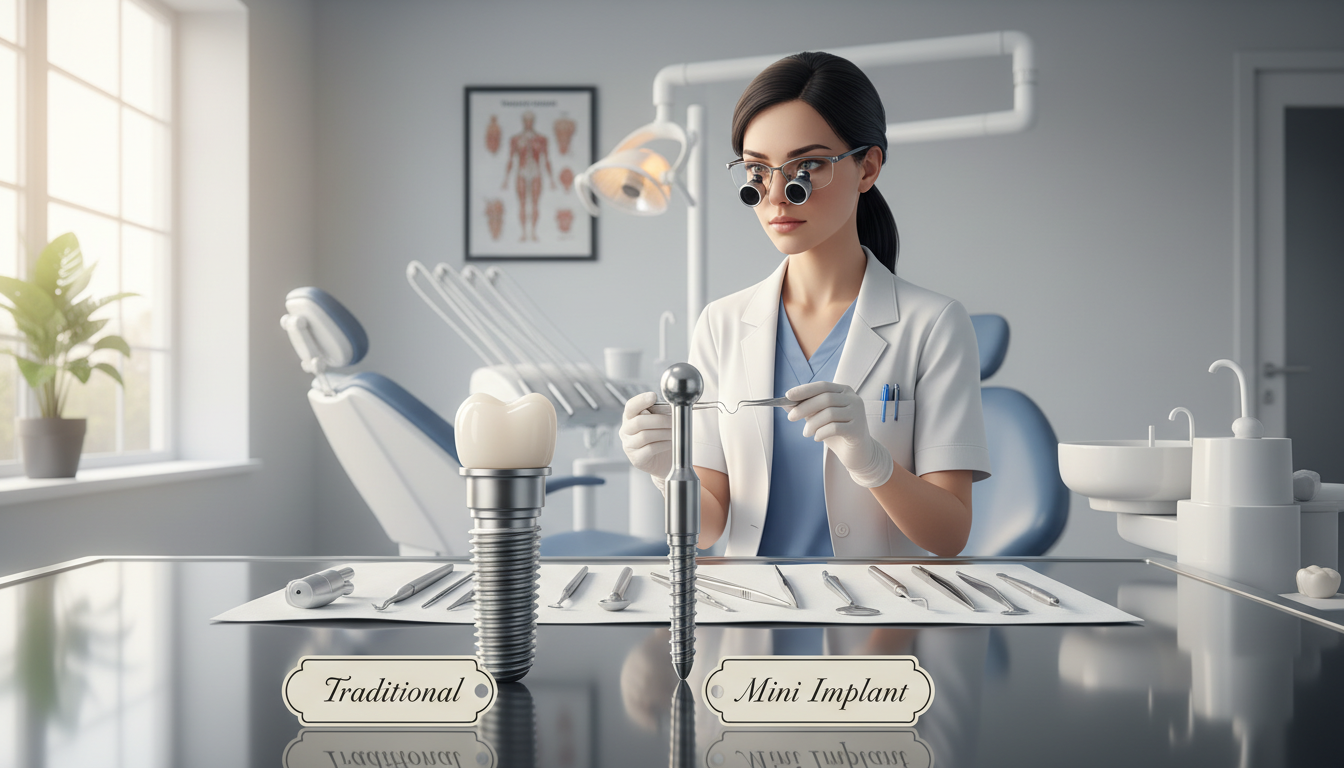
Which tooth-replacement option will restore your smile faster and hold up best over time?
Patients facing missing teeth often feel unsure about the best path forward. Understanding the key differences between types of dental implants helps people choose an option that fits their needs, time, and budget.
Per-Ingvar Brånemark’s discovery that titanium bonds with bone tissue remains central to modern dental implant care. That science explains why an implant can act like a durable root and support crowns or dentures.
Bone density, jawbone health, and implant size affect the healing process, recovery time, and total cost. Early attention to bone loss can preserve options and improve long-term success.
Whether looking for a less invasive procedure or a solution built for heavy chewing, patients should weigh surgery complexity, support needs, and aftercare. For details on pricing and treatment planning, see a helpful guide on dental implant costs and options.
Key Takeaways
- Know that implant type affects healing time, cost, and long-term support.
- Jawbone quality and bone density shape which option will work best.
- Titanium’s bone bonding is the foundation of modern dental implant success.
- Address bone loss early to keep replacement choices open and durable.
- Compare procedure complexity, recovery, and care needs before deciding today.
Understanding the Basics of Dental Implants
Understanding how an implant bonds to the jawbone is the first step toward a lasting dental solution.
Dental implants use titanium to fuse with bone. That process, called osseointegration, gives a stable base for a crown, bridge, or denture. A properly placed jawbone anchor acts like a natural root and can help patients replace missing teeth with confidence.
There are two common approaches: a standard, root‑width device and a narrower option often labeled as mini dental. Both restore function and help prevent further bone loss. Choosing the right path begins with measuring bone density and reviewing health history.
- Titanium bonding: the science behind long‑term stability.
- Placement: devices are surgically placed in the jawbone to support restorations.
- Fit for purpose: options vary by tooth location, bone quality, and patient goals.
| Feature | Standard dental implant | Narrow‑diameter option |
|---|---|---|
| Diameter | Wider; mimics tooth root | Smaller; fits thin ridges |
| Bone requirement | Needs adequate bone volume | Works with limited bone in some cases |
| Typical uses | Single crowns, bridges, full support | Stabilize dentures or replace small teeth |
Traditional Implants Vs Mini Implants: Key Differences
Choosing the right implant begins with understanding how size and design affect function and healing.
Size and Design
Standard dental implants typically range from 3.25mm to 5mm in diameter. In contrast, mini dental implants are usually under 3mm. That smaller size means implants smaller can be placed with less bone removal and in narrower ridges.
Because of their diameter, mini dental implants are often a less invasive option for patients with jawbone loss. Still, the narrower profile changes how much force the implant can bear.
Functional Applications
Standard devices offer stronger support for heavy chewing and are best for replacing molars and other back teeth. They give more long‑term load capacity and stability.
Mini dental solutions commonly stabilize loose dentures and serve as a practical replacement when bone density is limited. For many patients, this option shortens procedure time and recovery.
- Size: 3.25–5mm versus under 3mm.
- Surgery & recovery: smaller implants can mean simpler surgery and faster initial healing.
- Function: larger implants suit heavy bite forces; smaller options help retain dentures and fit thin ridges.
Surgical Procedures and Recovery Timelines
Recovery from implant surgery blends biology and good aftercare to secure long-term success.
Healing and Osseointegration
Osseointegration is the biological process where the jawbone fuses with the titanium dental implant. This bond creates a stable foundation for replacement teeth and is the key to lasting function.
The surgical procedure for traditional dental implants places a titanium post into the jawbone. That approach often requires several months for complete osseointegration before final restorations are attached.
By contrast, mini dental implants are often placed using a less invasive technique. Because the device is smaller, surgery can be quicker and recovery time shorter for many patients.
During healing, patients should follow their dentist’s care plan closely. Proper oral hygiene, soft diet, and avoiding smoking help the implant integrate with surrounding bone.
- The implant must fuse to bone for long-term stability.
- Traditional dental implant procedures usually mean a longer healing timeline.
- Mini dental placements often allow faster recovery and less discomfort after surgery.
Evaluating Bone Density and Structural Requirements
Before any implant is planned, measuring bone quality guides the entire treatment strategy.
Dental implants need the right foundation. Dentists assess jawbone density with CT scans or cone beam imaging to see how much support exists for an implant and to map nerve and sinus positions.
When bone volume is limited, a mini dental option can sometimes work because it fits into narrower ridges and avoids major grafts. That makes the procedure less invasive for some patients.
However, wider devices often give stronger long‑term support for chewing. If density is low, the clinician may recommend bone grafting before placing a traditional dental post to ensure the restoration lasts.
Matching implant size to available bone reduces failure risk and protects nearby teeth and dentures. A clear plan, based on imaging and the patient’s needs, helps choose whether implants smaller or larger best suit the case.
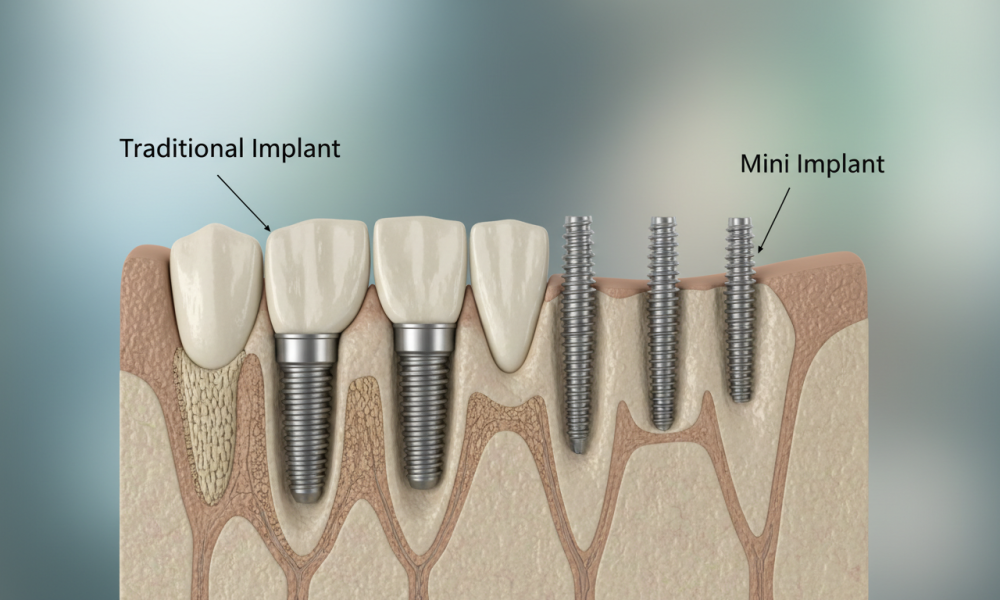
- Imaging defines bone quantity and quality.
- Smaller options may avoid grafting when bone loss exists.
- Proper size selection supports bite forces and long‑term success.
Comparing Costs and Long-Term Value
Upfront price rarely tells the whole story when evaluating implant options.
Traditional dental implants often mean a higher initial cost but greater long-term value for many people. Dr. George Mitrogogos of Sanford Dental Excellence stresses that longevity should guide the decision.
By contrast, mini dental implants can cost less up front. They suit some patients who need a quicker, less invasive solution. Yet they may not hold up as well for heavy chewing over many years.
The right choice balances budget, jaw health, and desired function. Your dentist will give a detailed cost breakdown and explain the expected lifespan of each option.
- Higher initial investment can reduce future repairs.
- Lower upfront cost may mean more replacements later.
- Regular checkups and good oral care extend the life of dental implants.
| Factor | Lower upfront cost | Long-term value |
|---|---|---|
| Initial price | Often lower | Often higher |
| Durability for chewing | Moderate | High |
| Maintenance needs | May need more | Less frequent |
| Best for | Thin ridges, denture support | Single crowns, full-function restorations |
“Choose the implant that matches your long-term goals and daily function,” said Dr. George Mitrogogos.
Benefits and Drawbacks of Each Implant Option
Choosing the right implant starts with weighing how each option affects strength, healing, and daily comfort.
Advantages of Traditional Implants
Traditional dental implants deliver strong bite support and long-term durability. They work well for single-tooth replacement and full restorations that must handle heavy chewing.
These devices typically last decades with good care. For patients with enough bone, they offer a near-permanent solution.
Advantages of Mini Implants
Mini dental implants are a less invasive option. They suit narrow ridges and often speed the surgery and recovery timeline.
They also stabilize loose dentures and reduce the need for bone grafting in cases of bone loss.
Limitations to Consider
Mini dental implants may not bear the same forces as larger posts. That affects long-term function for back teeth.
Traditional implants require more bone density and sometimes longer healing before final crowns are placed. Patients should discuss the procedure, cost, and recovery expectations with their dentist.

| Feature | Traditional implants | Mini dental option |
|---|---|---|
| Primary benefit | High strength and long life | Less invasive, faster recovery |
| Best use | Single crowns, heavy chewing | Denture stabilization, thin ridges |
| Bone need | Requires adequate bone | Works with limited density |
| Trade-off | Longer healing, higher cost | Lower load capacity over time |
Conclusion
Choosing the right prosthetic solution matters for chewing, speech, and the way you feel about your smile.
Making this choice affects oral health and confidence for years to come. Dr. Nate Bourassa at Artisan Dental CDA can assess bone density and discuss which option fits your anatomy and goals.
Both approaches offer benefits. Understanding the differences helps you make an informed decision and plan for long-term success.
Schedule a consultation today to review options and create a treatment plan tailored to your needs. Your journey toward better oral health and a restored smile starts with a professional assessment.
FAQ
What are the main differences between traditional dental implants and mini dental implants?
Traditional dental implants use a larger titanium post and often require more bone volume and a multi-step process, while mini dental implants are smaller in diameter, less invasive to place, and can be an option when bone height or width is limited. Both aim to replace missing teeth and restore function, but they differ in size, surgical complexity, and typical uses.
How do dental implants work to replace missing teeth?
Dental implants are titanium fixtures placed into the jawbone to act as artificial tooth roots. Over time, bone fuses to the metal in a process called osseointegration, creating a stable foundation for crowns, bridges, or denture attachments. This stabilizes chewing, preserves jawbone structure, and improves comfort compared with removable dentures.
How does size and design affect performance and longevity?
Larger-diameter posts generally provide greater surface area for bone contact and can support single crowns and heavier chewing loads for many years. Smaller posts are useful for narrow ridges or to stabilize dentures. Longevity depends on surgical technique, bone quality, oral hygiene, and load distribution rather than size alone.
Which functional applications suit each option best?
Standard implants are preferred for single-tooth replacements, long-span bridges, and cases needing high bite force support. Narrow-diameter implants often serve to stabilize lower dentures, replace small teeth like incisors, or provide a temporary solution while preserving bone. A clinician will match the option to the patient’s needs and bite dynamics.
What can patients expect during the surgical process and recovery?
Placement of larger posts often requires incisions, possible bone grafting, and several months of healing before final restorations. Mini posts can be placed with smaller incisions, sometimes in a single visit, with quicker immediate recovery. Both procedures involve local anesthesia, short-term swelling, and a healing period during which patients follow care instructions to reduce complications.
How long does osseointegration take?
Osseointegration for standard posts typically takes three to six months, depending on bone quality and location in the jaw. For narrow-diameter posts used to stabilize dentures, integration may be faster, but clinicians still allow time to ensure stable bone contact before applying full chewing forces.
How does bone density influence which implant option is recommended?
Dense, healthy jawbone supports larger posts and predictable long-term outcomes. When bone volume or density is low, options include narrow-diameter posts, bone grafting to support standard posts, or alternative prosthetic designs. A CT scan or cone-beam X-ray helps clinicians assess bone and plan treatment.
Are bone grafts commonly needed and why?
Bone grafting becomes necessary when jawbone has resorbed after tooth loss or trauma and cannot adequately support a standard post. Grafts rebuild volume to allow placement of larger fixtures. Narrow posts can sometimes avoid grafts, but grafting may yield a more durable long-term solution.
How do costs compare and what about long-term value?
Initial cost for smaller-diameter posts is generally lower due to simpler surgery and fewer office visits. Standard posts cost more upfront because of materials, possible grafts, and longer treatment time. Over the long term, full-size posts often deliver greater durability and fewer replacements, which can make them a better value for many patients.
What are the advantages of using larger-diameter posts for tooth replacement?
Larger posts provide stronger support for single crowns and bridges, distribute chewing forces effectively, and have a long clinical track record for durability. They can help preserve facial structure and reduce the need for future prosthetic adjustments when sufficient bone is present.
What are the advantages of narrow-diameter or small posts?
Narrow posts require less invasive surgery, often allow same-day stabilization of dentures, and can be placed in areas with limited bone without extensive grafting. They serve well for denture retention and in narrow tooth spaces, offering quicker recovery and lower immediate cost.
What limitations should patients consider when choosing an implant type?
Small-diameter posts may have lower load tolerance and could require replacement sooner under heavy chewing forces. Larger posts can need grafting and longer treatment times. Patient health, smoking, oral hygiene, and bite forces also influence success; clinicians balance these factors when recommending an approach.
How should patients decide which option fits their needs?
A dental specialist evaluates oral health, bone quality, the number of missing teeth, budget, and lifestyle. Shared decision-making—discussing risks, recovery time, and long-term goals—helps patients choose a plan that aligns with their function and aesthetic expectations.
Do cancer patients or survivors need special considerations for implant treatment?
Yes. Patients who have had radiation to the head or neck, certain chemotherapy agents, or immunosuppressive therapy may face higher risks for complications and slower healing. Coordination with the oncology team, additional imaging, and careful treatment planning are essential to ensure safe implant care.
What is the typical aftercare and maintenance for dental implants?
Ongoing care includes daily brushing and flossing, regular dental visits, and avoiding habits like smoking that harm bone and soft tissue. Professional cleanings and periodic X-rays help monitor bone levels and prosthetic integrity to maximize the lifespan of the restoration.
Can implants prevent future bone loss?
Implants help preserve the jaw by transmitting functional forces to the bone, which slows resorption compared with removable dentures. While they do not fully stop age-related changes, they reduce the rate of bone loss and help maintain facial structure and oral health.
Related guides
How Long Does a Dental Implant Procedure Take?
Curious if the journey to a restored smile will fit your life? Many patients wonder about the full…

Best Hair Transplant in Istanbul,Turkey
Could one clinic end years of worry and restore your confidence with a clear, tailored plan?Dr. Serkan Aygin…

What is Zygomatic Dental Implant?
Could anchoring into the cheekbone restore a confident smile when the upper jaw can’t?Zygomatic dental implants offer an…