
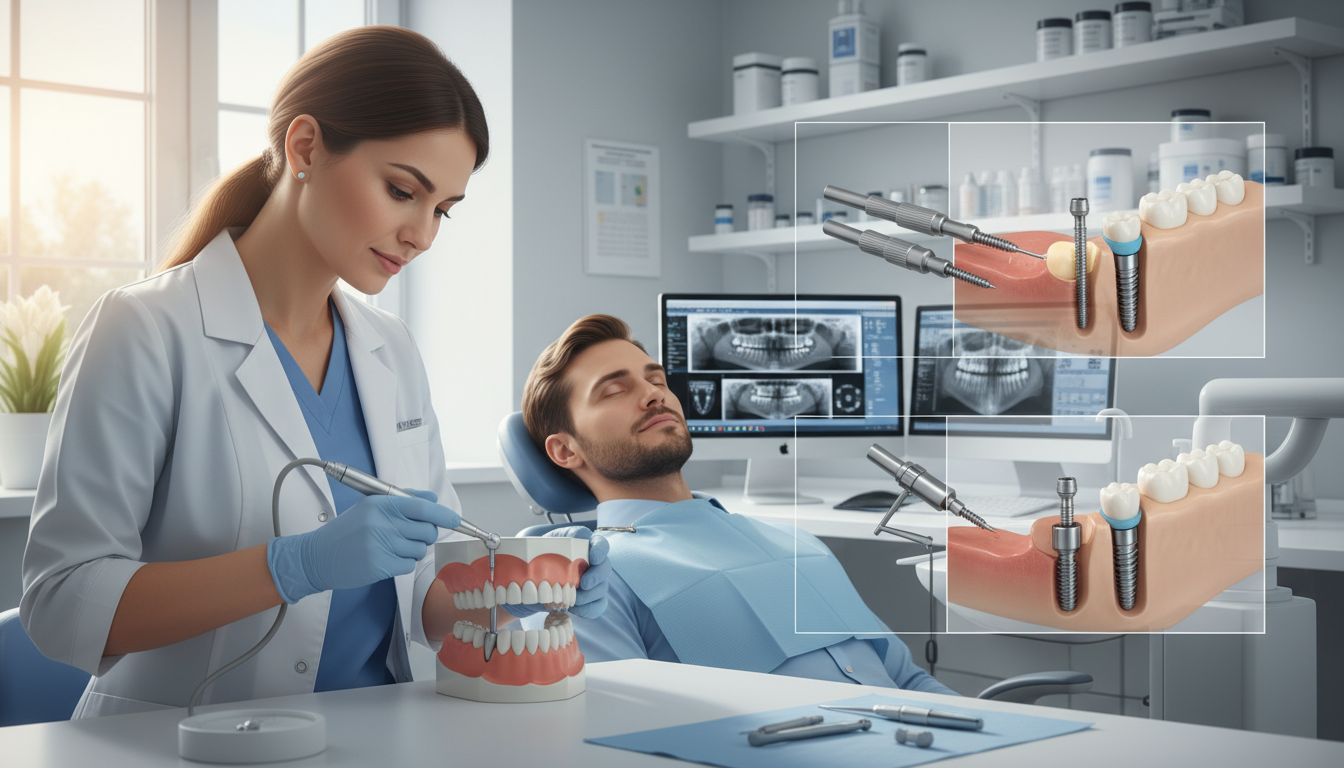
Curious if replacing a missing tooth can truly feel like your original smile? Many people worry that surgery, long healing times, and discomfort will outweigh the benefits.
Modern dental implants use a durable titanium post set into the jawbone to act like a natural root. Over several months, the post bonds with bone through osseointegration, giving stable support for a custom crown.
The treatment usually happens in stages during outpatient visits. Each stage focuses on comfort, proper healing of gums and bone, and careful implant placement so the final tooth looks and functions like natural teeth.
With attention to oral hygiene and follow-up care, implants often feel more reliable than dentures. This guide walks readers through the timeline, pain management, and how the final crown restores both function and confidence.
Key Takeaways
- Implants use a titanium post anchored in the jawbone to replace a missing tooth.
- The treatment unfolds in stages across several months to ensure solid healing.
- Proper oral hygiene and follow-up reduce risk and support long-term success.
- The final crown is made to match natural teeth for a lasting smile.
- Most patients find implants more stable and comfortable than dentures.
Initial Consultation and Oral Health Assessment
The journey begins with a careful exam to map oral health and candidacy for a new tooth. A short clinical review and medical history help the team understand overall health and any risk factors.
Diagnostic Imaging and X-rays
Dr. Barry D. Feldner, DDS, MS, performs a thorough oral exam and uses advanced imaging to check jawbone and bone density. 3D scans and X-rays show where an implant will sit and whether the jaw can support it.
“Advanced imaging allows precise planning and safer outcomes,”
Personalized Treatment Planning
Plans are tailored to each person’s anatomy and goals. If a missing tooth is present, the team reviews options such as dental implants or dentures and recommends the best treatment for long-term health.
- Clinical exam confirms teeth and soft-tissue condition.
- 3D scans guide exact placement and reduce surprises.
- Medical history ensures safe, durable results.
| Imaging Type | Purpose | Best Use | Notes |
|---|---|---|---|
| X-ray | Check roots and bone levels | Routine assessment | Quick and low radiation |
| 3D Scan | Measure bone density and structure | Precise placement planning | Ideal for complex cases |
| Clinical Exam | Assess gums and teeth | Initial candidacy check | Guides final recommendations |
Preparing for the Dental Implant Process Step By Step
Preparing well before surgery makes the implant experience calmer and more predictable. Modern Touch Dental Glendale guides each person through a clear timeline so expectations are realistic and stress is low.
Typical planning time is one to two weeks for scheduling, imaging, and any needed preparatory work such as a bone graft. This brief period helps the team set the right foundation for a new tooth and avoid delays later.
Patients receive simple, written instructions before the procedure. These cover fasting, medications, and what to arrange for recovery at home. Clear directions mean less chair time and a smoother visit.
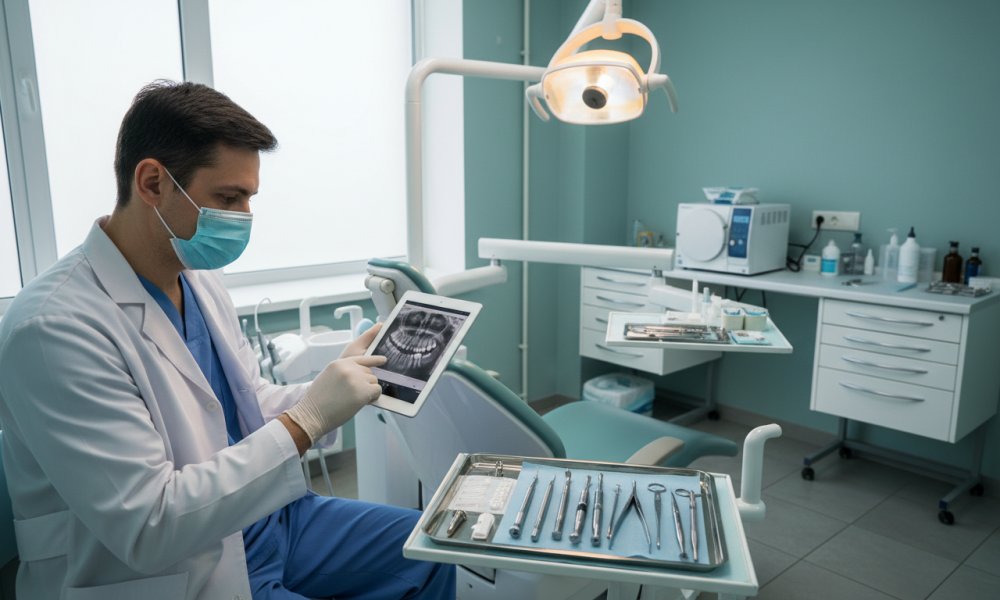
- Timeline: We map each stage so you know when appointments occur.
- Conditioning: Any issues with teeth or bone are treated first.
- Confidence: Staff explain the implant process and answer questions.
Good preparation supports long-term success and helps patients feel informed, safe, and ready for the treatment ahead.
Surgical Placement of the Implant Post
A careful surgical session anchors a biocompatible post into the jaw to act as a replacement root for the missing tooth. The team works under local anesthesia so the gums stay numb and the experience is comfortable.
Titanium is chosen because it bonds well with bone and is gentle on the body. When bone quality is low, a grafting procedure adds material to build width and height. This graft gives the foundation needed for a stable future crown.
After placement, a temporary cap or dentures may protect the site while healing begins. Careful follow-up checks ensure the post integrates and the soft tissue around the gums heals properly.
- During implant surgery, the post is positioned precisely to serve as a sturdy root.
- Bone grafting adds support when jaw density is insufficient.
- This step creates the solid base for the final crown and long‑term success.
“Precise placement and thoughtful grafting set the stage for lasting results.”
Osseointegration and the Healing Phase
Over the next few months the body works quietly to fuse bone to the new root. This natural process, called osseointegration, lets the jawbone lock onto the titanium post so the tooth gains a firm foundation.
The typical timeline runs about three to six months. During this time the body repairs and remodels bone to surround the implant. Regular check-ups track progress and confirm the jawbone is integrating properly.
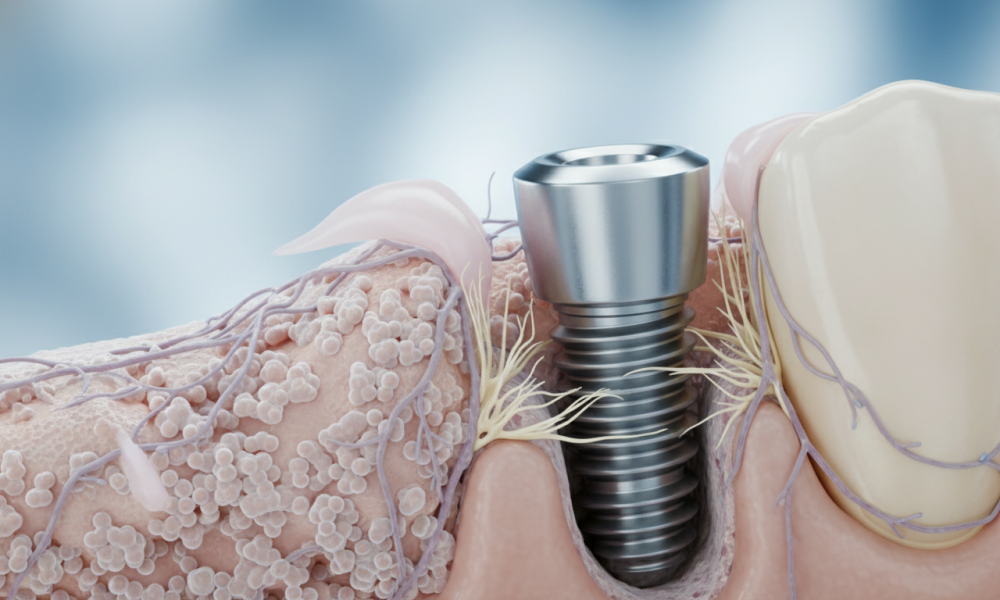
Patients may use temporary dentures while healing. These protect the site and help with eating and appearance. Clinicians monitor gum health and bone growth to avoid complications.
- Critical healing: bone fuses with the post to create lasting support.
- Monitoring: follow-up visits ensure the integration proceeds as expected.
- Patience matters: allowing several months for healing improves long-term success.
“Careful supervision during osseointegration gives the best chance for durable, comfortable results.”
Final Restoration and Crown Attachment
When healing is confirmed, clinicians move to craft and place the visible crown that completes the restoration. This stage focuses on fit, form, and a comfortable bite.
Abutment Placement
The abutment is a small connector that sits above the gums and attaches to the post. A brief, minor procedure exposes the site and secures the abutment.
Gums will heal around this piece over a few weeks, shaping the tissue for a natural appearance.
Custom Crown Fabrication
Precise impressions—taken with digital scanners or putty—guide the lab in making a custom crown that matches color and shape.
- The crown is secured onto the abutment to restore chewing and speech.
- Clinicians check the bite to minimize pain and ensure comfort.
- The final tooth blends with surrounding natural teeth and dentures for a seamless result.
For more on costs and travel-friendly options, see the dental implants cost guide.
Conclusion: Achieving a Lasting Smile
Finishing this treatment brings a renewed smile and steady function that lasts.
Following the recommended timeline and keeping up excellent oral hygiene protects your long-term health and helps the new tooth blend naturally. The dental implant process unfolds over several months and rewards patience with real comfort and improved eating.
This permanent solution restores form and gives quiet confidence each day. The team supports patients through every visit, and a committed patient role is the key to enjoying a durable, natural-looking smile.
FAQ
What happens during the initial consultation and oral health assessment?
During the first visit, a clinician reviews medical history, examines gums and remaining teeth, and checks jawbone stability. This assessment determines whether the mouth is ready for a titanium root replacement or if preparatory care—such as treating gum disease or extracting a damaged tooth—is needed before moving forward.
Why are diagnostic imaging and X-rays necessary?
X-rays and 3D scans give a clear view of bone density, nerve placement, and sinus position. This imaging guides precise positioning of the metal post and helps avoid complications, ensuring the replacement will function like a natural root.
What does personalized treatment planning involve?
A customized plan outlines the number of posts required, any grafting, the timeline, and the type of final restoration (single crown, bridge, or denture). The plan balances oral health, aesthetics, and the patient’s timeline and budget.
How should a patient prepare for the surgical placement of the implant post?
Preparation may include stopping certain medications, arranging transport for the day, and following pre-op instructions like fasting if sedation is planned. Good oral hygiene and controlling infections before surgery improve outcomes.
When is bone grafting needed and what does it entail?
If the jaw lacks sufficient volume, a graft rebuilds bone using synthetic material, donor bone, or the patient’s own bone. Grafting can be done before or during post placement; healing usually takes several months before a post can be loaded.
What is osseointegration and how long does healing take?
Osseointegration is the biological fusion of bone to the metal post. It creates a stable foundation for the final restoration. Healing commonly takes three to six months, but timelines vary with bone quality and whether grafting was needed.
What occurs during abutment placement?
Once the post has integrated, a small connector called an abutment is attached. This component links the post to the visible restoration. Placement can be a minor procedure under local anesthesia and may require a few weeks for the gum to shape around it.
How is a custom crown fabricated and attached?
The lab creates a crown that matches color and bite from impressions or digital scans. The crown is then secured to the abutment, restoring chewing function and appearance. Proper fit and bite alignment are verified before final cementation or screw retention.
How long does the entire timeline usually take from start to finish?
From consultation through final crown attachment, the process often spans several months—commonly three to nine months. Complex cases with grafting or multiple posts can extend the timeline.
Will the procedure be painful and what is recovery like?
Most patients experience mild to moderate soreness after surgery, managed with prescribed or over-the-counter pain relievers and ice. Swelling and minor bleeding are normal for a few days. Following aftercare instructions speeds recovery and reduces discomfort.
How should a patient care for the new restoration long term?
Treat the new tooth like a natural one: brush twice daily, floss or use interdental cleaners, and maintain regular professional cleanings. Avoid using the restoration as a tool and limit very hard foods to protect the crown and surrounding bone.
What are the risks and how common are complications?
Complications are uncommon but can include infection, nerve irritation, sinus issues, or failed osseointegration. Choosing an experienced clinician, following pre- and post-op guidance, and maintaining good oral health minimize risks.
Are implants suitable for cancer patients or those who had radiation?
Many cancer survivors can receive replacements, but prior radiation, chemotherapy, or immune-suppressing treatments affect healing. A coordinated plan with oncology and oral surgery teams ensures safety and the best timing for treatment.
How do replacements compare with bridges or removable dentures?
Fixed posts preserve adjacent teeth and help maintain jawbone volume, offering function and feel closer to natural teeth. Bridges require altering neighboring teeth; dentures may be less stable and can lead to gradual bone loss over time.
Can replacements fail and what options exist if they do?
Failures can occur, often early from infection or later from overload. If a post fails, clinicians may remove it, treat any infection, and consider re-grafting and placing a new post after proper healing. Long-term success rates remain high with good care.
Related guides
How Long Does a Dental Implant Procedure Take?
Curious if the journey to a restored smile will fit your life? Many patients wonder about the full…

Best Hair Transplant in Istanbul,Turkey
Could one clinic end years of worry and restore your confidence with a clear, tailored plan?Dr. Serkan Aygin…

What is Zygomatic Dental Implant?
Could anchoring into the cheekbone restore a confident smile when the upper jaw can’t?Zygomatic dental implants offer an…