
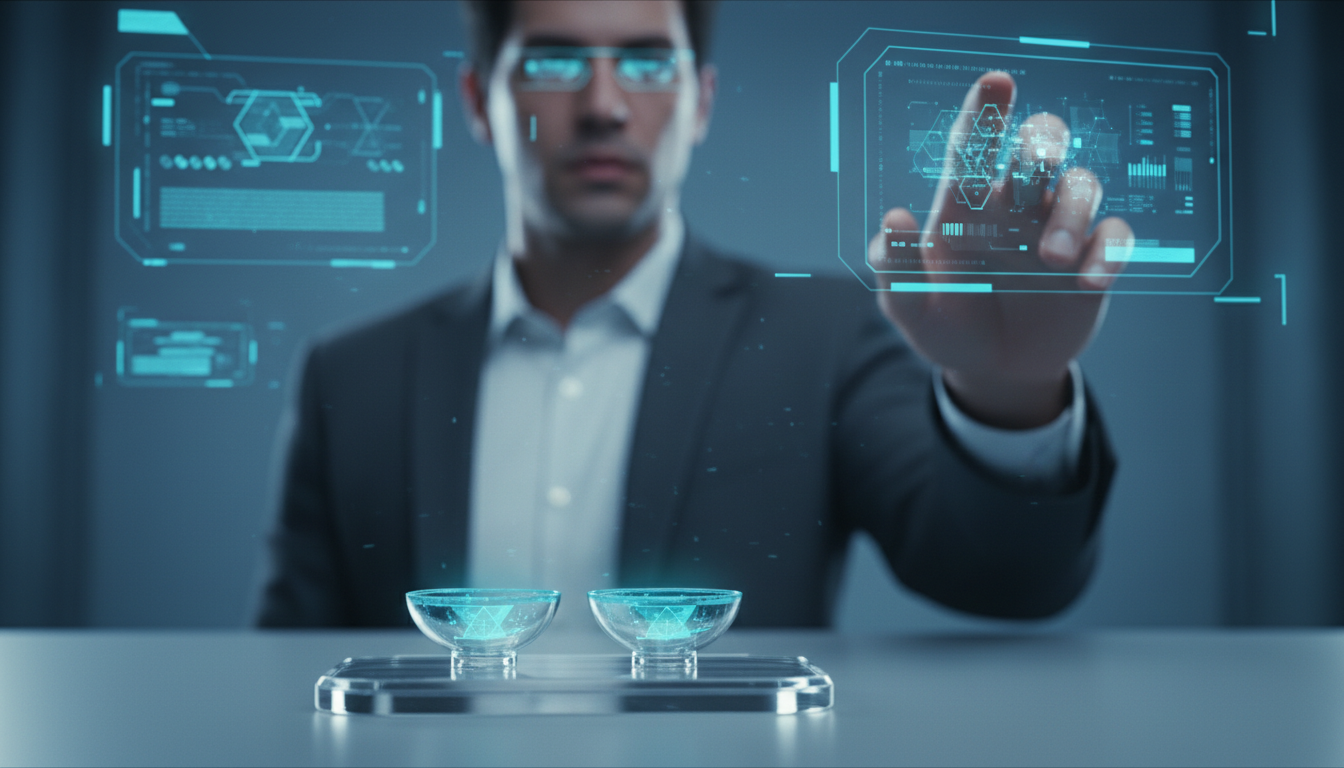
Could a small lens on the eye soon replace routine checkups and bring real-time health data to daily life?
Innovative contact lenses are moving beyond simple vision correction. Researchers and companies are testing tiny sensors that monitor intraocular pressure, track glucose in tears, and collect data to flag early signs of disease.
Most prototypes remain in clinical trials, yet progress in materials and microelectronics is fast. These devices aim to help people manage eye health, reduce vision loss risk, and even support augmented reality experiences in everyday use.
There are practical hurdles: power, safety, privacy, and regulation shape the market. Still, the field offers a hopeful path toward personalized care and better communication between patients and clinicians.
Key Takeaways
- Researchers are developing lenses with sensors for pressure and glucose monitoring.
- Most devices are in research or clinical trials, not yet widespread in the market.
- These systems promise real-time data to help prevent vision loss and support care.
- Technical and regulatory challenges still slow broad adoption.
- Future lenses may blend health monitoring with augmented reality features.
Understanding the Concept of Smart Contact Lenses
Modern ocular wearables merge optics and electronics to add new functions to everyday vision aids.
Defining the Technology
Smart contact lenses are miniaturized devices that place tiny wireless components—microchips, sensors, and antennas—inside a soft polymer shell.
These systems can track pressure, chemical markers, or other signals at the surface of the eye.
The goal is continuous, low-profile monitoring. Data can stream to a phone or clinician without interrupting daily life.
Beyond Traditional Vision Correction
Unlike a standard contact lens, a diagnostic lens collects physiological data or overlays information in the wearer’s view.
This shifts a simple vision tool into a proactive health device that supports ongoing eye care.
“Turning a corrective lens into a health monitor could change how clinicians detect and manage eye conditions.”
| Feature | Traditional | Smart contact lens |
|---|---|---|
| Primary role | Vision correction | Vision plus monitoring |
| Electronics | None | Microchips, sensors |
| Data output | None | Wireless to devices |
| Wear focus | Comfort, optics | Comfort, biocompatibility, sensors |
- Comfort and safety remain central goals.
- Research aims to keep these devices breathable for daily wear.
Do Smart Contact Lenses Exist?
Early prototypes placed on the eye are proving that a diagnostic lens can capture medically useful signals.
These prototypes live mostly in university labs and specialty clinics now. Engineers and clinicians test sensors for pressure and tear chemistry while checking safety for long-term wear.
They are not yet available for broad consumer use. Regulatory review, durable power solutions, and comfort testing must finish before a device reaches the market.
The journey from prototype to a consumer contact lens is long. Teams must solve engineering limits and show biocompatibility for the eye over months of daily wear.
Still, the potential is clear: a small lens could improve vision care and deliver real-time health data. As trials progress, the field may offer new tools that help patients and clinicians manage eye health more closely.
Core Components and Engineering
Creating a thin, comfortable lens that holds sensors, chips, and circuits is an engineering balancing act.
Sensors and microprocessors handle data near the tear film. Tiny sensors read pressure, glucose, or chemical cues. Microprocessors pre-process that data before it leaves the lens. This keeps the amount of transmitted information small and clinically useful.
Sensors and Microprocessors
Advanced silicone hydrogel polymers make up most modern contact lens bodies. These materials are breathable and biocompatible, so they protect the eye while housing delicate components.
Power Sources and Energy Harvesting
Power is a major hurdle. Solutions include microbatteries, biofuel cells that use tear chemistry, and harvesters that convert ambient light into energy. Each approach trades runtime, safety, and thickness.
Conductive Circuits
Conductive traces route signals between parts. Materials like graphene offer flexibility and conductivity with minimal bulk. Engineers must miniaturize circuits so the lens stays thin and comfortable.
“Tiny, reliable components are the bridge between an optical device and a medical tool.”
| Component | Function | Typical Material | Design Challenge |
|---|---|---|---|
| Sensors | Measure pressure, glucose | Microelectromechanical materials | Sensitivity in tear film |
| Power unit | Supply energy | Microbatteries, biofuel, photovoltaic | Size vs. runtime |
| Circuits | Signal routing | Graphene, silver nanowires | Flexibility and durability |
| Lens body | Comfort, biocompatibility | Silicone hydrogel polymer | Embedding electronics without irritation |
How These Devices Collect and Transmit Data
Embedded sensors read real-time signals from the eye and prepare them for wireless transfer.
The smart contact lens forms an integrated system. It stays in continuous contact with the tear film to monitor biomarkers and pressure levels.
Microprocessors on the contact lens pre-process readings to reduce noise and limit what is sent. This keeps the information clinically useful and small in size.
A tiny antenna then transmits data wirelessly to an external device, usually a smartphone. That communication is brief and encrypted to protect privacy.
- Non-invasive monitoring: sensors sample tears without needles or implants.
- Seamless reporting: the lens sends compact data packets to paired devices for review.
- Clinical value: clinicians can access trends to guide vision and eye care plans.
The design aims to be unobtrusive so wearers carry on with daily life while the system quietly collects useful health information.
Current Medical Applications for Eye Health
New lens devices aim to flag subtle shifts in ocular health long before symptoms appear.
Clinicians already use sensor-equipped wearables to track important eye signals. A noted example is the Sensimed Triggerfish, an FDA-approved contact lens that records fluctuations in intraocular pressure for glaucoma care.
Research shows a contact lens can also sample tears to estimate glucose levels. Elevated tear glucose may hint at early diabetic eye disease, offering a non-invasive path for broader health monitoring.
Early Disease Detection
Some prototypes measure ocular surface temperature to detect signs of dry eye and inflammation. Others focus on pressure trends that help clinicians adjust treatment plans.
- Pressure monitoring supports glaucoma management with continuous data.
- Tear analysis offers a window into systemic glucose and other biomarkers.
- Ongoing research explores new sensors that could detect additional disease markers.
“These lenses can turn routine wear into a daily health check, helping clinicians catch problems early.”
As devices advance, the goal is clear: use thin, comfortable lenses to deliver useful data without disrupting care.
The Role of Intraocular Pressure Monitoring
A 24-hour pressure profile from a worn lens reveals fluctuations that spot checks can miss.
High intraocular pressure (IOP) is a major risk factor for glaucoma. Left untreated, it can lead to permanent vision loss. Continuous monitoring helps clinicians see patterns across a full day and night.
The Sensimed Triggerfish is an example: the contact lens is worn for a full day to record tiny changes in the eye’s shape. That data shows pressure swings linked to posture, sleep, and daily activities.
Why this matters: a 24-hour system gives doctors richer data to craft personalized care plans. Trends replace single readings, improving treatment decisions and long-term care.
Despite engineering challenges, pressure sensors offer reliable access to information once hard to obtain in clinic settings.
| Monitoring Goal | How a Worn Lens Helps | Clinical Benefit |
|---|---|---|
| Detect IOP spikes | Continuous shape or pressure data over 24 hours | Identify peak times and adjust medication |
| Assess daily variability | Records during activity and sleep | Tailor treatment plans to individual patterns |
| Improve long-term care | Aggregated data trends for follow-up | Reduce risk of vision loss with informed decisions |
“Continuous pressure monitoring turns brief clinic snapshots into a meaningful, day-long story of eye health.”
Advancements in Glucose Level Detection
Researchers have pushed tear-based sensing into new territory, aiming for painless glucose tracking on the ocular surface.
In 2014, Google partnered with Novartis to build a prototype that analyzed tears for glucose. The device was designed to generate a reading once per second to give near real-time feedback.
That project faced technical and regulatory challenges and eventually concluded. Still, it proved the concept and spurred further research.
Modern efforts focus on improving sensor accuracy in the tear film and shrinking power needs. The goal is a safe, thin lens that reports glucose levels without finger pricks.
“A tear-based system could make daily monitoring less painful and more routine.”
- Benefit: noninvasive glucose readings in near real time.
- Challenge: correlating tear glucose to blood levels reliably.
- Promise: convenient health data during normal wear.
| Goal | Approach | Clinical Benefit |
|---|---|---|
| Real-time glucose | Tear chemistry sensors, 1 Hz sampling | Faster trend detection for diabetes care |
| Painless monitoring | Embedded micro-sensors in lens | Fewer finger sticks, improved adherence |
| Device safety | Biocompatible materials, low power | Daily wear with minimal irritation |
Exploring Augmented Reality Capabilities
On-eye displays aim to blend digital signals with natural sight so people keep focus while receiving guidance.
Hands-Free Digital Access
The addition of augmented reality to a thin lens gives wearers hands-free access to timely information. Devices built for the eye can show alerts, translations, and simple notifications without shifting gaze.
This approach reduces interruptions and supports safer behavior when walking or working near traffic. Designers tune light and contrast so digital cues feel natural, not intrusive.
Navigation and Information Overlays
Navigation overlays can display arrows and distances directly on the visual field. A compact system streams small packets of data to the lens and updates directions in real time.
Augmented reality features also layer contextual information—labels, timers, or health prompts—while leaving the real world visible. This fusion of reality and digital content may change how people interact with everyday information.
“Integrating on-eye displays represents a major shift in how we access and use visual information.”
Potential for Vision Correction and Enhancement
Imagine a thin lens that tunes its optics in real time to restore clear sight at any distance. Such a device blends traditional correction with live adjustments to help people focus near and far without switching eyewear.
Adaptive focus uses tiny actuators or fluid optics to change power on demand. That promises sharper vision for reading, screens, or driving.
Some prototypes also filter light to cut glare and boost contrast. This can improve comfort under bright sun and harsh indoor lighting.
- Enhanced modes: zoom or low-light amplification to support specific impairments.
- AR assistance: subtle overlays can help people navigate and interpret the scene in real time reality.
“Combining corrective optics with electronic features may reshape how people manage everyday sight,”
| Feature | Benefit | Use case |
|---|---|---|
| Auto-focus optics | Clear vision at multiple distances | Reading to driving |
| Light filtering | Reduced glare, better contrast | Outdoor activities, bright offices |
| Enhanced vision modes | Zoom/night support | Low-vision aid, nighttime safety |
| AR overlays | Guidance and context | Navigation for complex disabilities |
Overall, integrating these elements aims for a single, comfortable lens that restores and enhances vision while staying practical for daily life.
Safety and Biocompatibility Considerations
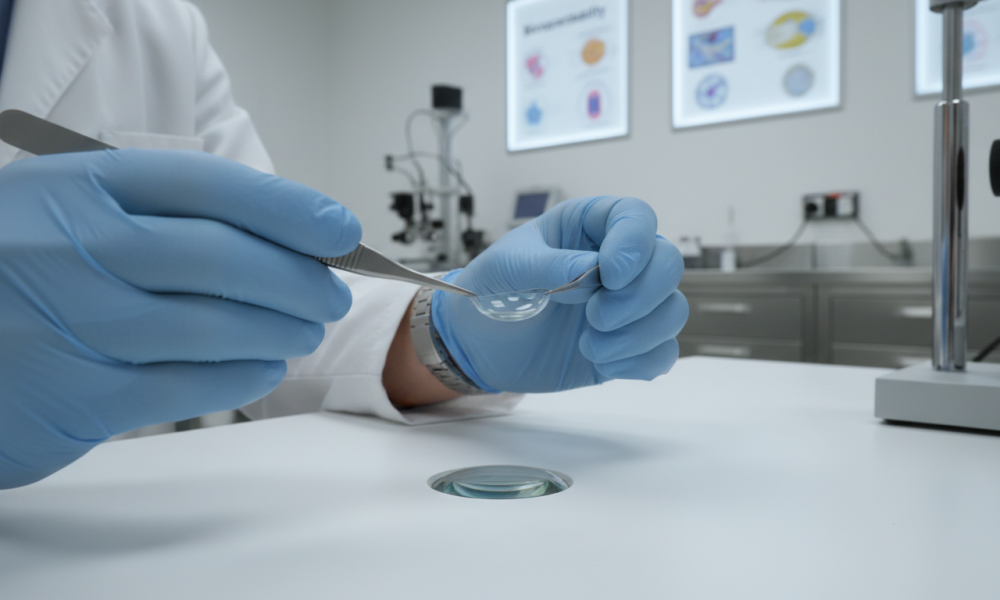
Ensuring safety is central when electronics meet the eye. Researchers test how materials and tiny components interact with the cornea and tear film before any wide use.
Material Science and Comfort
Manufacturers favor oxygen-permeable polymers such as silicone hydrogel. These materials keep the cornea healthy by letting oxygen reach the surface during wear.
The integration of sensors and microprocessors must avoid friction, bulk, and heat. Engineers embed circuits so the lens stays thin and flexible while protecting delicate tissues.
- Primary focus: long-term comfort and no irritation to the eye.
- Design challenge: house components without blocking tear flow or causing dry eye.
- Testing: extended-wear simulations, clinical trials, and biocompatibility assays.
“Safety testing aims to ensure a wearable device supports vision and health without adding risk.”
Ultimately, the goal is a functional device that supports daily vision, preserves eye health, and meets strict safety standards as the technology advances.
Data Privacy and Security Concerns
Wearable eye sensors collect deeply personal health signals, and that raises clear privacy concerns for many users. Continuous readings and short-term patterns form a detailed picture of health that must be protected.
Manufacturers building these devices are testing encryption and secure pairing to keep transmitted data safe. End-to-end encryption, tokenized identifiers, and limited data windows help reduce exposure.
Protecting user data is more than a technical task. It is a social one. If people cannot trust how information is handled, adoption will stall.
Regulation will shape rules for storage, consent, and sharing. Clear guidance can force baseline protections and create legal recourse for misuse.
Long-term success depends on solving practical challenges: secure firmware updates, resistant hardware, and transparent privacy policies. These steps build trust between users, clinicians, and companies.
“Addressing privacy and security is essential to move wearable eye monitors from trials into everyday care.”
- Limit what is sent off the device and why.
- Encrypt transmissions and store minimal identifiers.
- Follow U.S. and global health-data rules to protect users.
Hurdles in Mass Market Adoption
The path from lab prototypes to everyday wear is full of practical and regulatory hurdles that slow wide use.
Clinical trials must show long-term safety and reliable monitoring before a contact lens can reach people at scale. These studies take years and require large participant groups.
Cost is another barrier. Advanced components and the need for careful maintenance raise the price of these devices. That limits market access for many who could benefit.
Regulatory review adds time. Agencies treat sensor-equipped lenses as medical devices, so approvals demand robust safety and performance data. Communication between developers and regulators shapes product plans.
Technical challenges remain too. Power, durable components, and comfortable fit must work together in one thin lens. Developers balance these constraints while improving augmented reality and monitoring features.
- Growth potential: the market rose from USD 115M in 2018 with projected CAGR ~38.9%, signaling strong research interest.
- Key limits: high cost, complex maintenance, and long clinical trials before market entry.
- Next steps: clearer regulation, better components, and affordable care plans to broaden use.
| Hurdle | Impact | Needed action |
|---|---|---|
| Clinical trials | Long timelines, high cost | Large-scale, multi-year studies |
| Regulation | Lengthy approvals | Early regulatory engagement and clear plans |
| Cost & maintenance | Limits consumer adoption | Lower-cost components and support services |
| Technical integration | Trade-offs in comfort and runtime | Improved components and energy solutions |
“Overcoming these barriers is essential to move smart contact solutions from research to reliable, everyday care.”
The Impact of Artificial Intelligence on Lens Functionality
On-eye systems will rely on machine learning to translate tiny fluctuations into clinical insights in near real time.
AI can analyze continuous sensor streams and turn raw readings into clear, actionable data for clinicians and patients. That means faster detection of trends in health and clearer guidance about when to seek care.
These algorithms help the tiny devices learn an individual’s baseline. Over time, they reduce false alarms and improve diagnostic accuracy for common eye problems and broader systemic issues that show in the tear film.
Machine learning also supports better fit and comfort by guiding material choices and predicting how a device will interact with the eye. Designers use AI to speed iterative changes and to plan sensor placement that balances function and comfort.
Managing complex streams of sensor data is one of the biggest challenges. Embedded intelligence filters noise, summarizes trends, and flags urgent events so clinicians can focus on treatment plans.
“Intelligent processing turns continuous monitoring into practical care guidance.”
AI-driven features promise to enhance overall vision outcomes and support personalized eye health strategies that fit daily life.
Notable Prototypes and Industry Players
Several high-profile prototypes have taught the industry how far miniaturized displays and sensors can push a lens.
Mojo Vision’s Mojo Lens stood out with a 14,000 pixel-per-inch MicroLED display and ambitious augmented reality features. It showed what high-resolution on-eye displays might offer, but it also revealed limits in power and heat management.
Sensimed’s Triggerfish remains a valuable success story. As an FDA-cleared device, it demonstrated clear clinical benefit for pressure monitoring in glaucoma care. That approval helped set expectations for safety and data value.
Lessons from Defunct Projects
Failed or paused projects taught the field practical lessons. Teams learned that miniaturizing electronics demands trade-offs in thickness, runtime, and comfort.
“Prototype setbacks clarified which components must improve before daily wear becomes realistic.”
| Project | Main strength | Key challenge |
|---|---|---|
| Mojo Lens | High-res MicroLED AR display | Power, heat, and miniaturization |
| Sensimed Triggerfish | FDA-approved pressure monitoring | Limited to diagnostic wear, not daily correction |
| Various tear-glucose prototypes | Noninvasive glucose monitoring promise | Correlation to blood glucose and sensor stability |
The competitive market pushes deep-tech startups to refine sensors, power systems, and materials. Ongoing research focuses on reliable glucose readings in tears and stable pressure monitoring. These lessons shape the next-generation system designs and help move smart contact development toward safer, useful devices.
Future Trends in Ocular Wearable Technology
Researchers now prioritize longer runtime and reliable connectivity so wearable eye devices fit normal routines. This shift makes a thin lens more practical for daily monitoring and vision support.
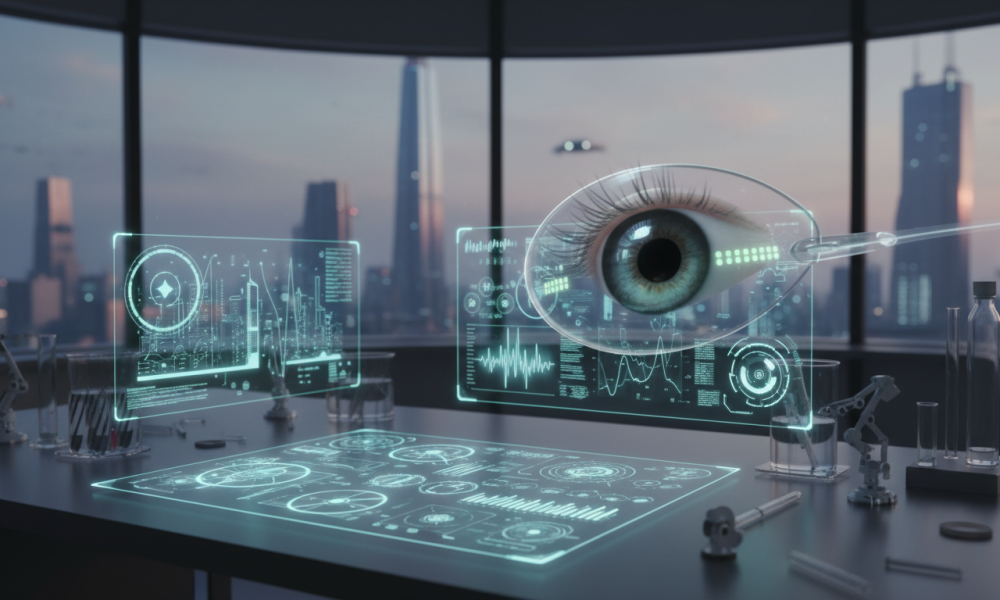
The next generation will be multifunctional. Manufacturers plan lenses that monitor glucose and other biomarkers while offering vision enhancement.
Improved power and links matter most. Better batteries, energy harvesting from light, and stronger wireless communication will extend runtime and reduce user friction.
Advanced sensors aim for more precise readings of glucose levels in tears and other tear-film markers. That precision supports reliable monitoring and better clinical decisions.
- Personalized care plans: Data from daily wear can tailor treatment and follow-up for individual eyes and health needs.
- Integrated systems: On-eye sensors will share compact, secure information with phones and clinician dashboards.
“Bridging medical monitoring with everyday convenience will broaden market access and improve long-term care.”
| Trend | Benefit | Key challenge |
|---|---|---|
| Multifunctional lens | Simultaneous vision and health monitoring | Miniaturized components without bulk |
| Longer runtime | Daily use without frequent charging | Safe, thin energy solutions |
| Accurate tear glucose | Noninvasive diabetes insights | Reliable correlation to blood glucose |
| Secure data links | Personalized care plans and clinician communication | Privacy and regulatory compliance |
As research progresses, the market will likely see more practical systems that blend health monitoring with comfortable vision care. That promise guides ongoing work and investment in lens technology.
Conclusion
A new class of lenses could make noninvasive health tracking as simple as putting in daily eyewear. , These devices sit at a powerful crossroad of medical care and everyday convenience.
Early wins—like the Sensimed Triggerfish—show clinical value for glaucoma and help prove the concept. One practical goal is to offer steady monitoring without adding burden to routine life.
Still, engineers and regulators must solve safety, power, and privacy challenges before broad use. When material science and AI improve, a single lens may deliver timely health insights and gentle vision support.
Overall, contact lenses that pair seamless data with comfort hold real promise for patients and clinicians. This future depends on careful study, clear rules, and trusted clinical pathways to bring such contact tools into daily care.
FAQ
What exactly are smart contact lenses?
Smart contact lenses are thin, wearable devices placed on the eye that combine corrective optics with tiny electronics — sensors, microprocessors, and sometimes wireless radios — to monitor health metrics or deliver information. They aim to do more than improve vision: they can sense tear chemistry, track intraocular pressure, or overlay information for the wearer.
Are these lenses available for everyday use now?
A few specialized devices have reached limited clinical or pilot stages, but wide consumer availability is not yet here. Medical prototypes for glaucoma monitoring and research lenses for glucose sensing have undergone trials. Mass-market AR-enabled lenses are still in development because of technical, regulatory, and safety hurdles.
How do lenses measure things like glucose or eye pressure?
Lenses use tiny biochemical sensors to detect molecules in tears or microelectromechanical sensors to sense pressure changes. Data are processed by embedded chips and then transmitted wirelessly to an external device for analysis. Accuracy and calibration remain active research areas.
Can these devices help detect eye diseases early?
Yes. Continuous monitoring of intraocular pressure and biomarkers in tears could flag early signs of glaucoma, dry eye changes, or inflammatory markers. Ongoing studies explore whether such monitoring improves outcomes by enabling earlier intervention.
Are augmented reality overlays possible on a lens?
Research teams and companies are pursuing tiny displays and light-modulating layers that could project simple AR information directly onto the wearer’s field of view. Current prototypes offer limited text or symbols; fully immersive AR still faces major hurdles in optics, power, and safety.
What powers sensors and circuits in these lenses?
Power comes from miniature batteries, wireless power transfer, or energy harvesting methods such as photovoltaic cells or motion-based generators. Each option balances size, heat, lifetime, and safety considerations — a central engineering challenge for practical products.
Are smart lenses safe and comfortable to wear?
Safety depends on materials, design, and use. Developers use biocompatible hydrogels and thin conductive traces to minimize irritation. Long-term comfort and ocular health need validation in clinical trials; regulators require strong safety data before approval.
Who is working on this technology?
Academic labs, ophthalmology researchers, and technology companies are active in the field. Examples include university research groups and industry efforts exploring glucose sensing, glaucoma monitoring, and AR. Some early commercial attempts have been discontinued, providing lessons about technical and market realities.
What privacy risks do these devices pose?
Lenses that collect health or location data raise concerns about who can access sensitive information and how it is stored. Secure encryption, strict data governance, and transparent consent are essential to protect users’ medical and personal data.
Could these lenses replace glasses or contact lenses for vision correction?
Potentially. Designers aim to combine vision correction with added sensors or displays, so a single lens could both correct refractive error and monitor health. However, clinical validation and regulatory approval are needed before they can replace standard corrective lenses broadly.
How might artificial intelligence be used with lens data?
AI can analyze continuous streams of ocular data to detect patterns, predict disease progression, or customize alerts for patients and clinicians. Machine learning helps translate raw sensor readings into actionable insights, but algorithms must be validated for medical reliability.
What are the biggest barriers to widespread adoption?
Key barriers include ensuring long-term safety and comfort, creating reliable power solutions, meeting strict regulatory requirements, demonstrating clear medical benefit, protecting user privacy, and developing cost-effective manufacturing.
Can smart lenses monitor glucose as an alternative to finger-prick tests?
Research shows promise: some lenses can detect glucose-related changes in tears. However, tear glucose correlates imperfectly with blood glucose, so more studies are needed to prove accuracy and clinical usefulness before replacing conventional glucose monitoring.
Are there clinical trials or regulatory approvals for these devices?
Several prototypes have entered clinical trials, especially for glaucoma monitoring. Regulatory approval depends on demonstrated safety and efficacy for a specific use. Interested patients should consult ophthalmologists about trial opportunities and approved medical devices.
How will these lenses affect daily life if they become mainstream?
If successful, they could enable continuous, hands-free health monitoring, quicker detection of eye disease, and practical AR-style information without bulky headsets. Yet adoption will depend on comfort, cost, clear medical benefit, and strong privacy protections.
Related guides
How Long Does a Dental Implant Procedure Take?
Curious if the journey to a restored smile will fit your life? Many patients wonder about the full…

Best Hair Transplant in Istanbul,Turkey
Could one clinic end years of worry and restore your confidence with a clear, tailored plan?Dr. Serkan Aygin…
What is Zygomatic Dental Implant?
Could anchoring into the cheekbone restore a confident smile when the upper jaw can’t?Zygomatic dental implants offer an…