
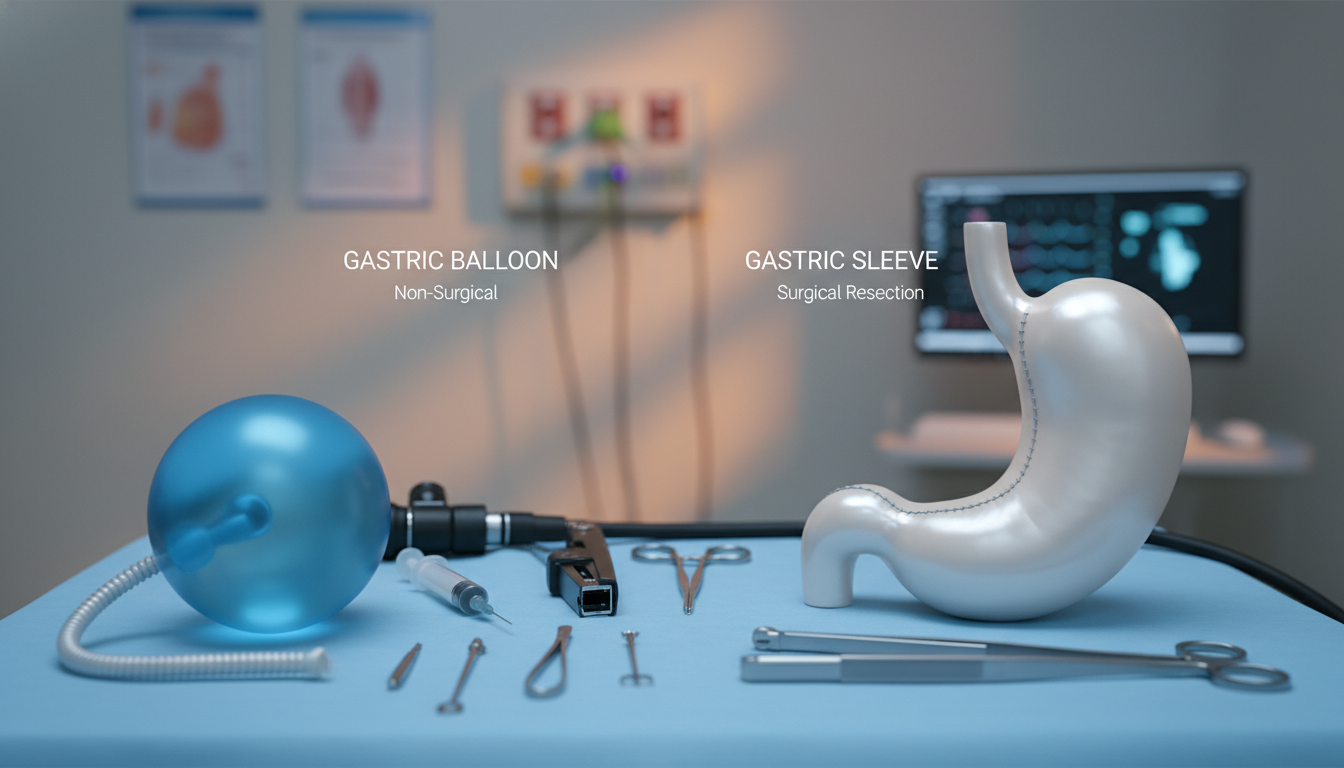
Which option truly fits your life: a less invasive implant that eases eating, or a permanent surgical change that reshapes the stomach? This question matters when you are weighing long-term health, daily comfort, and the results you expect from weight loss care.
Dr. Jorge Green, a board-certified expert, has performed over a thousand bariatric surgery procedures across a 17-year career. He helps people compare how a gastric sleeve and a gastric balloon affect appetite, recovery, and lasting weight changes.
This guide explores clear differences so you can make an informed choice. It outlines outcomes, risks, and the steps each surgery or procedure involves. Read on to learn what to expect and which path may match your goals.
Key Takeaways
- Both options support weight loss, but they differ in invasiveness and permanence.
- Dr. Jorge Green’s experience highlights predictable results and patient safety.
- Choose based on recovery time, goals, and willingness for permanent change.
- Understand risks, benefits, and long-term follow-up before you decide.
- Personal health and lifestyle determine the best bariatric surgery choice.
Understanding the Impact of Obesity on Health
Severe excess weight raises the chances of serious medical and emotional problems.
Physical Health Complications
Excess body mass often leads to chronic conditions that harm daily life. High BMI increases the likelihood of type 2 diabetes, hypertension, and joint strain.
Addressing weight can reduce these risks and improve long-term health. For many, managing weight loss changes medication needs and mobility.
Psychological Well-being
Living with severe obesity affects mood and self-image. For individuals with a BMI over 40, rates of depression and anxiety rise sharply.
Many patients report social isolation and reduced quality of life. Tackling root causes of weight gain supports both emotional stability and physical recovery.
- Physical: Diabetes, blood pressure, and joint wear.
- Mental: Higher rates of depression and anxiety in people with severe obesity.
- Social: Stigma and reduced participation in daily activities.
| Impact Area | Common Issues | Benefit of Loss |
|---|---|---|
| Metabolic | Type 2 diabetes, high cholesterol | Lower blood sugar and medication needs |
| Cardiovascular | Hypertension, heart strain | Reduced blood pressure and heart workload |
| Mental Health | Depression, anxiety | Improved mood and self-confidence |
| Mobility | Joint pain, limited activity | Better mobility and daily function |
For people exploring treatment paths, learning which options suit revision candidates can help. See revision candidates for more guidance.
Addressing the full picture—physical, mental, and social—gives the best chance for lasting weight loss and healthier days ahead.
Gastric Balloon Vs Gastric Sleeve: Key Differences
Choosing between a temporary implant and a permanent operation means weighing how change fits daily life. Each option affects food intake, recovery time, and long-term weight goals.
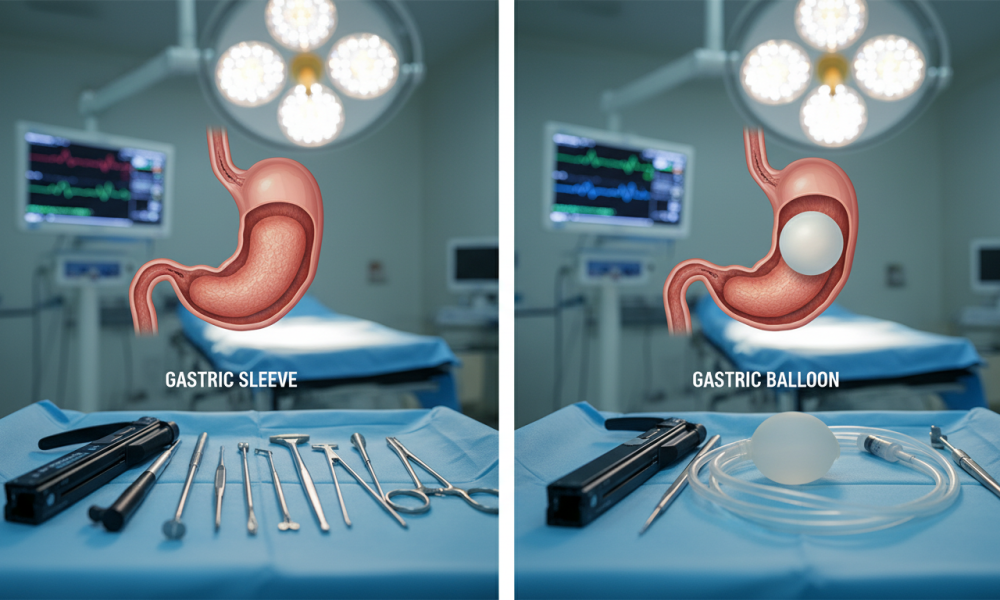
Gastric sleeve surgery removes about 80 percent of the stomach, creating a banana-shaped pouch that limits portions. This sleeve surgery approach is permanent and alters stomach anatomy to support lasting weight loss.
The gastric balloon is a less invasive, temporary option. The balloon occupies space inside the stomach so individuals feel full sooner. It helps during the active weight loss phase but does not permanently change anatomy.
“Dr. Guillermo Alvarez has performed more than 20,000 gastric sleeve procedures, showing how reliable the sleeve surgery can be for long-term management.”
- Permanent solution: sleeve surgery for long-term control.
- Temporary aid: balloon option for initial weight loss support.
Patients should match goals and lifestyle to the right solution. Talk with a specialist to compare outcomes, risks, and follow-up care before choosing.
Comparing Surgical and Non-Surgical Weight Loss Results
Knowing typical outcomes and what stays reversible helps patients pick a workable approach.
Weight Loss Expectations
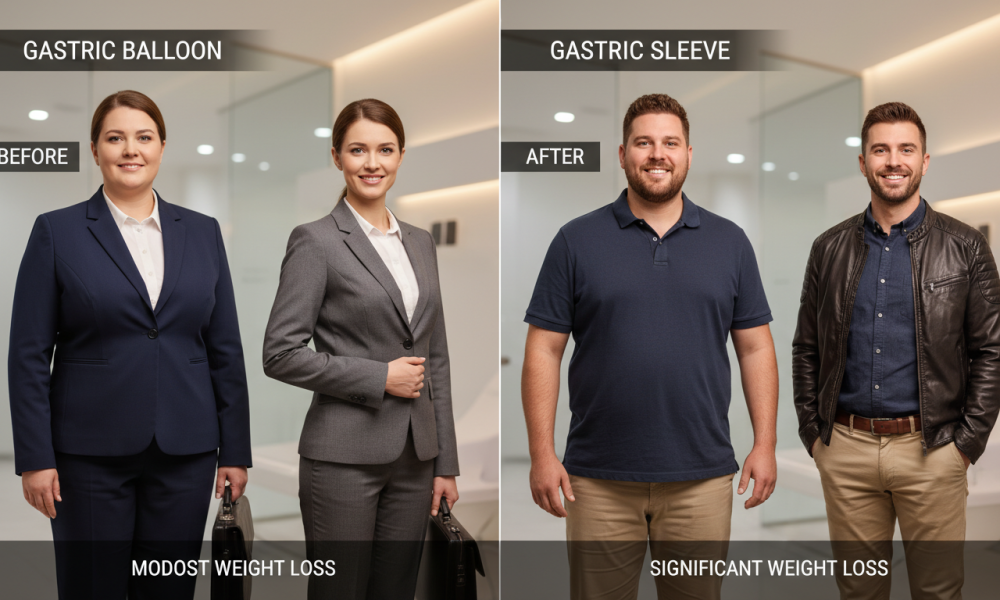
Patients who choose a gastric sleeve can expect to lose about 60–70% of their excess weight within 12 months after sleeve surgery gastric. That degree of loss is usually more consistent than non-surgical aides.
The gastric balloon is placed in a short, 20–30 minute procedure and helps people eat less while active. It is usually removed after 6–12 months, so long-term success depends on new habits and follow-up care.
Reversibility and Permanence
The sleeve surgery is permanent and reshapes the stomach to limit portions. The balloon option is reversible: balloons are removed when the active phase ends.
Insurance and Financial Considerations
Insurance often covers sleeve surgery more reliably than the balloon option. Out-of-pocket costs for the temporary implant can be a deciding factor for many patients.
| Option | Typical Weight Loss | Reversibility | Time Frame | Insurance |
|---|---|---|---|---|
| sleeve surgery | 60–70% excess weight in 12 months | Permanent | Single operation, long-term | Often covered |
| balloon procedure | Moderate early loss; varies with follow-up | Reversible (balloon removed) | 20–30 min placement; removed 6–12 months | Often not covered |
Safety Profiles and Potential Complications
Understanding complications helps people choose a path that matches risk tolerance. This section reviews the main safety signals and how recovery differs between options.
Managing Risks and Recovery
Regulatory warnings matter. In 2017 the FDA issued an alert about liquid-filled devices after rare but serious deaths. The notice stressed timely removal to prevent perforation or blockage.
Side effects differ. The less invasive option often causes nausea and discomfort early on and requires outpatient care. It must be removed to avoid long-term harm.
The surgical option typically needs a short hospital stay of 1–3 days. Because it does not leave a foreign object in the body, many clinicians report fewer long-term device-related issues.
“Dr. Guillermo Alvarez reports the sleeve surgery has a lower complication rate than other bariatric procedures.”
- Know the risks and follow post-procedure instructions closely.
- Discuss removal timelines and warning signs with your team.
- Choose the solution that balances safety, recovery, and long-term health goals.
Conclusion: Making the Right Choice for Your Future
The best path balances realistic weight loss expectations with safety, follow-up care, and lifestyle fit.
For many people, a temporary implant offers a short-term weight loss boost while a permanent surgery delivers more lasting results for excess weight. Both options can lower the risk of diabetes and improve daily energy.
We urge individuals to review risks, recovery plans, and long-term follow-up with a qualified team before deciding. Check options and costs — including destinations and accreditation — when considering care abroad at affordable countries for gastric sleeve surgery.
Ultimately, the right choice supports lasting health, improved quality of life, and weight loss that fits your routine. Discuss goals with a specialist to make an informed decision that matches your future.
FAQ
What are the main differences between a weight-loss balloon procedure and a sleeve surgery?
A balloon procedure places a temporary device in the stomach to reduce space and slow eating; it is non-surgical and is removed after several months. Sleeve surgery removes a portion of the stomach to create a smaller pouch, producing long-term restriction and hormonal changes that support weight loss. The balloon is reversible; the sleeve is permanent and requires a surgical operation and recovery period.
Who is a good candidate for the non-surgical balloon option?
Ideal candidates are adults with moderate excess weight who prefer a less invasive approach, want a temporary aid to change eating habits, or need a bridge to surgery. People with certain stomach conditions, large hiatal hernia, or previous upper GI surgery may not qualify. A consultation with a bariatric specialist helps determine suitability.
What weight loss can patients typically expect from each option?
The balloon often yields modest to moderate weight loss during the device period, especially when combined with diet and behavioral support. Sleeve surgery typically produces greater and more sustained weight loss over 12–24 months, due to both reduced stomach size and hormonal effects. Individual results depend on adherence to lifestyle changes.
How long is recovery for sleeve surgery compared with the balloon placement?
Balloon placement is usually done endoscopically with minimal downtime—patients can often return to normal activities within days. Sleeve surgery requires general anesthesia and a longer recovery; most people need one to four weeks before resuming normal routines, with gradual return to full activity over months.
Are there long-term health benefits beyond weight loss?
Both options can improve blood sugar control, blood pressure, and sleep apnea when weight decreases. Sleeve surgery often yields more durable improvements in type 2 diabetes because of metabolic and hormonal changes. Long-term benefits depend on sustained weight management and follow-up care.
What are the common risks and side effects of each option?
The balloon can cause nausea, vomiting, abdominal discomfort, or device deflation in rare cases. Sleeve surgery carries surgical risks: bleeding, infection, leaks, and longer-term issues like reflux. Both require medical supervision and lifestyle support to manage complications and optimize outcomes.
Is insurance likely to cover these procedures?
Insurance coverage varies. Sleeve surgery is often covered when medical criteria for bariatric surgery are met, such as BMI thresholds and documented attempts at weight loss. Many insurers consider balloon procedures elective and may not cover them. Financial discussions with providers and insurers are essential before deciding.
Can the balloon be used if someone plans later to have sleeve surgery?
Yes. Some people use the balloon as a temporary measure to lose weight and improve surgical risk before undergoing sleeve surgery. The device is removed before any definitive bariatric operation. A surgeon will evaluate timing and safety during preoperative planning.
How do lifestyle and behavioral changes factor into success for both choices?
Both options require committed dietary changes, physical activity, and often counseling or behavioral therapy. The device or surgery helps with restriction, but long-term success depends on adopting healthy habits. Structured follow-up with a multidisciplinary team improves outcomes.
How should someone choose between the two options?
Choice depends on medical history, weight-loss goals, risk tolerance, and whether a permanent solution is desired. A candid discussion with a bariatric surgeon, gastroenterologist, and nutritionist helps weigh effectiveness, safety, recovery time, and cost. Personal values and lifestyle play a key role in the decision.
Related guides
How Long Does a Dental Implant Procedure Take?
Curious if the journey to a restored smile will fit your life? Many patients wonder about the full…

Best Hair Transplant in Istanbul,Turkey
Could one clinic end years of worry and restore your confidence with a clear, tailored plan?Dr. Serkan Aygin…

What is Zygomatic Dental Implant?
Could anchoring into the cheekbone restore a confident smile when the upper jaw can’t?Zygomatic dental implants offer an…