
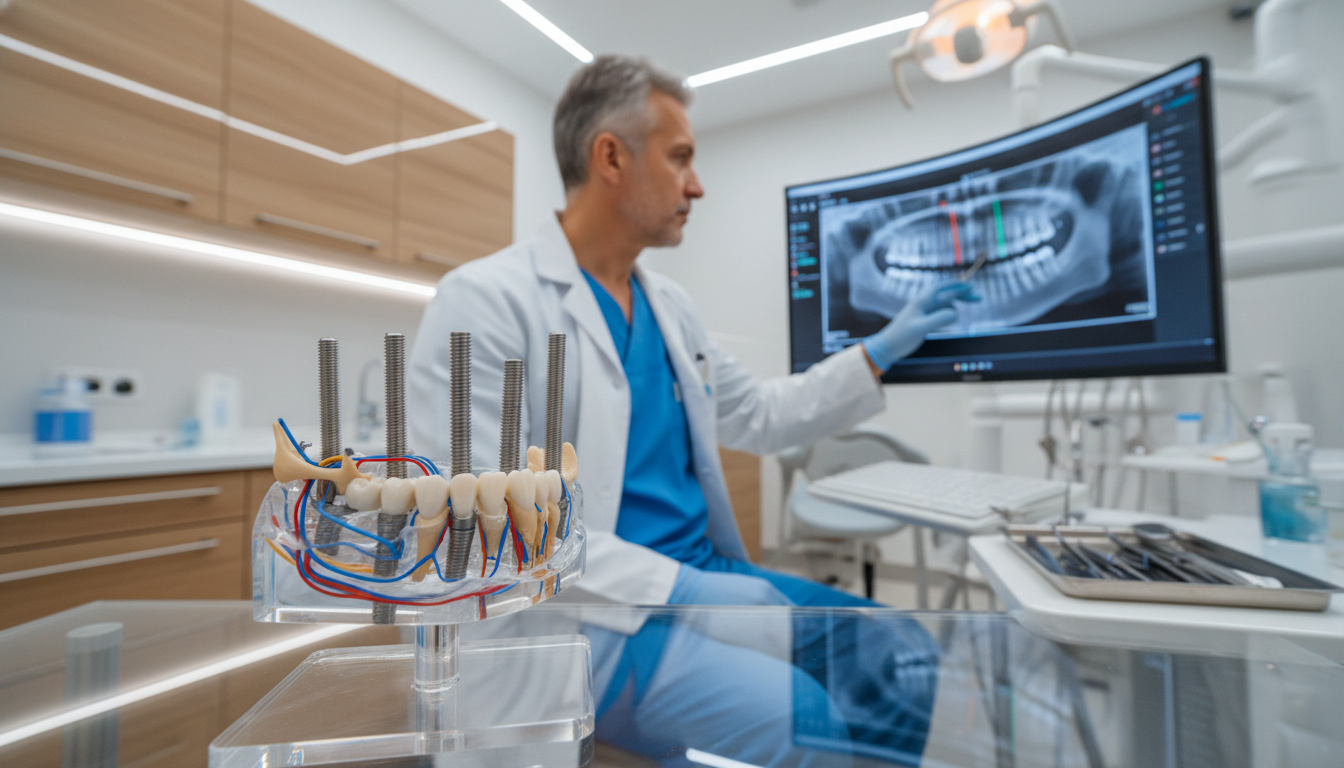
Could anchoring into the cheekbone restore a confident smile when the upper jaw can’t?
Zygomatic dental implants offer an alternative for people who have lost jaw bone over time. These implants anchor in the dense cheekbone rather than the weak upper jaw. That creates a stable base for missing teeth without long grafts.
Anne-Marie Kennedy notes this option helps patients regain a natural smile when standard choices fail. Surgeons use the zygomatic bone as a secure point to support long-term function and comfort.
For those avoiding lengthy bone grafting, this method can speed recovery and restore eating, speaking, and confidence. It suits adults with severe bone loss who seek a reliable, lasting solution.
Key Takeaways
- Anchored in cheekbone: provides a secure foundation when the upper jaw lacks bone.
- Avoids lengthy grafts: often removes the need for extensive bone reconstruction.
- Restores function: helps patients eat, speak, and smile with confidence.
- Durable support: uses dense bone for long-term implant success.
- Good candidate: adults with severe upper jaw bone loss may benefit most.
Understanding What is Zygomatic Dental Implant?
For many adults with severe upper jaw bone loss, anchoring into the cheekbone offers a path to stable tooth replacement.
These zygomatic implants were engineered for patients whose jawbone has been compromised by infection, trauma, or long-term denture wear.
The cheekbone is much denser than the upper jaw, so it provides a firmer base. Surgeons may place a single zygomatic implant or choose a quad configuration when bone loss is extensive.
Quad zygomatic implants use four fixtures instead of two to secure a full prosthetic when standard solutions are not possible.
This treatment lets people receive a reliable dental implant option without lengthy grafting. It often suits those told they are not candidates for traditional dental implants.
- Who benefits: patients with severe denture-related bone loss.
- Main advantage: dense cheekbone support for long-term prosthetics.
- Choice of approach: single or quad placement based on anatomy.
The Impact of Severe Bone Loss on Dental Health
Progressive resorption after long-term tooth loss creates challenges that demand alternative anchoring points for restorations. Edentulism triggers natural shrinkage of the jawbone. Over time, the ridge becomes thinner and less able to support a traditional dental implant.
The role of jawbone density matters. Low bone volume in the upper jaw often makes standard implants unstable. Sinus augmentation can add volume but may not supply enough bone for secure placement.
The Role of Jawbone Density
When jawbone density falls, surgical teams may recommend bone grafting to rebuild support. These procedures add time and healing before prosthetic work can begin.
Dense cheekbone tissue often remains even after severe bone loss in the upper jaw. That stability explains why some patients turn to zygomatic implants as an effective solution.
Consequences of Long-Term Tooth Loss
Missing teeth accelerate resorption and change facial contours. Patients may struggle with chewing, speech, and self-image.
- Severe bone loss upper often rules out standard placement without extensive grafting.
- Long-term denture wear can worsen bone loss and limit options.
- Zygomatic dental approaches can bypass the weakened jawbone by anchoring into denser bone for a faster, durable solution.
Comparing Zygomatic Implants to Traditional Dental Implants
When standard implants can’t secure a restoration, surgeons often turn to angled fixtures that anchor in stronger facial bone.
Traditional dental implants are straight posts placed into the jaw. They work well when the upper jaw has enough volume and density.
Zygomatic implants are longer and angled to reach the cheekbone. This design often removes the need for lengthy bone grafting and can bypass the sinus cavity.
Patients who lack sufficient jawbone may receive immediate prosthetic attachment with zygomatic dental implants. That can shorten treatment time and reduce surgical stages.
Below is a quick comparison to highlight differences and help with decisions.
| Feature | Traditional Implants | Zygomatic Implants |
|---|---|---|
| Anchor point | Jawbone | Cheekbone (zygoma) |
| Need for grafting | Often required (bone grafting) | Usually avoided |
| Sinus involvement | May require sinus lift | Designed to avoid sinus cavity |
| Prosthetic timing | Delayed in many cases | Immediate attachment often possible |
- Best use: traditional implants suit patients with good bone; zygomatic implants serve those with severe upper jaw loss.
- Procedure: choice depends on anatomy, goals, and whether the patient wants to avoid grafting.
Identifying Ideal Candidates for the Procedure
Before recommending this option, clinicians verify overall health and map facial bone with precise scans.
A full evaluation includes medical history, oral exam, and advanced imaging such as CT or cone beam scans.
3D imaging helps clinicians view sinus cavities, bone volume, and the cheekbone trajectory. That mapping guides safe planning.
Evaluating Health and Diagnostic Imaging
Patients with severe bone loss from trauma, disease, or long-term denture wear often emerge as strong candidates.
Those who had failure with traditional dental implants can also consider this option when grafting proved ineffective.
A qualified surgeon will assess bone density and the relationship to the sinus before recommending treatment.
| Assessment | What clinicians check | Implication for candidacy |
|---|---|---|
| Medical status | Overall health, smoking, chronic disease | Impacts healing and recovery |
| Imaging | CT / cone beam 3D scans | Maps bone, sinus, nerve positions |
| Previous treatments | Failed implants or extensive grafting | May favor cheekbone anchoring |
| Restoration goals | Full-arch upper prosthetic needs | Often suitable for permanent solutions |
- Advantage: avoids lengthy bone grafting or sinus lift in many cases.
- Candidate profile: adults seeking durable full-arch treatment and shorter recovery.
- Next step: consult a specialized surgeon for a tailored plan and risk review.
How the Surgical Procedure Works
Careful planning and imaging set the stage for a precise, predictable procedure and a faster return to normal life.
Pre-Surgical Planning and Imaging
Clinicians begin with advanced 3D scans to map the upper jaw, sinus, and cheekbone. This imaging guides implant placement and helps avoid vital structures.
The Day of Surgery
Most procedures take about two to three hours per arch. Patients usually receive general anesthesia for comfort.
The surgeon anchors titanium implants into the cheekbone at a precise angle to steer clear of the sinus.
Prosthetic teeth are often attached the same day. Others wear a temporary bridge for six to eight months while healing finishes.
Osseointegration and Prosthetic Attachment
Osseointegration is when the implant fuses with bone to create long-term stability. This process secures the foundation for the final bridge.
In some cases, traditional dental implants are combined with zygomatic implants to optimize support for missing teeth.
| Stage | Focus | Typical time |
|---|---|---|
| Planning | 3D imaging, bone mapping, surgical guide | 1–2 visits |
| Surgery | Titanium placement into cheekbone, anesthesia | 2–3 hours per arch |
| Immediate Prosthetics | Temporary or permanent teeth attached | Same day (often) |
| Healing | Osseointegration and soft tissue recovery | 3–8 months |
Managing Recovery and Post-Operative Care
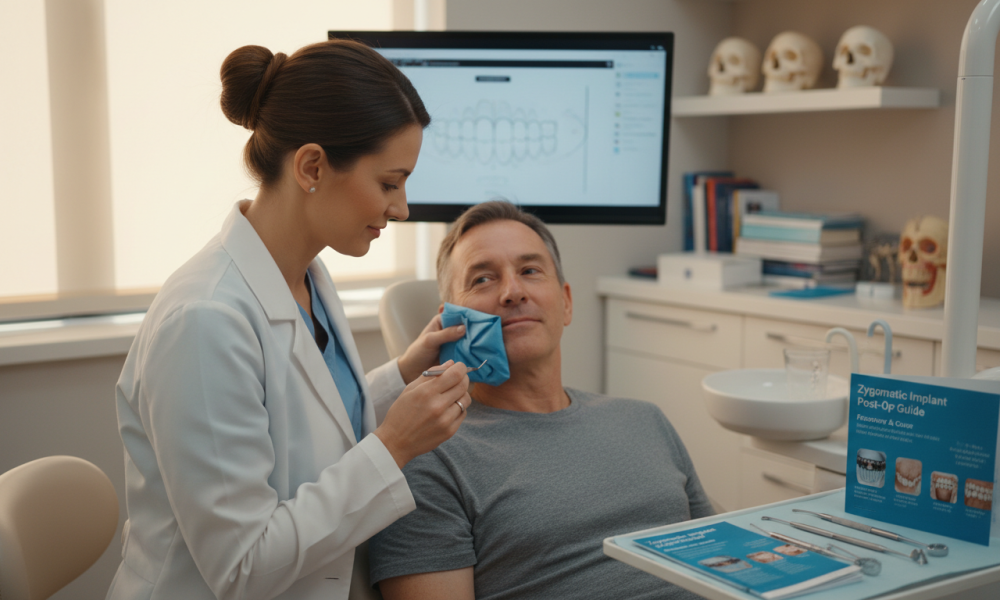
Recovery after cheekbone-based implant surgery focuses on simple, practical steps that reduce swelling and support healing.
First 72 hours: keep the head elevated when resting or sleeping to limit swelling. Use cold compresses the first day, then switch to warm compresses to ease stiffness.
Diet matters: choose liquids and soft foods while tissues mend. Avoid hard or crunchy items to protect the implant and surrounding bone.
Gentle oral hygiene prevents infection. Rinse with any surgeon-recommended solutions and brush lightly near the surgical sites.
Follow-up visits let the team check healing and make timely adjustments. Most patients return to light routines within a few days, but full recovery takes more time as the implant bonds with bone.
| Focus | Action | When |
|---|---|---|
| Swelling | Head elevation; cold then warm compresses | First 1–7 days |
| Nutrition | Liquid/soft food diet | First 1–14 days |
| Hygiene | Gentle brushing; antimicrobial rinses | Daily until healed |
| Follow-up | Clinic checks and adjustments | Scheduled over weeks/months |
- Practical tip: keep emergency contact info and follow post-op instructions closely.
- Support: ask a caregiver to help during the first day after surgery.
Financial Considerations and Insurance Coverage
Financial clarity helps patients weigh long-term benefits against upfront expenses for advanced oral care.
Average costs: The national average for zygomatic implants is about $3,918, typically ranging from $3,018 to $7,357. Prices vary by location, procedure complexity, and materials.
Because this treatment is often classified as elective, standard dental insurance may not cover it. Some medical plans will pay part of the bill if the surgeon documents medical necessity.
Exploring Financing Options
Patients commonly use financing to spread costs. Options include CareCredit and in-house payment plans. Discuss total fees up front so there are no surprises.
“Ask the clinic for a written estimate that lists surgeon, lab, and follow-up care fees,”
| Item | Typical Range | Notes |
|---|---|---|
| Average cost | $3,018–$7,357 | Depends on complexity and materials |
| Insurance coverage | Often limited | Medical plans may cover if deemed necessary |
| Financing | Varies | CareCredit and payment plans available |
Tip: Review the full estimate with the surgeon and verify what follow-up care is included before committing.
Potential Risks and Safety Profiles
All surgical choices carry trade-offs, and cheekbone anchoring procedures have a clear safety profile worth reviewing.
Long-term success for zygomatic dental implants sits near 95%, making them a reliable option for many patients with severe bone loss.
Common aftercare issues include swelling, bruising, and mild discomfort. These usually resolve with over-the-counter pain relievers and rest.
Less common complications can include sinus problems, infection, implant failure, or temporary facial numbness. Prompt follow-up helps catch these early.
Risk-reduction depends on surgeon skill and technology. Experienced oral and maxillofacial surgeons use advanced imaging and careful planning to guide placement and lower complication rates.
| Risk | Frequency | Management |
|---|---|---|
| Swelling / bruising | Common | Cold packs, pain meds, rest |
| Sinus complications | Uncommon | Antibiotics, ENT referral if needed |
| Infection | Rare | Antibiotics, possible implant revision |
| Implant failure / numbness | Rare | Monitoring; surgical review if persistent |
Tip: patients should discuss the safety profile, alternatives like bone grafting, and expected outcomes with their surgeon to feel fully informed before the procedure.
Working with Specialized Oral Surgeons
Choosing the right specialist matters for complex cheekbone-based restorations. These procedures require advanced training beyond routine dental implant placement.
Patients should seek oral and maxillofacial surgeons who list zygomatic implants among their specialties. The American Association of Oral and Maxillofacial Surgeons offers a searchable directory to find qualified providers by state.
Experienced teams use virtual surgery software to create a surgical guide. That digital plan maps the jaw, sinuses, and bone to position each implant precisely.
Custom care follows from careful planning. A specialist tailors the plan to a patient’s unique bone density and anatomy, which improves safety and long-term success.
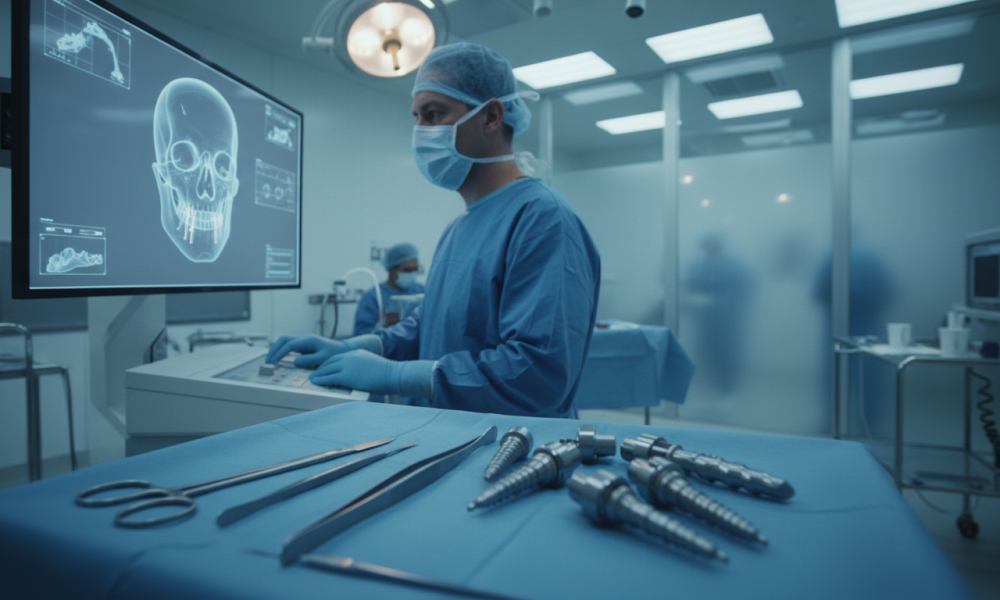
- Specialized surgeons have extra training for complex cases.
- Virtual guides increase accuracy during the procedure.
- Proper surgeon selection supports better outcomes and lasting implants.
Conclusion
Zygomatic implants offer a life-changing solution for many people facing severe bone loss in the upper jaw. By anchoring into denser facial bone, these implants provide a stable foundation for missing teeth and restore function and confidence.
This option helps patients avoid lengthy bone grafting and often suits those who are not a candidate for traditional dental implants. It shortens treatment time and reduces surgical stages for many.
Consult a qualified oral surgeon to review imaging, risks, and a personalized plan. With skilled care, this option can be the right path to a durable smile and renewed quality of life.
FAQ
What is a zygomatic dental implant and when is it used?
A zygomatic dental implant anchors into the cheekbone rather than the upper jaw. It offers a reliable option for patients with severe bone loss in the upper jaw who cannot undergo or prefer to avoid bone grafting. This solution restores chewing function and smile aesthetics in complex cases where traditional implants are not feasible.
How does this implant differ from traditional dental implants?
Unlike standard implants placed in the maxilla, zygomatic devices use longer screws that engage denser zygomatic bone. That allows placement without extensive grafting, shortens treatment time, and often enables immediate restoration. The surgical approach and planning are more specialized, and recovery may differ.
Who is a good candidate for this procedure?
Ideal candidates have significant upper jaw bone loss, failing upper teeth, or long-term denture wear causing resorption. Candidates should be in good overall health, free from uncontrolled diabetes or active cancer therapy that compromises healing, and willing to undergo imaging studies and specialized surgical care.
What kind of imaging and evaluation are required before surgery?
Detailed diagnostic imaging, typically 3D cone-beam CT scans, maps bone quality and the zygomatic anatomy. Clinical exams, dental records, and medical history ensure safe planning. Virtual surgical planning helps position implants and design the prosthetic restoration.
What happens on the day of the operation?
Under local anesthesia with sedation or general anesthesia, the surgeon exposes the upper jaw and cheekbone, places the long implants into the zygoma, and secures them. In many cases a temporary prosthesis is attached that same day, restoring function while final restorations are fabricated.
How long does osseointegration take and when is the final restoration attached?
Bone integration typically progresses over several months. When primary stability and healing are adequate, a definitive prosthesis is placed, often between three and six months. Some protocols allow immediate load with a provisional bridge, depending on clinical factors.
What should patients expect during recovery and aftercare?
Recovery includes swelling, bruising, and mild discomfort for a few days to weeks. Pain control, antibiotics, and oral hygiene instructions help prevent complications. Soft diet and follow-up visits are important. Most people resume normal activities within a week but should avoid heavy exertion while healing.
Are there risks or complications associated with the treatment?
As with any surgery, risks include infection, sinus issues, numbness, or implant failure. Because the implants pass near the sinus and facial structures, careful planning reduces risks. Working with an experienced oral and maxillofacial surgeon lowers complication rates.
How does cost compare to traditional implants and bone grafting?
Costs are generally higher than single traditional implants but can be comparable or lower than full grafting plus multiple implants. Factors include the number of implants, anesthesia, hospital fees, and prosthesis type. Many practices offer financing and payment plans; insurance coverage varies and should be confirmed in advance.
Can survivors of head and neck cancer or patients with a history of cancer receive these implants?
Many cancer survivors can receive this treatment, but timing matters. Oncologic history, radiation exposure, and current therapies affect healing. A multidisciplinary team should evaluate safety and timing; in some cases, additional precautions or delay are necessary.
How do patients find a qualified specialist for this procedure?
Seek an oral and maxillofacial surgeon or prosthodontist with experience in zygomatic implant placement. Ask for case examples, patient outcomes, and whether they use 3D planning. Referrals from dentists, cancer centers, or patient support groups can help locate experienced providers.
Are there alternatives to this approach for severe upper jaw bone loss?
Alternatives include sinus lifts with bone grafting, short or angled implants where bone permits, and removable dentures. Each option has trade-offs in stability, time, and cost. A personalized consultation determines the best path based on anatomy, health, and goals.
Related guides
How Long Does a Dental Implant Procedure Take?
Curious if the journey to a restored smile will fit your life? Many patients wonder about the full…

Best Hair Transplant in Istanbul,Turkey
Could one clinic end years of worry and restore your confidence with a clear, tailored plan?Dr. Serkan Aygin…
What Are The Best Dental Implant Brands 2026 ?
Could a single brand change a patient's long-term smile more than careful planning and skill? That question frames…