
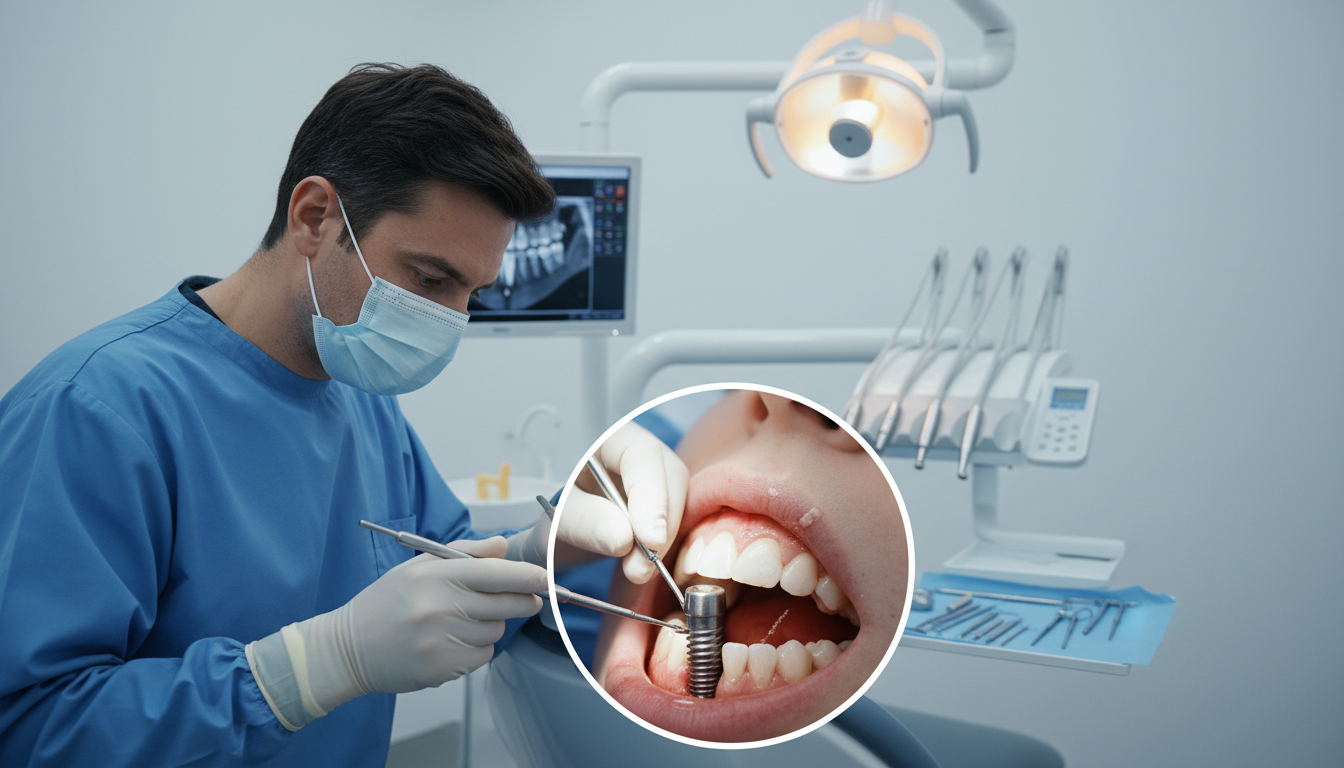
Curious if the journey to a restored smile will fit your life? Many patients wonder about the full timeline when they plan to replace a missing tooth. The answer often surprises people: this treatment replaces the root, so the process is not instant.
Dr. Michael Giesy in Tacoma, WA, helps people understand each step and what to expect. The typical path involves careful planning, implant placement, and months of healing while bone and implant fuse.
The team guides patients through every step of care. With clear communication and patience, most find the long dental timeline worthwhile for lasting oral health and a confident smile.
Key Takeaways
- Replacing the root means the treatment spans several months for proper healing.
- Bone integration is essential for long-term success.
- The dentist outlines each step to support patients through the process.
- Patient health and planning shape the exact time needed.
- Clear expectations make the journey less stressful and more manageable.
Understanding the Dental Implant Timeline
Replacing a lost tooth involves staged care and patience over the course of several months. The implant process typically unfolds in three phases and most patients complete treatment within five to eight months.
Your dentist first evaluates bone quality and overall health. Early action matters—bone shrinks fastest during the first year after a missing tooth, often at twice the normal rate.
This early assessment helps determine whether grafting or other steps are needed before the implant can integrate with bone. That planning shapes the total time and complexity of treatment.
- The multi-phase plan generally spans 5–8 months, depending on individual factors.
- Bone evaluation by your dentist sets the realistic timeline for successful healing.
- Addressing a missing tooth early often reduces overall time and potential procedures.
Initial Consultation and Treatment Planning
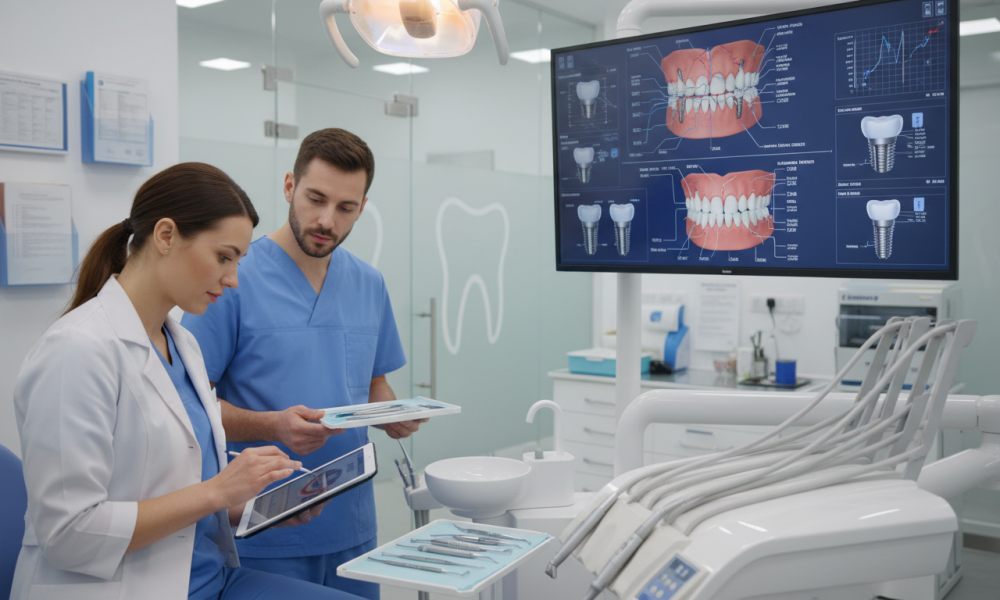
Planning begins with scans that reveal bone shape, density, and any hidden issues.
At the first appointment, the dentist uses diagnostic imaging such as a CBCT scan. This scan guides precise placement of the implant post and maps nearby anatomy.
If a tooth has been missing for a long time, bone loss may require a bone graft. A graft restores volume and can add three to six months to the timeline. That extra period helps secure long-term stability and supports proper healing.
Common planning outcomes
- Imaging confirms bone quality and highlights if bone graft is needed.
- Proper placement prevents future bone loss and improves implant success.
- Local anesthesia manages pain during any extraction or graft preparation.
- This planning step sets the foundation for the implant process and final treatment.
| Scenario | Typical need | Additional time |
|---|---|---|
| Good bone volume | No graft; direct placement | Minimal delay (weeks) |
| Mild bone loss | Minor graft or augmentation | 3 months |
| Advanced bone loss | Major grafting or staged graft | 3–6 months |
How Long Does a Dental Implant Procedure Take?
Timing for the surgical step varies, but the actual placement is often brief.
Clinicians typically complete placement of one implant within about an hour. Multiple implants may extend chair time to around two hours. Custom surgical guides speed the process and improve precision during implant surgery.
Factors Influencing Surgical Duration
Number of implants: More posts mean more time in the operatory.
Bone grafts: Complex grafting adds time and may lengthen the overall treatment by months.
- Many patients feel pressure rather than pain thanks to local anesthesia or sedation.
- Precision during the surgery protects bone and promotes proper healing.
- Following the dentist’s instructions during the healing time supports long-term success.
| Factor | Typical effect | Estimated in-chair time |
|---|---|---|
| Single implant, good bone | Straightforward placement | About 1 hour |
| Multiple implants | Longer surgery, more steps | 1–2 hours |
| Bone graft present | Extra steps; may be staged | Additional appointments; adds months overall |
The Healing Phase and Osseointegration
After surgery, the body begins a careful repair process that links metal and bone over several months.
The Role of Titanium
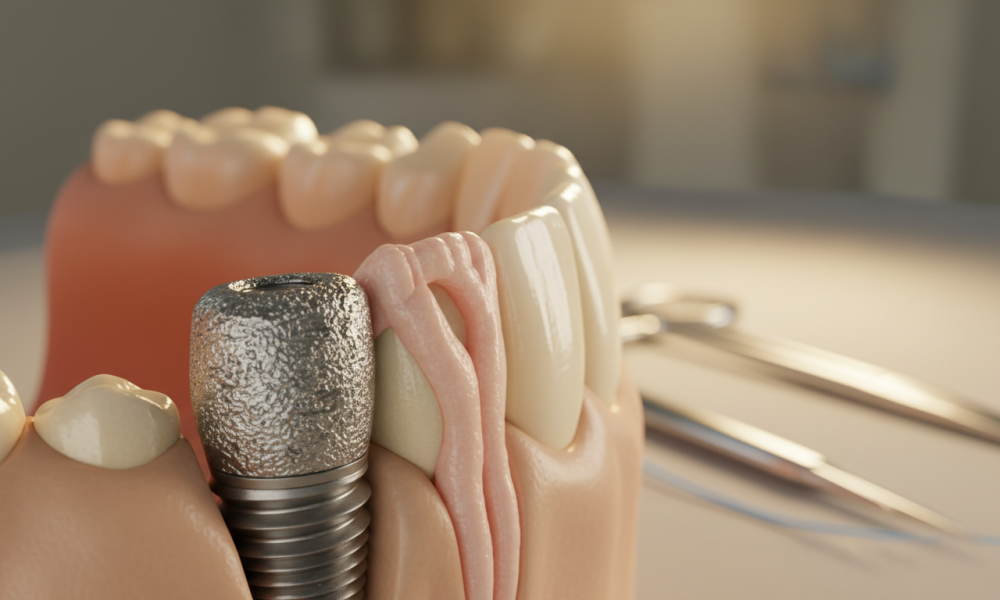
Titanium is biocompatible and promotes secure fusion. During the typical 3 to 6 months of healing, the titanium implant post bonds with the jawbone in a process called osseointegration.
This fusion is the vital part that lets the new tooth support chewing forces and last for years.
Temporary Prosthetics
Patients often receive a temporary crown or prosthetic to preserve appearance and function while the bone heals.
These temporary restorations help maintain speech and chewing without stressing the healing site.
Monitoring Recovery
Regular checkups with the dentist monitor integration and catch issues early.
Follow a soft-food diet for the first weeks and avoid heavy chewing on the treated side.
- Key factors: implant post stability, bone health, and patient care during the period.
- While surgery may take only hours, full integration takes months and is crucial for success.
Final Restoration and Abutment Placement
At this step, the hidden post becomes a natural-looking crown that fits your smile.
The final phase usually needs one or two appointments. During these visits the abutment is secured to the implant post and the custom crown is attached.
Many offices design the crown in-house for same-day delivery. When a dental lab creates the crown, patients should expect another one to two weeks for fabrication.
“Once the abutment and crown are in place, the restoration feels like natural teeth and restores normal function.”
- The last step secures the abutment and places the crown.
- One to two appointments cover this part of the process.
- Lab-made crowns add one to two weeks; same-day crowns shorten time to hours or a day.
- When complete, implants allow confident chewing, speech, and a lasting smile.
| Step | Typical time | Outcome |
|---|---|---|
| Abutment placement | One appointment (minutes to hours) | Connects post to restoration |
| Same-day crown | Hours to one day | Immediate final tooth |
| Lab crown | 1–2 weeks | Custom match to teeth |
Conclusion
The implant process balances surgical precision and natural healing to rebuild missing teeth.
In short, the journey demands months but delivers lasting health and a confident smile, with success rates near 98%. Proper daily care and regular dentist visits protect the restoration and support bone health.
While recovery spans weeks to months, the final abutment and crown restore normal chewing and speech. Patients gain long-term value that often outweighs the initial time and recovery period.
Interested in options or cost comparisons? Learn more about treatment timelines and travel plans at dental implant cost in Turkey, then schedule a consultation to discuss personalized care.
FAQ
How soon can a patient expect a new tooth after implant placement?
Timeline varies by case. Many patients receive a temporary tooth the same day if the implant is stable. Full restoration with a permanent crown often follows after osseointegration, typically three to six months. Bone grafting or health factors can extend this period.
What happens during the initial consultation and treatment planning?
The dentist reviews medical history, performs an oral exam and takes diagnostic imaging such as CBCT scans or panoramic X‑rays. This step determines bone quality, need for grafting, and the optimal implant type and position for a safe, lasting result.
When is bone grafting required and how does it affect timing?
Bone grafting is needed if jaw volume or density is insufficient to support an implant. Grafts may require three to nine months to integrate before implant placement, adding time to the overall treatment plan but improving long‑term success.
How long does the surgical placement of the implant post take?
The surgical appointment for a single implant typically lasts one to two hours. That includes local anesthesia, placement of the titanium post and suturing. Complex cases or multiple implants may take longer.
What factors influence how many hours the surgery will require?
Surgical duration depends on the number of implants, bone quality, need for grafting or sinus lift, patient anatomy and whether additional extractions are performed. Advanced imaging and planning can streamline the process.
What is osseointegration and how long does it take?
Osseointegration is the biological fusion of bone to the implant’s titanium surface. It usually takes three to six months in healthy adults. Smoking, certain medications and medical conditions can slow healing.
Why is titanium commonly used for implants?
Titanium is biocompatible and encourages bone to bond to its surface. This stable connection supports chewing forces and long‑term function, making it the standard material for most implant posts.
Are temporary prosthetics used during healing?
Yes. Temporary crowns or bridges protect the surgical site, maintain appearance and allow basic function while the implant integrates. They are designed to avoid loading the implant excessively during early healing.
How is recovery monitored after implant surgery?
Follow‑up visits assess soft tissue healing and check for signs of infection or implant mobility. Periodic X‑rays confirm bone integration. Good oral hygiene and following post‑op instructions support smooth recovery.
When is the abutment and final crown placed?
After successful osseointegration, the abutment and final crown are fitted. This usually occurs three to six months after placement but may occur sooner with immediate protocols in select cases. The final restoration restores full function and aesthetics.
What pain and recovery should patients expect on the day of surgery?
Mild to moderate discomfort, swelling and bruising are common for a few days. Dentists prescribe pain control and antibiotics if needed. Most people return to normal activities within a few days while avoiding strenuous exercise.
How do general health and habits affect overall treatment time?
Conditions like uncontrolled diabetes, osteoporosis, or tobacco use can delay healing and increase complication risk, lengthening the process. Addressing these factors before treatment improves outcomes and may shorten timelines.
Can multiple missing teeth be replaced faster than single implants?
Full‑arch solutions such as implant‑supported bridges or All‑on‑4 can replace multiple teeth in fewer visits, sometimes using immediate loading protocols. Still, final restorations await adequate healing to ensure longevity.
What aftercare helps ensure timely healing and implant success?
Maintain excellent oral hygiene, follow dietary and activity guidelines, attend follow‑ups and stop smoking. Regular dental checkups and professional cleanings support implant health and reduce the risk of peri‑implantitis.
Related guides

Best Hair Transplant in Istanbul,Turkey
Could one clinic end years of worry and restore your confidence with a clear, tailored plan?Dr. Serkan Aygin…

What is Zygomatic Dental Implant?
Could anchoring into the cheekbone restore a confident smile when the upper jaw can’t?Zygomatic dental implants offer an…

What Are The Best Dental Implant Brands 2026 ?
Could a single brand change a patient's long-term smile more than careful planning and skill? That question frames…