

A patient comparing a $35,000 procedure quote in the US with a far lower estimate from Istanbul is not just shopping for price. They are evaluating risk, outcomes, travel logistics, physician quality, and whether the savings are worth crossing borders for care. That is why medical tourism in Turkey Istanbul has become a serious healthcare decision, not a bargain-hunting trend.
Istanbul sits at the center of Turkey’s international treatment market for a reason. It combines large private hospital networks, internationally trained physicians, advanced medical infrastructure, and global air access in one city. For patients, that can mean faster scheduling, more treatment options, and meaningful cost savings. For healthcare providers and international patient programs, it represents one of the most competitive medical travel ecosystems in the region.
Why medical tourism in Turkey Istanbul keeps growing
Turkey has invested heavily in healthcare over the past two decades, and Istanbul has benefited the most from that growth. The city is home to many of the country’s best-known private hospitals and specialty clinics, with strong capabilities in cosmetic surgery, dental care, hair transplantation, bariatric surgery, orthopedics, fertility treatment, ophthalmology, and selected cardiac and oncology services.
Cost is a major driver, but it is not the only one. International patients often choose Istanbul because wait times can be shorter than in their home market, especially for elective procedures. Many facilities also package consultation, treatment, transfers, accommodation support, and translation services into one coordinated pathway, which reduces friction for patients who do not want to manage every detail on their own.
There is also a practical geographic advantage. Istanbul is well connected to Europe, the Middle East, North America, and parts of Africa and Asia. That makes it easier for hospitals to build international patient departments and maintain a steady flow of inbound medical travelers. A destination becomes stronger when access is easier, and Istanbul benefits from that at scale.
What patients usually come to Istanbul for
The demand profile in Istanbul is broad, but some treatments consistently lead the market. Cosmetic procedures remain one of the most visible categories, including rhinoplasty, liposuction, mommy makeover surgery, breast procedures, and facial aesthetics. Hair transplantation has also become closely associated with Turkey due to clinic volume, physician experience, and price positioning.
Dental care is another major segment, especially for implants, veneers, full-mouth restoration, and smile design. Patients often compare domestic dental costs with Turkey and find that even after flights and accommodation, the overall bill may still be significantly lower.
Beyond aesthetics, Istanbul also attracts patients seeking medically necessary or quality-of-life procedures. Bariatric surgery, IVF, orthopedic interventions, eye surgery such as LASIK or cataract treatment, and certain complex diagnostics are common. The right choice depends on the patient’s medical profile, not just the headline price. A clinic may be excellent for dental work and a poor fit for orthopedic surgery. That distinction matters.
The real value proposition is quality plus affordability
One reason medical travel to Istanbul has moved beyond niche status is that patients are no longer choosing between low cost and quality. In many cases, they are looking for both. Private hospitals in Istanbul often invest in modern operating rooms, digital imaging, multilingual staff, and internationally aligned patient services because they are competing for global demand.
That said, affordability should be interpreted carefully. A lower quote does not automatically mean lower standards, but it should prompt the right questions. Patients need clarity on what is included, who performs the procedure, what credentials the physician holds, whether anesthesia and medications are part of the package, and how complications are handled if they arise after discharge or after returning home.
The strongest providers are transparent on these points. They do not sell treatment as a simple travel product. They position it as a clinical service with travel coordination built around it.
How to evaluate hospitals and clinics in Istanbul
A polished website and social media presence are not enough. Patients should look at accreditation status, physician training, hospital affiliations, procedural volume, and whether the facility has an established international patient department. These are stronger signals than before-and-after photos alone.
Communication quality is another reliable indicator. If a provider is vague before the sale, it usually does not become more organized after payment. Patients should expect a clear treatment plan, realistic timelines, a defined recovery period, and honest disclosure about who is and is not a good candidate.
This is where guided facilitation matters. A coordinated medical tourism partner can help narrow the field, compare hospitals on relevant criteria, and reduce the chance of choosing based on marketing alone. DGS Healthcare operates in that space by helping connect patients with vetted providers while also supporting hospitals and clinics with the systems that drive international patient acquisition and conversion. That dual perspective matters because it combines commercial discipline with operational understanding.
Medical tourism in Turkey Istanbul is not one-size-fits-all
Istanbul is a strong destination, but it is not the right answer for every patient or every procedure. Some treatments require long-term follow-up that may be harder to manage internationally. Others may involve medical histories that call for care closer to home, especially when multidisciplinary coordination is needed over several months.
There are also differences within Istanbul itself. A large multispecialty hospital may be the best option for a patient with underlying health risks who needs broader clinical support. A focused specialty clinic may be more efficient for a straightforward elective procedure. The better choice depends on complexity, not brand visibility.
Patients should also think beyond the operation day. Recovery time, mobility limitations, travel clearance, and remote aftercare all affect the overall experience. Flying home too soon can be a real issue for some procedures. A credible provider will advise on this conservatively, even if it means a longer stay.
What a well-managed patient journey should look like
A strong medical travel experience starts long before arrival. It begins with medical record review, consultation, candidacy assessment, and a realistic quotation. Then it moves into scheduling, travel planning, accommodation coordination, and airport and hospital transfers when needed.
Once the patient arrives, the process should feel structured rather than improvised. That means confirmed appointments, language support, informed consent handled properly, and a clear explanation of the treatment plan and expected recovery. After the procedure, patients should receive discharge guidance, medication instructions, and a practical aftercare path that continues once they return home.
This is where many medical tourism experiences succeed or fail. Clinical quality is essential, but patient confidence is built through coordination. A hospital may have excellent surgeons, yet still create anxiety if communication, timing, and follow-up are weak. End-to-end management is not a luxury in international healthcare. It is part of the service standard.
Why Istanbul works for providers as well as patients
For hospitals and clinics, Istanbul offers a rare mix of clinical supply and international demand. The city has the infrastructure to attract patients, but competition is high. Growth does not happen just because a provider is located in Turkey. It depends on positioning, lead generation, conversion systems, multilingual communication, call center effectiveness, and the ability to guide patients from inquiry to booking.
That is why provider success in medical tourism is operational as much as clinical. Healthcare organizations that want to grow internationally need more than ads or a translated website. They need a system that connects marketing, sales, patient coordination, and measurable revenue outcomes. In Istanbul, where patients have many choices, that level of execution becomes a competitive advantage.
The questions smart patients ask before booking
Patients should ask who will perform the treatment, where it will take place, what happens if medical findings change the plan, and what support is available after they return to the US or their home country. They should also ask for a full breakdown of costs and whether there are situations that could increase the final price.
The best decision is usually not the cheapest quote or the most aggressive sales pitch. It is the option that balances physician expertise, facility quality, realistic pricing, and organized follow-up. That balance is what turns a low-cost offer into a sound healthcare decision.
Istanbul has earned its position in global medical travel because it can deliver that balance at scale. For patients, the opportunity is real, but so is the need for due diligence. For providers, the market is full of potential, but only for those prepared to compete on trust, quality, and conversion. The right outcome starts when the process is treated with the seriousness healthcare deserves.
Related guides
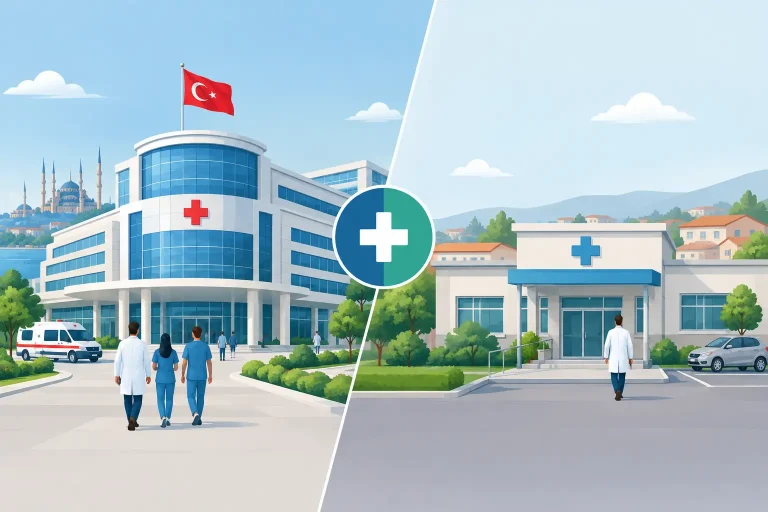
Turkey Hospitals vs Local Hospitals Compared
A lower procedure quote can get a patient’s attention. It should not make the decision on its own.…

Patient Experience That Drives Trust and Growth
A patient who has already uploaded medical records, compared providers, and arranged time away from work is not…

What Is a Medical Travel Facilitator and Why Use One?
A lower treatment quote can look compelling until you try to compare what it actually includes: surgeon fees,…