
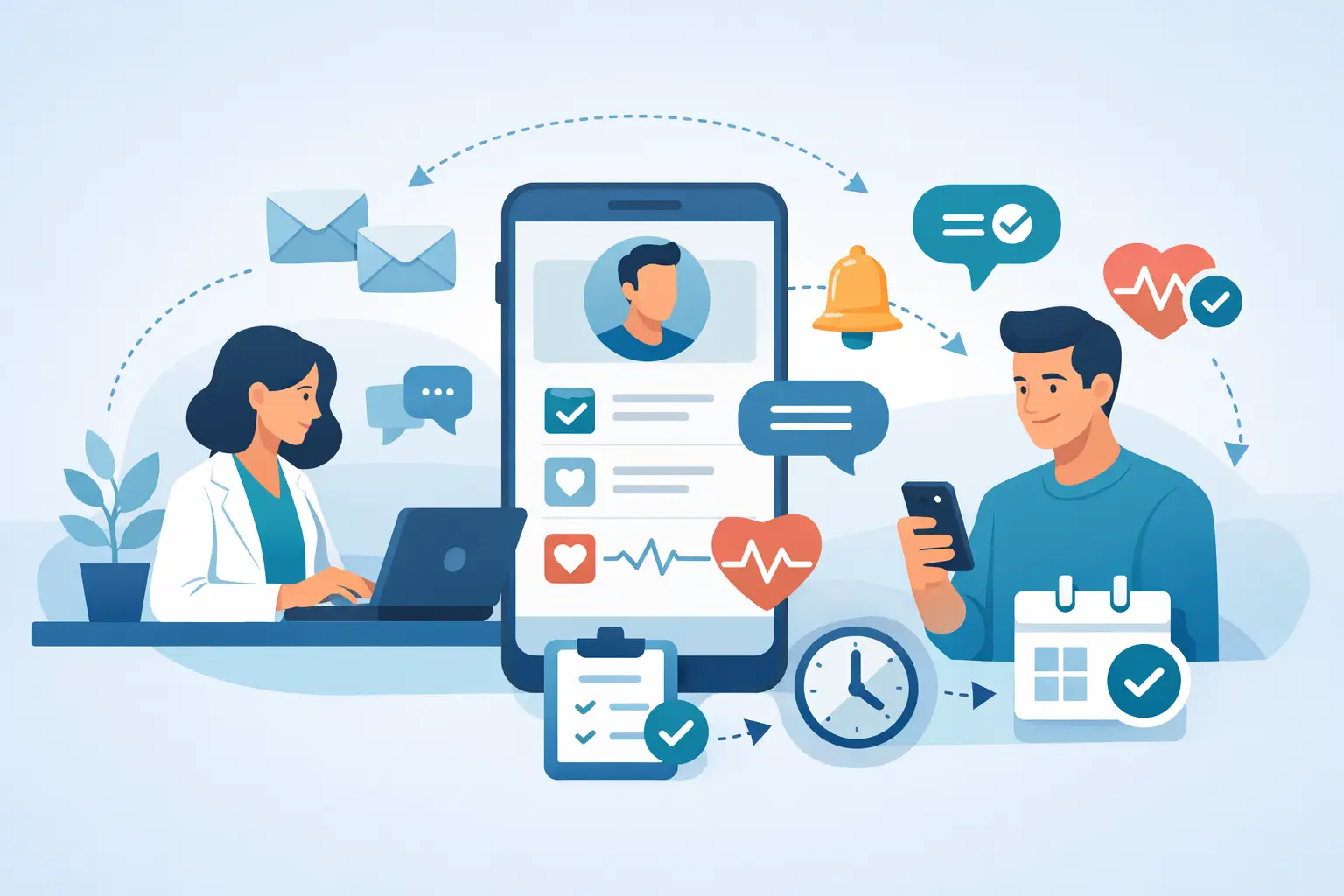
A missed follow-up is rarely just a missed message. For a hospital, clinic, or international patient program, it can mean a lost procedure, lower retention, weaker outcomes, and a patient who quietly books elsewhere. That is why patient follow up automation has become a growth and operations priority, not just a convenience feature for front-desk teams.
In healthcare, speed matters, but timing alone is not enough. Patients need reminders, reassurance, education, and next-step clarity at different points in their journey. The challenge is that manual outreach breaks down fast when inquiry volume grows, treatment pathways become more complex, or international cases involve travel coordination, financing questions, and post-treatment communication. Automation solves part of that problem, but only when it is built around real patient behavior and real operational goals.
What patient follow up automation actually means
Patient follow up automation is the structured use of CRM workflows, messaging tools, call triggers, and data rules to send the right follow-up communication at the right moment without relying on staff to remember every task manually. That can include lead response after a form submission, appointment reminders, no-show recovery, pre-op instructions, post-op check-ins, review requests, reactivation campaigns, and long-term care prompts.
The keyword is structured. Good automation is not a blast of generic texts and emails. It is a mapped communication system tied to patient stage, treatment type, language, source, and urgency. A cosmetic surgery inquiry from the US considering treatment in Turkey should not receive the same sequence as a local patient booking a routine dental cleaning. Both need follow-up, but the content, cadence, and channel should be different.
This is where many healthcare organizations get it wrong. They buy software first and strategy second. The result is a workflow that looks efficient on paper but creates friction in real life.
Why automation matters for growth, not just admin
Healthcare leaders often first see follow-up as an operational issue. Staff are overloaded, call backs are inconsistent, and lead leakage is hard to track. Those are valid reasons to automate, but the bigger value is commercial.
A strong follow-up system improves contact rates, consultation bookings, treatment acceptance, and patient retention. It also shortens response time, which is especially important in competitive specialties such as dental, bariatrics, hair transplant, IVF, orthopedics, and cosmetic procedures. In international care, delayed follow-up can end a sale before a conversation even begins. Patients comparing destinations want answers quickly, and confidence drops when communication feels slow or fragmented.
Automation also gives management something manual processes rarely can – visibility. You can see where patients stop responding, which campaigns produce booked consults, which coordinators close best after automated outreach, and where no-show or drop-off patterns begin. That visibility supports better marketing decisions and better patient service at the same time.
Where patient follow up automation has the biggest impact
The highest returns usually come from a few specific parts of the patient journey. New lead follow-up is one of them. If a patient submits an inquiry for treatment pricing or physician availability, the first few minutes matter. An immediate acknowledgment message, followed by a timed call task and a second message with clear next steps, often performs better than a single generic reply.
Appointment adherence is another area where automation pays off quickly. Reminder sequences sent by text, email, or voice can reduce no-shows, but the details matter. Too many reminders feel intrusive. Too few leave room for forgetfulness. For some specialties, adding preparation instructions improves both attendance and readiness.
Post-treatment communication is often underestimated. Patients who receive timely check-ins, symptom guidance, medication reminders, and satisfaction prompts are more likely to trust the provider, leave positive feedback, and return for additional care. For medical tourism programs, this stage is even more sensitive because the patient may already be back home. Follow-up needs to bridge distance without feeling impersonal.
Reactivation is another missed opportunity. Many clinics have thousands of old leads and inactive patients sitting in a database with no follow-up logic attached. Automated re-engagement campaigns can recover meaningful revenue, especially when segmented by prior interest, treatment history, or lapse period.
How to build patient follow up automation that works
The most effective approach starts with journey mapping, not software settings. Before building any workflow, define the stages that matter: inquiry, qualification, consultation booked, consultation completed, treatment scheduled, treatment completed, and long-term retention. Then identify what the patient needs at each stage and what the business needs to happen next.
Once those stages are clear, choose triggers carefully. A form fill, missed call, canceled appointment, completed procedure, or inactive period can all start a sequence. But every trigger should have a purpose. If there is no measurable action attached, the automation usually becomes noise.
Message design is where healthcare organizations either gain trust or lose it. Patients respond better when communications are specific, useful, and human in tone. A reminder that includes the provider name, appointment time, preparation instructions, and a simple reschedule option is stronger than a vague confirmation text. The same principle applies to international patient programs. If a patient is considering treatment abroad, follow-up should reduce uncertainty with practical information on consultation steps, travel planning, documentation, and recovery support.
Channel mix also matters. Text is fast and effective for reminders. Email works well for detailed education and documentation. Phone remains important for high-value procedures, complex cases, and emotionally sensitive decisions. Automation should support human outreach, not replace it where conversation is essential.
The trade-offs leaders should consider
More automation is not always better automation. Over-messaging can reduce response rates and damage brand trust. Under-segmentation can make patients feel like entries in a database. And if the CRM is messy, automation can scale the mess.
There is also a compliance and privacy dimension. Healthcare communication must be designed with appropriate consent, data handling, and regional requirements in mind. That becomes more complex when organizations work across borders, languages, and time zones. A system that works for domestic outpatient reminders may need a different structure for international treatment coordination.
Another trade-off is centralization versus flexibility. Large hospital groups often want standardized workflows across departments, which helps reporting and governance. But service lines differ. Orthopedics, IVF, dental implants, and aesthetic procedures each have distinct decision cycles and patient concerns. Standardization brings efficiency, while specialty-level adaptation brings conversion. The right balance depends on volume, complexity, and management maturity.
What good automation looks like in medical tourism
Medical tourism raises the stakes because patient follow-up is part sales process, part care navigation, and part trust-building. A patient asking about surgery in another country is not only evaluating price. They are evaluating safety, hospital quality, physician expertise, travel logistics, recovery planning, and what happens after they return home.
That means patient follow up automation for international programs should do more than chase inquiries. It should guide patients through decision points. Early communication may focus on treatment suitability and coordinator contact. Mid-funnel follow-up may address doctor credentials, estimated length of stay, and package details. Later messages may support travel prep, airport transfers, companion arrangements, and post-procedure expectations.
The strongest systems connect marketing, sales, and operations instead of treating them as separate functions. That is where a healthcare growth partner with call center support, CRM structure, and international patient process knowledge can create a measurable advantage. DGS Healthcare operates in that intersection, where lead generation is only valuable if follow-up converts and patient experience stays strong through treatment and aftercare.
How to measure whether it is working
If leadership only tracks open rates, they are missing the point. The real indicators are operational and commercial. Response speed, contact rate, consultation booking rate, no-show rate, treatment conversion, reactivation revenue, and retention give a much clearer picture.
It is also worth measuring handoff quality. How many automated leads actually reach a live coordinator? How long does that take? Which workflows create booked consultations but low treatment acceptance? Those gaps often reveal that the messaging is fine, but the next operational step is weak.
Patient feedback should be part of the evaluation too. Automation should make the experience feel clearer and more supportive, not colder. If patients say communication felt repetitive, confusing, or too sales-driven, the workflow needs adjustment.
Patient follow up automation is only as strong as the strategy behind it
The market does not reward hospitals and clinics for having automation software. It rewards them for following up faster, guiding patients better, and converting demand into care without letting quality slip. That takes more than templates and triggers. It takes patient journey design, segmented messaging, accountable teams, and reporting that connects communication to revenue and outcomes.
For healthcare organizations and international patient programs, the opportunity is straightforward. Build follow-up systems that reduce uncertainty for patients and reduce leakage for the business. When automation is set up that way, it does not feel mechanical. It feels organized, responsive, and worthy of trust.
The best follow-up is not the loudest or the most frequent. It is the one that arrives at the right moment and gives the patient a clear reason to take the next step.
Related guides
Turkey Hospitals vs Local Hospitals Compared
A lower procedure quote can get a patient’s attention. It should not make the decision on its own.…

Patient Experience That Drives Trust and Growth
A patient who has already uploaded medical records, compared providers, and arranged time away from work is not…

What Is a Medical Travel Facilitator and Why Use One?
A lower treatment quote can look compelling until you try to compare what it actually includes: surgeon fees,…