

Many people in the United Kingdom are now looking abroad for top-notch orthopaedic care. Dealing with an ACL Injury can be tough, with long waits at home. Turkey has become a top choice for those wanting quick, high-quality surgery.
This article takes you through the whole process, from getting diagnosed to getting back on your feet. We aim to offer a clear and supportive guide for those looking at treatment abroad. Turkey’s special care is both affordable and of the highest quality, helping many people recover well.
Key Takeaways
- Turkey offers high-quality orthopaedic services for UK patients.
- Reduced waiting times are a primary benefit of seeking treatment abroad.
- Comprehensive care covers everything from initial diagnosis to full rehabilitation.
- Cost-effective medical solutions do not compromise on clinical standards.
- Professional support ensures patients feel informed throughout their recovery journey.
Understanding the Anatomy and Mechanics of an ACL Injury
The knee’s stability relies on the anterior cruciate ligament. This small but strong tissue links the femur to the tibia. It keeps the joint stable. If it’s damaged, the leg’s mechanics can be severely affected.
The Role of the Anterior Cruciate Ligament in Knee Stability
The ligament stops the tibia from sliding too far forward. It also controls rotational forces during movement. Without it, the knee becomes unstable, mainly during sudden movements.
Maintaining structural integrity is key for athletes and active people. An Anterior Cruciate Ligament Injury can make the knee feel unstable. This often happens during intense physical activities.
Common Mechanisms of Injury in Sports and Daily Life
Most ACL injuries happen without direct contact. They often result from high-intensity movements. Landing wrong, like with a flat foot, can cause injuries.
Sharp changes in direction or sudden stops can also harm the ligament. These actions put too much strain on it. Knowing this helps understand why surgery might be needed.
| Mechanism | Primary Force | Typical Scenario |
|---|---|---|
| Sudden Pivoting | Rotational Torque | Football or Netball |
| Awkward Landing | Valgus Stress | Gymnastics or Basketball |
| Rapid Deceleration | Shear Force | Running or Tennis |
Knowing how injuries happen helps patients understand their Anterior Cruciate Ligament Injury. Doctors can then tailor the recovery better. This knowledge prepares patients for their rehabilitation after an ACL Injury.
Common Symptoms and Diagnostic Procedures for ACL Tears
When a knee injury happens, spotting the signs of an Anterior Cruciate Ligament injury is key to healing. People often say a sudden event made moving hard.
Recognising the Signs of a Ruptured Ligament
The first sign of an ACL injury is often a sudden feeling during impact. Many hear or feel a loud ‘pop’ in their knee, followed by feeling unstable.
After the injury, the knee changes quickly. Look out for these signs:
- Swelling starts fast, within hours.
- The knee feels like it’s ‘giving way’ when moving.
- Pain is so bad it makes it hard to stand.
- It’s harder to move the knee than the other one.
Clinical Examinations and Imaging Techniques
When you see a doctor, they’ll do special tests to check for an ACL tear. These tests check if the joint is loose and if the ligament is okay.
They might do the Lachman test and the pivot-shift examination. These tests see if the tibia moves wrong in the femur, a sign of a tear.
To be sure, doctors use advanced imaging. An MRI scan is best for seeing an ACL tear. It shows the soft tissues clearly. This helps find any damage to the meniscus or cartilage, making sure treatment covers everything.
The Rise of Medical Tourism for ACL Surgery in Turkey
Many patients look to Turkey for ACL Surgery because of its advanced medical setup. Turkey has become a top choice for orthopaedic care worldwide. It focuses on patient results and uses the latest technology, setting a high standard for medical services globally.
Why Patients Choose Turkey for Orthopaedic Procedures
One big reason is the shorter waiting times compared to the NHS in the UK. Patients can get their ACL Treatment much faster, speeding up their recovery. This quick service doesn’t mean they sacrifice quality, as Turkey has many skilled orthopaedic surgeons.
These doctors often train in top international schools, bringing the best practices to Turkey. They also offer comprehensive care packages that include support after surgery. This ensures patients get the best care from start to finish.
The Growth of Accredited Medical Facilities in Istanbul and Antalya
Investment has led to top medical centres in Istanbul and Antalya. These places are made for international patients, with state-of-the-art infrastructure like Europe’s best hospitals. Many have international accreditations, showing they meet strict safety and cleanliness standards.
These cities have the latest technology for precise diagnoses and effective ACL Surgery. Patients get top medical care and a supportive environment for their ACL Treatment. Turkey’s medical scene is growing, making it a leader in orthopaedic medicine.
Comparing Healthcare Standards: Turkey versus the United Kingdom
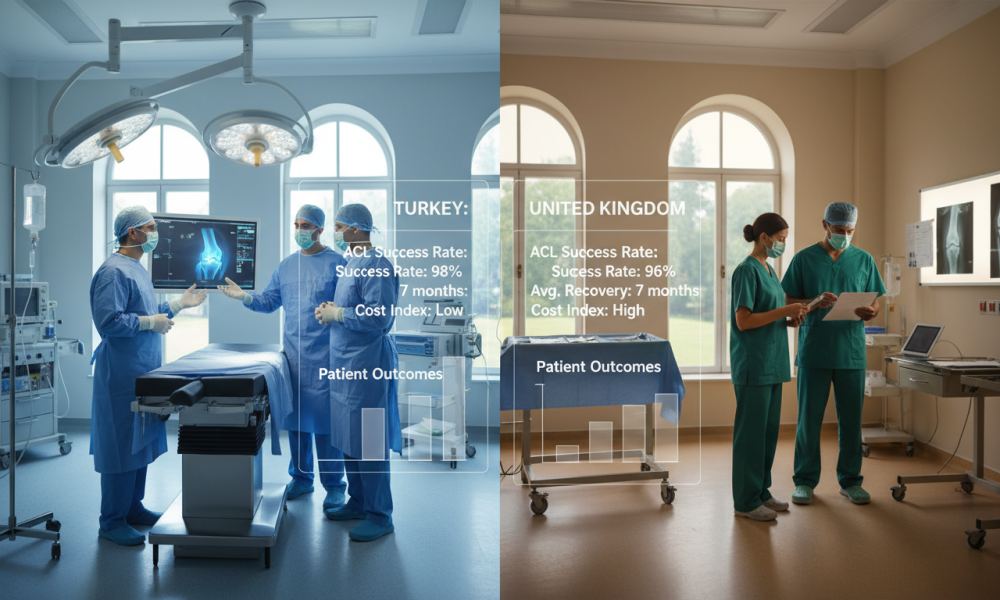
The difference in healthcare between Turkey and the UK is not as big as many think. People often wonder if international clinics can match the NHS or British private clinics. Luckily, Turkey’s medical care has grown to meet and sometimes beat global benchmarks for orthopaedics.
Regulatory Oversight and Surgeon Qualifications
Turkish orthopaedic surgeons get a lot of training that meets international standards. Many do fellowships in Europe or North America. This brings a lot of diverse clinical experience back to Turkey.
These doctors often join top groups like the European Society of Sports Traumatology, Knee Surgery and Arthroscopy (ESSKA). Turkey’s healthcare follows strict rules to keep patients safe and ensure good results. Hospitals follow national health rules that are checked often to keep accreditation status.
Technological Advancements in Turkish Hospitals
Modern Turkish hospitals have top technology, just like the UK’s best private clinics. They use robotic-assisted surgical systems for surgeries. This makes surgeries more precise, leading to improved recovery times and better knee stability.
Turkish clinics also have the latest in diagnostic tools, like high-resolution MRI and CT scanners. This lets surgeons see injuries clearly before surgery. Turkey offers a strong choice for top orthopaedic care with its advanced tech and skilled doctors.
Pre-operative Preparation and Patient Assessment
Getting the best results from surgery starts well before you fly. A well-planned medical journey ensures you’re ready for your procedure in Turkey. Early assessment and physical prep lay the groundwork for a smooth recovery.
Initial Consultations and Remote Diagnostics
Today, seamless communication is key in medical tourism. Before you travel, you’ll have a detailed remote consultation. This lets your surgeon check your medical history and current symptoms.
You’ll need to send your latest MRI scans and reports online. This helps the team confirm your diagnosis and plan your surgery. Clear communication at this stage avoids delays and makes sure everything is ready for you.
Optimising Physical Health Before Surgery
Starting a prehabilitation program is essential for your success. You’ll do exercises to reduce swelling and keep your muscles strong. This improves your knee’s range of motion before surgery, making recovery easier.
Arriving with a stable, mobile knee can speed up your recovery. Your physiotherapist or surgeon will give you a personalized plan before your flight. Following this plan helps prevent muscle loss and prepares your body for surgery.
The table below shows the key steps for your preparation:
| Preparation Stage | Primary Objective | Key Action |
|---|---|---|
| Remote Consultation | Clinical Assessment | Submit MRI and medical history |
| Prehabilitation | Joint Preparation | Follow targeted exercise plan |
| Logistical Planning | Travel Readiness | Confirm flight and accommodation |
| Health Optimisation | Physical Readiness | Reduce swelling and inflammation |
Surgical Techniques Used in Modern ACL Reconstruction
Understanding the ACL surgery techniques is key for the best results. Modern surgery aims to restore knee stability with precise graft placement. Surgeons in Turkey use these advanced methods to help patients regain full mobility and confidence.
Autograft versus Allograft Options
Choosing the right graft material is a big decision. An autograft uses the patient’s own tissue, often from the hamstring or patellar tendon. This is preferred for younger, active people because it heals faster with the bone.
An allograft uses donor tissue from a bank. This option can make the surgery shorter and avoid extra cuts on the patient. Your team will help decide which is best for you based on your lifestyle and activities.
Minimally Invasive Arthroscopic Approaches
Modern ACL surgery often uses minimally invasive arthroscopic techniques. These methods use small incisions and a camera for clear knee views. This approach causes less damage to tissues than traditional surgery.
These methods lead to less pain after surgery and shorter hospital stays. The precision of arthroscopic tools ensures accurate tunnel placement for better knee stability. Choosing these modern techniques means a smoother and quicker recovery.
Post-operative Care and Immediate ACL Recovery Protocols
Recovery starts right after surgery. The first few days are key for a good ACL Recovery. Listening to your doctor’s advice is vital for a smooth return to normal life.
Managing Pain and Inflammation in the First Week
Reducing pain and swelling is the main goal in the first days. Doctors often suggest a mix of medicine and cold treatments. Keeping symptoms under control helps you rest better, which aids in healing.
Here are some tips for a better recovery:
- Elevation: Elevate your leg to reduce swelling.
- Cryotherapy: Use ice packs or cool devices on your knee for 15 to 20 minutes, a few times a day.
- Medication adherence: Follow your doctor’s instructions for pain and swelling meds.
Early Mobilisation and Weight-bearing Guidelines
Moving early is important to avoid muscle loss and stiffness. Even small movements help keep blood flowing and aid in healing. If you’re looking for a top orthopedic clinic in Turkey, talk about their recovery plans.
Most people start walking as soon as they can, with crutches for support. Your physiotherapist will create a plan that’s right for you. This way, you can regain confidence in your knee quickly after surgery.
Structured ACL Rehabilitation Programmes
The journey back to peak physical performance starts with a well-planned rehabilitation programme. After surgery, the knee needs a gradual and methodical approach to regain its strength and full range of motion. High-quality rehabilitation treatment in Turkey provides the necessary support for a successful recovery.
Phases of Physiotherapy Following Reconstruction
Recovery is split into distinct stages, each with specific goals. The first phase focuses on reducing inflammation and restoring basic joint mobility. Gentle, controlled movements are used to prevent stiffness and ensure the graft heals correctly.
As the patient moves forward, muscle activation and weight-bearing exercises become more important. Later stages include dynamic agility training and sport-specific movements. This structured progression prepares the knee for daily life and athletic activities.
The Role of Professional Guidance in Recovery
Following a professional plan is key to a successful recovery. A qualified physiotherapist tailors the ACL Rehabilitation programme to the individual’s needs and recovery speed. They closely monitor progress, adjusting exercises for safety and maximum gains.
Professional guidance helps patients avoid common mistakes, like overexertion or improper movement. Working with experts ensures the recovery is on the right path. This dedicated approach to ACL Rehabilitation helps patients return to their favourite activities with renewed stability and strength.
Essential ACL Exercises for Long-term Knee Stability
Getting your knee stable for the long term needs hard work after surgery. The surgery sets the stage, but ACL exercises are key to success. These exercises help protect the graft and get the joint working fully.
Strengthening the Quadriceps and Hamstrings
The quadriceps and hamstrings are the knee’s main stabilisers. They’re essential for absorbing shock and easing the stress on the repaired ligament. Consistency is key in these exercises to keep the knee strong every day.
Using controlled, progressive resistance training is important. It lets the muscles grow without harming the healing tissue. Leg presses, hamstring curls, and controlled squats are great for building endurance. These ACL exercises wrap a protective layer around your knee.
Proprioception and Balance Training
Getting your neuromuscular control back is as important as building strength. Proprioception training helps your brain and body work together, keeping the knee stable. It’s essential for feeling secure in sports and high-impact activities.
Balance drills, like standing on one leg or using a wobble board, strengthen the lower limb’s stabilisers. Adding these ACL exercises to your routine improves your movement and prevents injuries. Here’s a typical rehabilitation plan.
| Phase | Primary Focus | Example Exercise |
|---|---|---|
| Early Stage | Activation | Quad Sets |
| Intermediate | Strength | Weighted Squats |
| Advanced | Neuromuscular | Single-leg Balance |
| Maintenance | Functional | Agility Drills |
Following this structured plan keeps your knee strong and functional for years. Always check with your physiotherapist to adjust these ACL exercises to fit your recovery needs.
Managing Expectations and Possible Complications
Recovering from an ACL tear takes time and understanding. Surgery is a big step, but the real work comes after. Setting clear, achievable goals helps keep you physically and mentally strong.
Understanding the Timeline for Return to Sport
Getting back to sports takes time, usually months. It’s key to not rush it to avoid injuries. Focus on reaching functional milestones, not just the date.
Tracking your progress with leading and lagging KPIs in healthcare helps. This way, you know when your knee is ready for more. Consistency in your rehabilitation programme is key to a successful return.
Identifying Risks and Post-surgical Challenges
Even with great surgery, problems can happen during recovery. Issues like stiffness, muscle loss, or graft failure can occur. Spotting these early is vital.
If you see unexpected swelling, loss of movement, or pain, see your doctor right away. Proactive communication with your physiotherapist can prevent big problems. Paying attention to your body helps avoid delays and keeps you on track.
The Importance of ACL Prevention Strategies
Preventing an ACL injury is better than fixing it after it happens. By being proactive, athletes can keep their joints safe and play longer. It’s key to use ACL prevention strategies to keep knees healthy and stable.
Neuromuscular Training for Athletes
Neuromuscular training helps the brain talk better to the muscles around the knee. It focuses on core stability and hip control. This keeps the lower limbs in line during fast movements.
Getting help from a pro is important to do these exercises right. Regular practice builds muscle memory. This is essential for safe reactions in games. It lowers the chance of getting hurt again.
Modifying Movement Patterns to Reduce Injury Risk
Changing how an athlete lands or turns is key in ACL prevention. Many injuries happen when the knee bends inward. Training should focus on soft landings and keeping knees over toes to reduce stress.
The table below shows important areas for athletes to work on. It helps improve movement and lower knee injury risk.
| Training Focus | Primary Benefit | Target Area |
|---|---|---|
| Core Stability | Improved balance | Abdominal muscles |
| Hip Control | Joint alignment | Gluteal muscles |
| Landing Mechanics | Force absorption | Quadriceps/Hamstrings |
| Proprioception | Joint awareness | Ankle and knee |
Logistics of Travelling to Turkey for Orthopaedic Treatment
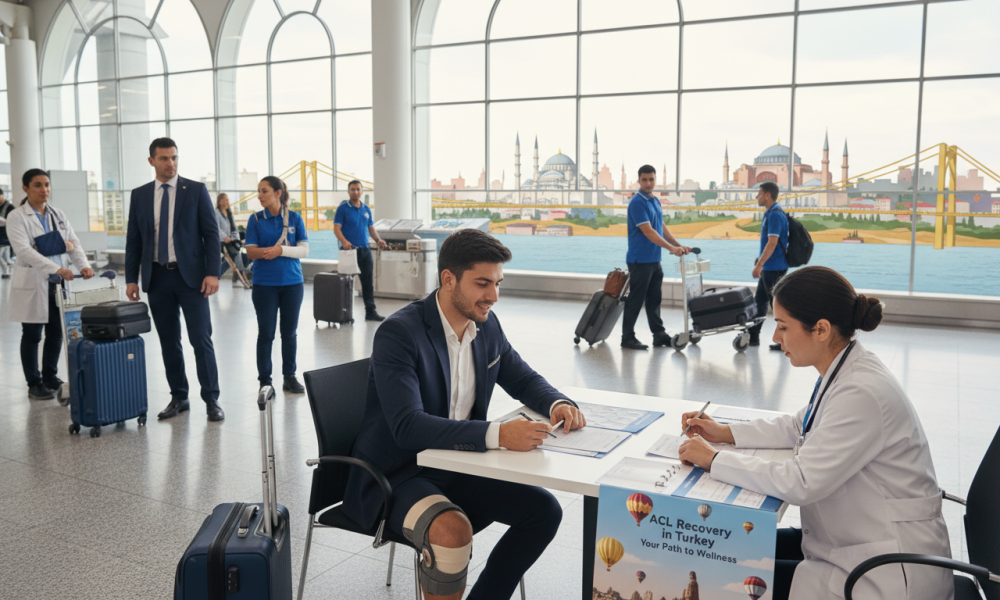
Getting orthopaedic treatment abroad needs careful planning and clear talks. When you pick Turkey for your ACL treatment, it’s more than just a flight. You need a detailed plan for your whole trip.
Travel Planning and Post-surgical Recovery Periods
Before you leave, plan for the time needed for your ACL recovery. Most doctors say you should stay near the clinic for 7 to 10 days after surgery. This is to watch for any problems and make sure the wound heals right.
Think about these key things when planning your trip:
- Flight arrangements: Book seats with more legroom to keep your knee straight during the flight.
- Accommodation: Pick hotels or apartments near the clinic with easy access.
- Documentation: Keep all your medical papers, notes, and images in a safe, easy-to-get folder.
Coordinating Care Between Turkish Surgeons and UK Physiotherapists
For your treatment to work, your care plan must smoothly move from Turkey to the UK. It’s crucial for long-term success to link your Turkish surgeon with your UK physiotherapist.
Make sure your surgeon gives a clear rehabilitation protocol for your UK physio to follow. This keeps your ACL rehabilitation on track, avoiding any breaks in your progress.
Good coordination means:
- Sharing digital copies of your surgical report and post-op images.
- Booking your first UK physio session within 48 hours of coming back.
- Keeping open communication for any questions about your ACL treatment progress.
By focusing on these steps, you can concentrate on healing. A well-planned journey reduces stress and helps you recover better.
Financial Considerations and Insurance for International Surgery
Planning your finances is key when looking at surgery abroad. Many find that ACL Surgery in Turkey is cheaper than in the UK. Knowing all costs helps you manage your budget and focus on your health.
Cost Analysis of Procedures in Turkey
Choosing Turkey often means better prices due to the favourable exchange rate and lower costs. The total cost usually includes the surgeon’s fees, hospital stay, and anaesthesia. Remember to add extra expenses like flights, accommodation, and post-op meds to your budget.
When you compare these costs to the UK, you’ll see big savings. The quality of care is top-notch, but medical tourism makes it more affordable. This is great for those looking for a cost-effective ACL reconstruction.
| Expense Category | Private UK Estimate | Turkish Clinic Estimate |
|---|---|---|
| Surgical Procedure | £6,000 – £9,000 | £2,500 – £4,000 |
| Consultation Fees | £250 – £500 | Included/Minimal |
| Hospital Stay | £1,500+ | Included |
| Total Average | £8,000 – £11,000 | £3,000 – £4,500 |
Navigating Private Medical Insurance and Funding
Before going abroad for surgery, check with your insurance. Some UK insurers might cover ACL Surgery abroad if the facility is accredited. Always get written confirmation to avoid surprise costs.
If your insurance doesn’t cover it, look at other funding options. Many save up or get medical loans for elective surgeries. Clear communication with your clinic about payment plans can help too.
Conclusion
Getting back on your feet after a ligament injury needs a solid plan and expert help. Those who choose top-notch orthopaedic care in Turkey find a great mix of cost and quality. Your success depends on sticking to a rehabilitation plan and regular physical therapy.
Getting professional advice is key to safely getting back to sports. Adding specific exercises and balance training helps protect your knee. These steps make sure your surgery pays off in the long run.
Traveling for medical care abroad requires careful planning and teamwork with your local doctors. Talking openly with your surgeon in Istanbul or Antalya and your physiotherapist in the UK makes recovery smoother. This teamwork keeps your healing on track at every step.
Your path to an active life is a personal promise to your health. Use what you’ve learned to make smart choices about your care. With the right effort and planning, you can overcome your injury and get back to what you love.
FAQ
Q: What are the primary ACL Symptoms to look out for following a suspected knee trauma?
A: People often hear a ‘pop’ sound when it happens. They then feel swelling and their knee feels unstable. These signs point to an Anterior Cruciate Ligament Injury. It makes it hard to move or bear weight.
Q: Why is Turkey becoming a preferred destination for UK patients seeking ACL Surgery?
A: Turkey is chosen for its top-notch ACL Treatment in places like Istanbul and Antalya. Hospitals like the American Hospital offer world-class care. They use the latest technology and have shorter waiting times than the NHS, often at a lower cost.
Q: How is an ACL Tear definitively diagnosed by orthopaedic specialists?
A: Doctors do physical tests like the Lachman or pivot-shift to check for looseness. But to see how bad the ACL Injury is, an MRI scan is needed. It shows the damage clearly for surgery planning.
Q: What are the differences between autograft and allograft options during ACL Reconstruction?
A: Surgeons replace the torn ligament with a graft. Using the patient’s own tissue, or autograft, is often preferred for younger, active people. It has lower rejection rates. Allograft, from a donor, may cause less pain at first but might not be as good for athletes.
Q: What does a typical timeline for ACL Recovery look like for an international patient?
A: The first phase focuses on reducing swelling and getting basic movement back in a few weeks. People can usually go back to light work in two weeks. But, getting back to sports fully takes about nine to twelve months with a good ACL Rehabilitation plan.
Q: How vital is ‘prehabilitation’ before undergoing surgery for an ACL Injury?
A: Doing specific ACL Exercises before surgery is key for better results. It helps reduce swelling and strengthen muscles. This makes recovery faster and improves knee stability.
Q: Which specific ACL Exercises are most effective for long-term knee stability?
A: Good ACL Rehabilitation includes strength training and balance drills. Focus on the back muscles to support the new ligament. Balance work helps the nervous system, keeping the joint stable.
Q: What are the most effective ACL Prevention strategies for athletes returning to sport?
A: Athletes should do neuromuscular training to strengthen the core and hip. ACL Prevention also means changing how they move, like landing with bent knees. Avoiding ‘valgus’ collapse is important too.
Q: How can I coordinate my ACL Treatment between surgeons in Turkey and my local UK physiotherapist?
A: Keep care continuous with detailed reports and shared scans. Turkish hospitals give a recovery plan your UK physiotherapist can follow. This ensures a smooth transition from surgery to long-term strengthening.
Q: Are the healthcare standards in Turkish hospitals comparable to those in the United Kingdom?
A: Yes, many Turkish hospitals meet international standards, like the Joint Commission International (JCI). They use modern ACL Treatment and techniques, often matching or beating UK private facilities.
Related guides

Healthcare Content Compliance Guide for Growth
A high-performing treatment page can generate international patient inquiries within hours. It can also create material risk if…

Turkey Hospitals vs Local Hospitals Compared
A lower procedure quote can get a patient’s attention. It should not make the decision on its own.…

Patient Experience That Drives Trust and Growth
A patient who has already uploaded medical records, compared providers, and arranged time away from work is not…