
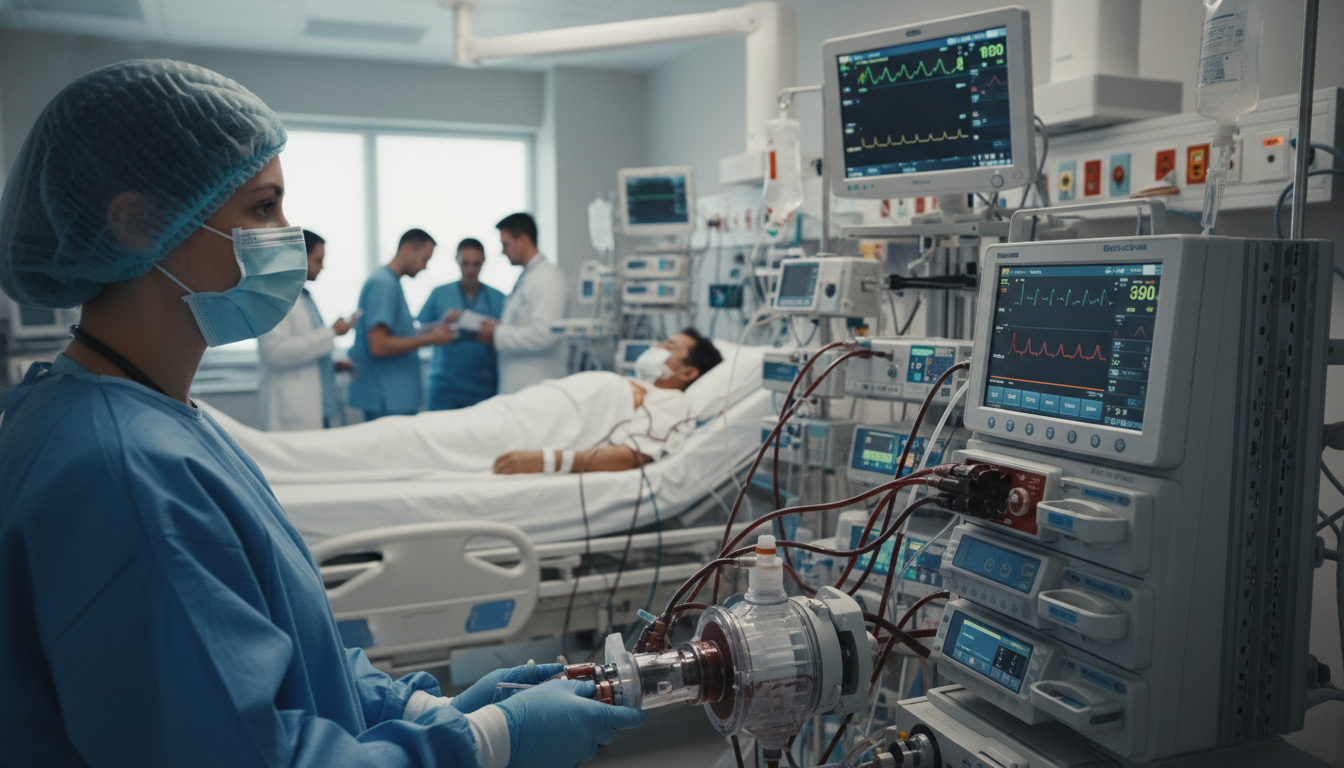
Turkey is now a top choice worldwide for those needing top-notch critical care. It has built modern medical facilities to offer the best care for complex cases.
More and more people are picking this area for its top clinical skills and modern setups. Local hospitals use the latest tech to give patients the best care as they get better.
One big step forward is the ECMO Treatment. This life-saving method is done by expert teams across the country. It gives hope to those facing serious heart or lung problems.
Key Takeaways
- Turkey is recognised as a leading centre for advanced medical care and critical interventions.
- The country prioritises the integration of modern technology to improve patient outcomes.
- Specialised medical teams provide high-level expertise for complex health conditions.
- International patients benefit from world-class facilities and professional support services.
- The availability of advanced life-support systems ensures that critical care is accessible to those in need.
Understanding Extracorporeal Membrane Oxygenation (ECMO) Treatment
Extracorporeal Membrane Oxygenation (ECMO) Treatment is a life-saving method. It helps patients whose hearts or lungs can’t work on their own. This technology keeps people alive while they get better from serious illnesses or injuries.
ECMO works by moving blood outside the body. It does the job that the patient’s organs can’t do. This life-saving intervention has changed intensive care forever.
The Physiological Basis of ECMO
The main aim of ECMO life support is to help with gas exchange and keep blood flowing. It takes blood from the veins and goes through a special filter.
In this filter, the blood gets rid of carbon dioxide and picks up oxygen. Then, it goes back to the patient, skipping the damaged lungs or heart.
This way, important organs get the oxygen they need. It helps the heart and lungs rest and recover.
Historical Evolution of Extracorporeal Life Support
The story of ECMO life support started in the mid-20th century. Scientists were trying to keep blood flowing during heart surgeries. This led to the first heart-lung machines.
Years went by, and these machines got smaller and better. New materials and pumps allowed for longer support times. Now, ECMO is used in intensive care units too.
Today, Extracorporeal Membrane Oxygenation (ECMO) Treatment is a result of many years of research. It keeps getting better, giving hope to those facing tough medical challenges.
Why Turkey Has Become a Global Hub for Advanced Critical Care
Turkey’s rise as a global leader in critical care is not by chance. It’s the result of years of careful planning. The country has focused on improving its healthcare, combining traditional medicine with advanced life-support technologies. This has made Turkey a top choice for patients looking for top-notch care.
Investment in Modern Medical Infrastructure
Turkey has invested heavily in building top-notch hospitals. These facilities are on par with the best in Europe and North America. They are equipped with the latest technology and high-tech intensive care units for complex cases.
These modern hospitals have many key features:
- Advanced monitoring systems for quick decision-making.
- Units for complex respiratory and cardiac support.
- Digital health records for smooth care.
- Modern labs for fast test results.
Accreditation and International Standards in Turkish Hospitals
Turkey’s success also comes from its commitment to international quality. Many top hospitals have Joint Commission International (JCI) accreditation. This ensures they meet high global standards.
Keeping these standards means Turkish hospitals are trusted by patients worldwide. They focus on staying up-to-date with the latest research and guidelines. This ensures patients get the best care in a safe and professional place.
Clinical Indications for ECMO Therapy
Starting advanced life support is based on clear signs that usual treatments have failed. Finding the right ECMO indications is key to giving patients the best care. This treatment helps when standard treatments can’t do the job anymore.
Respiratory Failure and ARDS Management
ECMO therapy is used for severe, but reversible, respiratory failure. When usual ventilation methods can’t keep oxygen levels up or carbon dioxide down, ECMO is needed. This is true for Acute Respiratory Distress Syndrome (ARDS) where lungs can’t expand well.
Doctors look for signs like not getting enough oxygen despite the best ventilator settings. ECMO lets the lungs rest and heal from damage. This helps avoid lung damage from the ventilator, a big risk in critical care.
Cardiac Failure and Circulatory Support
ECMO also helps with heart failure by keeping blood flowing to important organs. It’s used when the heart can’t pump enough blood, even with strong medicines. This is vital for patients after a heart attack or those in severe heart failure.
The table below shows when doctors might use ECMO for different conditions:
| Clinical Condition | Primary Goal | ECMO Configuration |
|---|---|---|
| Severe ARDS | Gas exchange support | Veno-venous (VV) |
| Cardiogenic Shock | Haemodynamic support | Veno-arterial (VA) |
| Refractory Cardiac Arrest | Circulatory restoration | Veno-arterial (VA) |
| Post-cardiotomy failure | Myocardial recovery | Veno-arterial (VA) |
Understanding ECMO Contraindications and Patient Selection
Not every patient with severe respiratory or cardiac failure is right for ECMO therapy. Starting ECMO therapy needs careful thought about the chance of recovery and the risks. Doctors must look at the patient’s health and how well they can handle the treatment.
Absolute versus Relative Contraindications
Doctors split ECMO contraindications into two groups. Absolute contraindications are when the treatment is not needed or is too risky. These cases are when the patient’s condition is too severe.
Relative contraindications are when the treatment is risky but not impossible. These cases need careful thought from a team of doctors. They decide if the benefits of treatment are worth the risks.
| Category | Description | Clinical Examples |
|---|---|---|
| Absolute | Conditions where support is futile | Terminal malignancy, irreversible brain injury |
| Relative | High-risk factors requiring caution | Advanced age, severe coagulopathy, obesity |
| Decision Basis | Assessment of recovery probability | Organ failure severity, comorbidities |
The Importance of Thorough Pre-procedure Screening
A comprehensive pre-procedure screening is key for safe and effective ECMO therapy. It checks the patient’s medical history, organ function, and any health problems. This helps avoid treatments that could harm more than help.
The screening includes tests like imaging and blood tests. Collaboration between doctors and specialists is important. This ensures all aspects of the patient’s health are considered. It’s a sign of top-notch care, focusing on patients most likely to recover well.
The Technical Components of the ECMO Machine
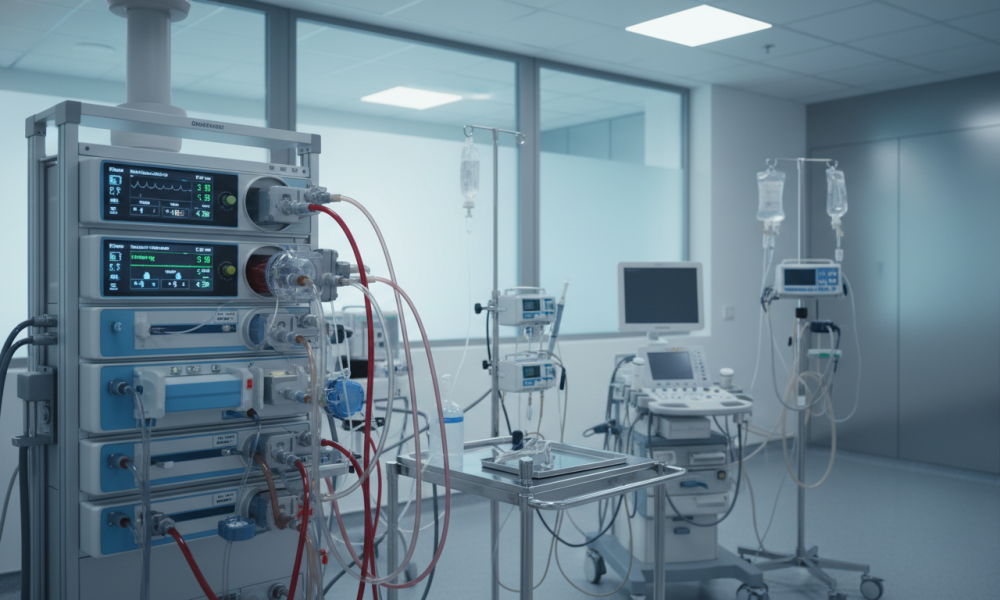
The ECMO machine is a key part of advanced life support. It’s a medical marvel that helps patients when their organs fail. This machine acts as an external lung or heart, giving the body a chance to rest and heal.
It works by moving blood through tubes and devices. This keeps the body’s vital functions going and helps with breathing and heart functions.
The Role of the Membrane Oxygenator
The membrane oxygenator is a vital part of the ECMO machine. It acts like an artificial lung, adding oxygen to the blood and removing carbon dioxide. This happens through a special membrane that keeps blood and gas separate, preventing air bubbles.
Today’s oxygenators are very good at their job. They use new materials to reduce inflammation caused by synthetic surfaces. This ensures that the patient’s tissues get enough oxygen, even when their lungs are not working well.
Centrifugal Pumps and Blood Flow Dynamics
The system uses a centrifugal pump to move blood. This pump is different from old roller pumps because it uses a magnetic impeller. This design is gentler on blood cells, reducing the risk of damage during long-term support.
The pump lets doctors adjust the flow rate precisely. This is important for keeping blood flowing well and preventing problems like blood clots. The pump and oxygenator work together smoothly, making the ECMO machine an effective part of the body’s system.
| Component | Primary Function | Clinical Benefit |
|---|---|---|
| Membrane Oxygenator | Gas exchange | Restores blood oxygen levels |
| Centrifugal Pump | Blood propulsion | Maintains systemic circulation |
| Cannulae | Vascular access | Enables extracorporeal flow |
| ECMO Machine Console | System monitoring | Ensures operational safety |
The ECMO Procedure: From Cannulation to Stabilisation
The journey to recovery starts with the careful placement of medical tubing. This is a key part of the ECMO procedure. A skilled team is needed to ensure the patient is safely supported by the machine. Every step is planned to keep the blood flowing smoothly.
Veno-venous (VV) Cannulation Techniques
For severe respiratory failure, the Veno-venous approach is often chosen. It drains blood from a vein and returns it, oxygenated. This method mainly supports the lungs while the heart works as usual.
The team puts the drainage cannula in the femoral vein and the return cannula in the internal jugular vein. This setup helps with gas exchange without needing to access arteries. It gives the lungs time to heal from injury.
Veno-arterial (VA) Cannulation Techniques
When both heart and lung support are needed, Veno-arterial is used. It returns blood to the arteries, bypassing the heart and lungs. This is key for patients with heart failure or severe cardiac arrest.
Inserting the cannulae is more complex, needing precise arterial access. Once in, the machine pumps blood, stabilising blood pressure and ensuring organs get oxygen. This is a critical part of the ECMO procedure for recovery.
Types of ECMO Life Support Systems
ECMO life support systems are very flexible. They help doctors tailor treatments for patients with different organ failures. By changing the circuit setup, teams can give the right help to each patient. This flexibility is key to top-notch care in Turkish hospitals.
Short-term versus Long-term Support Strategies
Choosing how long to use ECMO is critical for a patient’s recovery. Short-term use is often as a bridge-to-recovery. It helps while the heart or lungs get better from injury. This is common in reversible respiratory failure or after heart surgery.
Long-term ECMO is a bridge to more treatments, like heart transplants. It keeps patients stable while they wait for surgery. Turkish hospitals are great at managing these transitions, keeping patients stable in ICU.
“The true measure of medical progress lies in our ability to customise life-saving technology to the unique physiological requirements of every patient.”
Hybrid Configurations for Complex Cases
For very complex cases, standard methods aren’t enough. Hybrid setups use multiple access points for full support. These are vital for patients with multi-organ failure or complex anatomy.
Using these systems needs a lot of skill and multidisciplinary coordination. Turkish experts often use these setups for patients not suitable for standard treatments. The benefits include:
- Better oxygen to vital organs during severe shock.
- Improved blood flow in complex heart cases.
- More flexibility in adjusting support as the patient improves.
Managing Possible ECMO Complications
ECMO is a life-saving treatment that needs careful handling. It’s a powerful therapy, but teams must be ready for ECMO complications. This ensures the best care for patients.
Keeping patients safe is the main goal. Medical teams follow strict rules to lower risks. This improves the quality of care.
Haemorrhagic Risks and Anticoagulation Management
Managing anticoagulation is a big challenge in critical care. The body tries to clot when blood touches synthetic surfaces. This can lead to bleeding.
Doctors must carefully use anticoagulants like heparin. Precision is key. Small mistakes can cause serious bleeding.
“The art of medicine in critical care lies in the delicate balance between preventing systemic clotting and avoiding life-threatening haemorrhage during extracorporeal support.”
To keep this balance, hospitals take these steps:
- Regular monitoring of activated clotting time (ACT).
- Frequent assessment of platelet counts and fibrinogen levels.
- Adjustment of infusion rates based on real-time laboratory data.
Neurological Monitoring and Infection Control
Neurological health is a big concern. Continuous monitoring helps spot problems like bleeding in the brain or lack of blood flow. This is done early.
Stopping infections is also key. With invasive lines, the risk of sepsis goes up. Strict aseptic techniques are used to prevent infections.
Using advanced monitoring and strict hygiene, teams lower ECMO complications. This is vital for success in modern intensive care units in Turkey.
Analysing ECMO Survival Rates and Clinical Outcomes
Patients and families often look for clear evidence of successful recovery rates when considering critical care options. The ECMO survival rate gives a clear view of how well medical centres handle life-threatening conditions. By looking at clinical data, we can see the quality of care in modern facilities.
Factors Influencing Patient Prognosis
The success of ECMO therapy depends on several key factors. Doctors must carefully check ECMO contraindications to make sure the patient is right for this intense treatment. Spotting these factors early can greatly improve the chance of a good outcome.
Patient age, how severe their illness is, and how quickly they get treatment are key to recovery. Starting treatment quickly can stop further damage to organs, which is critical for survival. Detailed screening helps doctors tailor care to each patient’s needs.
Benchmarking Turkish Success Rates against Global Data
Turkish medical centres have shown top performance in critical care, often beating global standards. By following strict ECMO contraindications, these hospitals focus on patients most likely to recover. This careful approach has led to a high ECMO survival rate in various settings.
The table below shows how Turkish results compare to global averages in important areas. These figures highlight the commitment to high-quality medical care and ongoing improvement in intensive care units.
| Metric | Global Average | Turkish Centres |
|---|---|---|
| Respiratory Support Success | 65% | 72% |
| Cardiac Support Success | 50% | 58% |
| Complication Management | High | Very High |
| Average Recovery Time | 21 Days | 19 Days |
The Role of Multidisciplinary Teams in Turkish Hospitals
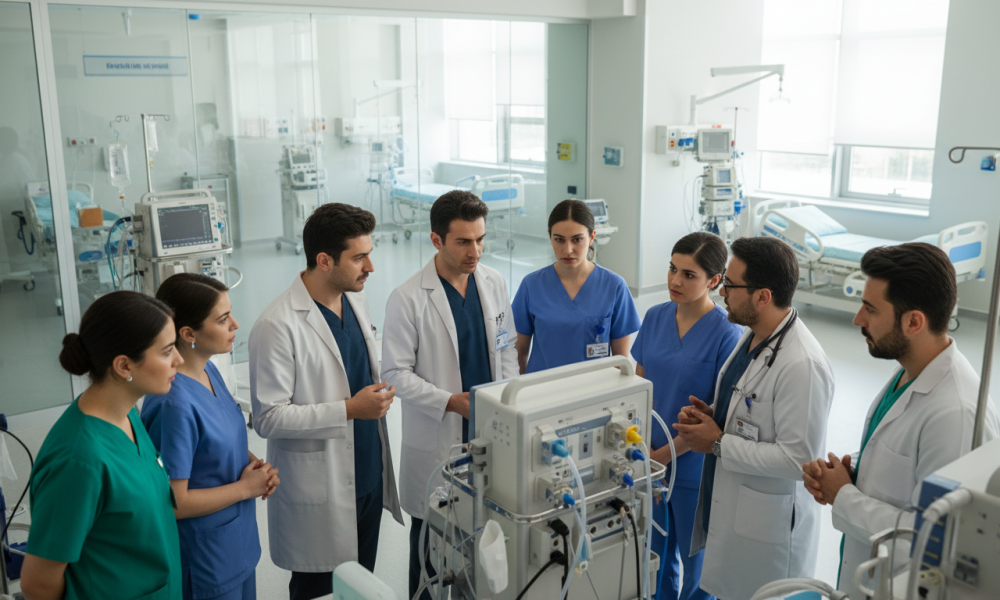
Managing patients on life support needs more than just technology. It requires a team effort. In Turkish hospitals, a team of specialists works together seamlessly. This teamwork is key to the high ECMO survival rate in top hospitals.
Collaboration Between Perfusionists and Intensivists
Perfusionists and intensivists are at the heart of patient care. Perfusionists handle the technical side, keeping blood flow right. Intensivists look at the bigger picture, adjusting medicines and managing organ failure.
This teamwork leads to quick changes in care, keeping patients stable. Their combined skills make care proactive, not just a response to problems. This teamwork is vital for top-notch care.
The Importance of Nursing Specialisation in ECMO Care
Nurses play a big role in watching over patients on life support. They’re trained to spot small changes that might mean a patient needs help fast. Their watchfulness helps prevent serious problems.
Nurses also offer comfort and support to patients and their families. They’re key to the ECMO survival rate, as they’re the main point of contact for care. Their training ensures each patient gets a caring and tailored recovery.
Comparing ECMO Costs in Turkey versus the United States
Deciding where to get Extracorporeal Membrane Oxygenation (ECMO) Treatment is a big choice. It’s about finding the best care at a price you can afford. Many families look abroad because of the big cost difference in healthcare systems.
By exploring options outside their country, patients can get top-notch care without the huge costs of the US.
Cost-Effectiveness of Medical Tourism for Critical Care
Turkish hospitals are known for their remarkable cost-efficiency in critical care. They offer quality care similar to the US but at a much lower cost. This is because their operational costs are much lower.
This means patients can get Extracorporeal Membrane Oxygenation (ECMO) Treatment at a fraction of the US price.
Patients find that the total cost, including ICU stays and specialist fees, is much lower. This financial help lets families focus on recovery without worrying about debt. Here’s a table showing the cost differences for critical care services.
| Service Category | Average Cost (USA) | Average Cost (Turkey) | Potential Savings |
|---|---|---|---|
| ECMO Initiation | $80,000 – $120,000 | $25,000 – $40,000 | Up to 70% |
| Daily ICU Stay | $10,000 – $15,000 | $2,500 – $4,500 | Up to 75% |
| Specialist Consultations | $2,000 – $5,000 | $500 – $1,200 | Up to 80% |
Insurance Coverage and Financial Planning for International Patients
Getting insurance to cover international procedures needs careful planning. Many US health insurance plans may not cover Extracorporeal Membrane Oxygenation (ECMO) Treatment abroad. It’s important to talk to your insurer early to understand their policies.
Planning your finances should include all expected costs, like medical evacuation and after-care. Turkish hospitals have teams to help with costs and billing. Working with these teams can help you budget for all your care needs before you go.
Logistics for International Patients Seeking ECMO in Turkey
Traveling abroad for an ECMO procedure needs careful planning for patient safety. Every step of the journey must be managed with great care. Turkish medical centres have set up strong systems to help international patients arrive safely.
Medical Evacuation and Air Ambulance Services
For patients in a critical state, flying commercially is not an option. Specialised air ambulance services are needed for continuous care during flight. These flights have technology that mirrors intensive care units in top hospitals.
Teams on these flights include skilled perfusionists and critical care doctors. They keep the ECMO procedure stable, managing blood flow and oxygen levels. This smooth transition is key to successful care for international patients.
Visa Requirements and Patient Support Services
International patients need quick entry into Turkey for timely treatment. Most hospitals offer patient support services to help with medical visas. These teams act as a link between the patient’s family and government, reducing delays.
These support teams also help with settling into the new environment. They assist with local accommodation, translation, and keeping in touch with medical staff. This way, the family can focus on the patient’s recovery after the ECMO procedure.
Post-ECMO Rehabilitation and Long-term Recovery
Coming back to daily life after intensive care is a big step for patients who had advanced support. The main goal of ECMO therapy is to keep vital functions stable. But the recovery phase is just as important for long-term success.
Patients often need a team effort to get strong and independent again. This is after a long time in the hospital.
Physical Therapy and Pulmonary Rehabilitation
Being stuck in bed for a long time can cause muscle loss and weakness. Physical therapists are key in helping patients move again. They use exercises to build strength, balance, and endurance.
Pulmonary rehab is also vital for those with severe lung problems. It involves breathing exercises to boost lung function and oxygen use. This helps deal with the lasting effects of ECMO complications on physical health.
Psychological Support for Post-ICU Syndrome
Mental health is a big concern for patients, as many face Post-ICU syndrome. This can include anxiety, depression, or brain fog after a serious medical event. Counselling and support groups offer a safe place for patients to share their feelings and heal.
Getting help early is important for dealing with these mental challenges. Adding mental health checks to the recovery plan helps patients cope with their emotional journey. For more on complex recovery, like specialised oncology or thoracic care, expert advice is essential.
| Recovery Phase | Primary Focus | Expected Outcome |
|---|---|---|
| Early Mobilisation | Muscle activation | Prevention of atrophy |
| Pulmonary Rehab | Lung function | Improved oxygen saturation |
| Psychological Care | Mental resilience | Reduced anxiety levels |
| Community Reintegration | Daily living skills | Restored independence |
Technological Advancements in Turkish Intensive Care Units
The world of intensive care in Turkey is changing fast thanks to digital innovation. Hospitals are buying top-notch equipment to give patients the best care worldwide. They’re using smart systems to help doctors make quick, life-saving choices.
Integration of Artificial Intelligence in Monitoring
Artificial Intelligence (AI) is key in Turkish ICUs now. These smart systems look at lots of patient data live, helping doctors spot problems early. They use predictive analytics to fine-tune an ECMO machine settings.
This way, doctors can avoid mistakes during tricky treatments. AI watches for small changes in vital signs, making sure each patient gets the right treatment. This is a big step up for patient safety and better recovery chances.
Next-Generation Oxygenator Technology
Turkish hospitals are also updating their equipment with the latest tech. New oxygenators are made to be gentler on the body, reducing inflammation. This means the ECMO machine works better for longer.
These new devices are more reliable and stable, keeping blood flowing smoothly. They protect blood cells from harm, thanks to being less reactive. This is why Turkey is a top choice for critical care from around the world.
| Technology Feature | Traditional Systems | Next-Generation Systems |
|---|---|---|
| Monitoring Capability | Manual observation | AI-driven predictive alerts |
| Oxygenator Efficiency | Standard gas exchange | Enhanced biocompatibility |
| ECMO machine Control | Basic manual settings | Automated flow optimisation |
| Patient Safety | Reactive intervention | Proactive risk mitigation |
Ethical Considerations in Critical Care Medicine
When patients face life-threatening conditions, the moral weight of clinical decisions is huge. Modern intensive care units blend advanced technology with human vulnerability. Navigating this space requires a commitment to transparency, empathy, and rigorous ethical standards.
Informed Consent and Family Communication
Clear communication is key to building trust between medical teams and patient families. Doctors must explain the ECMO indications in simple terms. This ensures families understand the benefits and risks of the procedure.
Good communication is more than sharing facts; it’s about listening and showing emotional support. By addressing concerns early, doctors can align treatment with the patient’s values. Honest communication is vital when the future is uncertain or complex.
“The true measure of medical excellence is found not only in the technology we employ but in the compassion and clarity with which we guide families through their darkest hours.”
End-of-Life Decision Making in Complex Cases
Critical care often deals with unpredictable outcomes. When ECMO indications show no hope of recovery, the focus shifts to dignity and comfort. These moments need a team effort that puts the patient’s well-being first.
Decisions to stop life support are never easy. Medical teams work with families to make choices that respect the patient’s wishes and dignity. Providing a supportive environment during these difficult times is essential for quality care.
Conclusion
Choosing the right place for life-saving treatments is key. Turkey is a top choice for this, thanks to its focus on top-notch medical care. It has the best technology and teams ready to help.
Patients get the best care with advanced machines and expert doctors. This ensures every treatment step is carefully planned. Hospitals in places like Istanbul and Ankara keep patients safe with constant checks and proven methods.
Success in critical care comes from teamwork. Turkish medical teams work well together. This teamwork helps patients get better and recover faster. They offer care that is both caring and meets global standards.
Patients from around the world can get top care in Turkey. It’s a place where health needs are handled with care and skill. Contact trusted healthcare providers in Turkey to start your journey to better health.
FAQ
Q: What exactly is Extracorporeal Membrane Oxygenation (ECMO) Treatment, and how does it function?
A: ECMO is a temporary life support for severe heart or lung failure. It works by taking blood from the body, removing carbon dioxide, adding oxygen, and then warming and pumping it back. This gives the heart and lungs a break to recover.
Q: Why has Turkey become a leading destination for ECMO therapy?
A: Turkey is known for its advanced medical care. It has top hospitals like Acıbadem Healthcare Group and Memorial Healthcare Group. These places offer ECMO therapy at a lower cost than in Western Europe or North America.
Q: What are the primary ECMO indications for adult and paediatric patients?
A: ECMO is used for severe respiratory failure and heart problems. It’s also a “bridge” for those waiting for transplants. In Turkey, it’s used for major cardiac surgeries and severe pneumonia.
Q: Are there specific ECMO contraindications that would prevent a patient from receiving support?
A: Yes, ECMO is not for everyone. It’s not for those with advanced cancer, severe brain injuries, or can’t use blood thinners. Turkish teams check carefully before starting ECMO to make sure it’s the right choice.
Q: How is the ECMO procedure performed and managed?
A: The ECMO process starts with inserting large tubes into blood vessels. It can support the heart and lungs. The procedure is done in a clean environment, often by a team at Istanbul Florence Nightingale Hospital.
Q: What is the typical ECMO survival rate for patients treated in Turkish intensive care units?
A: Turkey’s ECMO survival rates are high, matching global standards. Success rates for ARDS management are often over 60-70%. This is thanks to early treatment and dedicated care teams.
Q: What are the primary ECMO complications that medical teams monitor for?
A: ECMO can lead to bleeding, blood clots, or infections. It can also cause brain problems. Turkish ICUs watch closely for these risks, using advanced monitoring and infection control.
Q: How does the cost of ECMO life support in Turkey compare to the United States?
A: ECMO in Turkey is much cheaper than in the US. A treatment in the US can cost hundreds of thousands of dollars. In Turkey, it’s 40% to 60% less, making it a good option for families and insurance.
Q: Can international patients be transported to Turkey for emergency ECMO Treatment?
A: Yes, Turkey has a system for bringing in critically ill patients. Air ambulances with ECMO units can bring patients from anywhere. Hospitals also help with visas and accommodation for families.
Q: What does the recovery and rehabilitation process look like after being weaned off the machine?
A: Recovery after ECMO is slow, focusing on breathing and muscle therapy. Turkish hospitals also help with mental health and nutrition. Long-term care is key to ensure a good quality of life.
Related guides
Healthcare Content Compliance Guide for Growth
A high-performing treatment page can generate international patient inquiries within hours. It can also create material risk if…
Turkey Hospitals vs Local Hospitals Compared
A lower procedure quote can get a patient’s attention. It should not make the decision on its own.…

Patient Experience That Drives Trust and Growth
A patient who has already uploaded medical records, compared providers, and arranged time away from work is not…