

A full-mouth dental restoration in the US can cost as much as a car. A hair transplant or cosmetic procedure may be priced far beyond what many patients can justify out of pocket. That gap is a big reason why medical tourism is popular in Turkey – but price alone does not explain Turkey’s rise as a global treatment hub.
Turkey has built a medical tourism ecosystem that speaks to what international patients actually want: qualified physicians, modern hospitals, shorter waiting times, and a process that feels manageable from the first inquiry to the flight home. For hospitals and clinics, that combination creates strong global demand. For patients, it can turn a delayed or unaffordable treatment plan into a realistic next step.
Why is medical tourism popular in Turkey? The short answer
Turkey is popular because it offers a strong value equation. Patients can often access treatment at significantly lower prices than in the US, UK, or parts of Europe, while still receiving care in advanced private hospitals with international patient departments, multilingual coordinators, and experienced specialists.
That said, value is not the same as cheap. Turkey’s reputation has grown because many providers compete on clinical quality, physician expertise, hospitality, and speed. When those factors align, patients do not feel like they are compromising. They feel like they are making a smarter buying decision in a market that has matured quickly.
Cost matters, but it is not the whole story
Affordability is usually the first trigger. Procedures such as dental implants, bariatric surgery, IVF, hair transplantation, ophthalmology treatments, and cosmetic surgery are often priced far lower in Turkey than in many Western countries. For self-pay patients, that difference can be decisive.
But patients rarely travel abroad for healthcare based on price alone. Healthcare is not a retail purchase. A low quote without trust creates hesitation, not conversion. Turkey performs well because many providers pair competitive pricing with visible infrastructure, established clinical teams, and treatment packages that simplify planning.
This matters for patient decision-making. A person comparing options does not just ask, “How much does it cost?” They also ask whether the surgeon is experienced, whether the facility is credible, whether English-speaking support is available, and what happens if something goes wrong. Turkey’s strongest providers are successful because they answer all of those questions well.
Strong private hospitals and specialist clinics drive confidence
One reason medical tourism is popular in Turkey is the country’s concentration of large private hospital groups and specialist clinics built for international demand. In major cities such as Istanbul, Ankara, Antalya, and Izmir, patients can find facilities equipped with advanced technology, dedicated care teams, and departments designed specifically for cross-border patients.
International accreditation, while not the only marker of quality, also plays a role in trust. Many patients look for recognized standards, documented protocols, and hospitals that already treat a high volume of overseas cases. That level of operational maturity reduces friction. It tells patients they are not the first foreign visitor trying to navigate an unfamiliar system.
Specialization is another factor. Turkey is especially well known for dental care, cosmetic surgery, hair transplantation, ophthalmology, orthopedics, bariatric surgery, and fertility treatments. High case volume in these categories can strengthen clinical expertise and streamline the patient journey. In practical terms, that means consultations move faster, treatment pathways are clearer, and support teams are better prepared for recurring patient concerns.
Experienced doctors and high procedure volume matter
Patients want evidence that their doctor does this work regularly, not occasionally. Turkey benefits from physicians who treat large numbers of local and international patients, especially in popular elective procedures. Repetition builds experience, and experience tends to increase patient confidence.
This is particularly relevant in treatments where outcomes are visible or highly personal, such as rhinoplasty, veneers, hair transplants, and body contouring. In these segments, patients often compare before-and-after results, doctor profiles, and clinic reputation in depth. Turkish providers that invest in consistent outcomes, clear communication, and realistic expectation-setting usually stand out.
There is a trade-off here, though. High demand can also attract lower-quality operators trying to compete aggressively on price. That is why patients should avoid making decisions based only on social media visibility or unusually low packages. Turkey’s popularity is justified, but provider selection still matters.
Shorter waiting times are a major advantage
In many markets, patients are not only managing cost. They are also managing time. Delays in diagnostics, specialist consultations, or elective procedures can push treatment back for months. For someone dealing with pain, declining confidence, or a health issue affecting daily life, that delay carries a real emotional and practical cost.
Turkey often offers much faster access. Patients can submit records, receive a preliminary treatment plan, schedule travel, and begin care in a relatively short window. For cosmetic, dental, and bariatric procedures, that speed is often one of the strongest conversion drivers.
For healthcare organizations, this is one reason Turkey remains competitive internationally. Speed is not just a service feature. It is a commercial advantage that directly affects patient acquisition.
Travel convenience supports the decision
Turkey’s geographic position makes it accessible from Europe, the Middle East, and many other regions. Major airports, frequent international flights, and strong hospitality infrastructure make travel logistics easier than patients often expect. That ease supports the medical tourism model.
It also helps that many clinics and hospitals package non-clinical services into the patient journey. Airport transfers, hotel coordination, interpreter support, treatment scheduling, and follow-up communication can all be arranged in advance. When handled properly, those details reduce perceived risk.
This is where facilitation quality makes a difference. A good medical travel experience is not only about what happens in the operating room or dental chair. It is also about what happens before arrival, during recovery, and after the patient returns home. Companies such as DGS Healthcare are positioned to add value here by connecting patients with vetted providers while also supporting the operational side of international treatment access.
Turkey understands the business of medical tourism
Another reason Turkey performs so well is that it does not approach medical tourism casually. Many providers actively invest in international patient departments, multilingual sales teams, digital lead management, faster response times, and conversion-focused communication. That may sound commercial, but in cross-border healthcare, commercial readiness often improves the patient experience.
A patient who receives timely answers, transparent pricing, documentation support, and a clear treatment pathway is more likely to move forward with confidence. A hospital or clinic that understands how to manage international inquiries professionally is better equipped to convert interest into treatment and treatment into referrals.
This operational strength is often overlooked in patient-facing content, but it is a major part of why Turkey continues to grow. Quality care matters, of course. So does the ability to guide an overseas patient through a complex decision without confusion or delay.
Why is medical tourism popular in Turkey for specific treatments?
Turkey’s reputation is not evenly distributed across every specialty. It is strongest in treatments where affordability, high provider volume, and predictable travel planning align well.
Dental tourism is a clear example. Patients seeking implants, crowns, veneers, or full-mouth rehabilitation often find major savings compared with US pricing. Cosmetic surgery follows a similar pattern, especially for rhinoplasty, breast procedures, liposuction, and mommy makeovers. Hair transplantation has become one of Turkey’s best-known sectors because of clinic volume, surgeon experience, and package-based travel planning.
Bariatric surgery, IVF, eye treatments, and orthopedic procedures also attract international demand, though the right option depends more heavily on the patient’s medical profile. In these cases, proper candidacy review, pre-travel diagnostics, and continuity planning are essential.
Patients should still assess risk carefully
Turkey’s popularity does not mean every provider offers the same standard of care. The best outcomes usually come from careful vetting, not impulse booking. Patients should review physician credentials, hospital standards, treatment plans, follow-up protocols, and what is included in the quoted price.
They should also ask practical questions. Who handles complications? What happens if the patient needs an extended stay? Is aftercare coordinated once they return home? Is the treatment package clinically appropriate, or is it being sold too aggressively?
For providers and facilitators, transparency is not optional. It is a trust signal that directly affects conversion quality and long-term reputation. Patients are more likely to choose Turkey when the process feels guided, honest, and medically grounded.
The bigger reason Turkey keeps winning market share
If you step back, the answer to why medical tourism is popular in Turkey is straightforward: Turkey delivers a combination that many competing destinations struggle to match consistently. It offers attractive pricing, strong private healthcare capacity, experienced physicians in high-demand specialties, faster access, and a travel experience built around international patients.
That does not mean Turkey is automatically the right choice for every person or every procedure. Some patients need highly specialized long-term care closer to home. Others may prioritize local follow-up over cost savings. But for a large share of self-pay and elective treatment seekers, Turkey makes sense because the balance of cost, quality, and convenience is hard to ignore.
The most successful medical tourism decisions happen when patients look past headline prices and focus on overall treatment value. That is also where Turkey is strongest – not just as a cheaper option, but as a well-developed destination for care that feels accessible, credible, and worth the journey.
Related guides

Healthcare Content Compliance Guide for Growth
A high-performing treatment page can generate international patient inquiries within hours. It can also create material risk if…
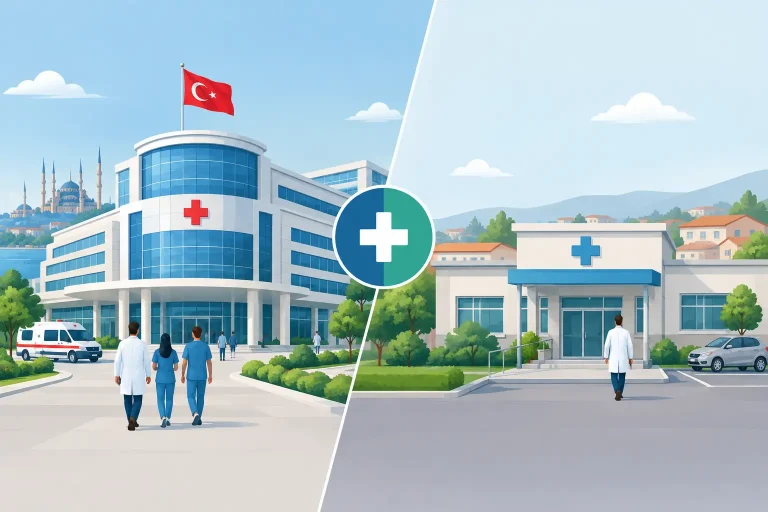
Turkey Hospitals vs Local Hospitals Compared
A lower procedure quote can get a patient’s attention. It should not make the decision on its own.…

Patient Experience That Drives Trust and Growth
A patient who has already uploaded medical records, compared providers, and arranged time away from work is not…