
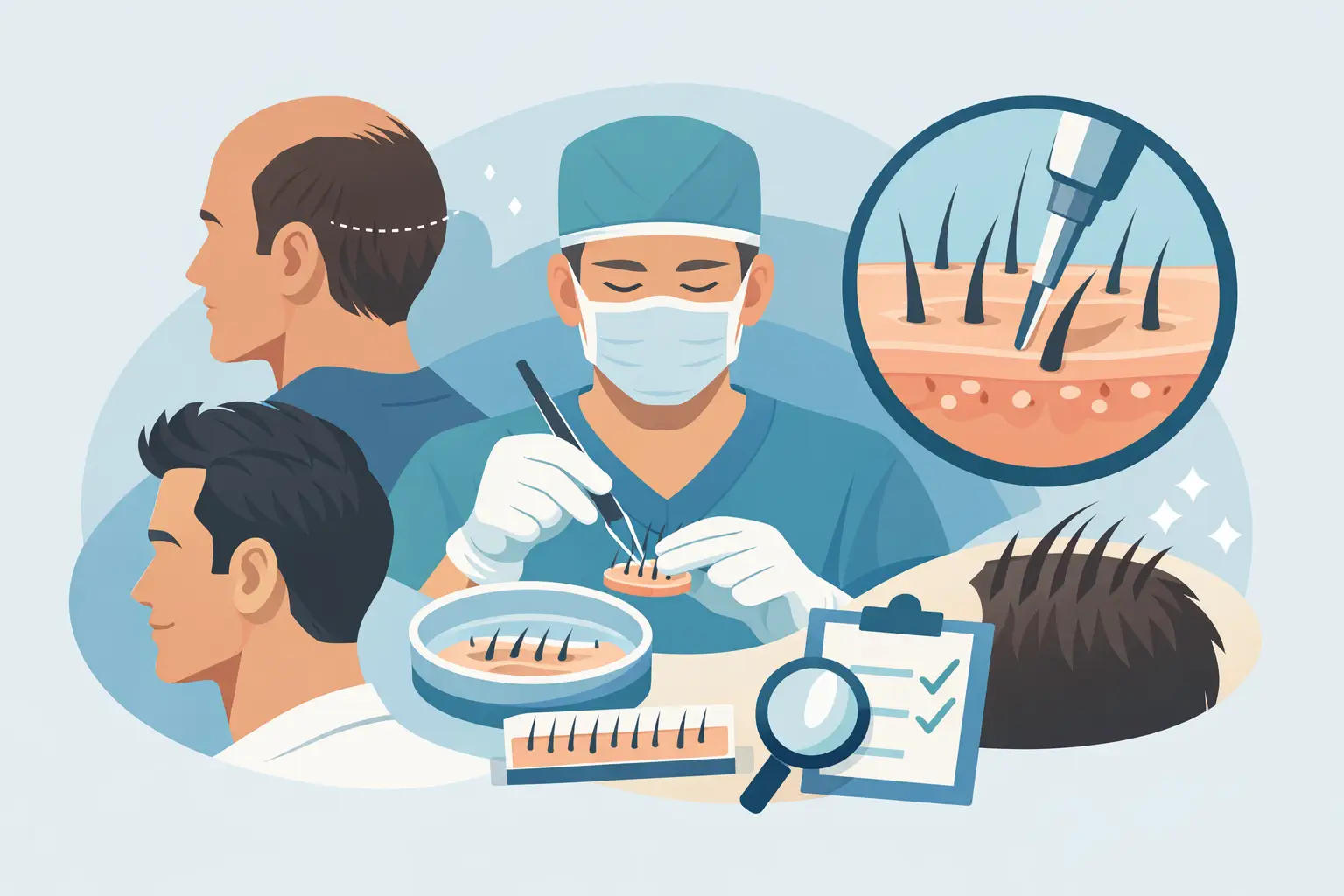
Searches for the best hair transplant usually start with one question and quickly turn into ten. Is it about price, surgeon reputation, graft count, technique, country, or the final hairline? For most patients, the real answer is simpler and more demanding at the same time: the best result comes from the right diagnosis, the right clinic, and a treatment plan built around long-term outcomes rather than fast sales.
Hair transplantation is not a beauty package purchase. It is a medical procedure with cosmetic consequences that will stay visible for years. That changes how smart patients should evaluate their options, especially when comparing domestic pricing with treatment abroad.
What defines the best hair transplant?
The best hair transplant is not automatically the most expensive procedure, the clinic with the biggest social media following, or the offer with the highest graft number. A strong result depends on a combination of surgeon judgment, donor area management, natural hairline design, technique selection, and aftercare.
A clinic can advertise thousands of grafts, but if the donor area is overharvested or the hairline is designed too low and too dense, the result may look unnatural over time. Hair loss is progressive. That means a transplant should not only look good at month six, but also make sense at year five and beyond.
This is where clinical strategy matters. A qualified team should assess your pattern of loss, family history, age, donor capacity, hair caliber, scalp condition, and likely future thinning. Patients in their late twenties may need a very different plan than patients in their forties, even if both want the same frontal restoration.
Best hair transplant techniques: FUE, DHI, and FUT
When patients ask about the best hair transplant, they are often really asking which technique is best. The answer depends on goals, hair characteristics, and how the clinic performs the procedure.
FUE
Follicular Unit Extraction, or FUE, is the most commonly requested method in medical tourism. Individual grafts are extracted from the donor area and implanted into thinning or bald areas. It is popular because it avoids a linear scar and generally offers a more comfortable recovery profile.
For many patients, FUE is the most practical option. It works well for hairline restoration, crown work, and moderate to extensive cases when performed by an experienced team. The key issue is not whether a clinic offers FUE. It is whether the extraction pattern protects the donor area and whether implantation is handled with precision.
DHI
Direct Hair Implantation, often marketed as DHI, is a variation that uses an implanter pen to place grafts. It can be useful in cases requiring dense packing or refined placement, particularly in smaller areas. Some clinics present DHI as a premium upgrade in every case, but that is marketing more than medicine.
DHI is not automatically better than FUE. In many settings, the grafts are still extracted using FUE principles. What changes is the implantation approach. A good clinic should explain why DHI is appropriate for your case instead of treating it as a universal answer.
FUT
Follicular Unit Transplantation, or FUT, removes a strip of tissue from the donor area, which is then dissected into grafts. It is less common in international cosmetic travel than FUE, but it still has value for some patients who need a high graft yield and are less concerned about a linear scar.
The important point is this: technique matters, but execution matters more. A poorly performed DHI procedure will not outperform a well-planned FUE transplant.
The clinic matters, but the surgeon matters more
One of the biggest mistakes patients make is evaluating a clinic like a hotel. Attractive interiors, airport pickup, and all-inclusive packages can make the process feel organized, but they should never be the main reason to choose a provider.
The best hair transplant clinics have clear medical leadership, transparent consultation processes, and defined roles for the surgeon and clinical team. Patients should know who performs the design, who extracts grafts, who creates recipient sites, and who handles implantation. In high-volume markets, this distinction is critical.
There is nothing wrong with efficient systems. In fact, strong operational coordination is one reason destinations like Turkey have become global leaders in hair restoration. But efficiency should support quality, not replace it. If a clinic avoids direct answers about medical responsibility, that is a concern.
Why Turkey is often considered for the best hair transplant
Turkey has earned its reputation for hair transplantation because it combines three factors that patients care about most: clinical experience, affordability, and international patient infrastructure. The country treats a high volume of hair transplant patients every year, which gives leading clinics broad procedural experience across different hair types and levels of hair loss.
For US patients, the price difference is often significant. A procedure that may cost much more domestically can be available in Turkey at a lower total price, even when travel and accommodations are included. That does not mean every low-cost offer is a good one. It means the market can deliver better value when patients choose carefully.
Turkey also stands out because established medical tourism systems are already in place. International patients typically expect coordination around consultations, travel planning, local transfers, hotel arrangements, and post-procedure guidance. This support reduces friction, especially for patients navigating treatment abroad for the first time.
For that reason, many patients looking for the best hair transplant are not simply asking where they can get hair. They are asking where they can get safe, high-quality care with a smoother overall journey.
Price should be part of the decision, not the whole decision
A low price can be attractive, but aggressive discounting often hides shortcuts. These may include rushed consultations, excessive daily case volume, technician-led procedures without adequate physician oversight, or unrealistic graft promises.
At the same time, a higher price does not guarantee a superior outcome. Some clinics charge a premium mainly because of location or branding. The smarter approach is to evaluate value. That means understanding what is included medically, what role the surgeon plays, what aftercare is provided, and whether the proposed plan fits your long-term hair loss pattern.
Patients should also think beyond the first procedure. A cheap transplant that requires major corrective work later is rarely a bargain.
How to judge results the right way
Before-and-after photos are useful, but they need context. Look for consistency across cases, not just one or two dramatic transformations. Strong results show natural hairline design, appropriate density for the patient’s donor supply, and clean temple work where relevant.
Video results can be more revealing than studio photos because they show hair from different angles and under ordinary lighting. It also helps to review cases similar to your own hair color, texture, and stage of loss. A dense result on a patient with thick, dark hair may not predict the same visual impact for someone with fine, light hair.
The best hair transplant outcomes usually look unremarkable in the best possible way. They do not announce themselves. They restore framing, density, and confidence without looking artificial.
Questions serious patients should ask
A quality consultation should feel diagnostic, not promotional. Patients should ask who performs each stage of the procedure, how many grafts are realistically recommended, whether medication is advised to preserve native hair, and what the clinic would do if future loss continues.
It is also reasonable to ask about donor management, expected timeline for shedding and regrowth, and what kind of follow-up support is available once you return home. For international patients, continuity matters. Good care does not end when the flight departs.
This is one area where experienced facilitators and healthcare growth partners can add real value. When patient coordination, clinic selection, communication, and post-treatment planning are managed properly, the experience becomes clearer and lower risk. DGS Healthcare operates in that space with a focus on connecting patients to trusted providers and measurable quality standards rather than treating medical travel like a simple lead exchange.
Best hair transplant choices depend on the patient
There is no single clinic, country, or technique that is best for everyone. A younger patient with early recession, a patient needing crown coverage, and a patient seeking repair after a failed transplant all require different strategies. What matters is fit.
The right choice balances medical quality, aesthetic planning, affordability, transparency, and support. For many international patients, Turkey remains a leading option because it can deliver that combination at scale. But the best decision still comes down to selecting a provider that treats hair restoration as a medical specialty, not a volume business.
If you are comparing options, focus less on slogans and more on evidence. The best hair transplant is the one that still looks right years later, protects your donor supply, and makes you feel like yourself again without drawing attention to the procedure itself. That is the standard worth traveling for.
Related guides

Healthcare Content Compliance Guide for Growth
A high-performing treatment page can generate international patient inquiries within hours. It can also create material risk if…

Turkey Hospitals vs Local Hospitals Compared
A lower procedure quote can get a patient’s attention. It should not make the decision on its own.…

Patient Experience That Drives Trust and Growth
A patient who has already uploaded medical records, compared providers, and arranged time away from work is not…