
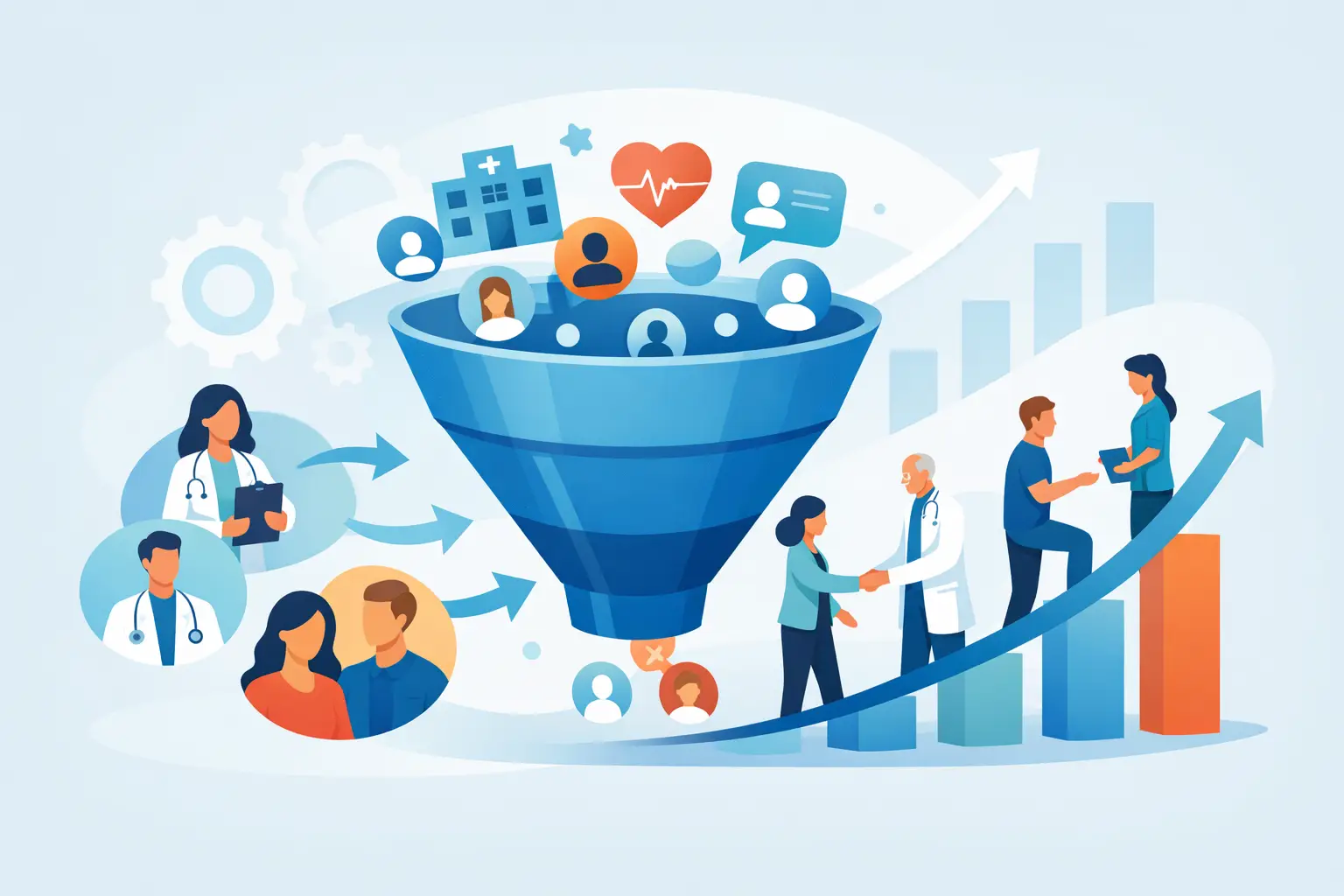
A referral source sends five patients a month, but only one books. Another sends two, and both convert into high-value cases. That gap is why learning how to build patient referral funnels matters. Referrals are not just about volume. They are about visibility, trust, follow-up, qualification, and a patient journey that moves quickly enough to keep intent from fading.
For hospitals, specialty clinics, and medical tourism programs, referral growth often gets treated as a relationship problem alone. Relationships matter, but they are only the front end. If the referral path after that introduction is slow, unclear, or inconsistent, even strong physician or partner networks will underperform. A referral funnel gives structure to what happens next so more referred patients actually become consultations, procedures, and long-term revenue.
What a patient referral funnel actually does
A patient referral funnel is the system that turns a recommendation into a completed action. That action might be a consultation, diagnostic review, treatment plan, or booked procedure. In a domestic setting, the source may be a physician, employer, payer, or existing patient. In medical tourism, it could also include facilitators, international coordinators, diaspora networks, or digital lead partners.
The core principle is simple. Every referral source creates intent, but intent still needs conversion. Patients need answers, reassurance, logistics, pricing clarity, scheduling support, and timely communication. Referring providers need confidence that their patients will be handled professionally and updated appropriately. If either side encounters friction, the funnel leaks.
This is why the best referral strategies are operational, not just promotional. They connect marketing, intake, call center performance, CRM workflows, physician liaison activity, and patient coordination into one measurable path.
How to build patient referral funnels from source to conversion
The strongest referral funnels begin with segmentation, not outreach. Too many organizations treat all referrals the same, even though a local primary care physician, an orthopedic specialist, an insurance case manager, and an international patient facilitator each require a different message and response workflow.
Start by grouping referral sources by case type, average patient value, urgency, geography, and expected decision timeline. A cosmetic procedure referral behaves differently from an oncology referral. A domestic gastroenterology patient can usually move faster than an international surgical traveler who needs records review, travel planning, and cost estimates before committing.
Once those segments are defined, map the exact steps from referral to booking. Most healthcare organizations discover that the problem is not lead generation. It is handoff quality. A common failure point is when a referral arrives by email, form, phone call, or messaging app and then sits unassigned for too long. Another is when intake teams collect contact information but fail to move the patient toward a specific next step.
A referral funnel should always answer four questions. Where did the referral come from? What service line or treatment is involved? Who owns the next action internally? How quickly can the patient receive a meaningful response?
Stage 1: Capture the referral with complete context
The first stage is intake. This is where many funnels lose performance because the organization captures contact details but not decision-driving information. A proper referral intake should include the referral source, treatment interest, patient location, urgency, insurance or self-pay status, and any required records.
For medical tourism programs, this stage should also capture travel readiness, preferred timeline, passport status if relevant, and whether the patient needs support with accommodation, transfers, or multilingual communication. That information shapes conversion. A patient seeking treatment abroad is not just buying care. They are assessing risk, logistics, and trust at the same time.
The intake experience also needs to feel professional. Referral forms should be short enough to complete easily, but structured enough to support triage. Calls should route to trained agents, not generic reception workflows. If the source is a physician or partner organization, they should have a dedicated submission path and a clear expectation for response time.
Stage 2: Qualify quickly without creating friction
Qualification is where many teams overcomplicate. The goal is not to interrogate the patient. The goal is to determine fit, readiness, and next action. A referral funnel that asks for too much too early can reduce conversion, especially for elective or international care.
Instead, separate essential qualification from deeper case development. In the first interaction, confirm need, timeline, financial pathway, and decision-maker involvement. Then move the patient into the appropriate track. Some should go directly to scheduling. Others need medical review, financing support, or international treatment coordination.
Speed matters here. In high-intent healthcare categories, waiting 24 to 48 hours can sharply reduce booking rates. The organizations that win referrals are usually the ones that respond first with clarity, not the ones with the longest brochure or the most aggressive sales language.
Stage 3: Create a conversion path, not just a follow-up queue
A follow-up queue is not a funnel. A funnel gives every qualified referral a defined path. That path should be tied to the patient’s likely barriers.
If cost uncertainty is the main issue, the next step may be a pricing discussion or financing screen. If clinical confidence is the issue, the next step may be a physician review or case assessment. If travel complexity is the issue, especially for international patients considering Turkey or another destination, the next step may be a treatment roadmap covering hospital, physician, travel timing, and estimated stay.
This is where many providers lose referred patients to more organized competitors. Patients rarely say, “Your response workflow was weak.” They simply go elsewhere because another organization made the process easier to understand.
The role of CRM, call center, and referral source management
A scalable referral funnel cannot live in spreadsheets and inboxes for long. At a certain volume, CRM structure becomes essential. Every referral should enter a pipeline with source attribution, stage tracking, ownership, and task automation. That visibility helps leadership understand which sources generate inquiries, which generate qualified consultations, and which actually generate revenue.
Call center performance is equally important. Many healthcare brands invest heavily in physician outreach or digital campaigns, then let untrained intake teams handle referred leads. That creates a conversion mismatch. Referral patients often arrive with higher trust, but also higher expectations. They assume they were sent to a capable provider. The first conversation needs to reinforce that confidence.
Teams should be trained to handle referral-specific communication, including how to acknowledge the referring source, explain next steps clearly, and document obstacles that delay booking. In medical tourism, this includes discussing travel concerns with precision and reassurance rather than vague promises.
Referral source management should also be proactive. High-performing sources deserve reporting, communication, and relationship maintenance. Low-performing sources should be evaluated carefully. Sometimes they send poor-fit patients. Sometimes your own process is failing them. The difference only becomes visible when the funnel is measured properly.
Metrics that show whether your patient referral funnel is working
If you want referral growth that is commercially meaningful, measure more than referral count. Volume alone can hide weak conversion and wasted staff time.
Track referral-to-contact time, contact-to-consultation rate, consultation-to-treatment rate, average revenue per referral source, and time-to-booking. For international programs, also track records completion rate, travel-ready rate, and treatment approval rate where applicable.
These metrics reveal where to intervene. A low consultation rate may point to weak intake or slow response. A strong consultation rate but low treatment conversion may suggest pricing issues, poor case presentation, or weak trust-building after the first interaction. It depends on the service line, patient origin, and complexity of care.
This is also where a growth partner with healthcare-specific operational expertise can make a real difference. DGS Healthcare approaches referral growth as a full commercial system, connecting patient acquisition, sales process, coordination, and technology so providers can improve not just awareness, but booked outcomes.
Common mistakes when building patient referral funnels
The first mistake is assuming referrals convert themselves. They do not. They convert better than cold traffic in many cases, but only when the process supports intent.
The second is treating every referral source identically. Different channels produce different expectations, timelines, and case quality. A one-size-fits-all workflow often creates unnecessary delays.
The third is separating business development from intake operations. If relationship teams promise responsiveness but the call center cannot deliver it, trust erodes quickly. The fourth is neglecting post-referral communication. Referring partners want confidence that their patients were contacted and guided appropriately.
The final mistake is trying to scale before standardizing. Automation helps, but only after the referral journey is clearly designed. Technology cannot fix an unclear process. It only accelerates it.
Building a funnel that earns trust at every step
The best patient referral funnels do not feel like funnels to patients. They feel organized, responsive, and safe. That matters even more in healthcare than in most industries because decisions are personal, urgent, and often expensive.
When you build the system well, referral growth becomes more predictable. Sources send more of the right patients. Internal teams work with better visibility. Patients move forward with less confusion. And revenue becomes tied to a process you can actually improve rather than a network you merely hope will produce.
If your current referrals are inconsistent, the answer is rarely more noise. It is a better path from trust to treatment.
Related guides

Patient Experience That Drives Trust and Growth
A patient who has already uploaded medical records, compared providers, and arranged time away from work is not…

What Is a Medical Travel Facilitator and Why Use One?
A lower treatment quote can look compelling until you try to compare what it actually includes: surgeon fees,…
What Hospital Accreditation Reviews Really Tell You
A hospital can have polished facilities, prominent surgeons, and hundreds of five-star ratings, yet those signals do not…