
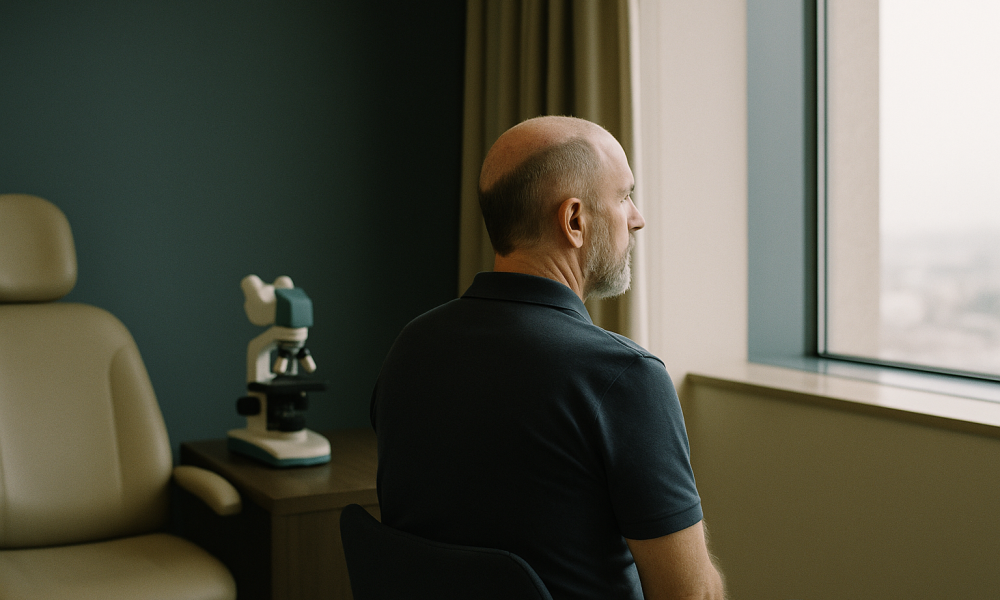
What FUE Hair Transplant is and who it is for
Follicular Unit Extraction (FUE) is a modern hair transplantation technique that involves the individual extraction of hair follicles from a donor area, typically the back or sides of the scalp, and their transplantation to areas where hair is thinning or balding. This method is favoured for its minimally invasive nature, resulting in no linear scars, unlike the older Follicular Unit Transplantation (FUT) technique. FUE is particularly suitable for patients who prefer to wear their hair short as it leaves tiny dot-like scars that are virtually undetectable.
The procedure begins with the shaving of the donor area to facilitate the extraction of follicles. Under local anaesthesia, a specialised micro-punch tool is used to extract individual follicles. These follicles are then carefully implanted into the recipient area, where they grow naturally over time. The process is meticulous and can take between 6 to 8 hours, depending on the number of grafts required. Recovery is generally swift, with most patients returning to normal activities within a week.
FUE is ideal for individuals experiencing male or female pattern baldness, those with thinning hair, or anyone with hair loss due to injury or previous surgeries. However, the success of the transplant largely depends on the quality and availability of donor hair. Patients with a sufficient supply of healthy hair follicles in the donor area are considered good candidates. Additionally, FUE can be employed for beard and eyebrow transplants, making it a versatile option for those looking to enhance their appearance with natural-looking results.
It’s important to note that while FUE is a highly effective technique, it does not prevent future hair loss. Patients may require additional sessions in the future to maintain their desired appearance. As such, realistic expectations and a comprehensive understanding of the procedure are crucial before undergoing FUE.
Are you a good candidate?
Determining candidacy for an FUE hair transplant involves several considerations to ensure optimal results and patient satisfaction. The suitability of a candidate is assessed based on a variety of factors, each contributing to the overall success of the procedure.
Firstly, the quality and quantity of available donor hair is paramount. Individuals with a dense supply of healthy hair in the donor area, typically the back or sides of the scalp, are more likely to achieve satisfactory outcomes. The donor hair should ideally be similar in texture and colour to the hair in the recipient area to ensure a natural appearance.
Another critical factor is the pattern and extent of hair loss. FUE is most effective for those with stable hair loss patterns, such as androgenetic alopecia, where the hair loss is predictable and not rapidly progressing. Candidates should have realistic expectations, understanding that FUE can enhance their appearance but may not fully restore the hair density of their youth.
Age can also play a role in determining candidacy. While there is no strict age limit, younger patients may be advised to wait until their hair loss pattern stabilises, as premature intervention could result in an unnatural appearance if hair loss continues. Conversely, older patients with stable hair loss patterns may find FUE a suitable option.
Overall health is another important consideration. Candidates should be in good general health, as certain medical conditions or medications can affect the healing process and the growth of transplanted hair. A thorough medical evaluation is often conducted to rule out any contraindications.
Checklist for FUE Hair Transplant Candidacy:
- Sufficient donor hair availability
- Stable pattern of hair loss
- Realistic expectations regarding outcomes
- Good general health
- Understanding of the procedure and recovery
Ultimately, a consultation with a qualified hair transplant specialist is essential to assess individual candidacy. They can provide personalised advice and discuss any concerns or questions the patient may have, ensuring an informed decision-making process.
The procedure, step by step
Follicular Unit Extraction (FUE) is a meticulous hair transplant technique that requires careful planning and execution. Here is a detailed step-by-step guide to what the procedure involves:
- Consultation and Planning: Before the procedure, patients undergo a detailed consultation with a hair transplant specialist. During this session, the patient’s hair loss pattern, density, and donor area are assessed. The doctor will discuss the patient’s expectations and design a personalised hairline. This session also includes explanations about the procedure, potential risks, and post-operative care.
- Preparation: On the day of the surgery, the patient arrives at the clinic, where the healthcare team prepares the donor and recipient areas. The patient’s hair in the donor area, usually the back of the scalp, is trimmed short to facilitate the extraction of follicles. Local anaesthesia is administered to ensure a pain-free experience.
- Follicle Extraction: Using a specialised micro-punch tool, the surgeon extracts individual follicular units from the donor area. Each follicle typically contains 1-4 hairs. The precision of this tool minimises damage to surrounding tissues and ensures healthy grafts.
- Graft Preparation: After extraction, the follicular units are carefully examined and sorted. Technicians prepare the grafts for transplantation, ensuring they remain hydrated and viable.
- Recipient Site Creation: The surgeon creates tiny incisions in the recipient area, where the hair will be transplanted. The angle, depth, and direction of these incisions are crucial for achieving a natural-looking result.
- Graft Implantation: The prepared grafts are meticulously implanted into the recipient sites. This process requires precision and skill, as the surgeon must ensure the grafts are placed at the correct angle and density to mimic natural hair growth.
- Post-Procedure Care: Once the implantation is complete, the medical team provides detailed instructions for post-operative care. This includes guidelines on washing, medications to reduce swelling, and activities to avoid during recovery.
The FUE procedure typically lasts between 4 to 8 hours, depending on the number of grafts required. Patients are usually able to return to their accommodation on the same day.
Recovery timeline
Recovering from an FUE hair transplant is a gradual process that requires patience and adherence to care instructions. Here is a breakdown of the recovery timeline:
| Period | What to expect | Care notes |
|---|---|---|
| Day 1-2 | Patients may experience mild discomfort and swelling around the forehead and eyes. Tiny scabs may form around the grafts. | Keep your head elevated while resting. Use prescribed medications to manage discomfort and swelling. |
| Day 3-5 | Swelling should begin to subside. Scabs around the grafts may become more pronounced. | Avoid touching the grafts. You may gently rinse your hair with a saline solution as advised by your doctor. |
| Day 6-10 | Scabs will start to fall off naturally. New hair shafts may begin to shed, which is a normal part of the process. | Continue gentle hair washing techniques. Avoid strenuous activities that may increase blood pressure to the scalp. |
| Week 2-4 | The majority of scabs should be gone. The donor area should be healing well. | Follow any additional instructions from your doctor. It’s generally safe to resume light exercise. |
| Month 1-3 | Hair shedding will continue, and new hair growth may begin to appear. The donor area should fully heal. | Continue to protect the scalp from sun exposure. Be patient, as visible results take time to develop. |
| Month 4-6 | Noticeable hair growth in the transplant area. Hair may appear thin and fine initially. | Maintain a healthy diet and lifestyle to support hair growth. Follow up with your specialist as needed. |
| Month 6-12 | Significant hair growth with improved density and texture. Full results are typically visible by 12 months. | Continue regular hair care practices. Consult your doctor for any concerns or additional treatments. |
This timeline provides a general overview, but individual recovery experiences can vary. Always follow your healthcare provider’s specific advice for the best outcomes.
What it costs: Turkey vs the UK, Europe and North America
When considering a Follicular Unit Extraction (FUE) hair transplant, understanding the cost implications across different regions is crucial. The cost of FUE hair transplants can vary significantly depending on the country, the clinic’s reputation, the surgeon’s expertise, and what is included in the treatment package.
| Region | Indicative Cost Range (GBP) | Typical Package Inclusions |
|---|---|---|
| Turkey | £1,500 – £3,500 | Consultation, procedure, accommodation, airport transfers, post-op care |
| UK | £6,000 – £12,000 | Consultation, procedure, follow-up care |
| Europe (excluding UK) | £4,000 – £10,000 | Consultation, procedure, follow-up care |
| North America | £8,000 – £15,000 | Consultation, procedure, follow-up care |
These figures are indicative and should be used as a general guideline. Prices in Turkey are typically lower due to the lower cost of living and operational expenses. However, this does not necessarily reflect a compromise in quality. Many Turkish clinics are equipped with state-of-the-art technology and employ highly skilled professionals.
Packages in Turkey often include additional services such as airport transfers, accommodation, and comprehensive post-operative care. This can add significant value and convenience for international patients. In contrast, clinics in the UK, Europe, and North America may charge separately for these services, contributing to higher overall costs.
It is essential to verify what is included in the quoted price and to understand the full scope of the package offered by the clinic. Patients should also consider the travel expenses to Turkey, although these are often offset by the savings on the procedure itself.
Ultimately, while cost is an important factor, patients should prioritise the quality and safety of the procedure, ensuring that they select an accredited and reputable clinic.
Risks and how accredited providers manage them
Like any surgical procedure, FUE hair transplants come with potential risks, which can be effectively managed by choosing an accredited provider. Understanding these risks and how they are mitigated can help patients make an informed decision.
Common risks associated with FUE hair transplants include infection, scarring, bleeding, and unsatisfactory cosmetic results. Infection is rare, especially when the procedure is performed in a sterile environment by qualified professionals. Accredited clinics adhere to strict hygiene protocols to minimise this risk. Patients are usually prescribed antibiotics as a precautionary measure post-surgery.
Scarring is another consideration, although FUE is known for leaving minimal scarring compared to other hair transplant methods. The technique involves extracting individual hair follicles, resulting in tiny, dot-like scars that are typically undetectable. Accredited providers employ advanced techniques that further minimise visible scarring.
Bleeding is a potential risk during and after the procedure. However, this is usually minor and well-managed through careful surgical technique and post-operative care. Patients are advised to avoid certain medications before surgery, such as aspirin, which can increase bleeding risk.
One of the more subjective risks is the potential for unsatisfactory cosmetic results. Accredited clinics manage this by conducting thorough pre-operative consultations, during which the patient’s expectations are discussed in detail. Surgeons use digital imaging to simulate potential outcomes, allowing patients to have a realistic understanding of the results they can expect.
Accredited providers are also committed to ongoing research and training. They stay abreast of the latest advancements in hair restoration techniques, ensuring that they offer the most effective and safe procedures available. Continuous professional development and adherence to international standards are hallmarks of reputable clinics.
Post-operative care is critical in managing risks associated with FUE hair transplants. Accredited clinics provide comprehensive follow-up services, including regular check-ups and guidance on hair care post-surgery. Patients are given detailed instructions on how to care for their scalp to promote healing and ensure the best possible results.
Choosing an accredited provider not only ensures a higher standard of care but also offers peace of mind. Accreditation signifies that the clinic meets established standards of quality and safety, which is paramount in surgical procedures.
How to choose the right provider
Choosing the right provider for your FUE hair transplant in Turkey is crucial for a successful outcome. Start by ensuring the clinic is accredited by reputable international healthcare organisations, such as the Joint Commission International (JCI). Accreditation ensures that the clinic meets specific standards in terms of safety, hygiene, and quality of care.
Next, research the experience and qualifications of the surgeons. Look for surgeons who are members of recognised professional bodies, such as the International Society of Hair Restoration Surgery (ISHRS). It’s beneficial to choose a surgeon with at least five years of experience in performing FUE transplants, as experience often correlates with skill and outcomes.
Aftercare is another critical factor. The clinic should provide comprehensive aftercare services, including detailed post-operative instructions, follow-up appointments, and support for any complications that may arise. Ask about the availability of 24/7 support and whether they offer remote consultations once you return home.
Be wary of red flags, such as clinics that promise unrealistic results, offer significantly lower prices than competitors, or pressure you into making quick decisions. It’s important to have a transparent understanding of what to expect from the procedure, including potential risks and realistic outcomes.
Finally, consider reviews and testimonials from previous patients. While online reviews can be helpful, try to find reviews from reputable sources or speak directly with past patients if possible. This can provide insights into the clinic’s reputation, patient satisfaction, and the overall experience.
Planning your trip
Proper planning is essential to ensure a smooth experience when travelling to Turkey for an FUE hair transplant. Start by consulting with the clinic approximately 3-6 months before your desired procedure date. This timeline allows adequate time for consultation, planning, and travel arrangements.
When it comes to documentation, ensure your passport is valid for at least six months beyond your planned stay. Depending on your nationality, you may require a visa to enter Turkey. Check the Turkish government’s official visa website for specific requirements and apply well in advance.
The typical length of stay for an FUE hair transplant is around 5-7 days. This includes a pre-operative consultation, the procedure itself, and a few days for initial recovery and follow-up appointments. Ensure you have accommodations booked for this duration, preferably close to the clinic for convenience.
Consider purchasing travel insurance that covers medical procedures abroad. This can provide peace of mind in case of unexpected events or complications.
Upon returning home, ensure you have planned for follow-up care. This may include remote consultations with your Turkish surgeon or appointments with a local healthcare provider. It’s crucial to adhere to the aftercare instructions provided by your surgeon to ensure optimal recovery and results.
Finally, arrange for transportation to and from the airport, as well as to the clinic. Some clinics offer transportation services as part of their package, so inquire about these options during your initial consultation.
Frequently Asked Questions
What is the typical cost of an FUE hair transplant in Turkey?
The cost of an FUE hair transplant in Turkey typically ranges from £1,500 to £3,500, depending on the number of grafts required and the clinic's reputation. This price is indicative and may vary based on individual circumstances and specific clinic offerings.
How safe is it to undergo an FUE hair transplant in Turkey?
FUE hair transplants in Turkey are generally safe when performed by experienced and qualified surgeons at accredited clinics. It's important to research the clinic's accreditation, surgeon's experience, and patient reviews to ensure safety and quality of care.
How long should I plan to stay in Turkey for the procedure?
You should plan to stay in Turkey for approximately 5-7 days. This duration covers the pre-operative consultation, the procedure, and initial recovery, along with follow-up appointments to ensure everything is progressing well.
What should I look for in a hair transplant surgeon?
Look for a surgeon who is a member of recognised professional organisations like the ISHRS, with at least five years of experience in FUE procedures. Verify their qualifications and seek reviews from past patients to assess their reputation.
Do I need a visa to travel to Turkey for a hair transplant?
Visa requirements depend on your nationality. Many countries require a visa to enter Turkey, which can often be obtained online. Check the Turkish government's official visa website for specific requirements and apply ahead of time.
What kind of aftercare is necessary post-transplant?
Post-operative aftercare includes following specific instructions provided by your surgeon, such as how to wash your hair, avoiding sun exposure, and attending follow-up appointments. Comprehensive aftercare is crucial for successful recovery and results.
Can I return to work immediately after the procedure?
Most patients can return to non-strenuous work within a week post-procedure. However, it's advised to follow your surgeon's specific recommendations based on your individual recovery process to ensure optimal healing.
Are there any red flags to watch out for when choosing a clinic?
Be cautious of clinics offering significantly lower prices than competitors, making unrealistic promises, or pressuring you for quick decisions. Ensure the clinic is accredited and has positive reviews from previous patients.
What documentation do I need for the procedure?
Ensure your passport is valid for at least six months beyond your stay. Depending on your nationality, a visa may be required. Additionally, bring any medical records or information requested by the clinic for your consultation.
How can I ensure a successful recovery post-transplant?
Follow all aftercare instructions provided by your surgeon, schedule and attend follow-up appointments, and maintain communication with the clinic if any issues arise. Proper aftercare is essential for a successful recovery.
What if I experience complications after returning home?
If complications arise, contact your Turkish clinic immediately for advice. Many clinics offer remote consultations. Additionally, seek assistance from a local healthcare provider if necessary to address any urgent concerns.
Is travel insurance necessary for medical procedures abroad?
While not mandatory, travel insurance is highly recommended when undergoing medical procedures abroad. It provides coverage for unexpected events or complications, offering peace of mind during your trip.