
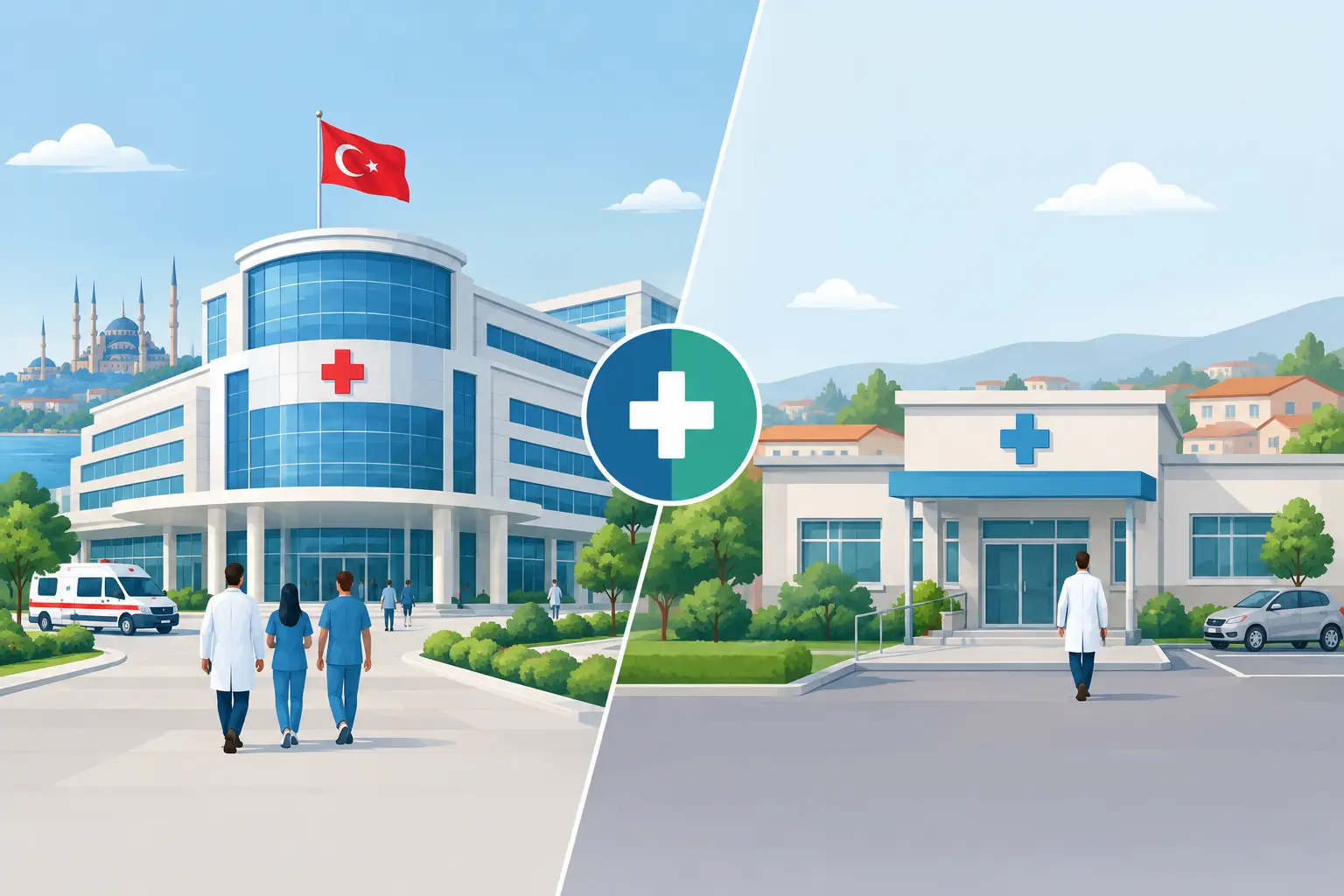
A lower procedure quote can get a patient’s attention. It should not make the decision on its own. When comparing Turkey hospitals vs local hospitals, US patients are weighing far more than price: clinical capability, physician experience, communication, recovery logistics, and what happens after they return home.
Turkey has become a major destination for elective and complex international care, particularly in areas such as bariatric surgery, orthopedics, dentistry, cosmetic procedures, IVF, and ophthalmology. Many patients find that a well-selected Turkish hospital offers modern facilities and substantial savings. Others may be better served close to home. The right choice depends on the treatment, the patient’s health profile, and the quality of coordination behind the care.
Turkey Hospitals vs Local Hospitals: The Core Difference
Local hospitals offer proximity. For US patients, that usually means direct access to familiar insurance networks, in-person preoperative appointments, family support, and a straightforward route back to the treating team if a concern develops. That convenience has real clinical and emotional value, especially for urgent care, high-risk surgery, or conditions requiring frequent monitoring.
Turkey hospitals can offer a different value proposition: internationally oriented care pathways, experienced specialists who treat high volumes of particular procedures, shorter scheduling windows, and private-pay pricing that may be significantly below US charges. Leading private hospitals in Istanbul, Ankara, Antalya, and other medical hubs often invest heavily in advanced imaging, surgical technology, international patient departments, and hotel-style patient services.
The comparison is not between “foreign” and “safe,” or “local” and “better.” It is between specific providers, physicians, treatment plans, and support systems. A respected local hospital may be the clear choice for one patient, while an accredited Turkish hospital with the right specialist may be a strong option for another.
Cost: Look Beyond the Procedure Price
Cost is often the first reason patients investigate treatment in Turkey. For self-pay patients, the difference can be meaningful, particularly when US prices include hospital charges, surgeon fees, anesthesia, facility costs, diagnostics, and separate professional billing. Turkish private hospitals frequently provide package pricing, which can make budgeting more predictable.
But a package should be read carefully. Patients need to know whether the estimate includes the surgeon, anesthesia, implants or medical devices, laboratory work, medications, hospital stay, airport transfers, interpreter support, and required follow-up visits. Airfare, accommodation, meals, companion travel, travel insurance, and the cost of remaining in Turkey long enough for safe recovery also belong in the total calculation.
Local care may be more expensive on paper but less disruptive when insurance provides meaningful coverage. A patient should also consider the financial impact of a complication after returning home. US insurance may not cover follow-up care related to an elective procedure performed abroad, and local physicians are not obligated to assume postoperative management for another surgeon’s work.
The practical question is not simply, “How much will I save?” It is, “What is the total cost of a safe, complete episode of care?”
Quality Depends on the Hospital and Physician, Not the Country
Turkey’s strongest hospitals compete internationally for patients and clinical talent. Many work with global accreditation frameworks, maintain formal quality systems, and employ physicians trained or experienced in multiple countries. High procedure volume can also matter. A surgeon who performs a focused procedure regularly may have more refined protocols than a generalist who performs it occasionally.
That said, the medical tourism market is uneven. Marketing claims, social media before-and-after images, and attractive package offers are not substitutes for clinical due diligence. Patients should verify the hospital’s credentials, the doctor’s specialty training and board status, the physician’s direct role in the procedure, and the facility’s ability to manage complications. For surgical care, ask whether an intensive care unit, blood bank, emergency team, and relevant specialist coverage are available on site.
A local hospital deserves the same scrutiny. Name recognition does not automatically mean that a particular department, surgeon, or program is the best fit. Request a clear explanation of the treatment recommendation, likely outcomes, risks, alternatives, and expected recovery timeline. For a major intervention, an independent second opinion can be valuable whether care is planned in the US or Turkey.
Questions that reveal clinical readiness
Patients should expect direct, specific answers about who will perform the treatment, how many similar cases the physician handles, what happens if complications arise, and how medical records will be provided. They should also receive a written treatment plan before travel, not a vague promise of a procedure that will be finalized after arrival.
A trustworthy provider will not pressure a patient to book quickly, dismiss relevant medical history, or guarantee a perfect result. Good medicine includes candid discussion of limits and risks.
Travel, Recovery, and Continuity of Care
Travel is not a minor detail in medical decision-making. Flying after surgery may increase risks such as blood clots, swelling, pain, or wound-related issues, depending on the procedure and the patient’s individual health factors. The treating physician should provide a recovery and travel-clearance plan based on the operation, not a generic itinerary.
For some treatments, Turkey is easier to consider. Dental restoration, hair transplantation, eye procedures, selected cosmetic surgeries, and planned orthopedic or bariatric care can often be organized around a defined recovery stay. For patients with unstable chronic conditions, complex cancer care requiring ongoing coordination, advanced cardiac disease, or a high likelihood of repeated urgent visits, local care may offer a safer and more practical framework.
Continuity matters after the flight home. Before committing, patients should know how they will contact the treating team, how quickly questions will be answered, and how discharge records, imaging, operative notes, medication lists, and pathology reports will be shared. These documents should be in clear English and available promptly for a US physician if needed.
The strongest international care journeys include a follow-up plan before treatment begins. That can involve scheduled virtual check-ins, a local clinician willing to oversee routine recovery, and clear escalation instructions for symptoms that require urgent evaluation.
Communication Is a Clinical Safety Issue
International patient coordination is often presented as a concierge benefit. It is more than that. Accurate communication affects consent, medication safety, discharge planning, and patient confidence.
A qualified interpreter or English-speaking care coordinator should be available for clinical conversations, not only airport pickup and hotel arrangements. Patients should be able to speak with the actual physician before deciding, understand the diagnosis and procedure in plain language, and receive copies of signed consent documents.
Family members also need realistic expectations. A companion may be essential after certain surgeries, especially when mobility is limited or patients need help navigating a new environment. A quality provider will explain the practical side of recovery rather than focusing only on the procedure day.
When Local Care Is Likely the Better Choice
Choosing local treatment is not a missed opportunity to save money. It may be the best decision when speed of emergency access, ongoing monitoring, insurance coverage, or family support outweighs the potential savings abroad.
Patients should be especially cautious about traveling for care if they cannot safely delay treatment, have multiple uncontrolled medical conditions, need frequent adjustments to therapy, or do not have a realistic recovery plan after returning home. The same applies when a provider cannot supply transparent credentials, complete pricing, or a credible plan for complications.
Local care can also be preferable for patients who value long-term relationships with a particular specialist and expect years of follow-up. In these cases, continuity may be worth more than a lower upfront cost.
When Turkey May Offer Strong Value
Turkey can be a compelling choice for medically appropriate, planned treatment when a patient has identified a reputable hospital, verified the physician, reviewed the complete costs, and allowed enough time for recovery before flying. It can be particularly attractive for self-pay patients facing long wait times or high out-of-pocket expenses in the US.
The best outcomes tend to come from preparation, not bargain hunting. Patients benefit from having their medical history reviewed in advance, confirming candidacy before booking travel, and receiving a written schedule covering arrival, testing, procedure, recovery, discharge, and remote follow-up.
DGS Healthcare helps patients evaluate these details by connecting them with internationally focused providers and coordinating a more accountable treatment journey, from initial inquiry through return-home planning.
A hospital decision should leave a patient feeling informed, not rushed. Whether care happens five miles away or across the Atlantic, choose the team that can clearly demonstrate clinical expertise, transparent planning, and responsibility for the full path of care.
Related guides

Patient Experience That Drives Trust and Growth
A patient who has already uploaded medical records, compared providers, and arranged time away from work is not…

What Is a Medical Travel Facilitator and Why Use One?
A lower treatment quote can look compelling until you try to compare what it actually includes: surgeon fees,…

What Hospital Accreditation Reviews Really Tell You
A hospital can have polished facilities, prominent surgeons, and hundreds of five-star ratings, yet those signals do not…