

A yearly check-up sounds simple until you try to book specialist visits, imaging, lab work, and follow-up appointments across different providers. For many international patients, that is exactly why medical tourism Turkey check up packages have become so attractive. Turkey offers a practical alternative: coordinated diagnostics, modern hospitals, internationally trained physicians, and pricing that often makes a full preventive assessment more accessible than doing the same workup at home.
Why a medical tourism Turkey check up gets attention
The appeal is not just lower cost. It is speed, coordination, and scope. In many cases, patients can complete blood panels, cardiac screening, radiology, and physician consultations within one or two days instead of stretching the process across several weeks.
That matters for busy professionals, self-paying patients, and families comparing private healthcare costs in the US with international options. It also matters for people who want a second opinion or a more structured preventive review after ignoring symptoms for too long. A check-up in Turkey is often positioned as an efficient health assessment rather than a luxury trip built around medicine.
Turkey also benefits from strong medical tourism infrastructure. Major private hospitals in Istanbul, Ankara, Izmir, and Antalya are used to serving international patients. That usually means multilingual coordinators, airport transfer planning, transparent package building, and support with reports and post-visit communication. Not every provider operates at the same level, but the better ones understand that international care is as much about operations as medicine.
What is usually included in a Turkey check-up package?
There is no single standard package, and that is where patients need to pay attention. A basic check-up may include physician consultation, blood work, urinalysis, chest imaging, ECG, and abdominal ultrasound. A more advanced package may add stress testing, echocardiography, cancer screening, thyroid evaluation, pulmonary testing, or gender-specific assessments.
Age, sex, family history, smoking status, and known conditions should shape the package. A healthy 32-year-old does not need the same workup as a 58-year-old with hypertension and a family history of heart disease. When packages look cheap, the first question should be what is actually included and whether those tests are relevant.
The strongest hospitals do not just sell a generic bundle. They ask for medical history in advance, review medications, and recommend a risk-based diagnostic plan. That approach tends to produce better outcomes and fewer unnecessary tests.
Common tests patients may see
Most medical tourism Turkey check up programs are built around internal medicine evaluation first. From there, additional diagnostics may include lipid profile, liver and kidney function tests, fasting glucose or HbA1c, thyroid labs, vitamin levels, cardiac screening, mammography, Pap smear, PSA testing, colon screening referrals, bone density scans, and advanced imaging if clinically justified.
Some executive-style packages also include dietitian review, eye exam, dental screening, and lifestyle counseling. Those add convenience, but they are not always medically essential. The value depends on the patient’s goals.
Cost advantage matters, but so does value
Price is one reason Turkey remains competitive. Private healthcare costs in the US can make even routine preventive workups feel fragmented and expensive, especially for uninsured or underinsured patients. In Turkey, bundled pricing often makes diagnostics far more predictable.
Still, the lowest quote is not always the best option. A check-up priced aggressively may exclude specialist interpretation, omit higher-value diagnostics, or leave follow-up recommendations vague. Patients should compare not just the package cost, but the quality of the hospital, physician credentials, accreditation status, imaging technology, reporting standards, and how clearly abnormal findings are handled.
A good check-up is not a shopping deal. It is a decision about clinical quality, efficiency, and what happens after the tests are done.
Who benefits most from a check-up in Turkey?
This model tends to work best for a few patient groups. The first is self-pay patients who want private hospital access without US-level pricing. The second is international patients who want a concentrated preventive review while traveling for business or family reasons. The third is patients already considering treatment abroad and wanting an assessment before deciding on a larger procedure.
It can also be useful for patients who have mild but persistent concerns such as fatigue, digestive discomfort, chest symptoms, or family-history-related anxiety and want a structured evaluation quickly. That said, a check-up is not the right format for emergencies, unstable symptoms, or conditions requiring immediate local intervention.
If someone has severe chest pain, stroke symptoms, active bleeding, or sudden shortness of breath, international travel for diagnosis is the wrong move. Those are emergency care issues and should be managed locally without delay.
How to choose the right provider for medical tourism Turkey check up services
Patients often focus first on destination and price. A better approach is to start with the provider. The hospital or clinic should have a clear international patient department, experience with preventive medicine pathways, transparent pricing, and physicians whose qualifications can be reviewed in advance.
Ask direct questions. Which specialists are involved? How long does the program take? Are tests performed on-site? Who explains the results? Will you receive English-language reports? What happens if something significant is found? Strong providers answer these questions without vague promises.
Accreditation and reputation matter, but so does practical coordination. International patients need scheduling discipline, airport and hotel planning support, and a reliable point of contact before and after arrival. This is where experienced facilitators can reduce friction. Companies such as DGS Healthcare help bridge the gap between patient expectations and provider operations by focusing on qualified hospital access, communication, and a guided treatment journey rather than just lead generation.
Red flags to watch for
If a package promises every possible test for one low price, be cautious. More testing is not automatically better care. If the provider cannot explain why certain diagnostics are included, that is a warning sign.
Another red flag is weak follow-up planning. A check-up has limited value if abnormal findings are handed over in a report with no clinical discussion, no recommendations, and no pathway for next steps. International care should feel organized, not transactional.
Travel, timing, and practical planning
Most check-up programs in Turkey can be completed within one to three days, depending on complexity. Patients usually arrive the day before testing, complete diagnostics in a concentrated block, then meet with physicians for result review and recommendations.
It is smart to bring previous lab reports, imaging, medication lists, allergy information, and any known diagnoses. That saves time and reduces duplicate testing. Patients should also avoid assuming every result can be finalized instantly. Some pathology or specialized tests may take longer, which means follow-up discussion could happen remotely after departure.
Travel planning should include recovery time only if the package includes invasive diagnostics such as endoscopy or colonoscopy with sedation. For standard preventive screening, most patients can resume normal activity quickly.
The trade-offs patients should understand
A Turkey check-up can be efficient and cost-effective, but it is not perfect for every situation. One trade-off is continuity. Your physicians in Turkey may not be the ones managing long-term care at home. That means reports need to be clear, portable, and clinically useful for your local doctor.
Another issue is overtesting versus under-testing. Some providers package too many low-value tests because patients equate quantity with quality. Others keep prices low by making the package too basic. The right balance depends on risk profile, not marketing.
There is also the question of what happens if a serious issue is discovered. For some patients, that is actually a benefit because diagnosis happens quickly. For others, it can complicate travel plans and create a decision about whether to continue treatment in Turkey or return home for management. This is why pre-travel communication matters so much.
Why Turkey stands out in preventive medical travel
Turkey’s advantage is not one thing. It is the combination of modern private hospitals, internationally oriented service models, physician depth, and pricing that remains competitive in the global market. For patients seeking an organized, private-pay preventive health review, that combination is compelling.
For healthcare providers and hospital groups, the growth of check-up travel also shows something larger. International patients are not only traveling for major surgeries anymore. They are increasingly looking for diagnostic certainty, speed, and coordinated access. Providers that build credible, well-structured preventive programs are better positioned to attract high-intent patients and convert inquiries into long-term trust.
The best outcomes happen when the process stays grounded in real clinical need. A well-designed check-up should answer meaningful questions, not just fill a schedule. If you are considering Turkey for preventive screening, the smartest move is to choose a provider that treats coordination, physician quality, and follow-up with the same seriousness as the tests themselves.
Related guides

Healthcare Content Compliance Guide for Growth
A high-performing treatment page can generate international patient inquiries within hours. It can also create material risk if…
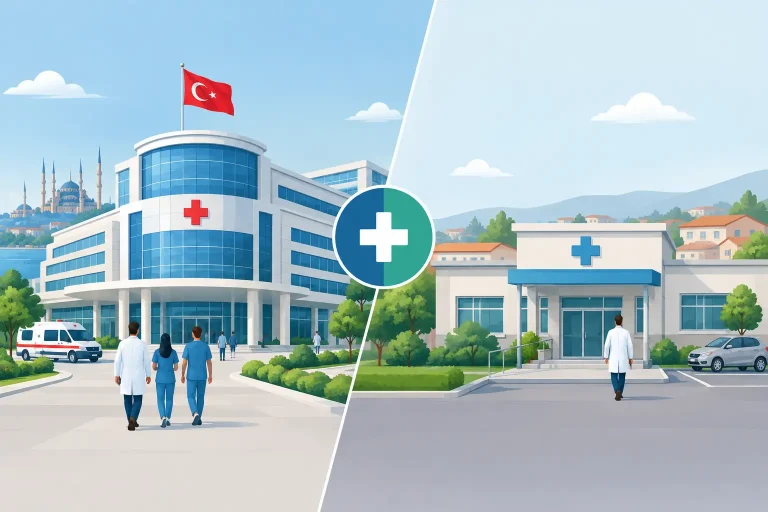
Turkey Hospitals vs Local Hospitals Compared
A lower procedure quote can get a patient’s attention. It should not make the decision on its own.…

Patient Experience That Drives Trust and Growth
A patient who has already uploaded medical records, compared providers, and arranged time away from work is not…