
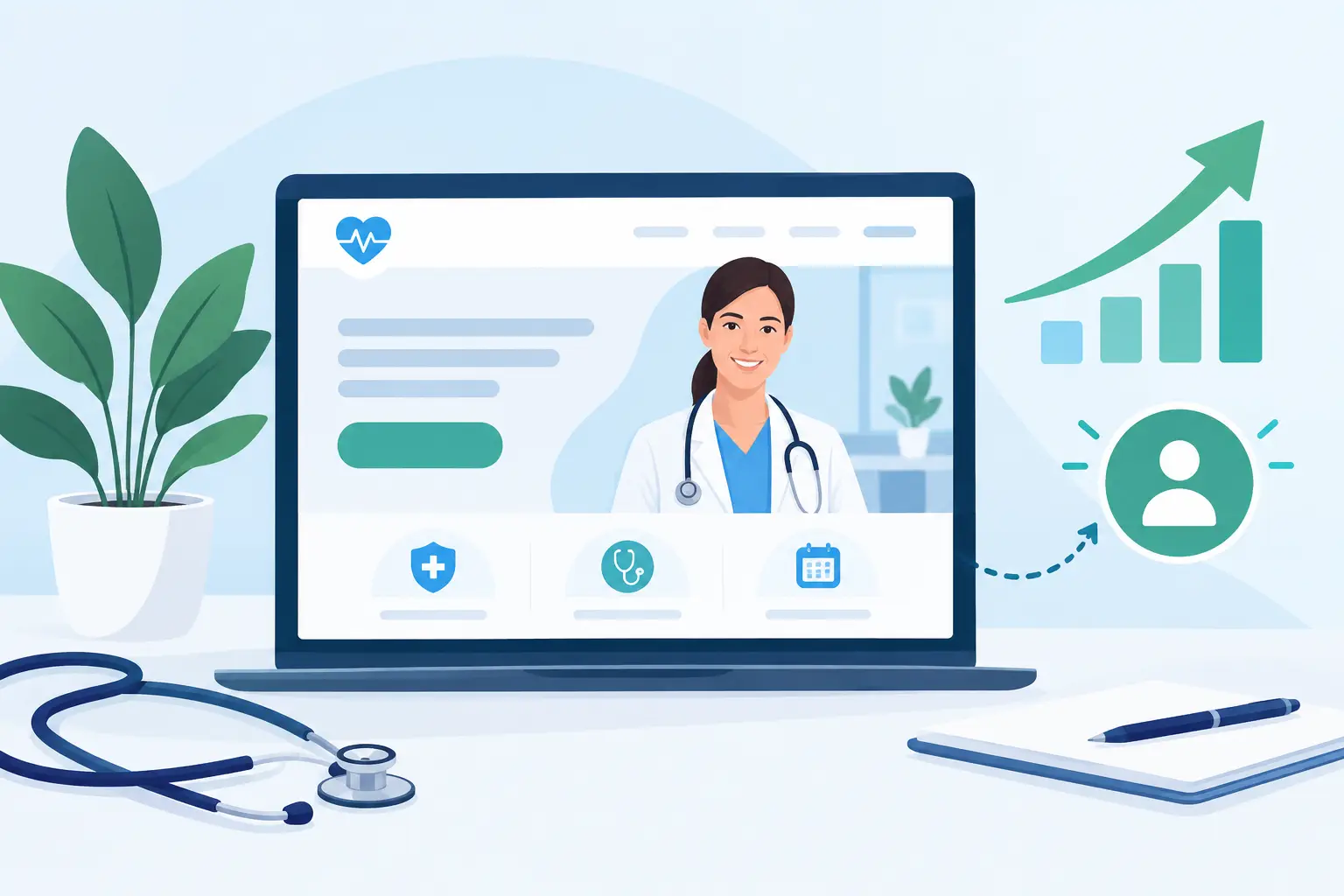
A prospective patient may spend ten minutes comparing surgeons, accreditation, recovery timelines, and travel requirements before reaching your landing page. If that page answers none of the questions creating hesitation, a costly paid-search click becomes an abandoned session. To optimize healthcare landing page conversions, providers need more than polished design. They need a clear, credible path from concern to consultation.
For hospital groups, specialty clinics, and international patient programs, conversion is not simply a form submission. It is a qualified inquiry that can be contacted quickly, assessed appropriately, and guided toward a realistic treatment decision. That distinction should shape every message, form field, call-to-action, and follow-up workflow on the page.
Start With One Patient Decision, Not Every Service
Many healthcare landing pages underperform because they try to represent an entire organization at once. They introduce every department, every technology, every physician, and every destination. The result is informative but indecisive. A patient searching for bariatric surgery in Turkey does not need a broad corporate overview before taking the next step. They need confidence that the program fits their needs.
Build each landing page around one high-intent decision. That may be requesting a treatment plan for dental implants, speaking with an international patient coordinator, or checking candidacy for a specific procedure. The advertising message, page headline, supporting evidence, and call to action should all reinforce that single decision.
This does not mean withholding useful information. It means organizing it in the order a patient needs it: what treatment is available, why the provider is credible, what the likely process looks like, and how to begin a confidential conversation. For a domestic clinic, location and insurance may lead that sequence. For a medical tourism program, physician expertise, accreditation, travel coordination, and transparent cost expectations often carry more weight.
Optimize Healthcare Landing Page Conversions With Trust
Healthcare is a high-consideration purchase. Patients may be anxious, in pain, worried about safety, or making decisions for a family member. Generic conversion tactics can feel aggressive when the page does not first establish clinical and operational credibility.
Trust should be visible before the first form. Lead with specific proof rather than broad claims such as “world-class care.” Name the relevant specialty, explain the provider’s experience, and present credentials in language patients can understand. If the hospital holds a recognized international accreditation, explain why it matters. If a physician has performed a meaningful volume of procedures, provide context without making unsupported outcome promises.
For international care, patients also need reassurance beyond the operating room. They want to know who will coordinate records, airport transfers, interpreters, accommodations, treatment schedules, and post-treatment communication. A landing page that speaks only about the procedure leaves a major portion of the decision unanswered.
Social proof can help, but it must be handled with care. Real patient stories, verified reviews, and outcomes presented within appropriate compliance standards are stronger than anonymous testimonials. Before-and-after images may be relevant in some specialties, but they should never substitute for clear clinical information or informed expectations.
Make the Offer Specific Enough to Act On
“Contact us” is a weak offer when a patient does not know what happens after contact. Replace vague calls to action with an exchange that feels useful and low-risk: request a preliminary treatment plan, speak with an international patient advisor, submit records for a physician review, or receive a cost estimate range.
The offer must match the stage of intent. Someone researching an elective procedure may be comfortable requesting a brochure or treatment guide. Someone arriving from a high-intent paid-search campaign is more likely ready to schedule a consultation or upload imaging. Asking too much too early reduces response rates. Asking too little can produce low-quality leads that consume call center capacity.
Use a concise form that collects only what the next step requires. Name, phone number, email, preferred contact method, treatment interest, and country may be sufficient for an initial conversation. More detailed health information can be gathered through a secure clinical process once the patient understands why it is needed.
The page should also set expectations beneath the form. A statement such as “A patient coordinator will contact you within one business day to discuss treatment options and next steps” reduces uncertainty. If you offer multilingual assistance or after-hours coverage for US-based inquiries, make that operational advantage clear.
Remove Friction Without Oversimplifying Care
Fast pages convert better, but speed is only one form of friction. Patients also leave when content is hard to scan, pricing language feels evasive, mobile forms are difficult to complete, or the page forces them to hunt for basic answers.
Start with the mobile experience. Paid traffic frequently arrives on a phone, especially when patients are comparing options outside working hours. Forms should be easy to complete with a thumb, phone numbers should be tappable, and the primary call to action should remain visible without interrupting the content. Avoid auto-playing video, heavy image galleries, and pop-ups that block the information a visitor came to see.
Pricing requires judgment. Not every treatment can be quoted accurately without records, a consultation, or physician review. But refusing to address cost at all can create distrust, particularly in medical tourism. When exact pricing is not appropriate, explain the variables that affect it and provide a meaningful starting range, package inclusions, or comparison framework. Clarity is more persuasive than a promise of “affordable care” with no evidence behind it.
A strong page also answers practical questions before they become objections. For international patients, that can include expected length of stay, companion arrangements, airport support, medical records, payment options, and aftercare planning. For local patients, the questions may center on appointment availability, insurance verification, referral requirements, and financing.
Connect the Page to the Sales and Care Journey
A landing page cannot compensate for slow or inconsistent follow-up. If a prospect submits an inquiry and waits two days for a response, the organization has already signaled that the patient journey may be difficult. Conversion optimization extends into call center operations, CRM routing, lead qualification, and consultation scheduling.
Define what should happen after each conversion. High-intent leads may require a call within minutes. International inquiries often require an initial response that confirms receipt, explains the document-review process, and offers a convenient time for a coordinator conversation across time zones. Lower-intent leads may enter an education sequence, but they should never receive generic messages that ignore the treatment they selected.
Track the journey beyond the form fill. A useful measurement framework follows the progression from landing page visitor to inquiry, contacted lead, qualified candidate, consultation, treatment booking, and revenue. This reveals whether the problem is page performance, traffic quality, call center response time, pricing alignment, or a gap in patient navigation.
At DGS Healthcare, this connected view matters because patient acquisition is only valuable when marketing, sales support, and treatment coordination operate as one commercial system. A page may increase lead volume, but the better outcome is a higher share of suitable patients reaching an informed consultation.
Test What Changes Patient Confidence
A/B testing is valuable when it is built around real patient questions. Testing button colors in isolation rarely changes business performance as much as improving the treatment offer, physician proof, response-time promise, or pricing explanation.
Prioritize tests with a clear hypothesis. For example, a page may test whether a physician-led video improves consultation requests for a complex surgery, whether a cost-range section reduces low-quality inquiries, or whether a short eligibility form produces more qualified calls than a general contact form. Run one meaningful change at a time where possible, and allow enough traffic to avoid treating random variation as a result.
Review conversion quality with the teams speaking to patients. Marketing data may show that one version generates more forms, while call center data shows those leads are less reachable or less suitable. The winning page is the one that improves profitable, appropriate patient acquisition, not merely the top-line conversion rate.
The most effective healthcare landing pages do not pressure people into a decision. They make the next decision easier: trust the provider, ask the right question, and begin a guided conversation with a team prepared to respond.
Related guides

Digital Marketing for Clinics That Drives Demand
A clinic can have exceptional physicians, advanced technology, and competitive pricing, yet still lose prospective patients before the…

How Overseas Surgery Insurance Really Works
A lower treatment quote can quickly lose its advantage if an unexpected complication extends your stay, requires emergency…

Analyzing the Medical Tourism Market: Current Trends
Quick answerThe medical tourism market is growing due to factors like cost-effective treatments, advanced medical technologies, and international…