
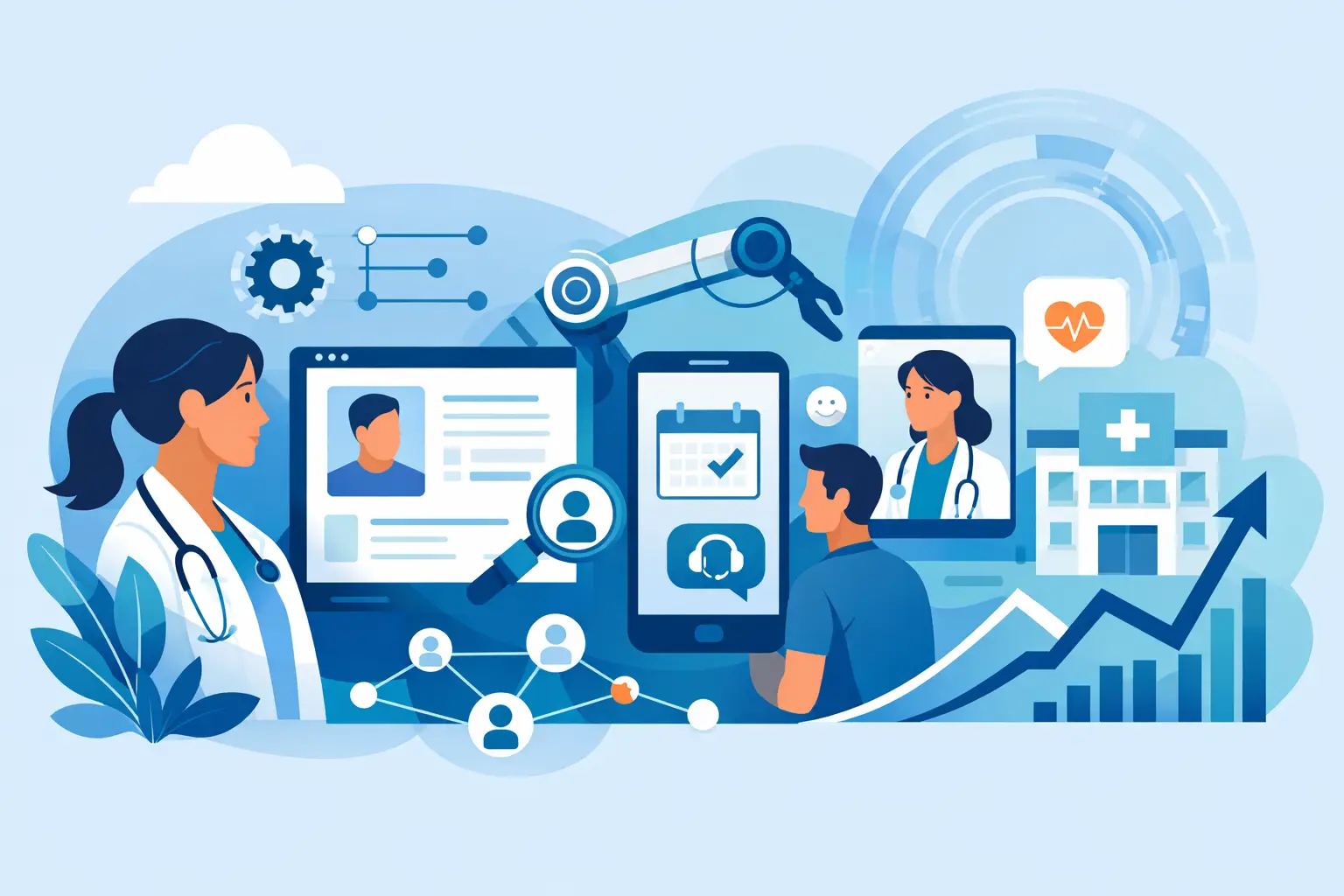
A prospective patient who requests information at 9:00 p.m. may contact three hospitals before breakfast. The provider that responds with relevant answers, clear next steps, and a human path to care has a material advantage. That is why patient acquisition automation trends are moving beyond scheduled emails and basic lead routing. For hospital groups, clinics, and international patient programs, automation is becoming the operating layer that connects demand generation to consultation, treatment planning, and measurable revenue.
The opportunity is significant, but the standard is higher than it was even a year ago. Healthcare buyers expect faster service without generic communication. Patients want guidance without pressure. Leaders need systems that reduce manual workload while preserving compliance, clinical accuracy, and the trust required to make a high-consideration healthcare decision.
Patient Acquisition Automation Trends That Matter Most
Speed-to-lead is becoming a revenue discipline
The first few minutes after an inquiry are often the most valuable. A patient researching dental implants, bariatric surgery, IVF, oncology care, or elective treatment abroad is usually comparing options actively. Automation can immediately acknowledge the inquiry, capture essential context, assign it to the right team, and offer a relevant next step.
The strongest programs do not confuse an instant response with an automated sales pitch. They use a short confirmation message to establish expectations: when a patient coordinator will respond, what records may be needed, and how to schedule a consultation. If a lead arrives outside call center hours, the system should still create confidence that the request has been received and is being handled.
For international patient departments, this can also include language preference, country of residence, desired travel timing, and service line. Routing a U.S. patient considering treatment in Turkey to a coordinator trained in that pathway is more valuable than simply assigning the lead to the next available representative.
AI-assisted conversations need firm clinical boundaries
Conversational AI is increasingly used to qualify inquiries, answer common administrative questions, schedule calls, and collect preliminary information. Used well, it reduces friction for patients and gives staff more time for conversations that require empathy, commercial judgment, or clinical coordination.
Its role must remain carefully defined. An automated assistant can explain the consultation process, ask about treatment goals, share documentation requirements, or clarify whether a service is available. It should not diagnose, promise outcomes, interpret complex medical records, or substitute for a licensed clinician. Every workflow needs a clear handoff when a question becomes clinical, urgent, emotionally sensitive, or too specific for an approved response.
This is especially important in medical tourism. A patient may ask whether they are suitable for a procedure, how quickly they can travel after surgery, or whether a condition affects eligibility. Those questions require review by qualified professionals, not an automated reply built around conversion targets.
CRM data is shifting from storage to action
Many healthcare organizations have a CRM full of leads but limited visibility into what happens after the initial inquiry. The next trend is not simply adopting another platform. It is making the existing data operational.
A well-designed patient acquisition workflow records lead source, campaign, service interest, contact attempts, consultation status, records received, physician review, quote status, travel readiness, and final outcome. With that information in place, automation can trigger appropriate actions instead of treating every lead alike.
For example, a patient who completed a consultation but has not submitted records may need a coordinator reminder and a secure upload instruction. A patient who received a treatment plan may need follow-up based on the stated decision timeline. A lead that has gone cold after several outreach attempts may be placed into a controlled re-engagement sequence rather than repeatedly called by multiple team members.
The commercial benefit is not just better organization. It is a clearer view of where prospects stop moving forward, which campaigns produce qualified patients, and which sales processes need attention.
Automation Must Follow the Patient Journey
The most effective automation programs are journey-based, not channel-based. They account for the fact that a patient moves through different questions and levels of readiness before making a treatment decision.
Marketing automation is becoming more intent-aware
A general inquiry form provides limited information. Modern patient acquisition systems combine form data with behavioral signals such as pages viewed, service line interest, return visits, consultation requests, and responses to outreach. This allows teams to prioritize patients who show meaningful intent without ignoring those who need more education before they are ready to speak.
Segmentation matters. A domestic orthopedic patient seeking a second opinion has a different journey from an international patient comparing a treatment package, hospital accreditation, physician experience, travel logistics, and aftercare. Their communications should reflect that difference.
Educational content can be automated at the appropriate stage, but it should answer real decision barriers. For an international patient, that may include the consultation process, required medical documentation, expected length of stay, companion arrangements, and post-treatment follow-up. For a provider, it may include cost transparency, insurance guidance, or referral coordination. Generic nurture messages rarely create the confidence needed to advance a complex care decision.
Call center automation is focused on quality, not fewer people
Healthcare call centers remain essential because patients frequently want reassurance from a real person before sharing records or committing to a consultation. Automation supports this role by prioritizing call queues, presenting patient history to agents, prompting follow-up tasks, and tracking response performance.
Call recordings and conversation analytics can identify recurring objections, missed questions, and coaching opportunities. A sales manager may discover that patients are not declining a treatment plan because of price alone. They may be uncertain about recovery support, physician access, financing, or the credibility of a destination. That insight should improve scripts, patient materials, and operational processes.
There is a trade-off. Over-automating call workflows can make agents sound scripted and impatient. The goal is to remove administrative repetition so coordinators can listen more closely, explain more clearly, and build confidence at critical moments.
Scheduling and follow-up are becoming coordinated systems
Appointments are often lost because the patient is asked to take too many steps across disconnected tools. Automated scheduling, calendar reminders, confirmation messages, and post-consultation follow-up can reduce this leakage. The workflow should be designed around the service line and patient profile, not around what is easiest for the internal team.
A consultation reminder for a local outpatient clinic may be simple. An international care consultation may need time-zone confirmation, interpreter needs, medical-record instructions, and a named coordinator. The technology should make each next action easier while keeping the communication personal and accurate.
Privacy, Consent, and Trust Will Define the Winners
Patient acquisition automation cannot be treated like ordinary consumer marketing. Healthcare data carries legal, ethical, and reputational consequences. Organizations need clear consent practices, role-based access, secure data handling, compliant communication channels, and retention rules that reflect the markets they serve.
In the U.S., HIPAA considerations may apply when protected health information is involved. International programs also need to account for cross-border data practices and the expectations of patients sharing sensitive records from another country. Legal requirements vary by workflow, so technology decisions should be reviewed with qualified compliance and legal teams rather than based on a vendor’s marketing claims.
Trust also depends on what patients experience. They should know who is contacting them, why information is being requested, and what will happen next. Automated messages must be accurate, respectful, and easy to opt out of where appropriate. A fast response that feels intrusive can damage a brand more quickly than a slower, well-managed follow-up.
What Healthcare Leaders Should Measure
Automation should be evaluated by commercial and patient experience outcomes, not by the number of workflows launched. Lead volume alone is a weak measure if leads cannot be reached, do not qualify, or never reach consultation.
Leadership teams should monitor response time, contact rate, consultation booking rate, show rate, record-submission rate, treatment-plan acceptance, acquisition cost, and revenue by source. International programs may also track travel conversion, cancellation reasons, and the time from first inquiry to arrival.
These metrics reveal where automation is helping and where it is creating friction. If response time improves but consultation attendance falls, the messages or scheduling process may need refinement. If paid media produces high inquiry volume but low record submission, the campaign may be attracting patients before they understand the true treatment pathway.
Building an Automation Strategy That Supports Growth
Start with one high-value patient journey rather than attempting to automate every interaction at once. Map the steps from first inquiry to treatment decision, identify where leads are delayed or lost, and define the human owner for each critical handoff. Then build workflows around a small number of measurable improvements, such as faster response to qualified inquiries or stronger follow-up after physician review.
Technology should support the operating model, not dictate it. The right CRM, call center processes, paid media tracking, content strategy, and patient coordinator training must work as one commercial system. DGS Healthcare approaches this challenge from both sides of the journey: helping providers generate and convert demand while helping international patients navigate credible treatment options with greater clarity.
The organizations that gain ground in 2026 will not be the ones that automate the most messages. They will be the ones that use automation to make every qualified patient feel recognized, informed, and confidently guided toward the right next conversation.
Related guides

Patient Experience That Drives Trust and Growth
A patient who has already uploaded medical records, compared providers, and arranged time away from work is not…

What Is a Medical Travel Facilitator and Why Use One?
A lower treatment quote can look compelling until you try to compare what it actually includes: surgeon fees,…
What Hospital Accreditation Reviews Really Tell You
A hospital can have polished facilities, prominent surgeons, and hundreds of five-star ratings, yet those signals do not…