
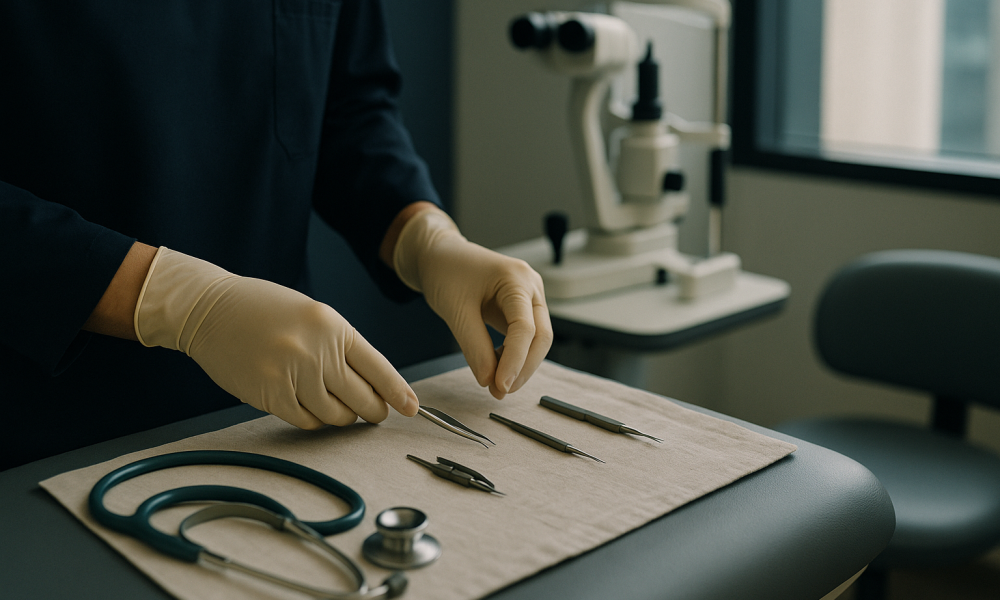
What Keratoconus Cross-Linking is and who it is for
Keratoconus is a progressive eye condition where the cornea, which is normally round, thins and begins to bulge into a cone-like shape. This can lead to distorted vision and increased sensitivity to light. Corneal cross-linking (CXL) is a minimally invasive procedure designed to halt the progression of keratoconus by strengthening the cornea.
The procedure involves the application of riboflavin (vitamin B2) eye drops, which are then activated by ultraviolet (UV) light. This process increases the collagen cross-links within the cornea, much like reinforcing a weak structure, thereby increasing its rigidity and preventing further distortion.
Cross-linking is typically recommended for patients in the early stages of keratoconus, as it is most effective when performed before significant corneal thinning or vision loss occurs. Although it does not reverse existing damage, it can prevent further deterioration. It is important to note that while CXL can stabilise the condition, it does not eliminate the need for glasses or contact lenses, although some patients may experience improved vision.
In Turkey, the procedure is widely available and performed by experienced ophthalmologists. The country’s medical infrastructure is robust, with many clinics accredited by international health organisations. Patients from the United States often consider Turkey due to the high standard of care, modern facilities, and the comparatively lower cost of treatment. The typical cost for keratoconus cross-linking in Turkey ranges from $1,200 to $2,000, which is significantly lower than in the US.
It’s essential for patients considering this treatment to consult with an eye specialist to determine the appropriateness of the procedure for their specific condition. An initial examination will include corneal mapping, vision tests, and a comprehensive review of medical history to ensure the best possible outcome.
Are you a good candidate?
Determining whether you are a good candidate for keratoconus cross-linking involves several factors and a thorough evaluation by an ophthalmologist. The procedure is generally recommended for individuals who meet certain criteria, which ensures the highest likelihood of halting disease progression effectively.
- Progressive Keratoconus: Candidates should have clinically documented progression of keratoconus. This means that there is evidence of worsening vision or corneal shape over time.
- Corneal Thickness: The cornea should have a minimum thickness of approximately 400 microns prior to treatment, as the procedure relies on enough corneal tissue to be effective and safe.
- Age Factors: While there is no strict age limit, most candidates are typically between the ages of 14 and 40. This is because keratoconus is more likely to progress in younger individuals, making early intervention beneficial.
- Vision Correction: Candidates who rely on glasses or contact lenses for vision correction but find them increasingly ineffective due to keratoconus may consider CXL.
- No Significant Corneal Scarring: The presence of significant corneal scarring might reduce the effectiveness of the procedure, so individuals with minimal to no scarring are better candidates.
Consulting with an eye care professional is crucial to determine candidacy. During the consultation, the specialist will conduct a range of tests, including corneal topography, pachymetry, and visual acuity assessments. This comprehensive evaluation helps in crafting a personalised treatment plan that aligns with the patient’s specific needs and medical background.
Patients with stable keratoconus or those who have achieved adequate vision correction with glasses or lenses may not require immediate intervention. Therefore, the decision to undergo cross-linking should be based on a careful assessment of potential benefits versus risks, considering the individual’s lifestyle and vision goals.
The procedure, step by step
Keratoconus cross-linking is a minimally invasive procedure designed to strengthen the corneal structure by increasing the collagen cross-links within the cornea. This procedure is typically performed in an outpatient setting and generally takes about 60 to 90 minutes to complete. Here is a detailed step-by-step guide of what to expect during the procedure:
- Pre-Procedure Preparation: Upon arrival at the clinic, you will undergo a thorough eye examination to confirm the diagnosis and determine the suitability for the procedure. This may include corneal topography and pachymetry to assess the thickness and shape of the cornea. You will be asked to sign a consent form and discuss any medical history relevant to the procedure. A local anaesthetic in the form of eye drops will be administered to numb the eye, ensuring a painless experience during the procedure.
- Epithelial Removal: The outermost layer of the cornea, known as the epithelium, is gently removed. This is done to allow the riboflavin solution to penetrate effectively into the corneal tissue. This step typically takes about 5 to 10 minutes.
- Riboflavin Application: A vitamin B2 (riboflavin) solution is applied to the corneal surface every few minutes for about 30 minutes. Riboflavin acts as a photosensitizer, which is essential for the cross-linking process. During this time, the patient is usually asked to lie back and relax.
- Ultraviolet Light Activation: After sufficient riboflavin saturation, the cornea is exposed to ultraviolet A (UVA) light for approximately 30 minutes. The combination of riboflavin and UVA light leads to the formation of new collagen cross-links, which strengthen the cornea and halt the progression of keratoconus. The distance and intensity of the UVA light are carefully controlled to protect the surrounding tissues.
- Post-Procedure Care: Once the cross-linking is complete, an antibiotic ointment is applied to the eye to prevent infection, and a bandage contact lens is placed to aid healing and provide comfort. You will receive detailed aftercare instructions, including the use of prescribed medications such as antibiotics and anti-inflammatory eye drops.
It is crucial for patients to follow the post-procedure care plan to ensure optimal healing and results. While the procedure is generally safe, some patients may experience mild discomfort, temporary vision blurriness, or sensitivity to light, which typically resolve within a few days.
Recovery timeline
The recovery process following keratoconus cross-linking varies among individuals but generally follows a predictable timeline. Understanding what to expect during each phase can help you prepare and manage your recovery effectively. Here is a detailed recovery timeline:
| Period | What to Expect | Care Notes |
|---|---|---|
| Day 1 | Immediately after the procedure, you may experience mild discomfort, a gritty sensation, and sensitivity to light. Vision may be blurred, and the eye may appear red or swollen. | Use prescribed antibiotic and anti-inflammatory eye drops as directed. Wear sunglasses outdoors to reduce light sensitivity. Avoid rubbing the eye. |
| Days 2-3 | Discomfort typically decreases, but vision may still be blurry. The bandage contact lens remains in place to aid healing. Some patients report improved vision clarity. | Continue using prescribed eye drops. Attend follow-up appointments to monitor healing progress. Rest your eyes and avoid strenuous activities. |
| Week 1 | The bandage contact lens is usually removed during a follow-up visit. Vision may fluctuate as the cornea continues to heal. | Follow-up with your eye specialist is crucial. Maintain hygiene and avoid swimming or using hot tubs to prevent infection. |
| Weeks 2-4 | Vision gradually stabilizes. Most discomfort has subsided, but minor fluctuations in vision are normal. | Continue with regular check-ups. Avoid eye strain by taking regular breaks from screens and reading. |
| 1-3 Months | Significant improvement in vision quality is often reported. The cornea continues to stabilize, and the full benefits of the treatment become more apparent. | Regularly attend follow-up appointments. Discuss any persistent issues with your specialist. |
| 3-6 Months | Full recovery is typically expected. Vision improvements are maintained, and the risk of keratoconus progression is significantly reduced. | Continue annual eye examinations to monitor corneal stability. Report any unusual symptoms to your eye care provider promptly. |
While most patients experience a smooth recovery, individual experiences may vary. It is essential to adhere to all post-operative instructions and attend all scheduled follow-up visits to ensure the best possible outcome.
What it costs: Turkey vs the United States
When considering keratoconus cross-linking, understanding the cost differences between Turkey and the United States is crucial for making an informed decision. The cost of medical procedures can significantly vary based on location, the complexity of the procedure, and the included services. Patients often find that Turkey offers a more cost-effective solution compared to the United States, without compromising on the quality of care.
In Turkey, the cost for keratoconus cross-linking typically ranges from £1,200 to £1,800 per eye. This price generally includes pre-operative assessments, the procedure itself, and post-operative care such as follow-up consultations and medications. In contrast, the cost in the United States is considerably higher, ranging from £3,000 to £5,000 per eye, with similar inclusions in terms of care and follow-up services.
| Country | Indicative Price Range (per eye) | Typical Package Inclusions |
|---|---|---|
| Turkey | £1,200 – £1,800 | Pre-operative assessments, procedure, post-operative care |
| United States | £3,000 – £5,000 | Pre-operative assessments, procedure, post-operative care |
Beyond the procedure itself, patients travelling to Turkey often benefit from comprehensive medical tourism packages. These packages can include airport transfers, accommodation arrangements, and sometimes even guided tours, making the overall experience more convenient and enjoyable. While such packages can also be found in the United States, they tend to be less common and more expensive.
It is important to note that the figures mentioned are indicative and can vary based on the specific clinic, the surgeon’s experience, and the location within each country. Patients are encouraged to conduct thorough research and consult with multiple providers to obtain detailed quotes and understand what exactly is included in the cost of treatment.
Additionally, when comparing costs, it is vital to consider the potential need for adjunctive treatments or additional procedures, which may not be included in the initial quote. These could include further corrective treatments or specialised lenses post-surgery, which could impact the overall financial outlay.
Risks and how accredited providers manage them
Keratoconus cross-linking is generally considered a safe procedure with a high success rate, but like any medical intervention, it does carry some risks. Understanding these risks and the measures taken by accredited providers to manage them is essential for prospective patients.
The primary risks associated with keratoconus cross-linking include infection, delayed epithelial healing, corneal haze, and in rare cases, vision deterioration. Accredited clinics in Turkey are well-equipped to minimise these risks through stringent protocols and highly trained healthcare professionals.
- Infection: Although rare, infection is a potential risk in any surgical procedure. Accredited providers mitigate this risk by maintaining sterile environments and using prophylactic antibiotics. Patients are usually prescribed antibiotic eye drops post-surgery to further reduce the risk of infection.
- Delayed Epithelial Healing: The epithelium, or the outer layer of the cornea, is removed during the procedure and must regenerate. Some patients may experience delayed healing, which can cause discomfort or blurred vision. Clinics manage this risk by closely monitoring the healing process through regular follow-up visits and providing protective contact lenses that promote healing.
- Corneal Haze: Some patients may develop a temporary cloudiness in the cornea known as haze. This is typically mild and resolves over time. Accredited providers use advanced imaging techniques to monitor corneal changes and intervene if necessary.
- Vision Deterioration: Although extremely rare, there is a possibility of vision deterioration post-procedure. Providers mitigate this risk by conducting thorough pre-operative assessments to ensure patient suitability and by tailoring the treatment approach to individual patient needs.
Accredited clinics in Turkey adhere to international standards of care and often undergo regular audits by international healthcare accreditation bodies. These audits ensure that the clinics maintain high standards of patient safety and quality of care. Additionally, many clinics employ multilingual staff to ensure clear communication with international patients, addressing any concerns promptly and effectively.
Before proceeding with treatment, patients are encouraged to discuss all potential risks with their healthcare provider and to ensure that they have a comprehensive understanding of the post-operative care required. This proactive approach helps in making informed decisions and contributes to a smoother recovery process.
How to choose the right provider
When considering keratoconus cross-linking in Turkey, selecting the right provider is crucial for a safe and successful experience. Start by ensuring the clinic is accredited by recognised international healthcare accreditation bodies such as the Joint Commission International (JCI) or the European Foundation for Quality Management (EFQM). Accreditation signifies adherence to high standards of patient care and safety.
The experience and expertise of the surgeon are equally important. Look for a provider with ophthalmologists who specialise in corneal diseases and have extensive experience in performing cross-linking procedures. Surgeons who regularly publish in peer-reviewed journals or speak at international conferences are often at the forefront of their field, indicating a commitment to staying updated with the latest advancements.
Aftercare is an integral part of the treatment process. Ensure the provider offers comprehensive post-operative care, including follow-up consultations and clear instructions for managing recovery. Some clinics may offer remote follow-up consultations via telemedicine, which can be beneficial for international patients.
Be aware of red flags when selecting a provider. Avoid clinics that guarantee specific outcomes, as this can be misleading. Be cautious of those offering significantly lower prices than the typical range of $1,500 to $3,000 USD for cross-linking, as this may indicate a compromise in quality or safety. Additionally, clinics with limited or negative online reviews should be approached with caution. Verifying patient testimonials and seeking recommendations from trusted sources can aid in making an informed decision.
Planning your trip
Planning your medical trip to Turkey for keratoconus cross-linking involves several key steps. Begin by scheduling your procedure at least two to three months in advance to allow ample time for preparation. This timeline accommodates initial consultations, obtaining necessary medical records, and arranging travel logistics.
Ensure you have all required documents, including a valid passport and any medical records related to your eye condition. Some clinics may request recent eye examination results to better understand your specific needs before your arrival. Additionally, check if a visa is required for entry into Turkey, although many nationalities, including U.S. citizens, can obtain an e-Visa online, which is valid for 90 days.
Plan to stay in Turkey for approximately one week. This duration allows for pre-operative consultations, the procedure itself, and initial post-operative check-ups. Although the cross-linking procedure typically takes less than an hour, having a few days post-procedure to monitor healing is advisable.
Consider the logistics of follow-up care once you return home. Arrange for a local ophthalmologist to manage your long-term recovery and monitor your progress. Many Turkish clinics can coordinate with your local eye care provider to ensure a seamless transition of care.
Lastly, explore travel insurance options that cover medical tourism. This can provide additional peace of mind by covering unexpected costs related to your procedure or travel disruptions. With careful planning, your medical journey to Turkey can be a smooth and rewarding experience.
Frequently Asked Questions
Is cross-linking for keratoconus safe?
Cross-linking is generally considered a safe procedure with a good track record of stabilising keratoconus. As with any medical procedure, there are risks, including infection and transient vision changes. Choosing a reputable clinic and experienced surgeon can help minimise these risks.
What is the typical cost of keratoconus cross-linking in Turkey?
The cost for keratoconus cross-linking in Turkey typically ranges from $1,500 to $3,000 USD. This range is indicative and can vary based on the clinic's location, the surgeon's experience, and the specific technology used during the procedure.
How long should I plan to stay in Turkey for the procedure?
It is recommended to plan a stay of about one week in Turkey. This allows time for pre-operative consultations, the procedure, and initial post-operative care. The procedure itself is quick, but staying a few days post-surgery helps ensure proper recovery monitoring.
Will I need to return to Turkey for follow-up visits?
Typically, follow-up visits can be managed with your local ophthalmologist once you return home. Turkish clinics often coordinate with your local eye care provider to ensure continuous care. However, remote follow-up via telemedicine may also be available.
What should I look for in a clinic's accreditation?
Look for clinics accredited by reputable international bodies such as the Joint Commission International (JCI) or the European Foundation for Quality Management (EFQM). Accreditation ensures the clinic meets high standards of care and safety.
Are there any red flags to watch out for when choosing a clinic?
Avoid clinics that guarantee specific outcomes or offer prices significantly below the typical range. Limited or negative reviews should also be a concern. Always verify patient testimonials and seek recommendations from trusted sources.
What documents do I need to bring for the procedure?
Ensure you have a valid passport, medical records related to your eye condition, and recent eye examination results if requested by the clinic. Check visa requirements; many nationalities can obtain an e-Visa online for Turkey.
Can I get travel insurance for medical tourism?
Yes, travel insurance that covers medical tourism is available and recommended. It can provide coverage for unexpected medical costs and travel disruptions, offering peace of mind during your trip.
Is there a language barrier in Turkish clinics?
Many Turkish clinics have English-speaking staff, particularly those that cater to international patients. It's advisable to confirm this with your chosen clinic ahead of your visit to ensure smooth communication.
What is the recovery time after cross-linking?
Recovery from cross-linking varies, with most patients resuming normal activities within a few days. Vision improvements can take several weeks to months. Follow your surgeon's post-operative care instructions closely for the best outcome.
How can I verify a surgeon's qualifications?
Verify a surgeon's qualifications by checking their certifications and memberships in professional organisations. Experienced surgeons often publish in peer-reviewed journals or participate in international conferences.
What are the payment options for international patients?
Most clinics accept major credit cards, bank transfers, and sometimes payment plans. It's important to confirm payment methods and any required deposits with the clinic before your procedure.