
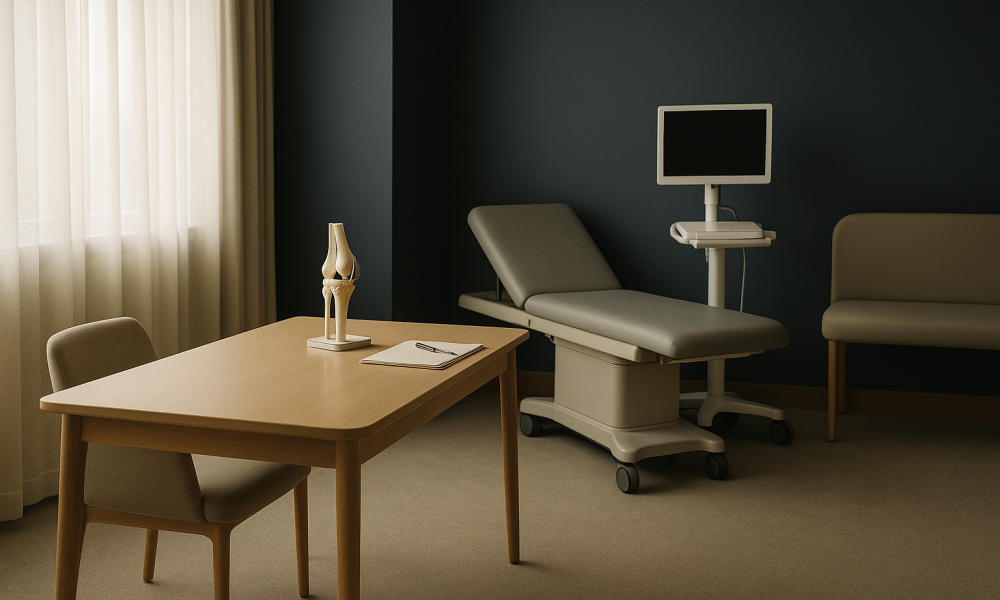
What Partial Knee Replacement is and who it is for
Partial knee replacement, also known as unicompartmental knee arthroplasty, is a surgical procedure aimed at relieving pain and restoring function in patients suffering from osteoarthritis in one compartment of the knee. Unlike total knee replacement, which involves replacing all components of the knee joint, partial knee replacement targets only the affected area, preserving healthy bone and tissue. This approach can lead to a more natural feeling in the knee and offers quicker recovery times.
The procedure involves resurfacing the damaged bone and cartilage in either the medial (inner), lateral (outer), or patellofemoral (front) compartments of the knee. A metal and plastic implant is then fitted to the area to facilitate smooth joint movement. Typically, the surgery lasts between 1 to 2 hours and is performed under general or spinal anaesthesia. Patients can often expect a hospital stay ranging from 1 to 3 days.
Partial knee replacement is primarily recommended for patients with osteoarthritis confined to one compartment of the knee. This condition generally affects individuals over the age of 50, though younger patients may also be considered if they meet specific criteria. The procedure is less invasive than total knee replacement and involves a smaller incision, which often results in reduced pain and a faster return to daily activities.
Compared to total knee replacement, partial knee replacement offers several potential benefits, including a more natural knee motion, less blood loss during surgery, and a shorter rehabilitation period. However, it is crucial for patients to have realistic expectations; not everyone is a suitable candidate, and the procedure may not entirely eliminate knee pain or restore full function.
Are you a good candidate?
Determining whether you are a good candidate for partial knee replacement involves a thorough evaluation by an orthopaedic specialist. The ideal candidates are those who have osteoarthritis limited to one compartment of the knee. This surgery is not suitable for individuals with rheumatoid arthritis or those with substantial damage in multiple compartments of the knee. Here are some of the criteria that may make you a suitable candidate:
- Localized Osteoarthritis: The arthritis should be confined to one compartment of the knee.
- Age: Typically over 50, but younger patients can be considered based on specific circumstances.
- Weight: Being within a reasonable weight range is important to avoid undue stress on the new joint.
- Activity Level: Candidates should have a moderate activity level; highly active individuals may need to consider other options.
- Overall Health: Good overall health is necessary to tolerate anaesthesia and the recovery process.
- Stable Ligaments: Intact and stable knee ligaments are essential for the success of the surgery.
- Realistic Expectations: Understanding the limitations and potential outcomes of the procedure is crucial.
If these criteria are met, the next step typically involves imaging tests such as X-rays or MRI scans to assess the extent of the osteoarthritis and confirm that other parts of the knee are healthy. A comprehensive evaluation will also include a review of your medical history and a physical examination. It is important to discuss all treatment options with your surgeon, including the potential risks and benefits, to make an informed decision about whether partial knee replacement is the right choice for you.
The procedure, step by step
Undergoing a partial knee replacement in Turkey involves a carefully coordinated series of steps that ensure both the precision of the surgical procedure and the comfort of the patient. Below is a detailed outline of the typical steps involved in the procedure:
- Pre-operative Assessment: Prior to surgery, patients will undergo a comprehensive assessment which includes physical examination, imaging scans such as X-rays or MRIs, and blood tests. This helps the medical team to plan the surgery and tailor it to the patient’s specific needs.
- Anaesthesia: On the day of the surgery, the patient will be administered either general anaesthesia, which puts the patient to sleep, or regional anaesthesia, which numbs the lower body. The choice depends on the patient’s health profile and preferences discussed with the anaesthetist.
- Incision and Exposure: The surgeon makes a small incision, typically 7 to 10 cm long, over the knee to expose the affected compartment. Specialised instruments are used to ensure minimal tissue damage.
- Bone Preparation: The damaged bone and cartilage are carefully removed from the knee joint. The surgeon uses precision tools to shape the bone surfaces to fit the implant components perfectly.
- Implant Placement: The metal and plastic components of the knee implant are positioned onto the prepared bone surfaces. These components are designed to replace the cartilage and bone loss while allowing smooth knee movement.
- Verification and Adjustment: The surgeon checks the alignment and movement of the knee with the new implant in place. Any necessary adjustments are made to ensure optimal function and stability.
- Closure: The incision is closed using sutures or staples, and the knee is bandaged. A drainage tube may be inserted to remove excess fluids from the surgical site.
- Post-operative Care: The patient is moved to a recovery room where vital signs are monitored. Pain management is initiated, and initial physiotherapy may begin as soon as the patient is stable.
This sequence of steps is designed to replace only the damaged part of the knee, preserving as much of the natural knee structure as possible, which can lead to a quicker recovery and more natural knee movement compared to total knee replacement.
Recovery timeline
Recovery from a partial knee replacement is a gradual process that varies between individuals, but here is a general timeline outlining what patients can typically expect:
| Period | What to expect | Care notes |
|---|---|---|
| Day 1 | Patients may experience some pain and swelling. Initial physiotherapy begins to encourage movement. | Pain management through prescribed medication. Begin gentle exercises as instructed by physiotherapists. |
| Week 1 | Pain and swelling should gradually decrease. Patients may start walking with assistance. | Continue taking prescribed medications. Elevate the leg and apply ice to reduce swelling. Attend follow-up appointments. |
| Weeks 2-4 | Improved mobility and reduced pain. Patients can begin walking without aids for short distances. | Engage in regular physiotherapy sessions. Avoid strenuous activities. Follow a balanced diet to support healing. |
| Month 2 | Most patients can resume normal activities, though some stiffness may persist. | Continue with exercises to improve strength and flexibility. Gradually increase activity levels. |
| Months 3-6 | Patients should experience significant improvement in knee function with minimal discomfort. | Regular check-ups to monitor progress. Engage in low-impact exercises to maintain joint health. |
| Full Recovery (6-12 months) | The knee should be fully functional, allowing for normal activities without pain. | Continue exercises and lead an active lifestyle. Discuss any concerns with your healthcare provider. |
While this timeline provides a general guide, individual recovery experiences may vary. Patients are encouraged to follow their personalised rehabilitation plan and communicate regularly with their healthcare team for the best outcomes.
What it costs: Turkey vs the UK, Europe and North America
When considering a partial knee replacement, cost is a significant factor for many patients. Turkey has emerged as a competitive option for this procedure, often offering lower prices without compromising on quality. To help you understand how costs compare, we have compiled indicative price ranges for partial knee replacement in Turkey, the UK, Europe, and North America. It is important to note that these figures are indicative and can vary based on specific hospitals, surgeons, and the complexity of the case.
| Region | Indicative Price Range (GBP) | Typical Inclusions |
|---|---|---|
| Turkey | £5,000 – £8,000 | Pre-operative consultations, surgery, hospital stay, post-operative care, and local transportation. |
| UK | £9,000 – £14,000 | Pre-operative consultations, surgery, hospital stay, and basic post-operative care. |
| Europe (e.g., Germany, Spain) | £10,000 – £16,000 | Pre-operative consultations, surgery, hospital stay, and routine post-operative care. |
| North America (USA, Canada) | £20,000 – £30,000 | Pre-operative consultations, surgery, hospital stay, and standard post-operative care. |
In Turkey, the financial advantage is not only in the lower cost but also in the comprehensive packages offered by many healthcare providers. These packages often include additional services such as airport transfers, accommodation arrangements for companions, and extended rehabilitation programmes. The lower cost in Turkey is primarily due to lower operational and labour costs, but the country still maintains high standards of medical care, supported by internationally accredited hospitals and experienced surgeons.
While the UK, Europe, and North America have higher costs, they also offer advanced medical technologies and experienced healthcare professionals. However, the difference in cost can be substantial, making Turkey an attractive option for those seeking quality care at a more affordable price. It is crucial to discuss with healthcare providers exactly what is included in their packages to avoid unexpected expenses.
Risks and how accredited providers manage them
As with any surgical procedure, partial knee replacement carries certain risks. However, understanding these risks and how they are managed can help you make an informed decision. Accredited healthcare providers in Turkey are well-prepared to minimise and manage these risks, ensuring patient safety and care quality.
Common risks associated with partial knee replacement include infection, blood clots, implant issues, and anaesthesia-related complications. Accredited providers in Turkey implement stringent protocols to mitigate these risks.
- Infection Control: To prevent infections, hospitals maintain high standards of hygiene and sterilisation. Pre-operative screening, prophylactic antibiotics, and post-operative wound care are standard practices.
- Blood Clot Prevention: To reduce the risk of thrombosis, patients may receive blood-thinning medications and are encouraged to mobilise early post-surgery. Compression stockings and pneumatic devices may also be used.
- Implant Longevity and Function: Accredited providers use high-quality, FDA-approved implants. Surgeons are trained in the latest techniques to ensure proper alignment and fixation, which are crucial for implant longevity and function.
- Anaesthesia Safety: Anaesthesiologists conduct thorough pre-operative assessments to tailor anaesthesia plans to individual needs, reducing the risk of complications.
Accredited hospitals in Turkey also adhere to international standards such as those set by the Joint Commission International (JCI). These standards ensure that facilities maintain the highest levels of patient care, safety, and operational excellence.
Furthermore, many hospitals have dedicated patient coordinators who assist international patients throughout their journey. These coordinators provide comprehensive support, from pre-operative consultations to post-operative follow-ups, ensuring that patients are well-informed and comfortable at every stage.
Patients are encouraged to discuss any concerns or questions with their healthcare providers before proceeding with surgery. By understanding the risks and how they are managed, patients can feel more confident in their choice to undergo partial knee replacement in Turkey.
How to choose the right provider
Choosing the right provider for partial knee replacement in Turkey involves several critical considerations. First, accreditation is a key factor. Ensure the hospital or clinic is accredited by international bodies such as the Joint Commission International (JCI) or the International Organization for Standardization (ISO). These accreditations indicate adherence to global healthcare standards and patient safety protocols.
Next, consider the experience and qualifications of the surgeon. Look for surgeons who specialise in orthopaedic surgery with a focus on knee replacements. Ideally, the surgeon should have at least 5-10 years of experience and a proven track record of successful outcomes. Inquire about the number of procedures they perform annually, as higher volumes can be indicative of expertise.
Aftercare is another crucial aspect of choosing a provider. A comprehensive aftercare programme should include post-operative consultations, physiotherapy, and rehabilitation services. This ensures a smooth recovery process and optimises surgical outcomes. Ask about the aftercare support available and whether it is included in the treatment package or at an additional cost.
Be aware of potential red flags when selecting a provider. Avoid clinics that make unrealistic promises or guarantees about outcomes. Transparency about risks, potential complications, and realistic recovery expectations is essential. Additionally, be cautious of providers that lack clear pricing structures or have significant hidden costs. A credible provider should offer a detailed breakdown of costs upfront.
Finally, patient testimonials and reviews are valuable resources. Look for feedback from previous international patients to gauge their satisfaction with the treatment and overall experience. While no provider will be without some negative reviews, a pattern of complaints, particularly about safety or transparency, should be a cause for concern.
Planning your trip
Planning your trip for a partial knee replacement in Turkey requires careful preparation to ensure a smooth experience. Begin by consulting with your chosen healthcare provider to establish a timeline. Typically, you should plan to arrive in Turkey at least 2-3 days before the surgery to allow for pre-operative assessments and to acclimatise.
Ensure you have all necessary documents in order, including a valid passport, visa (if required), and any medical records pertinent to your knee condition. It is also advisable to carry a list of current medications and any known allergies. Some clinics may require a referral from your local GP, so check in advance.
Regarding the length of stay, plan for approximately 10-14 days in Turkey. This duration allows for the surgery, initial recovery, and follow-up appointments. The specific length of stay may vary based on individual recovery rates and the surgeon’s recommendations.
Consider accommodation arrangements carefully. Many hospitals and clinics offer packages that include stay options, or you may choose to book independently. Opt for accommodations close to the medical facility to minimise travel stress post-surgery.
For follow-up care at home, liaise with your local healthcare providers before travelling. Ensure they are informed of your procedure and can assist with any necessary rehabilitation or monitoring post-return. Your Turkish healthcare provider should supply a detailed medical report and any recommendations for ongoing care.
Finally, think about travel insurance that covers medical procedures abroad. Verify that your policy includes coverage for potential complications and any additional treatments that might be required. This can provide peace of mind and financial protection.
Frequently Asked Questions
What is the typical cost range for a partial knee replacement in Turkey?
The cost for a partial knee replacement in Turkey typically ranges from £5,000 to £8,000. This is an indicative range and may vary based on the clinic, the surgeon's experience, and the specific services included in the package. Always confirm the full scope of what is covered in the quoted price.
How do I ensure the clinic is reputable?
To ensure a clinic's reputation, look for international accreditations like JCI or ISO, check the surgeon's credentials and experience, and read patient reviews. Additionally, transparency in communication and a clear breakdown of costs are good indicators of a reputable clinic.
What documents do I need to bring for my surgery?
You will need a valid passport, visa (if required), medical records related to your knee condition, a list of current medications, and any known allergies. Some clinics may also require a referral from your local GP, so it's best to confirm in advance.
How long should I plan to stay in Turkey for the procedure?
You should plan to stay in Turkey for about 10-14 days. This includes time for the surgery, initial recovery, and follow-up appointments. The exact duration may vary based on your individual recovery and the surgeon's advice.
Is it safe to travel to Turkey for knee surgery?
Yes, it is generally safe to travel to Turkey for knee surgery, provided you choose a reputable clinic with international accreditation and experienced surgeons. Ensure you have comprehensive travel insurance and follow all pre- and post-operative care instructions carefully.
What should I consider when choosing a surgeon?
When choosing a surgeon, consider their specialisation in orthopaedics, particularly knee replacements, their years of experience, and the number of procedures performed annually. Reviews from previous patients and professional accreditations are also important factors.
What is included in the aftercare package?
Aftercare packages typically include post-operative consultations, physiotherapy, and rehabilitation services. However, the specifics can vary by provider, so it's essential to clarify what is included in the package and if there are any additional costs.
Will my insurance cover the surgery in Turkey?
Coverage depends on your insurance policy. Some policies may cover overseas medical treatments, while others may not. It's crucial to contact your insurance provider to confirm the extent of coverage for international medical procedures.
How can I prepare for the surgery before travelling?
Preparation includes scheduling pre-operative consultations, gathering necessary medical documents, ensuring your passport and visa are valid, and arranging travel and accommodation. You should also organise follow-up care with your local healthcare provider for after you return home.
What happens if there are complications during my recovery?
If complications arise, your Turkish healthcare provider will address them initially. Ensure your travel insurance covers medical complications. Upon returning home, your local healthcare provider should be informed and prepared to assist with any ongoing issues.
Can I travel alone for the surgery?
While it's possible to travel alone, it's advisable to have a companion who can assist you, particularly during the initial recovery period. If travelling alone, ensure the clinic offers adequate support and transportation services post-surgery.
How do I handle follow-up care after returning home?
Before travelling, coordinate with your local healthcare provider to ensure continuity of care. Your Turkish provider should give you a detailed medical report and recommendations for follow-up care. Regular check-ups and physiotherapy may be necessary to ensure a full recovery.