
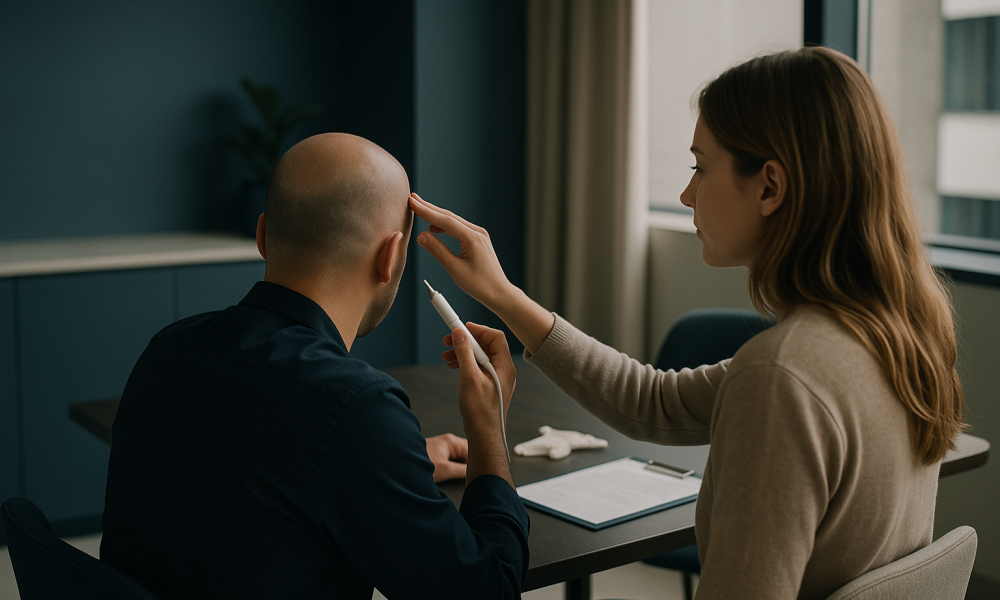
What Scalp Micropigmentation is and who it is for
Scalp Micropigmentation (SMP) is a non-surgical cosmetic procedure that involves the application of specialised pigments to the scalp to replicate the appearance of natural hair follicles. This procedure is particularly useful for individuals experiencing hair thinning, baldness, or pattern baldness, as well as those who wish to enhance the density of their existing hair. Unlike hair transplant surgeries, which involve the transplantation of hair follicles from one part of the body to another, SMP uses micro-needles to deposit pigment into the dermal layer of the skin, creating the illusion of a closely shaved scalp or denser hair coverage.
The procedure is often chosen by men and women who are experiencing various forms of hair loss, including androgenic alopecia, alopecia areata, and scarring alopecia. It can also be an effective solution for those who have undergone unsuccessful hair transplant surgeries or wish to cover scars from past procedures. The pigments used in SMP are formulated to match the natural hair colour of the individual, providing a seamless and realistic look.
In Turkey, SMP has gained popularity due to its affordability and the high level of expertise offered by practitioners. The typical cost ranges from £500 to £2,000, depending on the extent of the area to be treated and the number of sessions required. Each session typically lasts between 2 to 4 hours, and most individuals require two to three sessions to achieve optimal results. The procedure is performed under topical anaesthesia, minimising discomfort and allowing patients to return to their daily activities within 1 to 2 days.
The results of SMP are immediate, providing an instant improvement in the appearance of hair density. However, full recovery, including the settling of the pigments and any minor skin irritation, generally takes about 7 to 10 days. As the pigments are deposited into the dermal layer, they are semi-permanent and can last several years before a touch-up is required. This makes SMP a long-term solution for those seeking to improve their hair appearance without undergoing invasive surgery.
Are you a good candidate?
Determining whether you are a suitable candidate for scalp micropigmentation involves considering several factors related to your health, hair loss pattern, and expectations from the procedure. SMP is a versatile treatment that can cater to a wide range of individuals; however, certain criteria can help ensure the best possible outcome.
- Type of Hair Loss: SMP is suitable for individuals with various types of hair loss, including pattern baldness, alopecia areata, and thinning hair. It is also effective for those who wish to conceal scars from previous surgeries or injuries.
- Age: While there is no strict age limit, candidates are typically adults who have experienced stable hair loss patterns. This ensures that the pigment placement remains appropriate as hair loss progresses.
- Skin Type: SMP can be performed on all skin types, although individuals with extremely sensitive skin or certain dermatological conditions may require a preliminary consultation to assess suitability.
- Health Status: Being in good overall health is important. Those with certain medical conditions or who are taking medication that affects skin healing should discuss these factors with a practitioner.
- Realistic Expectations: Candidates should have realistic expectations about the results. SMP provides the appearance of hair density and a shaved look but does not grow hair.
- Commitment to Aftercare: Post-procedure care is crucial for optimal results. Candidates should be willing to follow aftercare instructions, including avoiding direct sunlight and refraining from certain activities during the healing period.
If you meet these criteria, you may be an excellent candidate for scalp micropigmentation. A consultation with a qualified practitioner in Turkey can provide further insight into your specific case and help tailor the treatment to your needs. The consultation will typically involve a review of your hair loss history, a discussion about your desired outcomes, and an assessment of your scalp to ensure that SMP is the best solution for you.
The procedure, step by step
Scalp micropigmentation (SMP) is a non-surgical procedure designed to create the appearance of fuller hair through the application of detailed microdots of pigment to the scalp. Here is a step-by-step guide to what you can expect during the procedure:
- Initial Consultation: Before the procedure, an in-depth consultation with the specialist will occur. This meeting is crucial for discussing your desired outcomes, assessing your scalp condition, and determining the appropriate pigment colour. The practitioner will also explain the procedure in detail, addressing any questions or concerns you may have.
- Preparation: On the day of the procedure, your scalp will be cleaned and prepared. This involves shaving the hair to a short length if needed, and ensuring the area is free from oils and debris. A topical anaesthetic may be applied to minimise discomfort during the procedure.
- Design and Planning: The specialist will map out the hairline and areas to be treated. This step involves careful design to ensure the results appear natural and blend seamlessly with existing hair. You will have the opportunity to review and agree upon the design before proceeding.
- Pigmentation Application: Using a fine needle, the specialist will apply pigments into the upper dermis of the scalp. This process is meticulous, with each session lasting between 2 to 4 hours, depending on the coverage area. The pigment is deposited in a pattern that mimics natural hair follicles, creating the illusion of density and shadow.
- Layering and Blending: SMP is typically completed over multiple sessions, usually 2 to 3, spaced about one week apart. Each session builds upon the previous one, allowing the practitioner to adjust pigment density and colour as needed to achieve optimal results.
- Final Review: After the last session, a thorough review of the results is conducted. The specialist will ensure that the pigment has settled evenly and that the overall appearance meets your expectations. Any necessary touch-ups will be discussed at this stage.
This detailed approach ensures that the final outcome is both aesthetically pleasing and personalised to your unique needs.
Recovery timeline
Understanding the recovery process after scalp micropigmentation is essential for achieving the best results. Below is a detailed timeline of what you can expect during the recovery period:
| Period | What to expect | Care notes |
|---|---|---|
| Day 1 | Immediately after the procedure, you may experience mild redness and slight tenderness on the scalp. The treated area will appear darker than expected due to the fresh pigment. | Avoid touching or washing the scalp. Keep the area dry and refrain from applying any creams or oils. |
| Days 2-4 | Redness and tenderness should subside. The pigment will begin to settle, and the colour may appear slightly lighter as the skin starts to heal. | Continue to keep the scalp dry. Avoid exposure to sunlight and refrain from strenuous activities that cause sweating. |
| Days 5-7 | Any initial scabbing or flaking may occur as the skin heals. It is crucial not to pick at the scalp to avoid affecting the pigment. | Wash the scalp gently with lukewarm water. Do not use shampoos or soaps that contain harsh chemicals. |
| Week 2 | The pigment will begin to stabilise, and the true colour will emerge. The scalp should feel more comfortable, with minimal sensitivity. | Moisturise the scalp with a recommended product to prevent dryness. Continue to protect the area from direct sunlight. |
| Weeks 3-4 | Most of the healing should be complete, and the final results will start to become evident. The pigment will have settled into a natural-looking tone. | You may resume regular washing of the scalp with gentle products. Use sunscreen to protect the scalp when outdoors. |
| Full Recovery (1-2 months) | By this time, the scalp should be fully healed, and the micropigmentation should appear natural and seamlessly blended with any existing hair. | Maintain regular scalp care and consider periodic check-ups with your specialist to assess the condition and address any concerns. |
Following these care guidelines will help ensure a smooth recovery and optimal results from your SMP procedure.
5. What it costs: Turkey vs the UK, Europe and North America
Scalp micropigmentation (SMP) has gained popularity as an effective non-surgical solution for hair loss. One of the factors contributing to its appeal is the cost, which varies significantly depending on the country. In Turkey, SMP is often more affordable than in the UK, Europe, and North America. This is due to lower operational costs and favourable exchange rates, making Turkey an attractive destination for those seeking quality treatment at a competitive price.
Below is a comparison of indicative price ranges for SMP across different regions:
| Region | Indicative Price Range (GBP) | Typical Package Inclusions |
|---|---|---|
| Turkey | £800 – £1,500 | Initial consultation, 2-3 sessions, follow-up visit, local anaesthesia |
| UK | £1,500 – £3,000 | Initial consultation, 2-3 sessions, follow-up visit |
| Europe | £1,800 – £3,500 | Initial consultation, 2-3 sessions, follow-up visit, local anaesthesia |
| North America | £2,000 – £4,500 | Initial consultation, 2-3 sessions, follow-up visit |
It is important to note that these figures are indicative and actual costs may vary based on the clinic, practitioner expertise, and the specific needs of the patient. In Turkey, packages often include additional services such as airport transfers, accommodation arrangements, and translation services, providing a comprehensive experience for international patients.
When considering SMP in Turkey, prospective patients should conduct thorough research to ensure they choose a reputable clinic. Looking into the qualifications of practitioners and seeking patient testimonials can help ensure a satisfactory outcome. Despite the lower costs, the quality of care in Turkey is generally high, with many clinics adhering to international standards.
Ultimately, the choice of location for scalp micropigmentation should balance cost considerations with the reputation of the clinic and the expertise of its practitioners. Patients should weigh the potential savings against the assurance of receiving treatment from accredited providers with a proven track record.
6. Risks and how accredited providers manage them
Like any cosmetic procedure, scalp micropigmentation (SMP) carries certain risks. These include allergic reactions, infection, and dissatisfaction with the aesthetic outcome. However, these risks can be mitigated when the procedure is performed by accredited providers who adhere to stringent safety protocols.
One of the primary risks associated with SMP is an allergic reaction to the pigments used. Accredited providers in Turkey typically perform a patch test before the procedure to identify any potential allergies. This precautionary step helps ensure that the pigments are safe for use on the patient’s skin.
Infection is another concern, particularly if the treatment environment is not adequately sterilised. Reputable clinics in Turkey follow rigorous hygiene standards, including the use of sterilised equipment and disposable needles. Practitioners are trained to maintain a sterile field throughout the procedure, significantly reducing the risk of infection.
Dissatisfaction with the aesthetic outcome can occur if the results do not meet the patient’s expectations. Accredited providers address this risk by conducting detailed consultations prior to the procedure. During these consultations, practitioners discuss the patient’s goals and provide realistic previews of the potential results. This ensures that patients have a clear understanding of what the treatment can achieve, reducing the likelihood of disappointment.
Moreover, accredited providers in Turkey often offer follow-up sessions to allow for adjustments if necessary. This ongoing care is crucial in ensuring patient satisfaction, as it provides an opportunity to refine the results according to the patient’s feedback.
In addition to managing specific risks, accredited providers in Turkey are often members of international professional organisations. These memberships require adherence to high standards of practice and continuous professional development. This commitment to excellence is reflected in the quality of care provided to patients.
In conclusion, while SMP does carry certain risks, these can be effectively managed by choosing accredited providers who follow international best practices. Patients considering SMP in Turkey should prioritise clinics with a strong reputation for safety and quality to ensure a positive experience and satisfactory results.
How to choose the right provider
Choosing the right provider for scalp micropigmentation (SMP) is crucial for a successful outcome. Start by ensuring the clinic is accredited by a recognised body, such as the Turkish Ministry of Health. Accreditation indicates adherence to high standards of hygiene, safety, and professional practice. Additionally, verify if the SMP technicians have undergone specific training and hold relevant certifications.
Experience is another key factor. Look for providers with a minimum of five years’ experience in SMP, as this often correlates with refined technique and better results. Request to see a portfolio of their work, including before and after photos, and read reviews from previous clients. Testimonials can provide insights into the practitioner’s skill level and patient satisfaction.
Aftercare is a critical aspect of the SMP process. Reputable clinics offer comprehensive post-procedure care, including written instructions and follow-up appointments to monitor progress and address any concerns. Some clinics offer virtual consultations, which can be particularly beneficial for international patients.
Be vigilant for red flags. Avoid clinics that make unrealistic promises, such as guaranteed results or immediate full coverage. A professional provider will give a realistic overview of what SMP can achieve and will discuss potential limitations and risks. Additionally, be wary of clinics that pressure you into making quick decisions or require large upfront payments without a clear refund policy.
Finally, consider the clinic’s communication responsiveness. A reliable provider will be accessible and responsive to your queries, providing detailed, transparent information about the procedure, costs, and expectations.
Planning your trip
Planning your trip for scalp micropigmentation in Turkey involves several important steps to ensure a smooth experience. Begin by scheduling your initial consultation at least two months in advance to allow ample time for planning and preparation. This consultation can often be conducted virtually and will help you understand the procedure details, costs, and expected outcomes.
For travel documentation, ensure your passport is valid for at least six months beyond your planned return date. Depending on your nationality, you might also need a visa to enter Turkey. The e-Visa can be easily obtained online for many nationalities, including UK, EU, and US citizens.
Plan your stay in Turkey for a minimum of 3 to 5 days. This timeframe allows for the procedure itself, which typically takes 2 to 3 hours, followed by a day or two for initial recovery. Some patients may require more than one session, spaced several days apart, so discuss this with your provider beforehand.
Consider your accommodation options carefully. Many clinics offer packages that include hotel stays, which can simplify logistics and often come with transport services between the airport, hotel, and clinic. However, independently booking a hotel close to the clinic might offer more flexibility.
After returning home, follow-up care is crucial. Ensure you have clear instructions from your provider on aftercare practices and any necessary follow-up appointments. Some clinics offer virtual follow-up consultations, which can be convenient for international patients.
Finally, consider travel insurance that covers medical procedures abroad. This can provide peace of mind against unforeseen circumstances, ensuring that you are covered for any complications or unexpected changes to your travel plans.
Frequently Asked Questions
What is the typical cost range for scalp micropigmentation in Turkey?
The cost of scalp micropigmentation in Turkey typically ranges from £800 to £2,000, depending on the extent of the treatment and the provider's expertise. This is an indicative range, and prices may vary based on individual needs and clinic offerings.
How do I know if a clinic is accredited?
You can verify a clinic's accreditation by checking with the Turkish Ministry of Health or looking for certifications from recognised international bodies. Clinics often display these certifications on their websites or upon request during consultations.
What qualifications should the SMP provider have?
The SMP provider should have specific training in micropigmentation and hold relevant certifications. Experience is also crucial; look for practitioners with at least five years of experience and a portfolio of successful treatments.
How long should I plan to stay in Turkey for SMP?
Plan to stay in Turkey for at least 3 to 5 days. This allows time for the procedure, initial recovery, and any necessary follow-up sessions. Discuss the exact timeline with your provider before booking your trip.
What should I expect during aftercare?
Aftercare involves following specific instructions to ensure proper healing and pigment retention. This may include avoiding sun exposure, not washing the scalp for a few days, and applying recommended products. Follow-up appointments may also be necessary.
Are there any risks associated with scalp micropigmentation?
SMP is generally safe when performed by qualified professionals. However, risks include infection, allergic reactions, or unsatisfactory results. Choosing an accredited clinic with experienced practitioners minimises these risks.
Can I get a refund if I am not satisfied with the results?
Refund policies vary by clinic. Some may offer partial refunds or corrective sessions if the results do not meet expectations. It is crucial to discuss and understand the clinic's policy on refunds and corrections before proceeding.
What documents do I need for travel to Turkey?
Ensure your passport is valid for at least six months beyond your return date. Depending on your nationality, you may need a visa, which can often be obtained online as an e-Visa. Check current visa requirements before traveling.
How soon can I return to work after the procedure?
Most patients can return to work within a few days following the procedure. However, it is advised to avoid strenuous activities and exposure to dirt or dust until the scalp has healed, typically within a week.
Is SMP a permanent solution for hair loss?
SMP is a long-lasting but not permanent solution. Over time, the pigments may fade and require touch-up sessions every 3 to 5 years to maintain the desired appearance.
What should I look for in patient reviews?
Look for reviews that mention the provider's professionalism, the cleanliness of the clinic, satisfaction with the results, and the quality of aftercare. Consistently positive feedback in these areas is a good indicator of a reliable provider.
How does the cost of SMP in Turkey compare to other countries?
SMP in Turkey is generally more affordable than in the UK, Europe, or North America, with savings of 40-70% in some cases. This is due to lower operational costs in Turkey, not a compromise in quality. Ensure the clinic is accredited and experienced for the best results.