
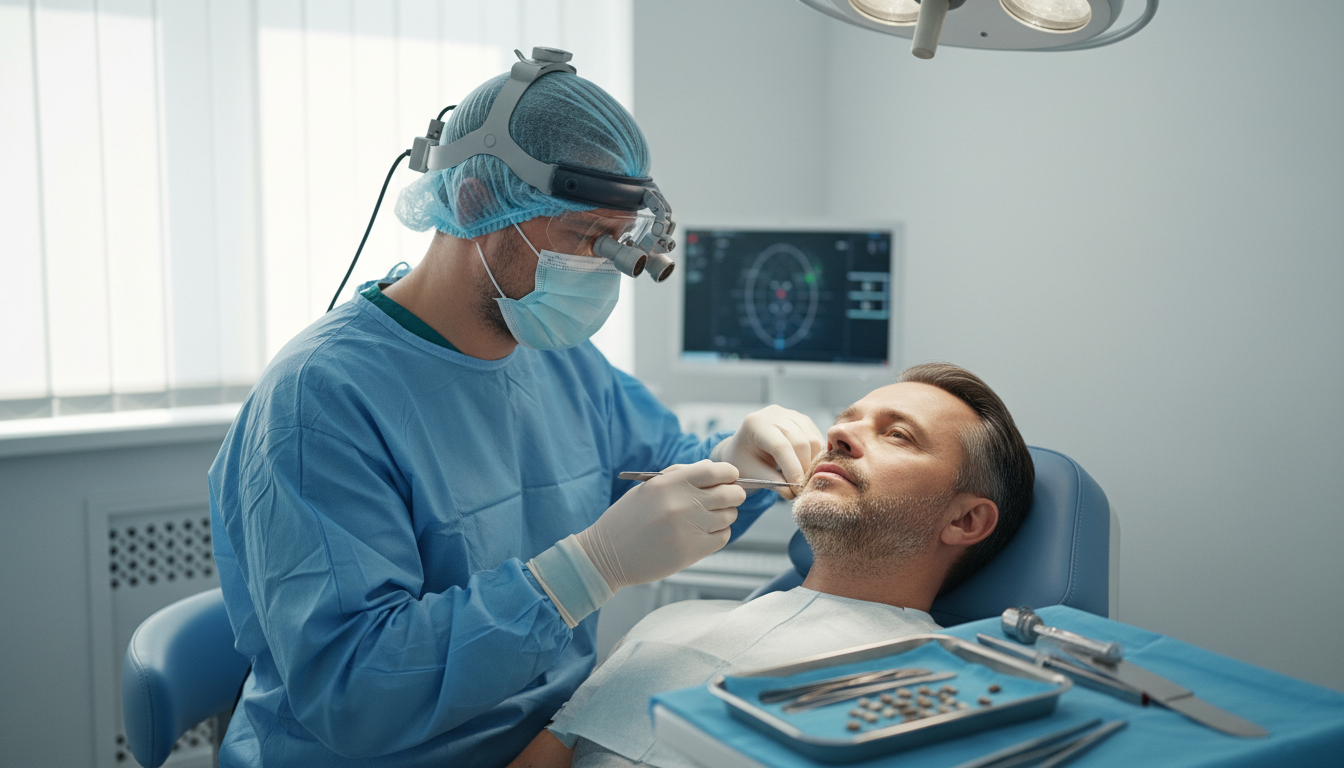
Can a targeted hair restoration procedure change how men feel about their appearance?
Many men wonder if modern techniques can fill sparse areas and create natural density. This introduction outlines what to expect from the procedure and why a careful consultation matters.
A skilled surgeon harvests healthy hairs and places them to restore facial hair where growth is thin. The process blends medical precision with aesthetic judgment to deliver natural-looking results.
Choosing an experienced clinic reduces risks and improves the chance of satisfying outcomes. Readers will learn about the steps, recovery, and how hair restoration can support confidence and a refined look.
Key Takeaways
- Hair transplant techniques can address patchy facial hair with lasting results.
- An initial consultation defines goals and realistic expectations.
- Experienced surgeons focus on natural density and proper placement.
- Recovery is gradual; final results appear over months.
- Understanding the procedure helps men make informed choices.
Understanding the Beard Transplant Your Guide to a Fuller Masculine Look
A precise surgical method relocates healthy follicles to sparse facial zones for natural-looking density.
This procedure is an effective form of hair restoration for men with patchy growth. It moves healthy donor follicles into areas of thin facial hair. Most sessions are done under local anesthesia, which keeps the patient comfortable throughout.
Transplanted hairs follow the same growth cycle as existing hair. Over months, the grafts settle and mature. The aim is a permanent improvement in beard density that matches facial contours and texture.
| Feature | Benefit | Typical Results |
|---|---|---|
| Donor follicle transfer | Natural texture match | Steady, long-term growth |
| Local anesthesia | Lower discomfort | Same-day recovery start |
| Follicle placement technique | Custom density and shape | Natural-looking facial hair |
| Medical assessment | Personalized plan | Improved confidence for men |
Keep in mind: these transplants are not merely cosmetic. They are a medical solution that can restore beard hair and support emotional well-being. Discuss expectations with a qualified clinician to understand realistic results.
Who Is an Ideal Candidate for Facial Hair Restoration
Some people turn to surgical hair restoration when natural growth patterns leave visible gaps. An evaluation checks causes, donor supply, and realistic goals before any procedure.
Genetic Factors
Many candidates have sparse beard growth due to heredity. Genetics can limit hair density in specific zones, creating patchy areas that do not respond to grooming.
A thorough assessment of hair growth patterns helps clinicians determine if transplanted hairs will blend naturally. A healthy donor area, often the scalp, is essential for success.
Scarring and Trauma
Loss from surgery, burns, or injury often produces local scarring that blocks normal hair growth. Careful planning can place grafts within scar tissue to restore coverage.
When scalp donor supply is low, surgeons may consider beard hair or other donor sites to achieve optimal results.
| Candidate Factor | Typical Issue | Clinical Consideration |
|---|---|---|
| Genetic patchiness | Thin areas on cheeks or chin | Assess donor scalp for matching hairs |
| Scarring or trauma | Local hair loss | Prepare recipient area; expect slower growth |
| Prior transplants | Depleted scalp donor | Consider alternative donor sites |
| Overall health | Healing capacity | Medical review before procedure |
Comparing FUE and DHI Surgical Techniques
Two leading methods now shape facial hair restoration: follicular unit extraction (FUE) and direct hair implantation (DHI).
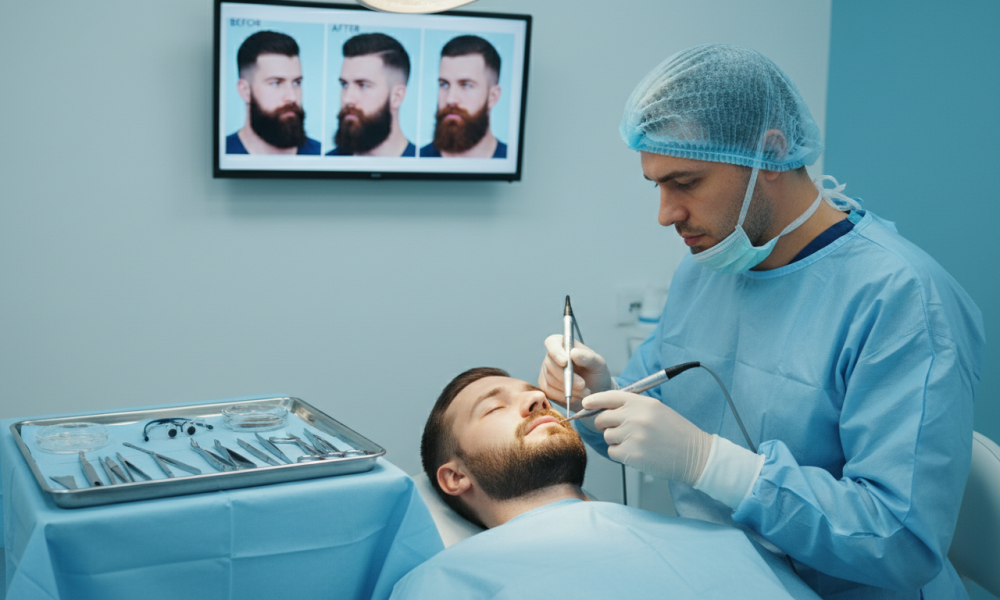
FUE extracts individual hair follicles from the donor scalp and implants them into the recipient area. This approach suits larger zones and offers natural distribution with minimal scarring.
DHI uses a pen-like tool to place each follicle directly. Surgeons can control angle and depth during placement, which often enhances density and precise results.
- FUE: good for coverage over wider areas; reliable follicle survival.
- DHI: precise placement for higher density in targeted zones.
- Both procedures minimize trauma in the donor region and aim for natural growth and texture.
| Technique | Extraction | Placement | Best for |
|---|---|---|---|
| FUE | Individual follicular unit removal | Incision or slit placement | Larger facial zones, even distribution |
| DHI | Similar extraction methods | Direct implantation with implanter pen | High density, precise shaping |
| Both | Donor preservation focus | Designed to protect hair follicles | Improved facial hair growth and natural results |
Choosing between these procedures depends on the pattern of hair loss and a surgeon’s recommendation. A careful consult helps decide which method delivers the best long-term results.
Preparing for Your Initial Consultation
The consultation begins with a careful assessment of the face and a clear discussion of achievable goals.
The surgeon will inspect facial growth, donor areas, and skin quality. This quick exam helps shape a personalized plan for the procedure.
Next comes a medical history review. Patients should share medications, past surgeries, allergies, and any health conditions that affect healing.
What to Expect During the Visit
- Health screening: A full review of medical background ensures safety and suitability.
- Goal setting: The team discusses aesthetic goals and realistic outcomes for facial hair restoration.
- Technique discussion: Ask about the surgeon’s methods and the expected recovery process.
- Risk review: Potential complications and post-procedure care are explained clearly.
An informed consultation builds confidence. The experience helps patients leave with clear expectations and a tailored treatment plan.
The Step by Step Surgical Procedure
A clear workflow helps ensure each follicular unit is handled safely from the scalp donor site to the recipient area. The full procedure usually takes between four and eight hours. Patients remain comfortable while the team works steadily toward natural density.
Donor Hair Harvesting
The donor area on the back of the scalp is shaved and prepared. Surgeons use either FUE or DHI extraction to remove individual follicles with care.
This source zone is chosen because hairs there resist loss and match texture for facial placement.
Recipient Site Preparation
Next, the team marks the treatment area and creates tiny incisions. Each cut is angled to mirror natural facial hair direction.
Accurate angle and spacing set the foundation for even growth and pleasing density.
Graft Placement
Technicians insert grafts one by one, placing harvested follicles into the prepared slits. The aim is seamless integration with existing hairs.
Afterward, progress is monitored over several months to track hair growth and final results.
Managing Expectations During the Recovery Timeline
Expect a predictable recovery rhythm: initial inflammation, short-term crusting, then gradual hair emergence.
Patients often notice mild swelling, redness, and scabbing in the treated area. These reactions usually ease within a week after a beard transplant.
Full skin healing takes about two weeks. New hair growth begins over the following months. Most people see meaningful improvement by 6–9 months, when final results become clearer.

Follow-up and aftercare matter. The surgeon will give specific steps for cleaning the scalp and facial area, avoiding heavy exercise, and protecting grafts from friction.
- Normal signs: swelling and light scabbing in early days.
- Aftercare: gentle cleansing and sun protection help hair restoration.
- Activity: most return to routine in a few days if they follow instructions.
Understanding the timeline helps set calm expectations. With proper care, transplanted hairs integrate and growth unfolds naturally over several months.
Essential Aftercare Tips for Long Term Success
Simple daily routines in the weeks after surgery protect delicate grafts and support steady growth.
Hygiene and Cleaning
Keep the recipient area clean and dry as directed by the clinic. Use gentle saline rinses or prescribed solutions to remove crusting without rubbing.
Avoid scratching or picking at grafts. This reduces the chance of infection and helps follicles anchor during early healing.
Shaving Restrictions
Avoid shaving for at least two weeks to prevent irritation and allow grafts to settle. When clearing stubble later, follow the surgeon’s timing and technique advice.
Proper care of the donor scalp and the recipient area lowers scarring risk and protects follicles so growth can progress naturally.
- Hygiene: strict cleaning prevents infection and supports healthy hair growth.
- Shaving: no razors for two weeks; follow clinic guidance before resuming trimming.
- Swelling: manage minor swelling with cold compresses and prescribed meds as needed.
Following these instructions protects your investment in hair restoration and improves the chance of consistent density and lasting results.
Factors Influencing the Cost of Your Procedure
Costs for facial hair restoration vary widely based on clinic choices and surgical complexity.
The number of grafts and the time required are primary drivers of total cost. More grafts mean longer sessions and higher fees.
Surgeon experience matters. Highly trained surgeons and clinics with strong reputations often charge more, but they may deliver better long-term results.
“Transparent pricing helps patients plan and feel confident about their decision.”
- Packages: Some centers, especially in Turkey, bundle travel and care for international patients.
- Technique: FUE or DHI choices affect time, staffing, and cost.
- Consultation: A full breakdown during the consult explains fees and expected graft counts.
| Factor | How it Affects Cost | Typical Range |
|---|---|---|
| Graft count | More grafts increase time and resources | Low to high depending on need |
| Surgeon skill | Experienced surgeons charge premium fees | Mid to high |
| Location | Regional pricing and package inclusions vary | Turkey often lower; U.S. higher |
| Technique | FUE/DHI and staffing affect hours and cost | Moderate to high |
Realizing Your Aesthetic Goals and Results
Visible progress often arrives in stages, bringing steady confidence along the way.
Significant improvements in density usually appear between 6 and 9 months. Over 12–18 months, hairs and follicles mature and the final results emerge.
A well-executed beard transplant becomes a lasting solution. Once healed, patients can groom and style facial hair like natural growth.
Surgeons work with patients to match growth patterns and facial contours. This collaborative approach helps align outcomes with personal goals.
- Timeline: early signs at 6–9 months; full maturation by 12–18 months.
- Permanence: transplanted hairs follow normal hair growth and are long lasting.
- Care: follow clinic advice for aftercare to protect graft survival and density.
Many people report improved self-esteem when final results arrive. The procedure is both medical and aesthetic, and careful planning supports the best possible outcome.
Selecting the Right Surgeon and Clinic
Evaluate a surgeon’s hands-on experience and membership in professional societies before booking an appointment. Look for credentials such as ISHRS affiliation or ABHRS diplomate status—these signal ethical standards and ongoing training.
Experience matters: choose surgeons with years of documented case results. A reputable clinic will share clear before-and-after photos and verified patient feedback.
Ask about technique options—whether FUE or strip extraction suits the scalp donor site and the desired facial hair pattern. An expert will explain how many grafts and which follicular unit approach best match texture and growth.
Prioritize clinics that describe safety protocols, staff training, and follow-up care. Patient-centered teams reduce scarring risk and help protect graft survival during early growth.
| What to Check | Why It Matters | Questions to Ask |
|---|---|---|
| Board certifications / ISHRS membership | Professional standards and ethics | Are you ABHRS certified or ISHRS member? |
| Before-and-after portfolio | See real results for facial hair styles | Can you show cases like mine? |
| Technique experience (FUE/strip) | Matches donor supply and goals | Which method suits my scalp and graft needs? |
| Aftercare and follow-up | Supports healing and final results | What is the follow-up schedule? |
- Tip: Verify clinic reviews and request a detailed graft estimate during consultation.
- Tip: Confirm surgical team experience and ask about complication protocols.
Conclusion
A successful outcome blends surgical skill, patient commitment, and thoughtful follow-up.
Modern hair transplant methods offer lasting density when performed by an experienced team. Patients who follow clear aftercare and attend scheduled reviews support the best chances for healthy growth.
This journey is both medical and personal. It can improve confidence and everyday grooming options beyond cosmetic change.
For practical insights and clinic considerations, review trusted resources like the hair restoration insights. Schedule a consultation to discuss expectations and how hair transplant techniques can help reach long-term goals.
FAQ
What is involved in facial hair restoration and who performs it?
Facial hair restoration uses hair transplant techniques such as follicular unit extraction (FUE) or direct hair implantation (DHI). A board-certified plastic surgeon or fellowship-trained hair restoration specialist typically performs the procedure in an accredited clinic. The team evaluates donor area quality, plans graft distribution, and places follicles to mimic natural growth patterns.
Who is an ideal candidate for this procedure?
Ideal candidates are adults with stable facial hair loss, good overall health, and realistic expectations. People with genetic patchiness, congenital sparse growth, or scarring from trauma may benefit. Candidates should have sufficient donor hair on the scalp and no active scalp or skin infections.
How do genetic factors and scarring affect outcomes?
Genetics determine follicle characteristics like thickness and curl, which influence final density. Scarred tissue from injury or surgery can reduce blood supply, making graft survival more challenging. Surgeons may recommend additional sessions or grafting techniques to improve coverage in scarred areas.
What are the main differences between FUE and DHI techniques?
FUE involves extracting follicles individually with tiny punches and creating recipient sites before placement. DHI extracts follicles and implants them using a pen-like implanter, allowing for more precise angulation and often fewer open sites. Both produce natural results; choice depends on surgeon preference, donor supply, and target density.
How should someone prepare for the initial consultation?
Bring a detailed medical history, list of medications, and photos of desired outcomes. Expect a scalp and facial exam, donor-area assessment, and discussion of goals, risks, and likely graft count. The surgeon will outline a personalized plan and recovery expectations.
What happens during donor hair harvesting?
Donor harvesting typically uses local anesthesia. With FUE, individual follicular units are extracted from the back or sides of the scalp using micro-punches. In strip procedures, a thin strip is removed and dissected into grafts. The donor site heals with minimal scarring when done by experienced teams.
How are recipient sites prepared and grafts placed?
The surgeon creates tiny incisions at specific angles to mimic natural hair direction. Grafts are handled gently and placed into these sites in a pattern that matches beard contours. Attention to density, spacing, and angle ensures a natural, masculine appearance.
What should patients expect during recovery and the timeline for growth?
Expect mild swelling, redness, and scabbing for the first week. Grafts shed in 2–6 weeks, then enter a resting phase. New hair growth typically begins around 3–4 months, with significant improvement by 6–9 months and final results at 12–18 months. Follow-up visits track progress.
What aftercare steps ensure the best long-term results?
Keep the area clean, follow prescribed topical or oral medications, and avoid strenuous activity for the first week. Protect grafts from direct sun, and avoid aggressive shaving until the surgeon approves. Long-term, maintain scalp and facial skin health to support hair survival.
Are there shaving restrictions after the procedure?
Patients should avoid close shaving in the grafted zone for about 7–10 days, or as directed. Once healed, gentle trimming is usually safe. Electric trimmers are often recommended initially to prevent trauma to new follicles.
What factors influence the overall cost?
Cost depends on graft count, technique (FUE vs. DHI), surgeon experience, clinic location, and facility fees. Additional factors include preoperative testing, anesthesia, and potential touch-up sessions. A personalized quote after consultation gives the most accurate estimate.
How long do results last and what affects longevity?
Transplanted follicles are typically permanent because they retain donor-area characteristics. Longevity depends on genetic hair loss patterns, how well aftercare instructions are followed, and overall health. Some men may require future procedures for increased density or to address ongoing hair loss.
How should someone choose the right surgeon and clinic?
Look for board certification, documented experience in facial hair restoration, before-and-after photos, and patient reviews. Ensure the clinic is accredited and offers clear communication about risks, costs, and follow-up care. A thorough consultation helps assess skill and rapport.
Are there risks or possible complications?
Common temporary side effects include swelling, redness, numbness, and scabbing. Less common complications are infection, poor graft survival, noticeable scarring in the donor area, or uneven density. Choosing an experienced team and following aftercare reduces risks.
Can cancer patients or survivors undergo this procedure?
Many cancer survivors can be candidates, but timing and safety depend on treatment status. Surgeons coordinate with oncologists; procedures are usually deferred until the patient is medically stable and cleared from active therapy. Emotional support and realistic expectations are essential.
How many grafts are typically needed for natural-looking facial hair?
Graft needs vary with desired density and area size. Small patches may need a few hundred grafts; full beard reconstruction often requires 1,500–3,000 grafts. The surgeon calculates an individualized plan during consultation, balancing donor availability and target appearance.
Will there be visible scarring after donor extraction?
With FUE, scarring appears as tiny, dot-like marks that are often barely noticeable when hair is grown. Strip harvesting leaves a linear scar that can be concealed with longer hair. An experienced surgeon will discuss scar expectations and strategies to minimize visibility.
Can transplanted hair be styled or colored like natural beard hair?
Yes. Once fully grown and matured—usually after 9–12 months—transplanted hair can be trimmed, styled, and colored like native beard hair. Initially, hair may look finer; texture and thickness typically improve as follicles settle into their new site.
How does one manage expectations about final appearance?
Surgeons use photos, digital simulations, and clear discussions about achievable density and shape to align expectations. Factors such as donor supply, skin type, and genetics set realistic limits. Patients are encouraged to focus on progressive improvements rather than immediate perfection.
Related guides
How Long Does a Dental Implant Procedure Take?
Curious if the journey to a restored smile will fit your life? Many patients wonder about the full…

Best Hair Transplant in Istanbul,Turkey
Could one clinic end years of worry and restore your confidence with a clear, tailored plan?Dr. Serkan Aygin…

What is Zygomatic Dental Implant?
Could anchoring into the cheekbone restore a confident smile when the upper jaw can’t?Zygomatic dental implants offer an…