
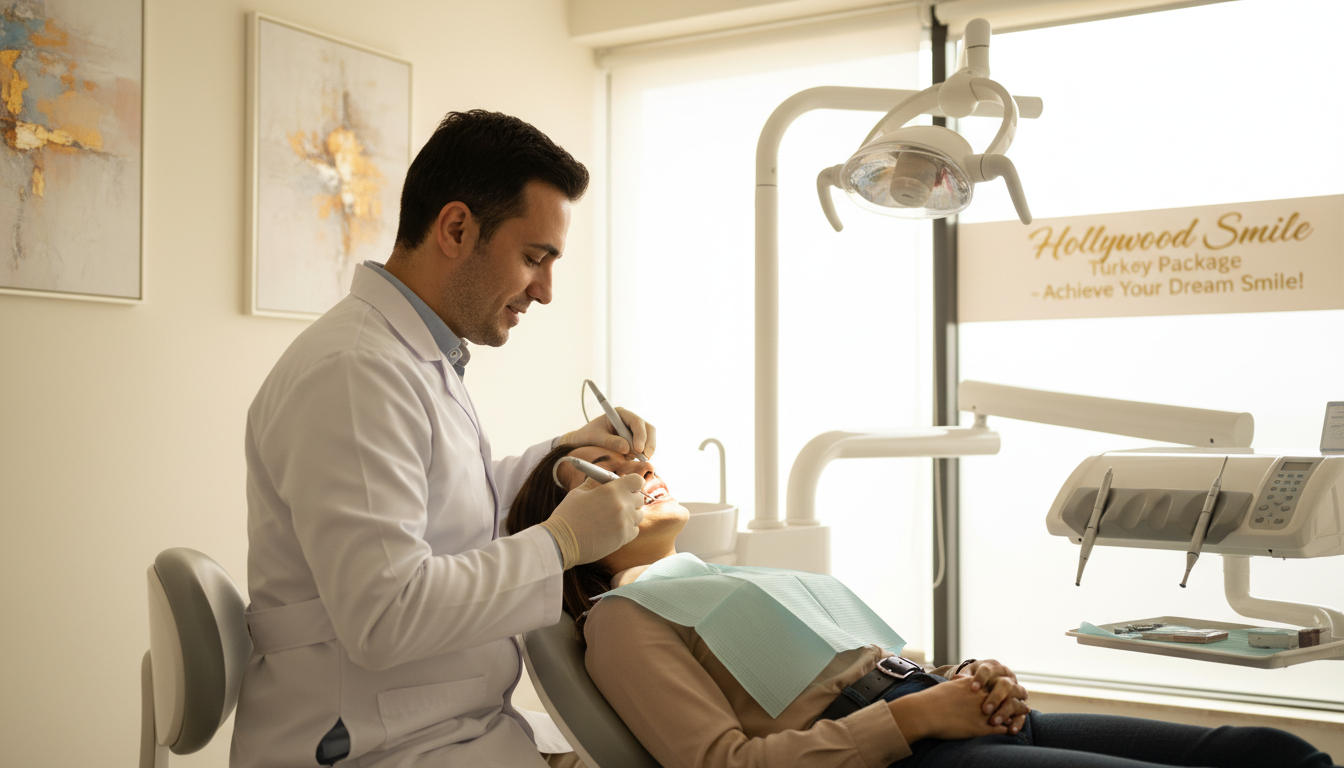
Can a single dental journey deliver a bright, natural-looking transformation without the high price tag? Many people assume top cosmetic work must cost a small fortune at home.
In fact, a hollywood smile performed in Turkey focuses on improving color, alignment, and the overall shape of your teeth. This treatment often uses veneers or crowns to create a uniform, confident look.
Choosing a professional clinic abroad can give patients world-class care and a tailored consultation that respects each person’s facial proportions and needs. The full-set cost typically ranges from $2,000 to $6,000 for 16–20 restorations, which is often 60–80% less than equivalent care in the US or UK.
Every plan begins with a clear, medically sound path. That helps ensure comfort and results that look both bright and naturally balanced.
Key Takeaways
- The package offers a complete cosmetic dentistry solution for a celebrity-style result.
- Procedures focus on color, alignment, and shape to harmonize the face.
- Costs for a full set (16–20 pieces) typically range $2,000–$6,000.
- Professional clinics provide personalized consultation and treatment plans.
- Many patients find comparable quality at substantially lower prices than in the US.
Understanding the Hollywood Smile Turkey Package
What does a complete smile redesign actually include? A full cosmetic plan—often called a smile makeover or smile design—combines several dental approaches to craft a bright, even look.
- Porcelain veneers and ceramic crowns to correct shape and alignment.
- Professional whitening and targeted teeth whitening to match natural enamel.
- Implants and gum contouring when structure or health issues need fixing.
Beyond cosmetics, this approach supports better oral health. Restorations can protect weakened teeth and make cleaning easier.
Patients frequently note a big confidence boost after treatment. Clinicians in smile turkey clinics plan each step to suit facial proportions and long-term well-being.
In short: a hollywood smile is not one single fix. It is a coordinated set of dentistry treatments aimed at improving color, alignment, and appearance while supporting overall dental health.
Why Turkey is the Global Leader for Smile Makeovers
High standards, competitive costs, and coordinated care make Turkey a top destination for those seeking major dental transformations.
Thousands of international patients travel for a hollywood smile because modern clinics blend advanced dentistry with accessible pricing. Antalya stands out, offering easy travel and a calm, Mediterranean setting for recovery.
Clinics use the latest technology to plan precise treatments. Digital imaging and guided workflows help dentists create natural-looking results and protect long-term health.
Patients benefit from a clear treatment plan that manages logistics, appointments, and aftercare. This coordination reduces stress and keeps the focus on safe, effective procedures.
- Expert teams and modern facilities for quality results.
- Structured care paths that support each patient from assessment to follow-up.
- Comfort-focused clinics that prioritize a smooth recovery.
In short, the combination of skilled dentists, up-to-date technology, and patient-centered planning makes Turkey a premier choice for a smile makeover.
Components of a Comprehensive Smile Design
A complete smile design combines cosmetic and restorative work to balance function with a natural look.
Porcelain Veneers
Porcelain veneers are thin shells bonded to the front of teeth to refine shape, color, and spacing. These dental veneers are custom-made to match facial proportions and desired appearance.
They correct chips, gaps, and discoloration while preserving a natural translucence that mimics enamel.
Zirconium Crowns
Zirconium crowns offer strong support for teeth that need structural repair. These crowns resist wear and blend well with surrounding restorations.
When a tooth is weakened or previously treated, zirconia provides durability without sacrificing aesthetics.
Gum Contouring
Gum contouring uses surgical or laser methods to remove excess tissue and create a balanced gum line. This procedure improves the ratio between gum and tooth for a more even appearance.
Gum contouring is often paired with veneers or crowns to complete a cohesive makeover.
- High-quality materials like porcelain and zirconia extend long-term health and appearance.
- Dental implants are integrated when missing teeth threaten the integrity of the new smile.
- Treatment elements are chosen based on oral health, function, and aesthetic goals.
Comparing Costs Between Turkey and Western Countries
Many Americans find that traveling for cosmetic dental work delivers major savings while preserving high-quality outcomes.
For a full set of 16–20 veneers or crowns, the typical cost in Turkey ranges from $2,000 to $6,000. That often equals a 60–80% saving versus similar care at home.
By comparison, an equivalent set in the US commonly starts above $15,000. In the UK, prices usually begin around $5,000 for the same scope of work.
Key advantages of choosing clinics abroad include transparent pricing and lower overall expenses even after travel and lodging. Clinics use quality materials and experienced dentists to keep standards high.
- Full-set prices: $2,000–$6,000 (16–20 restorations)
- US benchmark: $15,000+ for comparable care
- Clear package details reduce surprise costs for patients
Many patients discover the total cost—treatment, travel, and stay—remains far below domestic prices. This makes a cosmetic makeover financially accessible without sacrificing materials or clinical oversight.
Factors Influencing Your Final Treatment Price
The total bill depends largely on how many teeth are treated and which materials are chosen.
The most direct cost driver is the number of teeth addressed. Each tooth needs individual prep, impressions, and a custom restoration. Treating 16–20 teeth for a full set raises the total compared with a partial approach.
A choice between veneers or crowns affects the price. Porcelain veneers deliver high aesthetics, while crowns add strength where needed. Materials and lab work change the final cost.
Additional procedures can also influence the estimate.
- Gum contouring or other soft-tissue work adds time and fees.
- Teeth whitening before restorations can improve color matching.
- Complex dental health issues require extra treatments and planning by the dentist.
Transparent pricing helps patients plan. Clinics provide a detailed breakdown so the expected cost and the scope of work are clear. By defining the exact number of teeth to treat, clinics give a more accurate cost estimate for your smile makeover.
Exploring All-Inclusive Dental Tourism Packages
All-inclusive dental tourism offers bundle cosmetic dentistry with travel and hospitality to simplify treatment for international patients.
These bundled trips combine clinical care with seven nights of accommodation, VIP airport transfers, and scheduled post-procedure follow-ups. The goal is to make the whole process seamless so patients can concentrate on recovery.
Typical inclusions are an initial consultation, professional whitening, veneers or crowns when needed, and dental implants for missing teeth. Clinics coordinate appointments and lodging to reduce stress and cut hidden costs.
Prices for all-inclusive plans are highly competitive. Many U.S. patients find the total cost—treatment, travel, and stay—remains well below domestic prices while retaining high clinical standards.
- Seamless coordination from consultation to final follow-up.
- Seven nights of accommodation and VIP transport included.
- Essential procedures like whitening, veneers, crowns, and implants are covered as needed.
- Designed to minimize stress and provide clear, predictable prices.
The result: a carefully planned makeover that prioritizes comfort, quality treatment, and transparent cost—letting patients focus on their new smile while clinics handle logistics.
The Role of Digital Smile Design in Modern Dentistry
Digital Smile Design (DSD) uses photography, digital scans, and 3D software to create a clear visual of the proposed smile.
This method gives the patient a realistic preview of the end result. It builds trust and reduces uncertainty before any treatment begins.
DSD makes the treatment plan predictable. The dentist and patient review simulations together during consultation. That shared view helps refine proportions, shade, and function.
“Seeing a detailed simulation helped me make confident choices about my teeth and recovery.”
DSD supports collaboration and leads to more natural, balanced results. It is commonly used in smile turkey clinics and in practices offering a hollywood smile.
| Traditional Planning | Digital Smile Design |
|---|---|
| Paper notes and static photos | High-res photos and 3D simulations |
| Limited preview of outcome | Realistic visual of final smile |
| Less patient involvement | Patient and dentist collaborate on the plan |
- DSD improves communication during consultation.
- It refines the treatment plan for predictable results.
- Patients report higher satisfaction and clearer expectations.
Distinguishing Between Partial and Full Mouth Transformations
Deciding between a targeted arch update and a full-mouth reconstruction starts with a clear look at goals and tooth health. The right path balances clinical need, budget, and the desired visual effect.
Partial Arch Improvements
A partial approach focuses on the most visible teeth. It often treats 6 to 10 upper teeth to refresh the central view when smiling.
Advantages: less invasive, faster recovery, and lower cost. Options commonly include veneers, whitening, and limited crowns.
Full Mouth Reconstruction
Full mouth work transforms 16 to 20 visible teeth for a uniform look across both arches. This route suits those seeking a complete makeover.
Benefits: consistent color and shape, improved bite function, and long-term stability when implants or crowns are needed.
“Choosing the right scope of work makes the outcome predictable and satisfies both health and aesthetic goals.”
| Feature | Partial Arch | Full Mouth |
|---|---|---|
| Typical number of teeth | 6–10 (upper) | 16–20 (both arches) |
| Common procedures | Veneers, whitening, limited crowns | Veneers, crowns, implants, gum work |
| Invasiveness & cost | Lower invasiveness; more affordable | More invasive; higher investment |
| Best for | Targeted aesthetic fixes | Full aesthetic and functional overhaul |
- Distinguishing between partial and full mouth transformations helps define the best treatment plan.
- Clinicians evaluate the shape and condition of each tooth to recommend partial or full procedures.
- Patients who want dramatic change often choose full reconstruction; others find partial work meets their goals.
Selecting the Right Materials for Your Veneers and Crowns
Durability, translucency, and biocompatibility are the three pillars when choosing materials for a hollywood smile restoration.
Porcelain and E-max (lithium disilicate) offer natural translucency and are ideal for front teeth where appearance matters most. They mimic enamel and resist stains well.
Zirconia crowns provide superior strength for a tooth that needs structural support. Use zirconium when teeth are heavily filled or when implants and crowns must bear bite forces.
Composite veneers can lower the initial price and suit those with budget limits. Yet composite is less durable and stains faster than porcelain or E-max.
- Selecting the right materials affects the long-term cost and the look of your smile.
- Clinicians will discuss the number of teeth to treat and match materials to lifestyle and function.
- High-quality materials mean a more predictable result and lasting work.
| Material | Appearance | Durability |
|---|---|---|
| Porcelain / E-max | High | Good |
| Zirconia | Good | Excellent |
| Composite | Fair | Moderate |
During consultation, dentists explain trade-offs so patients can choose the best veneer or crown for their teeth, gum contouring needs, and future dental implants. This ensures the final smile suits both health and aesthetics.
Step by Step Guide to the Clinical Procedure
A clear clinical path helps patients understand each day of their makeover and feel calm about care.
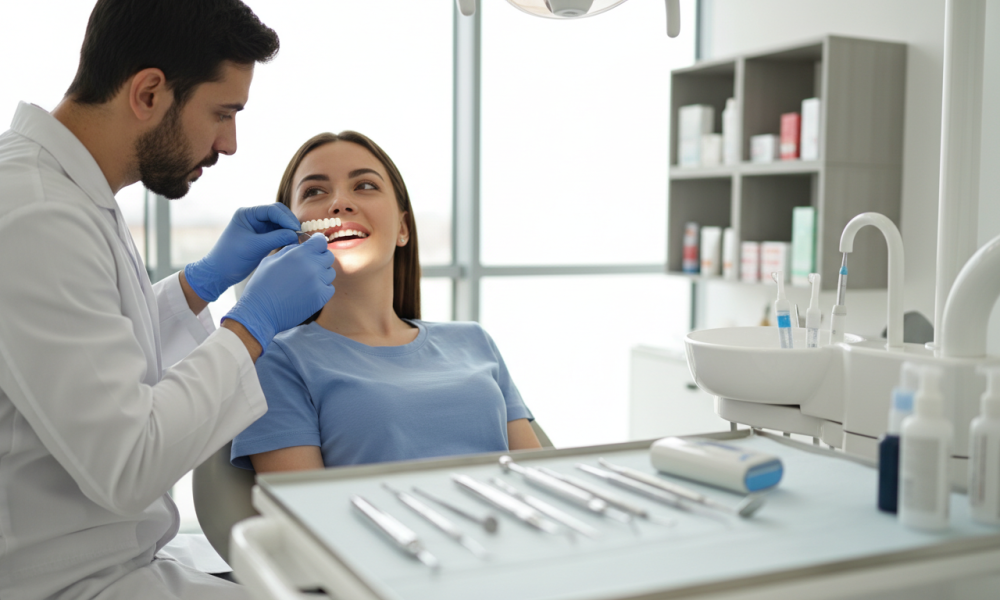
Initial Consultation and Planning
The journey begins with a thorough consultation. A dentist evaluates oral health, scans the teeth, and discusses goals for the new smile.
Digital planning follows. High-resolution images and 3D models form a precise treatment plan that outlines every procedure and the number of restorations needed.
During preparation, the team gently reshapes tooth surfaces and fits temporary veneers or crowns. These protect teeth while the lab crafts the final porcelain work.
The clinical timeline is efficient: most full makeovers finish in 5–7 days, from first consult to final bonding.
Final bonding is precise. The dentist checks fit, shade, and bite before permanently attaching veneers or crowns. Aftercare instructions are given to protect results.
| Stage | What Happens | Typical Time |
|---|---|---|
| Consultation | Exam, scans, treatment plan | Day 1 |
| Preparation | Tooth reshaping, temporary restorations | Day 2–3 |
| Final Bonding | Fit and cement veneers/crowns | Day 5–7 |
Comfort and aftercare are priorities. Clear recovery steps, gentle follow-up checks, and contact with the dental team help each patient keep their new smile healthy.
Essential Aftercare for Long-Term Results
How you care for restorations after treatment shapes their lifespan. A well-planned daily routine keeps a hollywood smile looking natural and strong.
Daily hygiene matters. Brush twice a day and floss every night to remove plaque around veneers and crowns. Gentle circular motions help protect gums and teeth without stressing bonded surfaces.
Schedule regular professional check-ups. These visits let the dentist spot minor wear or gaps early and recommend simple fixes before bigger work is needed.
- Avoid biting hard objects like ice or nutshells to prevent chips or cracks.
- If grinding or clenching occurs, a custom night guard protects restorations from wear.
- Ask the clinic for recommended toothpaste and advice on whitening to maintain shade safely.
Final note: consistent aftercare and quick follow-up on any concern preserve the investment. With simple habits and professional support, a hollywood smile can stay bright and resilient for many years.
Identifying the Ideal Candidate for Cosmetic Dentistry
Candidates who benefit most have healthy gums, sufficient enamel, and realistic expectations for a makeover.
A dentist begins with a focused consultation to review medical history and oral health. This helps determine if restorative steps are needed before cosmetic work.
Healthy gum tissue and strong tooth structure are essential for long-term success. If decay or periodontal issues exist, the dentist will propose a clear treatment plan to restore health first.
Good oral hygiene and a willingness to follow care instructions are key traits of ideal patients. Those habits protect new restorations and extend their lifespan.
- Assessment checks the condition of teeth, gums, and bite.
- Preliminary care is arranged when active disease or deep decay appears.
- Realistic expectations and commitment help ensure satisfaction with the final result.
Ultimately, a tailored plan balances aesthetic goals with dental health. The clinic guides each patient through safe, step-by-step dentistry so the makeover supports both form and function.
Navigating Potential Contraindications
Before any cosmetic work begins, clinicians carefully screen for conditions that could undermine long-term results.
Safety is the priority. A clinic will not proceed if active gum disease or untreated periodontal issues threaten healing or oral health.
Severe tooth decay and large cavities often require restorative treatments—fillings or root canals—before any veneer or crown procedure can start.
Allergies to dental materials are checked during assessment to avoid reactions to restorations or implants. Patients who cannot commit to proper oral hygiene may be guided toward alternative care first.
Major bite problems may need orthodontic correction before final cosmetic treatments so the result is both functional and stable.
| Contraindication | Why It Matters | Recommended Action |
|---|---|---|
| Active gum disease | Impairs healing and risks restoration failure | Periodontal therapy, then reassessment |
| Severe tooth decay | Compromises structure needed for restorations | Fillings or root canal before cosmetic work |
| Major bite issues | Can cause premature wear or fractures | Orthodontic or occlusal correction first |
| Material allergies / poor oral hygiene | Leads to adverse reactions or short lifespan | Allergy testing / hygiene plan or alternative treatments |
“Identifying and treating risks first protects your long-term results.”
How to Evaluate Clinic Expertise and Safety Standards
Choosing a clinic begins with checking credentials and real patient outcomes. Verify the dentist’s experience, case photos, and patient reviews. Real volume matters—Dr. Hasan Sahin, for example, has completed over 12,000 aesthetic procedures, which shows the depth of expertise available.
A safe clinic will provide:
- A written quote that lists price, cost breakdown, and included services.
- A clear consultation and a documented treatment plan that explains alternatives and risks.
- Transparent notes on materials used and aftercare instructions for long-term health.
Patients should ask about sterilization, staff qualifications, and emergency protocols. Request examples of similar smile makeover cases and ask who will perform each step.
| What to check | What to ask | Red flag |
|---|---|---|
| Clinician volume | How many similar procedures done? | No records or few cases |
| Written plan | Is there a documented treatment plan? | Only verbal estimates |
| Aftercare | What follow-up and warranty exist? | No aftercare details |
By choosing clinics that value transparency and patient health, a patient gets confidence in the treatment plan and the final makeover result.
Preparing for Your Dental Travel Journey
Sending clear photos and recent X-rays before travel speeds the process and allows a precise treatment plan.
Start by submitting high-quality smile photos and any recent radiographs. That lets the dentist assess teeth, plan the number of veneers or crowns, and estimate cost before you book.
Confirm appointment dates and the full timeline for the procedure. Patients should check what the all-inclusive package covers and ask about materials like porcelain or implant crowns.

Plan travel well in advance so recovery time fits the treatment schedule. The clinic will outline what to expect during stay, from consultation to final bonding and aftercare for your new teeth.
- Send photos and X-rays for an accurate remote consultation and treatment plan.
- Confirm dates, procedure steps, and what the price includes before departure.
- Ask who your dentist will be, which materials are used, and the expected timeline.
Final note: clear communication and early planning let patients focus on their makeover and oral health while the clinic manages logistics and support from consultation to aftercare.
Conclusion
Start with a straightforward consultation and let the team map a clear timeline for your care. A brief, no-pressure visit helps define goals and next steps.
We design a personalized smile makeover and a tailored plan that respects facial balance and function. Each step is explained so patients feel secure.
Choose a clinic that offers transparent costs. The quoted price covers materials, follow-up, and support so there are no surprises.
Take the first step today: a single consultation begins a rewarding process toward a healthy, confident smile—backed by expert care and clear communication.
FAQ
What does a Hollywood-style smile makeover include?
A smile makeover typically combines treatments such as porcelain veneers, zirconia crowns, gum contouring, and professional whitening. The dentist creates a personalized treatment plan after assessing teeth, gums, bite, and facial proportions. Digital smile design often guides aesthetic decisions to achieve a natural, long-lasting result.
Why are many patients choosing to have cosmetic dentistry done abroad?
Many patients choose to travel for care because some clinics abroad offer experienced dental teams, modern technology, and competitive pricing. When combined with accredited clinics, clear treatment plans, and good aftercare, dental travel can deliver high-quality results with potential cost savings compared with some Western countries.
How do porcelain veneers differ from zirconium crowns?
Porcelain veneers are thin shells bonded to the front of teeth to improve color and shape while preserving more enamel. Zirconium crowns cover the entire tooth for strength and durability, ideal for heavily restored or weakened teeth. Both materials can provide excellent aesthetics; the choice depends on tooth condition and functional needs.
What is gum contouring and when is it needed?
Gum contouring reshapes excess gum tissue to improve tooth proportions and the overall smile line. It is recommended for a gummy smile, uneven gum margins, or to expose more tooth surface before placing veneers or crowns. The procedure is minimally invasive and planned to match facial symmetry.
How is the final price of a smile makeover calculated?
The final price depends on factors such as the number of teeth treated, chosen materials (porcelain vs. zirconia), need for preparatory treatments (root canals, implants, periodontal work), digital planning, and length of stay. A detailed consultation and panoramic images help clinics provide an accurate quote.
What does an all-inclusive dental tourism offer usually cover?
All-inclusive packages commonly cover clinical fees, accommodation, airport transfers, and some aftercare appointments. Always confirm which materials and follow-up visits are included, and whether any emergency support or remote consultations are available after returning home.
How does digital smile design improve outcomes?
Digital smile design uses photos, 3D scans, and software to simulate proposed changes. It allows patients to preview the expected result, refines tooth proportions, and guides lab technicians for precise veneers or crowns. This reduces surprises and improves predictability.
What is the difference between partial and full mouth transformations?
Partial arch improvements address visible front teeth or a specific area, often using veneers or crowns. Full mouth reconstruction restores all upper and lower teeth, combining crowns, implants, periodontal care, and occlusal adjustments to rebuild function and aesthetics across the bite.
How many teeth are usually treated in a full smile design?
A full smile design typically treats 8 to 12 upper teeth for a complete aesthetic zone, but some plans include more or all teeth depending on functional needs and patient goals. The number influences the timeline, cost, and staging of the treatment.
What should patients know about material choices for veneers and crowns?
Important considerations include strength, translucency, longevity, and biocompatibility. Porcelain offers superior translucency for a natural look; zirconia provides exceptional strength for posterior teeth or patients who grind. Discuss options, warranties, and expected maintenance with the clinician.
What happens during the initial consultation and planning?
The initial visit usually includes a clinical exam, intraoral photos, X-rays or CBCT if needed, and digital impressions. The dentist discusses goals, explains options, and provides a proposed treatment plan with timelines and cost estimates. Consent and realistic expectations are emphasized.
What aftercare is essential to maintain results long-term?
Aftercare includes excellent oral hygiene, regular dental check-ups, avoiding hard foods that can chip restorations, and using a nightguard if you grind your teeth. Professional cleaning and occasional polish or touch-ups help preserve the appearance and function of veneers and crowns.
Who is an ideal candidate for cosmetic dental procedures?
Ideal candidates are adults with generally healthy gums and bone, realistic expectations, and a commitment to oral hygiene. Those with active gum disease, uncontrolled medical conditions, or severe bruxism may need preparatory care before cosmetic work.
What are common contraindications for elective cosmetic dentistry?
Contraindications include untreated periodontal disease, uncontrolled diabetes, severe tooth decay, active smoking without willingness to quit, and inadequate bone for implants without prior augmentation. A thorough exam identifies necessary treatments before aesthetic procedures.
How can patients assess clinic expertise and safety standards?
Verify clinician credentials, clinic accreditations, implant and materials brands, before-and-after galleries, and patient reviews. Ask about sterilization protocols, CBCT and digital workflow, and warranties. Request to see case studies similar to your needs.
How should patients prepare for dental travel and the clinical journey?
Prepare by gathering medical records, arranging travel and accommodation, confirming included services, and scheduling follow-up windows. Plan for a realistic recovery timeline and keep copies of treatment plans and post-op instructions for reference at home.
Related guides
How Long Does a Dental Implant Procedure Take?
Curious if the journey to a restored smile will fit your life? Many patients wonder about the full…
Best Hair Transplant in Istanbul,Turkey
Could one clinic end years of worry and restore your confidence with a clear, tailored plan?Dr. Serkan Aygin…

What is Zygomatic Dental Implant?
Could anchoring into the cheekbone restore a confident smile when the upper jaw can’t?Zygomatic dental implants offer an…