
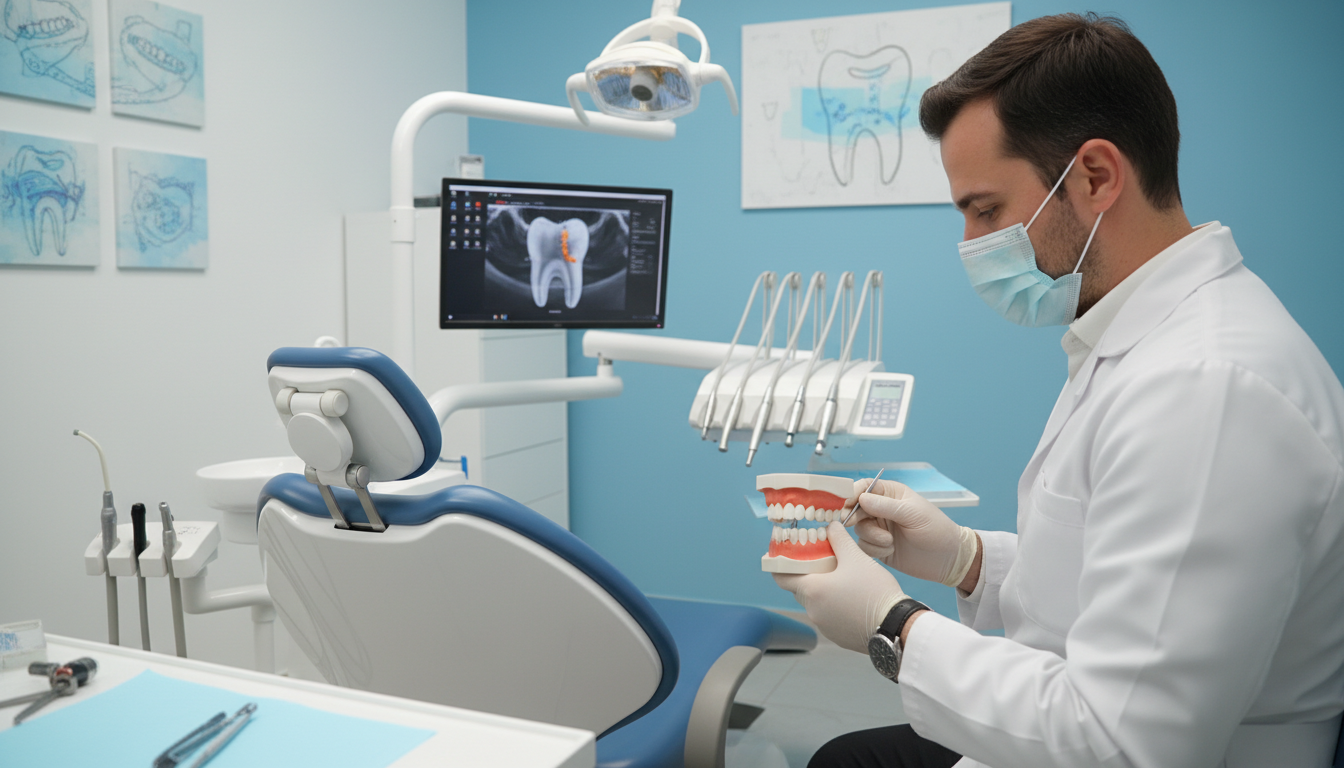
Can a single treatment unlock a confident smile and save you thousands? Many curious patients weigh the clinical benefits against travel and price. This guide gives clear facts about the procedure, the timeline, and the typical cost package offered by reputable clinics.
The All-on-4 system restores a full arch with four strategically placed implants that act like natural tooth roots. Patients usually need two visits and a careful plan to let the implant bond with the jaw.
Choosing the right clinic means checking accreditation, implant brand, and the team’s experience. Many international visitors report excellent care, modern technology, and packages that include hotel and transfers.
Key Takeaways
- One reliable full-arch solution that functions like natural teeth for years.
- Two visits are common to complete treatment and allow healing time.
- Reputable clinics offer bundled packages with hotel and transfers.
- Evaluate accreditation, dentist skill, and implant brand before you book.
- Understanding costs and the process helps patients plan a confident visit.
Understanding the All-on-4 Dental Implant System
The All-on-4 approach pairs careful planning with immediate provisional teeth to restore a full arch in a single surgical session. This system uses four implants to support a fixed bridge, offering a stable solution for a whole mouth replacement.
The concept of immediate loading means the patient often leaves with temporary teeth the same day as surgery. Osseointegration begins within two weeks, and titanium surfaces gain notable mechanical strength by day 28. This rapid timeline helps shorten recovery and improves early function.
How the angled implants work—two posterior fixtures are placed at about a 45-degree angle. The angle increases contact with available bone and avoids structures like the maxillary sinus. That makes the method suitable for people with significant bone resorption who would otherwise need grafting.
“Precise placement and consistent oral hygiene are the keys to long-term success.”
- Same-day provisional prosthesis after surgery.
- Osseointegration starts ~2 weeks; strength increases by day 28.
- Avoids complex bone grafting for many candidates.
| Feature | Benefit | Typical Timeline |
|---|---|---|
| Four implants | Full-arch fixed support | Immediate provisional |
| Angled posterior fixtures | Maximized bone contact | Placement during surgery |
| Immediate loading | Faster function and comfort | Provisional same day; final in months |
| Local anesthesia | Comfort during surgery | Single surgical visit |
How Much Do All on 4 Dental Implants in Turkey?
Price ranges for full-arch implant work often surprise visitors. For porcelain restorations, typical offers fall between £1,600 and £2,400. That represents major savings compared with U.S. or U.K. fees.
What affects the final cost? Brand of implant, crown material, and the clinic’s pricing policy drive variation. Packages usually include the dentist’s time, lab fees, local anesthesia, and medications.
Many clinics ask overseas patients to send panoramic X-rays and mouth photos. This helps produce an accurate treatment plan and a personalized cost estimate.
- Lower operational costs and government support for health tourism reduce prices.
- High-quality brands such as Straumann, Nobel Biocare, and Astra Tech are commonly used.
- Compare packages to confirm temporary teeth and follow-up care are included.
| Item | Typical Range | Notes |
|---|---|---|
| Porcelain full-arch | £1,600–£2,400 | Includes provisional prosthesis in most packages |
| Premium implant brand | Varies | Straumann, Nobel Biocare, Astra Tech increase material cost |
| Full mouth reconstruction vs local | Up to 80% cheaper | Compares favorably to UK/USA pricing |
Comparing Turkish Treatment Costs to the United States and Europe
A realistic budget helps people weigh travel costs against savings on full-arch restorations. Many U.S. patients face sticker shock at local quotes. In the United States, full-arch procedures commonly range from $25,000 to $35,000.
UK prices sit in a similar band, often $20,000 to $35,000. By contrast, reputable Turkish clinics offer complete packages from about $2,100 to $6,000. That makes overseas care roughly four to six times more affordable for many visitors.
Cost Factors Influencing Your Quote
- Implant brand — premium labels raise material costs and long-term warranties.
- Surgical complexity — extractions, bone grafting, or sinus work increase the fee.
- Prosthesis material — zirconia or porcelain affects the final price and appearance.
- Travel package — top clinics include transfers, hotel, and follow-up visits.
| Market | Typical Range | Notes |
|---|---|---|
| United States | $25,000–$35,000 | Higher clinic overhead and lab fees |
| United Kingdom | $20,000–$35,000 | Often similar to U.S. pricing |
| Turkey | $2,100–$6,000 | Includes competitive packages and fast scheduling |
Tip: Request a personalized quote to capture your bone needs, any extra procedures, and warranty terms. Transparent clinics list what their package covers so patients can compare real value—not just headline prices.
What is Included in All-Inclusive Dental Packages
An inclusive care bundle lets overseas visitors book treatment with confidence and a clear price.
Comprehensive clinical work usually begins with a consultation, panoramic X-rays and volumetric tomography. The surgical placement of implants and same-visit temporary fixed teeth are standard.
Packages commonly include Straumann Neodent or equivalent dental implant systems, lab fees, local anesthesia and prescribed antibiotics or pain medication. Professional oral hygiene and a personalized mouth guard arrive before discharge.
Travel comforts add value: a 5-star hotel stay, VIP airport-hotel-clinic transfers and translator assistance are often bundled. Accredited clinics include follow-up check-ups to support long-term success and reduce hidden costs.
- One-price package that covers clinical and travel logistics.
- Specialist dentist expertise and aftercare visits.
- Clear warranty and details so patients know what the package covers.
| Inclusion | Typical Detail | Why it matters |
|---|---|---|
| Clinical imaging | Panoramic X-ray, CT | Plans placement and assesses bone |
| Surgical care | Implant placement, local anesthesia | Ensures safe, sterile procedure |
| Patient support | Hotel, VIP transfers, translator | Reduces travel stress and improves care |
| Prosthetic lab work | Temporary fixed teeth, lab fees | Immediate function and esthetics |
Ideal Candidates for Full Arch Restoration
Adults with multiple missing teeth or advanced periodontal disease are often suitable for a full-arch fixed solution. Candidates are usually over 18 and must be well enough for minor surgery and follow-up care.
People who wear removable dentures and want a stable set of fixed teeth often see major quality-of-life gains. Those with long-term tooth loss may have bone atrophy; angled implants can use available bone and reduce the need for grafting.
Good candidates include:
- Patients with partial adentia or loose teeth where single restorations are ineffective.
- Individuals advised that complex grafting could be avoided with angled placement.
- Those committed to regular check-ups and consistent oral hygiene to protect the restoration for years.
A thorough consultation at a reputable clinic is essential. A qualified dentist will assess overall health, review imaging, and confirm there are no contraindications before recommending treatment.
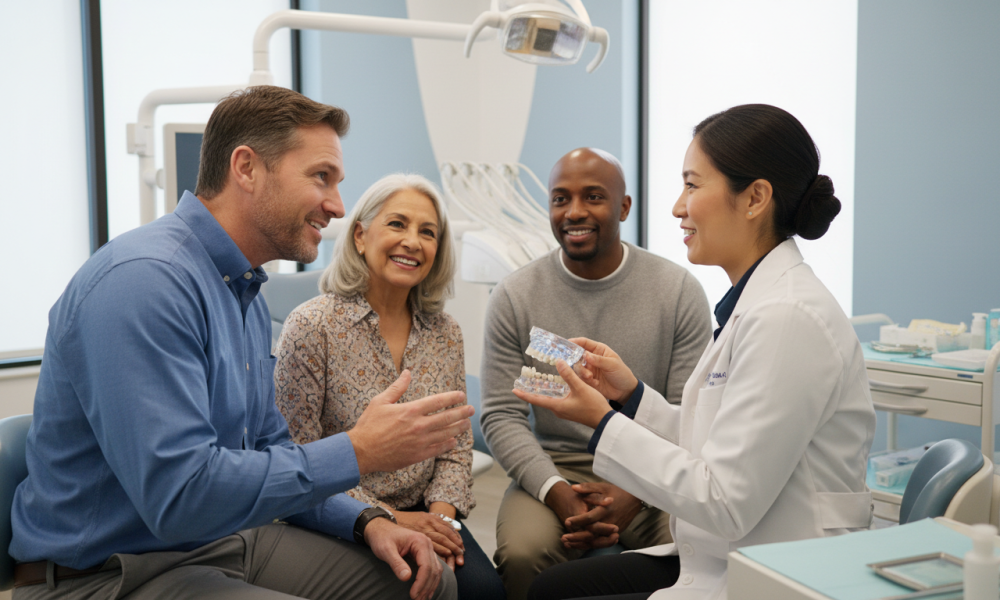
The Clinical Procedure and Surgical Timeline
A clear clinical timetable helps patients plan travel, recovery, and final fitting with confidence.
The First Visit
The initial visit usually lasts 5–7 days and focuses on diagnostic planning and surgery. The dentist completes a 3D CT scan and panoramic X‑ray to map bone and nerve positions.
During surgery, small incisions expose the jaw. The team drills precise osteotomies and places four fixtures into the bone. Temporary teeth attach the same day so patients leave with function and a renewed smile.
Clinics provide detailed postoperative instructions, pain control, and dietary guidelines. Patients then return home for a 3–6 month healing window while osseointegration strengthens the implant-bone interface.
The Second Visit
After 4–6 months the patient returns for final impressions and prosthetic delivery. Digital intraoral scanners and 3D smile design refine shape and shade for natural results.
The dentist checks implant stability, soft tissue health, and bite. The team fits the final fixed prosthesis and makes minor adjustments for comfort and esthetics.
“A staged process—surgical foundation first, aesthetic finalization later—supports long-term success.”
- Visit one: imaging, surgery, temporary teeth, discharge instructions.
- Recovery: home healing and follow-up communication for several months.
- Visit two: impressions, final prosthesis, function and cosmetic tuning.
| Step | Typical Timeframe | Purpose |
|---|---|---|
| Diagnostics | Day 1 | Plan implant placement and prosthesis |
| Surgery + temporaries | Day 1–3 | Place implants and provide temporary teeth |
| Osseointegration | 3–6 months | Allow implant to bond with bone |
| Final restoration | Visit two (4–6 months) | Fit permanent prosthesis and confirm results |
Following this structured plan helps clinics deliver consistent results and high success rates. Clear communication about care, hotel arrangements, and follow-up makes the process smoother for international patients.
Benefits of Choosing Turkey for Your Dental Surgery
Turkey blends modern clinics with strong value, making it a leading choice for overseas oral care. The country hosted about 2 million health visitors in 2024, and dental services made up roughly 15% of those trips.
Safety and expertise matter. There are 46 JCI-accredited hospitals and many dentists who belong to the FDI and the Turkish Dental Association. That adds confidence for patients seeking complex implant treatment.
Advanced technology—digital scanners and 3D imaging—supports precise planning and better outcomes. Clinics often offer premium brands and lab work at a fraction of the home-country cost.
Many centers provide an easy experience: a dedicated team handles travel, translation, and aftercare. Positive reviews highlight compassionate care and strong long-term results.
- Quality care: accredited facilities and skilled dentist teams.
- Value: high-end prosthetics and lower overall cost.
- Comfort: holiday-style recovery near mild-climate resorts.
“Patients report reliable results and a smooth journey from consultation to follow-up.”
Understanding the Role of Bone Density and Grafting
Reduced bone volume does not always block a fixed-arch solution; clever implant placement can use the existing jaw structure. The system is engineered to rely on the anterior bone where density often remains better.
Two posterior implants are tilted about 45 degrees to engage more bone and avoid sinus lifting. This tactic reduces the need for complex grafting and shortens the overall treatment timeline.
Bone resorption after tooth loss is managed by maximizing implant-bone contact. That stimulation helps preserve the jawbone and supports facial structure over time.
In extreme low-volume cases, the dentist uses volumetric tomography to map anatomy and confirm stability. Careful planning ensures the implant positions give enough support for a fixed arch.
Why angled placement matters
Angled implants increase mechanical contact with available bone. That improves stability and often lets patients who were once told they were ineligible receive treatment.
Benefits: fewer surgeries, lower cost, and faster recovery. Patients usually report less discomfort and a quicker return to normal activities when grafting is avoided.
“Accurate imaging and precise placement are the keys to using existing bone and avoiding grafts.”
| Challenge | Technique | Outcome |
|---|---|---|
| Reduced anterior bone | Use remaining anterior bone for fixation | Stable foundation for full-arch prosthesis |
| Low posterior volume | Posterior implants angled 45° | Avoids sinus lift and complex grafting |
| Bone resorption | Maximize implant-bone contact | Maintains jawbone strength and facial form |
| Extremely low volume | Volumetric CT assessment | Tailored placement for maximum stability |
Comparing All-on-4 to All-on-6 Solutions
More anchors usually mean greater stability; adding two implants helps spread chewing forces and builds a firmer bite. The central difference is the implant count and the mechanical support each pattern provides.
All-on-4 suits patients with reduced bone volume or those who want fewer surgeries. It delivers a reliable fixed set of teeth and often avoids grafting by using angled posterior placement.
All-on-6 fits people with good jaw bone who seek enhanced durability and a stronger bite. The two extra fixtures improve force distribution and can extend the long-term success of the restoration.
| Feature | All-on-4 | All-on-6 |
|---|---|---|
| Stability | Strong, fewer anchors | Greater; better for heavy bite |
| Bone need | Lower; works with limited bone | Higher; requires sufficient bone |
| Cost | Lower price and fewer procedures | Higher costs due to extra implants |
Experienced implantologists at reputable clinics evaluate bone, aesthetic goals, and budget to recommend the best option. Both routes restore chewing, speech, and confidence when high-quality brands and careful planning are used.
“The right choice is the one that matches a patient’s anatomy and long-term expectations.”
Selecting a Qualified Implantologist and Accredited Clinic
Confirming a clinic’s certifications and the implantologist’s track record prevents unexpected problems later. Patients should first check for international accreditation such as JCI or AACI. These badges show the clinic follows strict safety and quality rules.
Experience counts. A qualified implantologist typically has at least ten years of practice and can share before-and-after photos. Verify dentist membership in groups like the FDI World Dental Federation or the Turkish Dental Association.
Top clinics use certified brands such as Straumann, Nobel Biocare, or Astra Tech. That choice supports long-term success for teeth and bone health.
Read patient reviews and ask for a transparent treatment plan. The plan should list each step, the package inclusions, and a clear price breakdown. During consultation the dentist must explain risks, benefits, and alternatives.
Check technical capabilities: modern 3D scanners and digital planning improve precision. Many clinics provide a dedicated medical coordinator to guide patients from the first contact through follow-up care.
“A clear plan, proven brands, and an experienced team give patients peace of mind.”
| What to Verify | Why it Matters | Red Flag |
|---|---|---|
| International accreditation | Confirms safety and protocol standards | No certification or vague claims |
| Implantologist experience | Proven clinical skill and outcomes | No before-after photos |
| Transparent package | Prevents hidden cost surprises | Unclear price or missing inclusions |
Managing Recovery and Post-Operative Care
Recovery is a controlled, gradual process that rewards careful attention.
Minor swelling and discomfort typically peak within 48–72 hours and fall markedly by day five. Rest during this first week helps the body heal and reduces complications.
Medication and oral care: Take antibiotics and pain relief exactly as the dentist prescribes. Rinse the mouth gently and use a soft‑bristled toothbrush to keep the area clean without disturbing the implant site.
Follow a soft food diet for several days. Avoid smoking before and after surgery—tobacco raises infection risk and may jeopardize the implant’s success.
The bone integration phase requires patience: about 3–4 months for the lower jaw and roughly 6–8 months for the upper jaw. Regular follow-up visits let the clinic monitor healing and confirm that the temporary teeth function well.
Warning signs: Contact your dentist if pain persists, bleeding is excessive, or any infection signs appear. Prompt action reduces the chance of failure and additional cost.
“Good rest, strict oral hygiene, and adherence to instructions make recovery smoother and improve long-term results.”
- Peak swelling: 48–72 hours.
- Soft diet and gentle cleaning: first week.
- Osseointegration: months depending on jaw.
- Follow-up visits: essential to track progress.
| Concern | Recommended Action | Why it matters |
|---|---|---|
| Swelling / discomfort | Cold packs, prescribed analgesics | Controls pain and inflammation |
| Oral hygiene | Gentle rinses, soft toothbrush, floss | Prevents infection and protects healing bone |
| Smoking | Avoid pre- and post-op | Reduces infection risk and failure |
| Follow-up | Scheduled visits at clinic | Ensures implant integration and prosthesis fit |
For patients seeking a clear cost and care pathway, a reputable provider will outline the full post-operative plan before the procedure. For an overview of pricing and what a typical package covers, see treatment cost and package details.
Potential Risks and Long-Term Success Rates
Knowing the rare problems that can arise lets patients act quickly if symptoms appear. Overall, modern full-arch work shows excellent success: studies report a 97–98% short-term rate and a 93.8–94.8% survival at ten years.
Complications are uncommon. Postoperative infections occur in about 2.8% of cases when standard protocols are followed.
Risk factors include smoking, uncontrolled diabetes, poor oral hygiene, and surgical errors by less experienced teams. These increase the chance of implant rejection or failure.
Most issues are minor and treatable if addressed early… prompt professional care limits long-term harm. Patients who keep regular check-ups, follow aftercare, and maintain good general health see the best results.
- Choose a qualified specialist and accredited clinic to reduce risk.
- Discuss any health conditions before surgery and clarify warranty and follow‑up care.
| Measure | Value | Clinical Note |
|---|---|---|
| Short-term success | 97–98% | High with modern materials and technique |
| 10-year survival | 93.8–94.8% | Depends on care and health factors |
| Infection rate | ~2.8% | Lower with proper antibiotics and hygiene |
| Common causes of failure | Smoking, diabetes, surgical error | Addressable with candid pre-op assessment |
“When treatment is done by experts, most patients experience no long-term issues.”
The Importance of High-Quality Implant Brands
Selecting certified implant systems gives patients a clearer warranty, easier replacement parts, and predictable outcomes.
Top-tier brands matter. Leading clinics use names such as Straumann, Nobel Biocare, and Astra Tech because these products pass strict biocompatibility tests and 510(k) reviews.
High-quality dental implants fuse reliably with the jawbone. That fusion creates a stable base for crowns and fixed teeth that can last decades with proper care.
Brand choice will affect the treatment price. Yet spending on proven components reduces future maintenance costs and improves long-term success.
“The quality of the implant, combined with the dentist’s skill, is the best predictor of lasting, aesthetic results.”
- Ask your clinic which brand they use and request the warranty details.
- Choose a dental implant that insured replacement parts are available worldwide.
- Balance price and quality—many clinics offer tiered options so safety is not sacrificed for lower prices.
| Brand | Why it matters | Patient benefit |
|---|---|---|
| Straumann | Proven biocompatibility and long-term data | Predictable results and broad professional support |
| Nobel Biocare | Extensive clinical research and parts availability | Lower risk during future maintenance |
| Astra Tech | High mechanical strength and reliable osseointegration | Strong foundation for long-lasting teeth |
Navigating Travel Logistics and Accommodation
A dedicated medical coordinator often plans transfers, hotel stays, and appointment times.
VIP airport pickup is common. Many clinics arrange direct rides to a nearby hotel so patients arrive calm and rested.
Most visitors stay in 4- or 5-star hotels that come with the treatment package. This short distance between lodging and clinic saves time and reduces stress.
The clinic’s coordinator schedules consultations, sights visits, and follow-ups. Multilingual staff handle calls and local directions so international guests feel supported.
Share flight and arrival details early. That helps the team confirm transfers and same-day appointments. Clear coordination lets patients focus on healing and enjoying their stay.
- Advance booking keeps schedules smooth during busy seasons.
- Proximity of hotel and clinic simplifies recovery and check-ups.
- Positive reviews often mention the helpful medical coordinator.
| Item | Included | Benefit | Notes |
|---|---|---|---|
| Airport transfer | VIP car | Stress-free arrival | Share flight info |
| Hotel | 4–5 star | Comfort during recovery | Often within walking distance |
| Scheduling | Coordinator support | Efficient consultation and treatment | Multi-language assistance |
| Package extras | Transfers, hotel, follow-up | Transparent costs | Check reviews and warranty |
Aesthetic Options for Your New Smile
Patients can select from lifelike zirconium crowns or resilient porcelain-hybrid prostheses to shape their final appearance.
Zirconium crowns mimic natural tooth color and translucency. They suit people who want the most natural-looking teeth and long-term stain resistance.
Porcelain-hybrid teeth replace both tooth and gum contours when bone loss affects the mouth. This option restores form and supports facial balance for those with reduced jaw volume.
Final prostheses attach to the implants with a screw-retained system. That secure connection reduces movement and makes maintenance easier for future care.
Digital smile design shows expected results before lab work begins. Dentists use that preview to match shape, shade, and bite to each face.
| Material | Best for | Key benefit |
|---|---|---|
| Zirconium crowns | Aesthetic focus | Natural look; stain resistant |
| Porcelain-hybrid | Significant bone loss | Restores teeth and gum form |
| Screw-retained prosthesis | Long-term maintenance | Stable, serviceable connection |
Material choice can affect the overall price, but it is an investment in lasting confidence and quality. Discuss preferences during consultation to ensure the final smile matches expectations.
“A well-chosen prosthesis changes appearance and daily comfort—resulting in durable, natural results.”
Conclusion
A confident smile begins with a solid consultation and a step-by-step treatment roadmap.
Choosing care abroad can pair world-class skill with clear value. Patients who follow a two-visit plan often leave with temporary teeth and return after a few months for the final prosthesis.
A thorough consultation shapes a tailored plan that lowers surprises. Good hygiene and scheduled check-ups help implants integrate and stay healthy over time.
With accredited teams, transparent prices, and coordinator support, the journey is both safe and rewarding. Reach out to a reputable clinic to start your personalized path and book your first visit.
FAQ
What is the All‑on‑4 implant system and how does it work?
The All‑on‑4 concept replaces a full arch of teeth using four strategically placed titanium implants. Two implants are placed vertically in the front jaw and two are angled in the back to maximize bone contact. This arrangement supports a fixed prosthesis and often allows for immediate loading — a temporary bridge placed the same day as surgery.
Can patients receive a fixed set of teeth on the same day as surgery?
Yes. Immediate loading means a provisional prosthesis can be attached the day of surgery if primary stability is achieved. This gives patients a functioning smile while the implants integrate with the jawbone over the following months.
Why are some implants angled and what benefit does that provide?
Angled posterior implants avoid anatomical structures like the sinus or inferior alveolar nerve and engage denser anterior bone. This improves stability and often eliminates the need for extensive bone grafting, reducing treatment time and complexity.
What influences the total cost of full‑arch implant treatment in Turkey?
Price depends on implant brand, number of implants, prosthesis type (acrylic versus zirconia), bone grafting needs, surgeon experience, clinic accreditation, and included services such as travel, accommodation, and follow‑up care.
How do Turkish clinic prices compare with the United States and Europe?
Clinics in Turkey generally offer lower fees for surgery, lab work, and prosthetics while using the same international implant brands. Savings come from lower local overheads and bundled medical tourism packages, making treatment more affordable for many patients.
What typically comes in an all‑inclusive package?
A comprehensive package often includes initial consultation, implant surgery, prosthesis fabrication, airport transfers, hotel nights, some medications, and local aftercare. Always confirm which follow‑up visits and warranty terms are covered before booking.
Who is an ideal candidate for full‑arch restoration with this method?
Suitable candidates have failing or missing teeth across an arch, adequate bone density in the anterior jaw, good overall health, and realistic expectations. Smokers or patients with uncontrolled diabetes should discuss risks with the implantologist.
What happens during the first surgical visit?
The first visit usually includes removal of failing teeth, placement of the four implants, and attachment of a provisional prosthesis if stability allows. Surgeons provide post‑op instructions and medications to manage pain and prevent infection.
What occurs at the second visit and when is it scheduled?
The second visit, often 3–6 months later, involves fitting the final prosthesis after osseointegration is confirmed. Adjustments are made for bite, aesthetics, and comfort, and patients receive maintenance guidance.
Why do patients choose Turkey for this surgery?
Patients choose Turkey for experienced teams, modern clinics, cost savings, and bundled care that simplifies travel. Many clinics use recognized implant brands and offer strong patient reviews and case documentation.
How does bone density affect treatment and when is grafting needed?
Good anterior bone density supports immediate implants. If posterior bone is insufficient, the angled All‑on‑4 approach often avoids grafting. When severe resorption exists, grafts or alternative planning may be necessary.
Does All‑on‑4 eliminate the need for complex bone grafts?
Frequently. By using tilted posterior implants and engaging native anterior bone, many patients avoid sinus lifts or extensive grafting. Each case must be assessed with 3D imaging to confirm suitability.
How does All‑on‑4 compare with All‑on‑6 solutions?
All‑on‑6 uses two additional implants for potentially greater support and redundancy. It may suit patients with higher bite forces or those seeking extra security. Cost and surgical time are typically higher with six implants.
How should patients choose a qualified implantologist and clinic?
Look for board‑certified surgeons with full‑arch experience, CBCT imaging, international patient coordinators, transparent before‑and‑after cases, and recognized implant brands such as Straumann, Nobel Biocare, or Zimmer Biomet. Verify clinic accreditation and patient reviews.
What does recovery and post‑operative care involve?
Recovery includes a soft diet, oral hygiene guidance, medications for pain and infection prevention, and follow‑up visits. Initial healing takes weeks, while full integration occurs over months. Regular dental checkups extend prosthesis longevity.
What are the main risks and long‑term success rates?
Risks include infection, implant failure, prosthetic complications, and nerve or sinus issues. With proper planning and care, survival rates for full‑arch protocols commonly exceed 90% at five years, depending on patient health and maintenance.
Why do implant brand and material quality matter?
High‑quality brands provide proven implant designs, material strength, and available warranties. Premium prosthetic materials like monolithic zirconia offer better aesthetics and wear resistance than low‑cost acrylics.
How should patients plan travel and accommodation for treatment in Turkey?
Coordinate dates with the clinic, book flexible flights, and choose hotels near the clinic. Confirm included transfers and local SIM or translator services. Allow time for both surgical visits and potential unforeseen appointments.
What aesthetic options are available for the final smile?
Prosthetic choices range from tooth‑colored acrylic to layered or monolithic zirconia. Shade, shape, and gum contours are customized to facial features. Discuss aesthetic goals and smile design examples with the prosthodontist.
Related guides
How Long Does a Dental Implant Procedure Take?
Curious if the journey to a restored smile will fit your life? Many patients wonder about the full…
Best Hair Transplant in Istanbul,Turkey
Could one clinic end years of worry and restore your confidence with a clear, tailored plan?Dr. Serkan Aygin…
What is Zygomatic Dental Implant?
Could anchoring into the cheekbone restore a confident smile when the upper jaw can’t?Zygomatic dental implants offer an…