
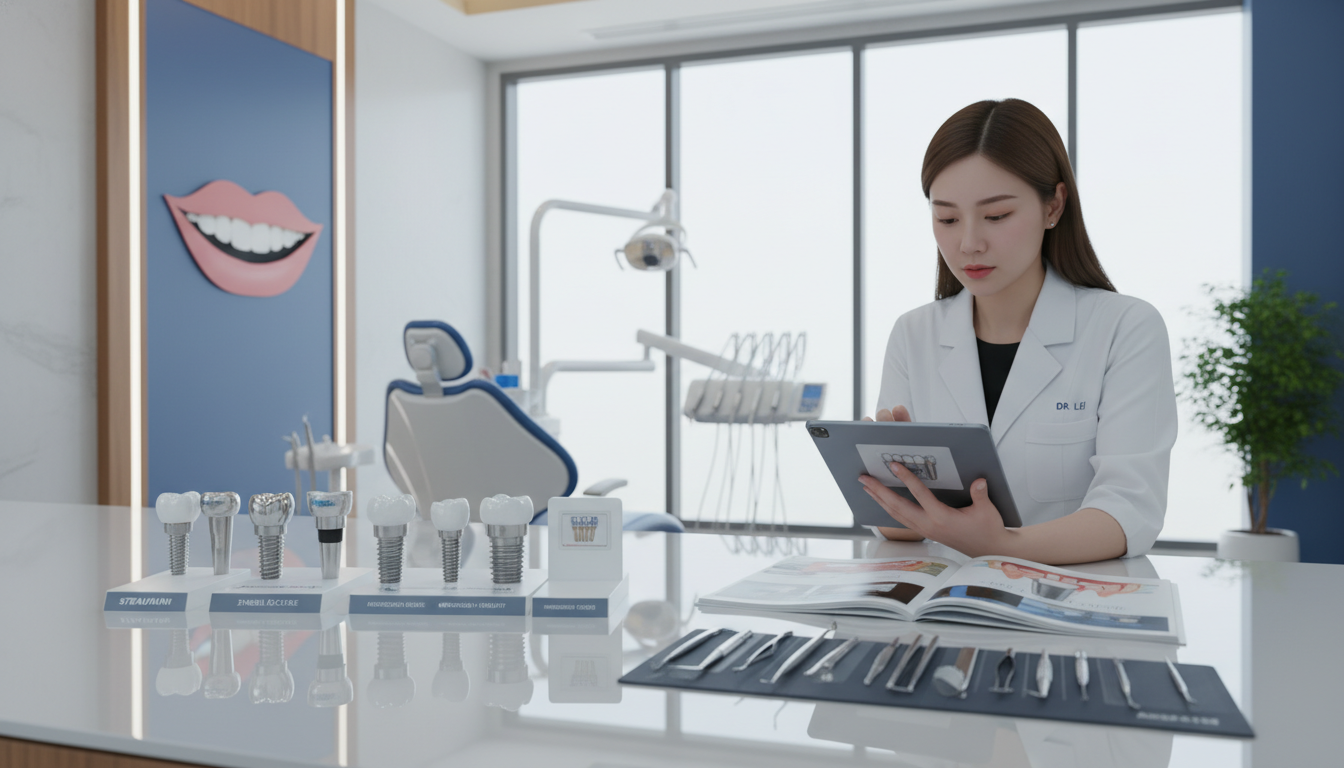
Could a single brand change a patient’s long-term smile more than careful planning and skill? That question frames choices in modern dentistry.
Choosing among dental implant brands matters. It affects oral health, comfort, and results for years.
Straumann, founded in 1954 in Switzerland, is one well-known name with a long record in implantology. Clinics such as D’Amico Dental Care in Wayland and Watertown, MA, pair that type of proven system with advanced diagnostics.
At D’Amico, clinicians assess bone density, medical history, and anatomy before selecting an implant brand. This patient-focused approach helps match an implant to biology and lifestyle.
Modern implants and systems aim for durability and aesthetics. When a skilled dentist combines quality materials and precise technique, implants can function for decades and offer reliable results.
Key Takeaways
- Choosing a dental implant brand is a medical decision that impacts long-term oral health.
- Personal biology and clinical expertise often matter more than a single brand name.
- D’Amico Dental Care uses diagnostics to tailor implant selection for each patient.
- Proven systems can deliver lasting results when placed with skill and care.
- Patients benefit from a blend of high-quality materials and compassionate clinical teams.
Why Dental Implant Brand Choice Is a Medical Decision
An implant system functions inside the body, so brand choice affects clinical outcomes. These devices integrate with jawbone tissue and behave more like medical hardware than cosmetic fixtures.
Correct selection reduces risks. Choosing an appropriate dental implant prevents complications such as peri-implantitis and supports long-term stability for your teeth.
D’Amico Dental Care treats each placement as a complex procedure. A skilled dentist evaluates bone quality, medical history, and lifestyle before recommending specific implant brands and systems.
- Engineering matters: implant designs influence healing and load distribution.
- Patient safety: evidence-backed systems lower failure rates over time.
- Personalized care: brand choice is matched to anatomy and treatment goals.
Patients often assume all implants are the same, but materials and surface tech affect how well implants integrate. D’Amico’s Wayland and Watertown teams use proven brands and careful planning to deliver lasting results.
For treatment planning and cost context, see dental implant cost insights.
Understanding the Science Behind Implant Success
Clinical success often traces back to the microscopic bond between device and jawbone.
Titanium vs zirconia materials
Titanium is used in over 90% of cases due to superior biocompatibility and strength. Its track record helps it support chewing forces similar to natural teeth.
Zirconia offers a metal-free alternative with esthetic appeal. Yet research shows titanium still leads in long-term load tolerance and predictable osseointegration.
The process of osseointegration
Osseointegration is the biological event where bone bonds directly to an implant surface. This fusion gives implants the stability needed for years of function.
- Core point: Proper surface design speeds bone attachment and reduces healing time.
- Studies link advanced surface technology to improved integration in low-density bone.
- Modern systems combine design, materials, and surgical technique for higher success rates.
“The interaction between bone and implant surface determines long-term function and patient comfort.”
Understanding the science helps patients see why certain materials and systems are chosen. Clinicians use technology to monitor integration and ensure each implant reaches stable support before final restoration.
What Are The Best Dental Implant Brands 2024 ?
Top-rated systems earn clinician trust through long-term clinical data and reliable outcomes.
Nobel Biocare stands out for full-arch solutions and decades of innovation. Many top-tier implant systems show clinical success rates above 95%, which is why clinicians recommend them for predictable restorations.
Choosing a system is a clinical decision made with patients. Dentists weigh history, published outcomes, and each person’s anatomy. That collaborative approach helps match an implant brand and system to individual needs.
- Clinicians favor brands refined over many years of clinical use.
- Systems with high success rates reduce long-term complications.
- Research-backed options support confident treatment planning and patient care.
“Selecting a proven system improves predictability and supports long-term comfort for patients.”
Straumann and the Standard of Swiss Precision
Straumann blends material science with careful manufacturing to deliver consistent clinical tools. Clinicians often cite its steady record for predictable results and high quality.
Roxolid Alloy and SLActive Surface
Roxolid is an alloy that adds strength while allowing smaller implant diameters. This helps patients with limited bone volume avoid more invasive grafting.
- SLActive surface speeds bone healing and improves early stability during the critical integration phase.
- Straumann systems combine advanced surface technology with refined design for better bone integration.
- Decades of research back its materials and manufacturing precision, reassuring clinicians and patients.
“Precision in design and surface science gives clinicians tools they trust for long-term stability.”
As an implant brand known for Swiss precision, Straumann remains a top choice among implant brands when clinicians seek a balance of strength, surface innovation, and proven systems.
Nobel Biocare and the Evolution of Full Arch Solutions
Nobel Biocare reshaped full-arch care with a concept that simplified complex restorations.
All-on-4 pioneered a fast route to fixed teeth for many patients. This approach reduced grafting, shortened surgery time, and improved comfort during recovery.
Its global reach matters. Nobel Biocare supplies high-quality systems to more than 80 countries, offering clinicians reliable components and support worldwide.
- Versatility: solutions work for single-site cases and full-mouth rebuilding.
- Research-backed: designs aim for long-term stability and good aesthetics.
- Clinical trust: many practices use Nobel Biocare for demanding treatments.
“Precision engineering and practical protocols helped transform how clinicians restore many missing teeth.”
| Feature | Nobel Biocare | Clinical Benefit |
|---|---|---|
| Signature concept | All-on-4 | Fewer implants, immediate function |
| Global support | 80+ countries | Parts and training widely available |
| Materials | Titanium-based systems | Strength and proven osseointegration |
MegaGen and the Advantages of Immediate Loading
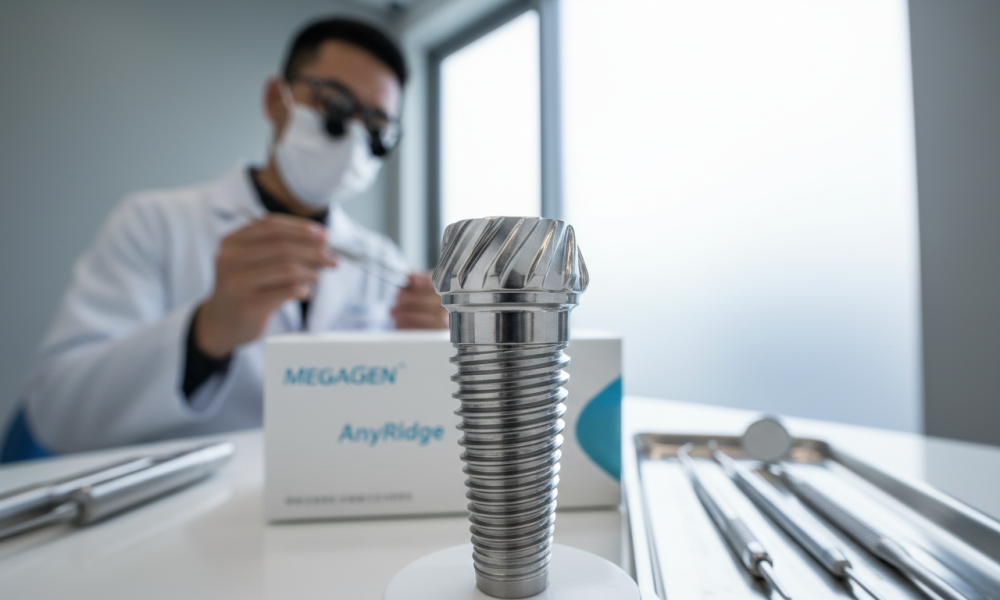
MegaGen’s AnyRidge system targets fast support for temporary teeth right after extraction. Clinicians select it when early mechanical hold is essential for immediate loading cases.
Primary stability in fresh sockets comes from a thread geometry that compresses bone during insertion. That compression helps secure the implant in soft or compromised bone.
Primary Stability in Extraction Sockets
High primary stability reduces micromovement and speeds safe provisional restoration. This often allows same-day temporaries, cutting time patients spend without functional teeth.
Benefits of Modern Thread Design
Unique thread profiles on AnyRidge concentrate force to preserve bone and improve long-term tissue health. Research supports its use in demanding cases and low-density bone.
- Fast provisionalization for patient comfort and function.
- Bone-preserving insertion that favors soft bone scenarios.
- Clinical teams trained in this technology can place implants with precision.
“When immediate stability is paramount, choosing a system that compresses bone during placement can change outcomes.”
| Feature | MegaGen AnyRidge | Clinical Benefit |
|---|---|---|
| Thread design | Variable, compressive threads | Improved primary stability in extraction sockets |
| Immediate loading | Supported | Same-day provisional restorations possible |
| Bone handling | Preserving insertion method | Better maintenance of ridge anatomy |
Comparing Surface Technologies and Bone Integration
Surface engineering often determines how quickly bone bonds to an implant and how stable that connection becomes.
Different implant brands use unique micro-textures and chemistries to guide cells. These choices affect early healing and long-term quality.
BioHorizons uses Laser-Lok to encourage both bone and soft tissue attachment. Other systems rely on grit, acid etching, or plasma treatments to speed osseointegration.
- Micro-texture matters: research shows roughened surfaces improve bone contact and healing time.
- Case selection: some designs suit low-density bone; others work best in dense bone.
- Clinical stability: surface and design together reduce complications and support lasting success.
At D’Amico, clinicians compare systems to choose an implant brand that matches each patient’s bone and goals. This tailored approach favors predictable results in modern dentistry.
“Surface choices shape biology—so the right brand and surface help safeguard long-term success.”
The Role of Digital Dentistry in Modern Implant Procedures
Digital workflows now let clinicians simulate final results before a single incision is made.
Digital dentistry gives teams tools to plan complex cases with high accuracy. Using advanced scans, clinicians map bone and soft tissue. This improves placement and supports better integration.
CAD CAM and guided surgery work together. CAD CAM designs custom restorations that match anatomy. Guided guides translate virtual plans into precise surgical actions.
CAD CAM and Guided Surgery
With precise planning, clinicians reduce surprises during procedures. This lowers risk and shortens chair time for patients.
- Higher accuracy: implants placed to planned depth and angle.
- Custom fit: CAD CAM systems create restorations that seat accurately.
- Clear communication: software helps teams and patients see the plan before treatment.
“Digital tools turn planning into predictable outcomes, helping clinicians place hardware where biology will support it best.”
| Tool | Function | Clinical Benefit |
|---|---|---|
| CAD CAM | Designs crowns and guides | Better fit, faster lab turnaround |
| Guided surgery | Translates plan to mouth | Higher placement accuracy, fewer revisions |
| Integrated systems | Combine imaging and design | Simplified workflow, improved integration |
Evaluating Long Term Clinical Success and Survival Rates
Long-term survival data gives a clear picture of how systems perform in everyday mouths.
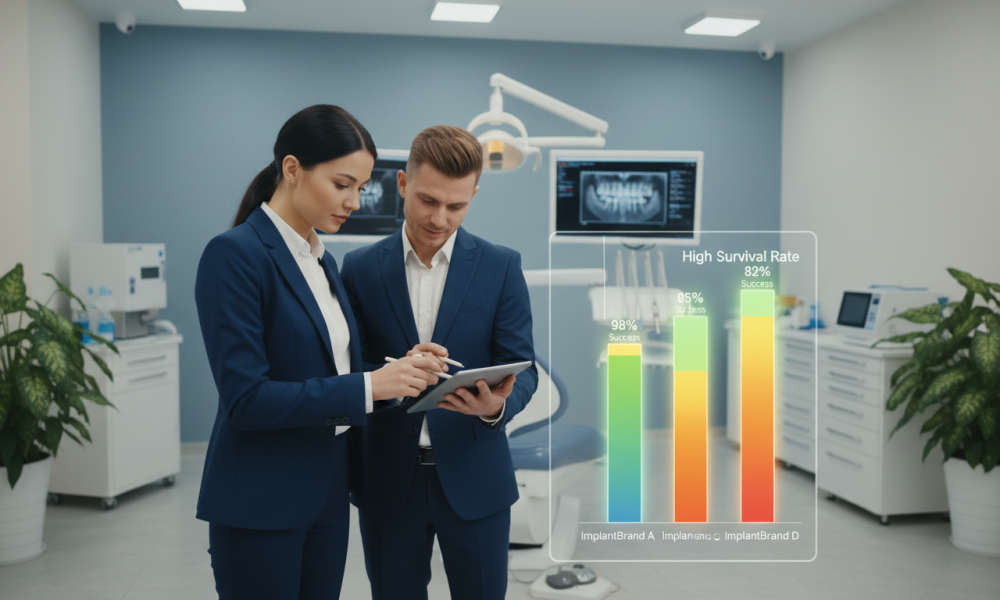
Clinical success means stable bone levels and healthy gum tissue for 10+ years. Peer-reviewed research shows top-tier systems maintain success rates above 95% after a decade.
Design and surface quality play a major role in osseointegration and early stability. Good design supports load distribution, while proven surface treatments encourage bone contact and faster healing.
- Evaluate survival rates over 10 years or more of functional use.
- Look for published research and long-term follow-up when comparing systems.
- Monitor patients regularly to safeguard stability and soft tissue health.
Safety guides selection: clinicians rely on systems with consistent long-term results. Transparent reporting of success and honest follow-up help patients make informed choices and trust their treatment outcomes.
“Longevity depends on proven design, rigorous research, and ongoing care.”
How to Select the Right System for Your Unique Biology
A tailored implant plan starts by matching system features to a patient’s bone and health profile. This approach keeps care personal and clinically sound.
Assessing Bone Density and Quality
Bone density guides system choice. Low-density bone favors implants with aggressive thread design or enhanced surface treatments to aid early contact.
High-quality scans reveal volume, cortical thickness, and anatomy. Those details inform which materials and designs will offer long-term stability.
The Importance of Surgeon Experience
Surgeon skill often outweighs small differences between systems. Experience affects placement precision, handling of complications, and final results for patients.
Clinicians pair their training with research-backed systems to improve success rates and reduce revisions.
Planning for Future Maintenance
Choose systems that simplify care over years. Prosthetic connections, accessible parts, and predictable soft tissue response ease ongoing maintenance.
Planning includes options for immediate loading when appropriate and durable materials that support esthetics and function.
“Matching biology to design improves outcomes and helps patients keep healthy, functional teeth for years.”
| Factor | Consideration | Clinical Benefit |
|---|---|---|
| Bone density | Scan-based assessment | Better primary stability, tailored system selection |
| Surgeon experience | Training and case volume | Fewer complications, precise placement |
| Maintenance | Prosthetic access and parts | Lower long-term costs, easier care |
Conclusion
, Selecting a reliable implant system marks a key step toward lasting oral function. This choice supports chewing, speech, and confidence when paired with skilled care.
Patients benefit most when clinical evidence guides selection of a dental implant brand and when surgeons tailor the plan to each biology. Good planning reduces risk and helps restorations last.
Experience and clear communication matter: a team that listens and explains options improves outcomes. Schedule a consultation to review your needs and build a personalized plan that focuses on long-term health and comfort.
FAQ
How do implant materials like titanium and zirconia differ in performance?
Titanium has a long track record for osseointegration and strength; many systems use medical‑grade titanium or titanium alloys for predictable bone integration. Zirconia offers a metal‑free option with good biocompatibility and aesthetics, useful for patients with thin gingival biotype or metal concerns. Choice depends on clinical goals, bone volume, and esthetic needs; the surgeon will match material to the biological and restorative plan.
Why does the choice of implant brand matter medically?
Brands differ in implant geometry, surface treatments, connection designs, and supported restorative workflows. These factors influence primary stability, healing time, prosthetic fit, and long‑term maintenance. Selecting a system that aligns with a patient’s bone quality, treatment complexity, and the clinician’s training reduces complications and improves outcomes.
What is osseointegration and why is it crucial?
Osseointegration is the biological process by which bone bonds to the implant surface, forming a stable anchor. Strong osseointegration ensures load transfer, long‑term stability, and successful prosthetic function. Surface technologies, implant design, surgical technique, and patient biology all affect this process.
Which brands are known for advanced surface technology?
Several manufacturers invest heavily in surface science. Straumann’s SLActive and Roxolid are known for enhanced wettability and strength. Nobel Biocare has a history of research into surface and connection systems for full‑arch solutions. Other global companies also offer proprietary surfaces proven in clinical studies. Clinicians review peer‑reviewed evidence when choosing.
Are immediate loading protocols reliable with modern systems?
Immediate loading can succeed when primary stability is high and patient factors are favorable. Systems such as those from MegaGen emphasize thread design and macrogeometry to improve initial fixation, especially in extraction sockets. Still, surgeon judgment, bone quality, and occlusal management are critical for success.
How does digital dentistry affect implant outcomes?
CAD/CAM workflows, 3D imaging, and guided surgery increase surgical precision and prosthetic fit. Digital planning helps assess anatomy, place implants in prosthetically driven positions, and fabricate restorations with predictable margins—reducing chair time and postoperative adjustments.
What should patients look for in reported success or survival rates?
Look for long‑term, independent clinical studies rather than short manufacturer reports. Survival rates above 95% at five to ten years are common for established systems, but success also depends on patient health, oral hygiene, and maintenance. Ask for published data relevant to the specific indication and population.
How important is the surgeon’s experience compared with brand selection?
Surgeon skill often outweighs small differences among reputable brands. Experience affects surgical technique, complication management, and case selection. Choose a clinician trained with the chosen system who can tailor treatment to your biology and prosthetic needs.
Can bone quality limit implant brand options?
Yes. Low bone density or reduced volume may require specific implant geometries, bone grafting, or short/wide implants from systems with proven performance in compromised sites. Assessment with CBCT and consultation with the surgeon will determine the most appropriate system and any adjunctive procedures.
How do connections and abutment systems influence long‑term maintenance?
Internal conical connections and platform‑switching designs can reduce microgap movement and crestal bone loss. Compatibility of restorative components and ease of access for repairs also affect maintenance. Pick a system with robust restorative support and widely available components.
Are all premium implant systems interchangeable?
No. While some components may fit across systems, manufacturers design proprietary connections and prosthetic libraries. Using recommended components from the system manufacturer preserves mechanical integrity and reduces risk of complications.
What role do alloy innovations like Roxolid play?
Alloy innovations aim to increase strength and allow slimmer implant profiles while maintaining load capacity. That can preserve bone and soft tissue in narrow ridges. Clinical evidence should support alloy benefits before choosing it for specific cases.
How should cancer patients or survivors approach implant therapy?
Cancer history, radiation, chemotherapy, and medications affect healing and bone quality. Coordination with oncology and careful risk assessment are essential. Surgeons may opt for staged protocols, hyperbaric oxygen considerations, or alternative restorative plans to prioritize safety and predictable healing.
What questions should patients ask their implant team?
Ask about the specific system proposed, supporting clinical evidence, surgeon experience with that system, expected healing timeline, risks, and maintenance needs. Request to see long‑term outcome data and examples of similar cases to build confidence in the plan.
Related guides
How Long Does a Dental Implant Procedure Take?
Curious if the journey to a restored smile will fit your life? Many patients wonder about the full…

Best Hair Transplant in Istanbul,Turkey
Could one clinic end years of worry and restore your confidence with a clear, tailored plan?Dr. Serkan Aygin…
What is Zygomatic Dental Implant?
Could anchoring into the cheekbone restore a confident smile when the upper jaw can’t?Zygomatic dental implants offer an…