

Turkey is no longer competing only on price. That shift matters because the future of medical tourism in Turkey will be decided by something more durable – trust at scale. Patients are asking harder questions about outcomes, accreditation, follow-up care, financing, data privacy, and who will still be available after they return home. At the same time, hospitals and clinics are under pressure to turn international interest into profitable, well-managed patient flows rather than scattered inquiries.
That creates a more mature market. Turkey still holds strong advantages in cosmetic surgery, dental care, hair transplantation, bariatric procedures, orthopedics, IVF, ophthalmology, and complex hospital-based treatments. But the next phase will favor providers that combine clinical quality with operational discipline, multilingual communication, and a better patient journey from first contact to aftercare.
What will define the future of medical tourism in Turkey
The biggest change is that Turkey is moving from a transaction-driven destination to a performance-driven one. For years, many patients chose Turkey because it offered a large cost gap compared with the US, UK, and parts of Europe. That advantage remains real. Still, lower pricing alone is no longer enough to attract informed international patients or build sustainable growth for providers.
The market is becoming more selective. Patients compare surgeon credentials, facility standards, recovery planning, online reviews, and the responsiveness of international patient teams before they ever book a flight. Provider organizations are also measuring lead quality, cancellation rates, call center conversion, treatment margins, and long-term reputation more carefully than before. This is good for the sector. It raises the standard and rewards providers that can prove value rather than simply advertise it.
For healthcare organizations, that means growth will come from systemization. A clinic with excellent doctors but weak inquiry handling will lose ground. A hospital with modern facilities but unclear pricing or inconsistent patient communication will struggle to convert interest into admissions. The Turkish market has enough demand to stay attractive, but future leaders will be the ones that treat medical tourism as a serious international business line, not a side channel.
Why Turkey remains strongly positioned
Turkey starts the next decade with real structural advantages. Its geographic location supports patient access from Europe, the Middle East, North Africa, and increasingly North America. Its private healthcare sector includes internationally trained physicians, advanced hospitals, and treatment packages that still compare favorably on price. In many specialties, the case volume is high enough to create deep procedural experience, which international patients notice.
Another advantage is range. Some destinations are known for one or two categories. Turkey offers a broader medical tourism portfolio, from elective aesthetic procedures to tertiary hospital care. That diversity matters because it creates resilience. If one segment faces regulatory pressure or demand softening, others can continue to grow.
There is also a business advantage that is often overlooked. Turkey has developed a stronger ecosystem around medical travel itself – coordinators, interpreters, hospitality support, transportation, and treatment packaging. That does not automatically guarantee quality, but it does make scaling easier for providers that build disciplined operations around it.
The patient journey will become more digital and more accountable
The future of medical tourism Turkey providers are building will not be won by flashy advertising alone. It will be won through better digital infrastructure and better patient management. International patients now expect rapid response times, transparent communication, pre-treatment screening, virtual consultations, digital records handling, and clear recovery guidance.
This is where many providers will either separate themselves or fall behind. Marketing may generate demand, but weak CRM use, poor lead routing, inconsistent follow-up, and undertrained call center teams can quietly destroy conversion. A provider may appear busy online while losing substantial revenue in operations.
Digital maturity also affects trust. Patients want to know what happens after the procedure, how complications are handled, and whether communication continues once they return home. Telehealth, structured follow-up, secure data sharing, and coordinated aftercare are becoming expected rather than exceptional. That is especially true for US patients, who often compare overseas options with a high standard for convenience and responsiveness, even when local pricing is unaffordable.
For provider groups, this means investment must go beyond promotion. The strongest programs will align patient acquisition, intake, telesales, scheduling, clinical coordination, and post-treatment engagement as one continuous pipeline. That is where measurable growth is created.
Regulation, accreditation, and reputation will matter more
As the market grows, scrutiny will grow with it. The future of medical tourism in Turkey depends heavily on reputation management at a national and provider level. A few highly visible negative experiences can affect trust far beyond one clinic or one city. That is why accreditation, clinical governance, informed consent, transparent pricing, and complication protocols are becoming central growth factors, not administrative details.
Patients are more informed than they were a few years ago. They look for internationally recognized standards, surgeon-specific credibility, and evidence of real patient support. They are also more alert to red flags such as unrealistic promises, rushed booking pressure, vague package terms, or incomplete discussion of risks. Providers that communicate honestly may lose some short-term leads, but they usually gain stronger-fit patients and better long-term outcomes.
This has implications for marketing strategy as well. Aggressive lead generation without qualification can create volume, but not healthy conversion or patient satisfaction. The better model is targeted acquisition backed by realistic consultation processes and operational follow-through. That is one reason specialized healthcare growth partners have become more valuable in this space. Providers need commercial performance, but they also need patient pathways that protect brand equity.
What US and international patients will expect next
Affordability will still drive interest, but expectations are rising fast. Patients increasingly want a treatment experience that feels organized, medically credible, and personally guided. They want clear timelines, airport-to-hospital coordination, physician access, recovery planning, and someone accountable if details change.
They also want a smarter definition of value. The cheapest offer may not be the best value if it excludes diagnostics, medications, hotel recovery, revisions, or aftercare support. As the market matures, patients will compare total treatment journeys rather than headline prices alone.
That shift favors providers that can communicate quality in practical terms. It is not enough to say a hospital is advanced or a physician is experienced. Patients want specifics that reduce uncertainty. How many similar cases are performed? What does recovery look like? Who handles follow-up? What happens if a patient is not a candidate? Clear answers build confidence faster than broad claims.
Growth will favor integrated service models
One of the clearest trends ahead is integration. Providers that treat marketing, sales, operations, and patient support as separate silos will face rising inefficiency. International patient growth requires alignment from the first ad impression to the final follow-up message.
That is where the market is becoming more sophisticated. Hospitals and clinics need more than website traffic. They need qualified international demand, multilingual conversion systems, trained coordinators, call center performance, and reporting that shows which channels actually produce profitable treatments. This is especially relevant in Turkey, where competition is high and patient expectations are rising.
For patients, integrated models also reduce friction. A guided pathway that connects physician selection, treatment planning, travel coordination, and aftercare support is easier to trust than a fragmented process managed across multiple vendors. For providers, it improves conversion, protects the patient experience, and creates clearer revenue visibility.
This is the direction companies like DGS Healthcare are built around – not only attracting interest, but helping providers turn that interest into measurable patient acquisition while making the medical travel process easier to navigate. That combination is likely to become more important as the sector gets more competitive.
The risks are real, and the winners will address them directly
Turkey’s outlook is strong, but growth is not automatic. Competition from other destinations will continue. Currency shifts can affect pricing strategies. Regulatory changes, travel disruptions, or negative publicity can quickly influence patient sentiment. There is also a basic operational challenge: scaling too fast can damage quality.
The winners will be the providers that plan for these realities rather than market around them. They will invest in compliance, patient screening, physician quality, multilingual communication, and post-treatment continuity. They will know which specialties they can deliver exceptionally well and which they should not overpromise. They will treat reputation as an asset that compounds over time.
For patients, this means the best opportunities in Turkey will come from choosing carefully, not simply choosing cheaply. For providers, it means the next growth phase belongs to organizations that can prove outcomes, manage demand professionally, and build trust before, during, and after treatment.
Turkey has the infrastructure, clinical talent, and market momentum to remain a global leader in cross-border care. The real question is not whether demand will continue. It is which providers will earn it consistently in a market where patients are better informed, standards are rising, and every interaction now shapes the decision to travel.
Related guides

Healthcare Content Compliance Guide for Growth
A high-performing treatment page can generate international patient inquiries within hours. It can also create material risk if…
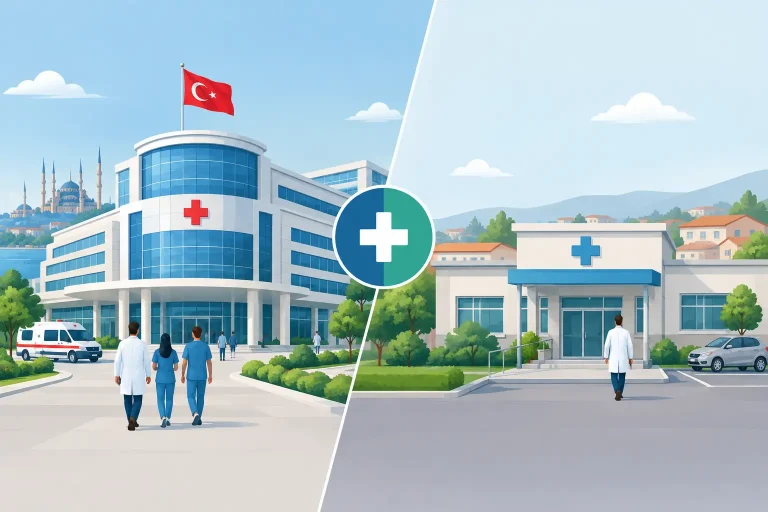
Turkey Hospitals vs Local Hospitals Compared
A lower procedure quote can get a patient’s attention. It should not make the decision on its own.…

Patient Experience That Drives Trust and Growth
A patient who has already uploaded medical records, compared providers, and arranged time away from work is not…