
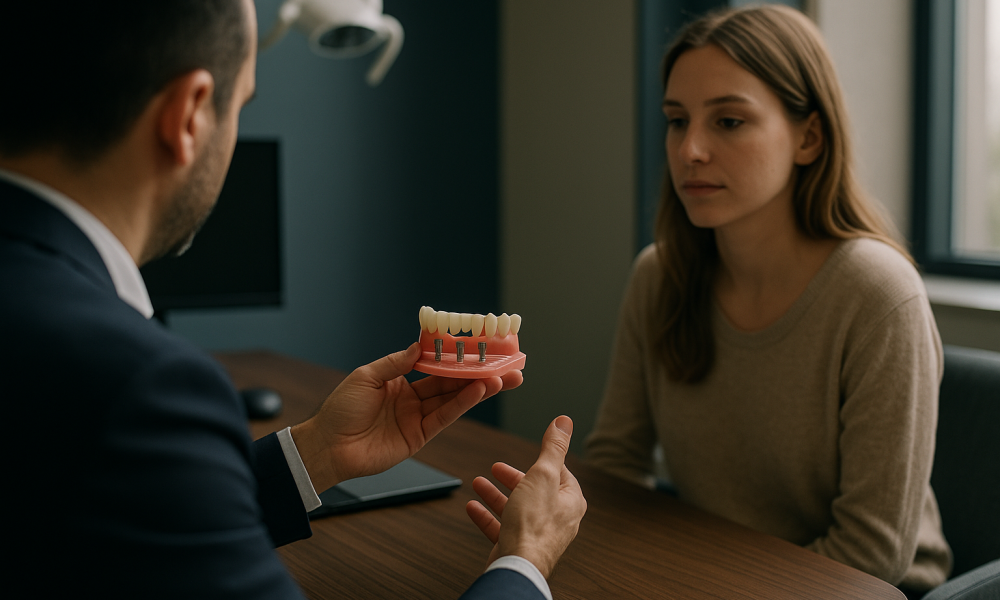
What All-on-4 Dental Implants is and who it is for
All-on-4 dental implants provide a full-arch restoration using only four strategically placed implants. This innovative approach to dental restoration offers a permanent solution for individuals who have lost most or all of their teeth. The technique is particularly beneficial for those seeking a cost-effective and less invasive option compared to traditional implants, which typically require an implant for each missing tooth.
The procedure involves inserting two implants at the front of the jaw and two at the rear, angled to maximise support and stability. This configuration allows for a complete set of teeth to be attached on the same day, offering immediate improvement in aesthetics and function. The implants are typically made from titanium, a biocompatible material that integrates well with the jawbone.
All-on-4 is ideal for individuals who have experienced significant tooth loss due to decay, gum disease, or trauma and are looking for a long-lasting and reliable solution. The procedure is suitable for both the upper and lower jaws and can often be performed without the need for bone grafting, making it accessible to a wider range of patients.
This approach is particularly appealing to international patients, including those from the UK, Europe, and North America, due to the high quality of care available in Turkey, combined with the potential for significant cost savings. The treatment is delivered by experienced dental professionals in state-of-the-art facilities, ensuring that patients receive the best possible care.
While the initial investment might seem substantial, the long-term benefits, such as the durability and convenience of All-on-4 implants, often outweigh the costs. Patients can expect to regain full dental function and enjoy a natural-looking smile, with results that can last many years with proper care.
Are you a good candidate?
Determining candidacy for All-on-4 dental implants involves evaluating several factors. The procedure is generally suitable for adults who have lost most or all of their teeth or who are facing complete tooth loss. It is important to have reasonable oral health and sufficient jawbone density to support the implants. However, one of the advantages of All-on-4 is that it often negates the need for bone grafting, which can be a barrier for some patients considering traditional implants.
Here are some key criteria to consider when assessing whether you might be a good candidate for All-on-4 dental implants:
- Overall Health: You should be in good general health, as certain medical conditions, such as uncontrolled diabetes or autoimmune diseases, can affect healing and implant success.
- Oral Health: Good oral hygiene practices and healthy gums are essential. Any existing oral health issues, such as gum disease, need to be treated before implant placement.
- Jawbone Density: While All-on-4 implants are designed to maximise available bone, some degree of jawbone density is necessary. A dental professional will assess this through imaging techniques.
- Non-Smoker: Smoking can impede healing and affect the success of dental implants, so non-smokers are typically better candidates.
- Realistic Expectations: Understanding the process, potential outcomes, and the commitment required for post-operative care is crucial for a successful experience.
If you meet these criteria and are considering All-on-4 dental implants, a consultation with a dental specialist in Turkey can provide a comprehensive evaluation and personalised treatment plan. This initial assessment often involves a detailed examination, imaging studies, and discussions about your dental history and goals.
The procedure, step by step
The All-on-4 dental implant procedure is a carefully orchestrated process designed to provide patients with a stable, functional, and aesthetically pleasing set of teeth. This method involves the strategic placement of four dental implants in the jawbone to support a full arch of prosthetic teeth. Here is a detailed step-by-step guide to what you can expect during the procedure:
- Initial Consultation and Assessment: The process begins with a comprehensive consultation with a dental specialist. During this appointment, the dentist will assess your oral health, take X-rays, and possibly conduct a CT scan to evaluate the jawbone’s condition. This step is crucial to ensure you are a suitable candidate for the All-on-4 procedure.
- Treatment Planning: Following the assessment, a personalised treatment plan is developed. This includes designing the prosthetic arch and planning the precise placement of the implants. Digital imaging and 3D modelling may be used to enhance accuracy.
- Pre-Procedure Preparation: On the day of the procedure, you will receive local anaesthesia or sedation to ensure comfort. If necessary, any remaining teeth in the arch will be extracted to make way for the implants.
- Implant Placement: The dentist will place four titanium implants into the jawbone. Two implants are typically inserted vertically at the front of the jaw, while the other two are placed at an angle towards the back. This angulation provides enhanced stability and support for the prosthetic arch.
- Immediate Loading: Unlike traditional implants that require months of healing before loading, the All-on-4 allows for the immediate placement of a temporary prosthesis. This means you can leave the clinic with a functional set of teeth on the same day.
- Final Prosthesis Fitting: After a healing period of approximately three to six months, during which the implants integrate with the bone (osseointegration), you will return to the clinic for the fitting of your permanent prosthesis. This final set is custom-designed for optimal function and aesthetics.
The All-on-4 procedure is meticulously planned and executed to ensure the best possible outcomes for patients. While it offers a quicker turnaround compared to traditional methods, it is essential to follow all pre- and post-operative instructions provided by your dental team to maximise success.
Recovery timeline
Recovering from the All-on-4 dental implant procedure is a structured process that varies slightly from patient to patient, but generally follows a predictable timeline. Below is a detailed overview of what you can expect during the recovery period:
| Period | What to expect | Care notes |
|---|---|---|
| Day 1 | Immediate post-operative period. Swelling and discomfort are common. | Apply ice packs to reduce swelling. Take prescribed pain medication as directed. |
| Days 2-3 | Swelling may peak; mild bruising can appear. Temporary prosthesis in use. | Maintain soft diet. Rinse gently with saltwater solution to aid healing. |
| Week 1 | Swelling begins to subside. Initial healing of gum tissue. | Continue with soft foods. Avoid strenuous activity. Attend follow-up appointment. |
| Weeks 2-4 | Gums continue to heal; discomfort significantly reduces. | Gradually reintroduce firmer foods as comfort allows. Maintain oral hygiene. |
| Months 1-3 | Osseointegration phase. Implants bond with the jawbone. | Regular dental check-ups. Follow dietary recommendations to support healing. |
| Month 4-6 | Final prosthesis fitting. Full functionality and aesthetics achieved. | Adopt regular oral care routine. Attend final fitting and adjustment appointments. |
Throughout the recovery process, it is important to adhere to your dentist’s instructions and attend all scheduled follow-up appointments. This ensures that the implants are integrating well and that the prosthesis is functioning as intended. Recovery times can vary, but with proper care, most patients can expect to fully enjoy the benefits of their new smile within six months.
What it costs: Turkey vs the UK, Europe and North America
When considering All-on-4 dental implants, cost is a significant factor for many patients. Turkey has become a popular destination for this procedure due to its competitive pricing, which often includes comprehensive packages. It’s essential to understand that the costs mentioned here are indicative and can vary based on specific clinic offerings, the complexity of the case, and other factors such as the materials used and the expertise of the professionals involved.
| Region | Indicative Price Range (GBP) | What Packages Typically Include |
|---|---|---|
| Turkey | £4,000 – £7,000 |
|
| UK | £12,000 – £20,000 |
|
| Europe | £10,000 – £18,000 |
|
| North America | £15,000 – £25,000 |
|
As illustrated, the cost of All-on-4 dental implants in Turkey is significantly lower than in the UK, Europe, and North America. These savings are often due to lower operational costs in Turkey and a favourable exchange rate. Packages in Turkey frequently include additional services such as accommodation and airport transfers, offering further value for international patients. However, it is crucial to verify the details of what is included in each package to avoid unexpected expenses.
Risks and how accredited providers manage them
Like any surgical procedure, All-on-4 dental implants come with certain risks. Understanding these risks and how accredited providers in Turkey manage them can help patients make informed decisions. The primary risks associated with the All-on-4 procedure include infection, implant failure, nerve damage, and sinus problems. Accredited providers mitigate these risks through stringent protocols and advanced technology.
Infection: Infection is a potential risk with any surgery. Accredited clinics in Turkey employ strict sterilisation techniques and use high-quality, sterilised instruments to minimise this risk. Patients are also typically prescribed antibiotics post-surgery to prevent infections.
Implant Failure: Implant failure can occur if the implant does not properly integrate with the jawbone. This risk is reduced by using advanced imaging techniques, such as 3D CT scans, to plan the procedure accurately. This planning ensures that the implants are placed in the optimal position for successful osseointegration.
Nerve Damage: Nerve damage, although rare, can happen if an implant is placed too close to a nerve. Accredited providers in Turkey utilise detailed pre-surgical assessments and imaging to map out the nerve pathways, thereby reducing the risk of nerve injury.
Sinus Problems: For upper jaw implants, there is a risk of sinus issues if the implants protrude into the sinus cavity. Experienced surgeons in accredited clinics use precise measurement techniques to avoid this complication, often employing sinus lift procedures when necessary to ensure adequate bone height.
Accredited dental clinics in Turkey are subject to rigorous standards and must comply with national and international healthcare regulations. Many clinics are also accredited by international bodies such as the Joint Commission International (JCI), which ensures adherence to global healthcare quality standards.
Furthermore, patient safety is enhanced by the use of high-quality materials and state-of-the-art technology. Providers often have multilingual staff to ensure clear communication with international patients, which is crucial for understanding risks and post-operative care instructions.
In conclusion, while there are inherent risks with the All-on-4 procedure, choosing an accredited provider in Turkey can significantly mitigate these risks. It is advisable for prospective patients to thoroughly research clinics, verify accreditations, and discuss potential risks and their management with the dental professionals involved before proceeding with treatment.
How to choose the right provider
Choosing the right provider for your All-on-4 dental implants in Turkey is a crucial step in ensuring a successful outcome. Start by checking the clinic’s accreditation. Reputable clinics should be accredited by international bodies such as the Joint Commission International (JCI) or the European Society for Quality in Healthcare (ESQH). Accreditation ensures that the clinic adheres to international healthcare standards, providing a level of assurance regarding the quality of care.
Surgeon experience is another vital factor. Look for a surgeon with a significant track record in performing All-on-4 procedures. Ideally, the surgeon should have at least five to ten years of experience and a portfolio of successful cases. You may request to see before-and-after photos of previous patients, which can give you a better idea of their expertise.
Aftercare is equally important. A reliable provider should offer comprehensive aftercare services, including follow-up appointments and guidance for maintaining oral hygiene post-surgery. Check if the clinic has an English-speaking support team that can assist you during your stay and after you return home. This can be invaluable in ensuring smooth communication and addressing any concerns promptly.
Be wary of red flags such as clinics that offer significantly lower prices than the typical range of £4,000 to £8,000 for the procedure. While cost is an important consideration, extremely low prices may indicate compromised quality. Additionally, avoid clinics that pressure you into making quick decisions or provide vague information about the procedure and its risks.
Finally, consider patient reviews and testimonials. Although individual experiences can vary, consistently positive feedback about a clinic’s services, professionalism, and outcomes can be a good indicator of reliability. Use independent review platforms to gather unbiased opinions. Overall, thorough research and careful evaluation of these factors will help you choose a provider that aligns with your needs and expectations.
Planning your trip
Planning your trip for All-on-4 dental implants in Turkey involves several key steps to ensure a seamless experience. Begin by establishing a timeline. It’s advisable to start planning at least three to six months before your intended travel date. This allows ample time to research providers, schedule consultations, and handle any necessary arrangements.
Ensure all your travel documents are in order. A valid passport is essential, and depending on your nationality, you may need a visa to enter Turkey. Check the latest visa requirements on the Turkish government’s official website or consult with your travel agent.
The typical length of stay for an All-on-4 procedure is around 7 to 10 days. This period allows for the initial consultation, surgery, and a short recovery phase. However, plan for potential extensions if any complications arise or if additional follow-up appointments are needed.
Upon returning home, follow-up care is crucial to monitor the healing process and address any issues. Arrange for a local dentist to conduct periodic check-ups. Many clinics offer remote consultations via video calls, which can be a convenient way to stay in touch with your surgeon and discuss any concerns.
Budgeting is another key aspect of planning. Aside from the procedure cost, which typically ranges from £4,000 to £8,000, account for travel expenses such as flights, accommodation, and meals. Consider travel insurance that covers medical tourism to protect against unforeseen circumstances.
Lastly, familiarize yourself with local customs and healthcare regulations in Turkey. Understanding these can help you navigate the healthcare system more effectively and enhance your overall experience. By carefully planning each aspect of your trip, you can ensure a smooth and successful journey for your dental treatment abroad.
Frequently Asked Questions
What is the typical cost of All-on-4 dental implants in Turkey?
The cost of All-on-4 dental implants in Turkey typically ranges from £4,000 to £8,000. This price usually includes the procedure itself, initial consultations, and basic aftercare. However, costs can vary depending on the clinic's location, the surgeon's expertise, and any additional services offered. It's important to inquire about what is included in the quoted price to avoid unexpected expenses.
How safe is it to have dental implants done in Turkey?
Dental implants in Turkey are generally safe when performed at accredited clinics by experienced surgeons. Many clinics adhere to international healthcare standards and are equipped with modern facilities. To ensure safety, verify the clinic's accreditation and the surgeon's qualifications. Additionally, read patient reviews and testimonials to gain insight into their experiences with the clinic's safety and care standards.
What should I look for in a dental implant provider?
Look for a provider with international accreditation, experienced surgeons, and comprehensive aftercare services. Verify the surgeon's experience and success rate with All-on-4 procedures. Check patient reviews and testimonials for insights into the clinic's reputation. Ensure the provider offers clear communication and support, particularly in English, to facilitate a smooth treatment process.
How long will I need to stay in Turkey for the procedure?
For All-on-4 dental implants, you should plan to stay in Turkey for about 7 to 10 days. This timeframe allows for the initial consultation, the surgical procedure, and a brief recovery period to ensure there are no immediate complications. It's wise to allow some flexibility in your schedule in case additional follow-up appointments are necessary.
What documents do I need to travel for dental treatment in Turkey?
You will need a valid passport and, depending on your nationality, possibly a visa to enter Turkey. It's crucial to check the latest visa requirements well in advance of your travel dates. Additionally, carry copies of your medical records, treatment plan, and any correspondence with the clinic to facilitate your treatment process.
How can I ensure quality aftercare once I return home?
Ensure quality aftercare by arranging follow-up appointments with a local dentist familiar with dental implants. Many Turkish clinics offer remote consultations to monitor your progress. Maintain good oral hygiene and adhere to any specific care instructions provided by your surgeon. Regular check-ups will help catch any potential issues early.
Are there any risks associated with All-on-4 dental implants?
As with any surgical procedure, there are risks involved, including infection, implant failure, and nerve damage. These risks can be minimized by choosing an experienced surgeon and following post-operative care instructions closely. Discuss potential risks and complications with your surgeon during the initial consultation to be fully informed.
Can I finance my dental implants in Turkey?
Some clinics in Turkey offer financing options for international patients, allowing you to pay for your dental implants in instalments. It's important to discuss payment plans and financing options directly with the clinic before committing to the procedure. Ensure you understand the terms and conditions of any financing agreement.
How do I communicate with the clinic if I don't speak Turkish?
Many clinics that cater to international patients have English-speaking staff to assist with communication. It's advisable to confirm this beforehand to ensure smooth interactions during your consultations and treatment. Some clinics also offer translation services for other languages to accommodate non-English speaking patients.
What should I do if I experience complications after returning home?
If you experience complications after returning home, contact your Turkish clinic immediately for guidance. They may offer remote consultations to assess your situation. Additionally, seek assistance from a local dentist familiar with dental implants for immediate care. Having a pre-established follow-up plan with a local professional can be beneficial.
Will I need to return to Turkey for follow-up visits?
Most follow-up care can be managed remotely or with a local dentist. However, if complications arise or additional adjustments are needed, a return visit to Turkey might be necessary. Discuss the likelihood of needing further visits with your surgeon during the treatment planning stage to manage expectations and plan accordingly.
How do I verify a clinic's accreditation in Turkey?
To verify a clinic's accreditation, check their credentials on the official websites of international accreditation bodies like the Joint Commission International (JCI) or the European Society for Quality in Healthcare (ESQH). Clinics should also provide documentation or certification upon request. This verification ensures that the clinic meets international standards for healthcare quality.