
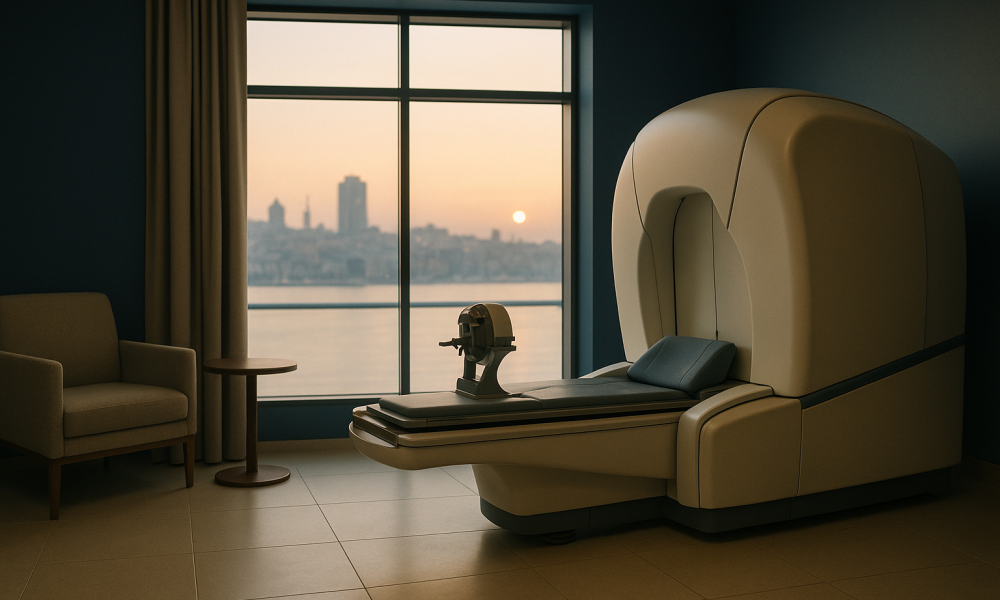
What Gamma Knife Treatment is and who it is for
Gamma Knife treatment is a form of stereotactic radiosurgery, a non-invasive procedure that utilises focused beams of radiation to treat small to medium-sized abnormalities in the brain. Despite its name, no knife or incision is involved. Instead, it employs a precisely targeted dose of radiation to disrupt the DNA of the targeted cells, inhibiting their ability to reproduce and grow. This is particularly effective for conditions such as brain tumours, arteriovenous malformations, trigeminal neuralgia, and certain functional disorders. The procedure is renowned for its precision, which minimises damage to surrounding healthy tissue.
The Gamma Knife is often preferred for patients who have lesions that are difficult to reach surgically or those who are not suitable candidates for traditional surgery due to medical conditions or age. It is also a viable option for patients seeking a less invasive treatment with a quicker recovery time. This technology is widely recognised and available in specialised centres across Turkey, offering patients access to advanced care at a fraction of the cost typically found in the UK, Europe, or North America.
During the procedure, patients are fitted with a lightweight stereotactic head frame to ensure precise targeting. The treatment itself can last from 1 to 4 hours, depending on the complexity and size of the area being treated. Anaesthesia is usually local, allowing patients to remain awake and communicate with the medical team throughout the procedure, although some may receive mild sedation to enhance comfort.
Gamma Knife treatment is typically performed on an outpatient basis, meaning patients can return home the same day. The non-invasive nature of the procedure means that recovery time is significantly reduced compared to traditional surgery. Patients can generally return to normal activities within a day or two, with full recovery expected within 1 to 4 weeks. However, the effectiveness of the treatment may take several weeks to months to become apparent, as the treated lesions gradually shrink or disappear over time.
Are you a good candidate?
Determining whether you are a suitable candidate for Gamma Knife treatment involves a thorough evaluation by a specialist medical team. This procedure is specifically designed for patients with certain types of brain conditions, and the criteria for candidacy are based on a combination of medical history, current health status, and specific characteristics of the condition being treated.
Potential candidates for Gamma Knife treatment should consider the following checklist:
- Diagnosis: You have been diagnosed with a condition that is appropriate for Gamma Knife treatment, such as a small to medium-sized brain tumour, arteriovenous malformation, or trigeminal neuralgia.
- Size and Location: The lesion is small to medium-sized and located in a position that is accessible by the Gamma Knife technique.
- General Health: You are in good general health and can tolerate the procedure without significant risk. This includes having no contraindications to radiation exposure.
- Previous Treatments: You may have had prior treatments, such as traditional surgery or other forms of radiation therapy, and are seeking Gamma Knife treatment as an adjunct or alternative option.
- Age Considerations: While there is no strict age limit, candidates are often adults who can remain still during the procedure, as movement can affect the precision of the treatment.
- Expectation of Outcomes: You have realistic expectations about the outcomes and understand that results may take time to manifest.
It is important to consult with a healthcare provider who can perform a detailed assessment and discuss the potential risks and benefits based on your specific medical condition. This ensures that you receive personalised advice and make an informed decision about undergoing Gamma Knife treatment in Turkey.
The procedure, step by step
Gamma Knife treatment is a type of stereotactic radiosurgery used for treating brain disorders. Although the name “surgery” is used, it is a non-invasive procedure that does not involve any incisions. Here is a detailed step-by-step guide to what patients can expect during the procedure:
- Initial Consultation and Imaging: Prior to the procedure, patients undergo an initial consultation with a neurosurgeon or radiation oncologist. This includes a comprehensive review of medical history and existing imaging scans like MRI or CT. These scans help in planning the precise delivery of radiation.
- Head Frame Placement: On the day of the procedure, a lightweight stereotactic head frame is attached to the patient’s skull. This frame is crucial for accurate targeting. Local anaesthesia is applied to minimise discomfort during its placement.
- Detailed Imaging: Once the frame is in place, the patient undergoes further imaging, typically an MRI, CT, or angiography, to provide detailed images of the brain. These images are used to locate the exact position of the treatment area.
- Treatment Planning: Using specialised computer software, the medical team develops a personalised treatment plan. This plan determines the number and intensity of gamma rays to be delivered to the target area, ensuring maximum impact on the abnormal tissue while sparing healthy tissue.
- Gamma Knife Treatment: The patient is positioned on the Gamma Knife machine, and the head frame is secured to ensure no movement. The treatment usually lasts from a few minutes to a few hours, depending on the complexity of the condition being treated. During this time, the patient remains awake and can communicate with the team through an intercom.
- Frame Removal and Post-Treatment Imaging: After the treatment, the head frame is removed, and the patient may undergo additional imaging to confirm the procedure’s success. Any immediate side effects are monitored.
- Post-Procedure Review: The medical team discusses the procedure’s outcomes and provides detailed post-operative care instructions. Patients are usually able to return home the same day, barring any complications.
This step-by-step approach ensures that the Gamma Knife procedure is as precise and safe as possible, minimising risks and maximising treatment efficacy.
Recovery timeline
Recovery from Gamma Knife treatment is generally quick, given its non-invasive nature. The following table outlines the typical recovery timeline and associated care notes:
| Period | What to expect | Care notes |
|---|---|---|
| Day 1 | Patients may experience slight headache or nausea immediately after the procedure. Mild fatigue is also common. | Rest is recommended. Over-the-counter pain relief, such as paracetamol, can be used for headaches. Hydration is important to alleviate nausea. |
| Week 1 | Most patients report feeling normal within a few days, though minor swelling at the frame site and mild fatigue may persist. | Avoid strenuous activities. Gentle exercise, such as walking, is encouraged. Follow up with the medical team if unusual symptoms occur. |
| Month 1 | By this time, patients typically resume all normal activities. Some may experience transient neurological symptoms as the brain adjusts. | Continue regular check-ins with your healthcare provider. Report any persistent or severe symptoms immediately. |
| Full recovery | While physical recovery is swift, the full therapeutic effects of Gamma Knife can take weeks to months to become apparent, depending on the condition treated. | Regular follow-up appointments are crucial to monitor progress and adjust treatment plans if necessary. MRI scans may be scheduled to assess the treatment’s effectiveness. |
This timeline provides a general guide, but individual recovery experiences can vary. Patients should maintain open communication with their healthcare providers to address any concerns during the recovery period.
5. What it costs: Turkey vs the UK, Europe and North America
When considering Gamma Knife treatment abroad, understanding the cost differences across regions is crucial for making an informed decision. Below is a table that compares the indicative cost ranges for Gamma Knife procedures in Turkey, the UK, Europe, and North America. It is important to note that these figures are indicative and can vary based on a number of factors, including the specific healthcare facility, the complexity of the treatment, and any additional services included in the package.
| Region | Indicative Cost Range (GBP) | Typical Package Inclusions |
|---|---|---|
| Turkey | £4,000 – £7,000 | Consultations, treatment, post-treatment care, accommodation, and airport transfers |
| UK | £8,000 – £15,000 | Consultations, treatment, and post-treatment care |
| Europe | £10,000 – £18,000 | Consultations, treatment, and post-treatment care |
| North America | £15,000 – £25,000 | Consultations, treatment, and post-treatment care |
As shown above, Turkey offers a significantly more affordable option for Gamma Knife treatment compared to the UK, Europe, and North America. The lower cost in Turkey is largely attributed to the lower operational expenses and favourable exchange rates, rather than a compromise in quality of care. Many Turkish healthcare facilities are accredited by international bodies, ensuring that they meet rigorous standards of care.
Typically, packages in Turkey are comprehensive and designed to accommodate international patients. They often include not only the medical procedures themselves but also additional services such as accommodation in nearby hotels, airport transfers, and sometimes even a translator to assist with communication. This holistic approach can make the entire experience more convenient and less stressful for patients travelling from abroad.
In contrast, packages in the UK, Europe, and North America tend to be more focused on the medical aspects, often excluding travel and accommodation, which can add significantly to the overall cost for international patients. Therefore, when budgeting for treatment, it is essential to consider these additional expenses.
While cost is an important factor, it should not be the sole determinant in choosing a treatment location. Prospective patients should weigh the cost savings against other factors such as the reputation of the medical facility, the experience of the medical team, and the level of personalised care they are likely to receive.
6. Risks and how accredited providers manage them
Gamma Knife treatment, like any medical procedure, carries certain risks, although it is generally considered safe and minimally invasive. The primary risks associated with Gamma Knife radiosurgery include swelling of the brain tissue, radiation-induced necrosis, and, in rare cases, damage to surrounding healthy tissues. Accredited providers in Turkey are well-equipped to manage these risks through rigorous pre-treatment planning, state-of-the-art technology, and comprehensive post-treatment care.
One of the key strategies used to minimise risks is the detailed imaging and planning process that precedes the treatment. Patients typically undergo MRI or CT scans, which allow the medical team to create a precise map of the area to be treated. This meticulous planning ensures that the gamma rays are accurately targeted, minimising exposure to surrounding healthy tissues.
Accredited facilities in Turkey utilise advanced software for treatment planning, which helps in determining the optimal dose and angles for radiation delivery. This technology is crucial in ensuring that the maximum therapeutic effect is achieved while minimising potential side effects. Furthermore, the treatment is usually carried out by a multidisciplinary team, including neurosurgeons, radiation oncologists, and medical physicists, who collaborate to deliver personalised care.
Post-treatment, patients are closely monitored for any adverse reactions. Accredited providers ensure that comprehensive follow-up care is part of the treatment package. This typically includes regular check-ups and imaging to assess the treatment’s effectiveness and to detect any early signs of complications. In case of any side effects, prompt intervention is available to manage symptoms and aid recovery.
Moreover, accredited providers in Turkey adhere to international health and safety standards, often undergoing regular audits to maintain their accreditation status. This commitment to quality assurance provides an added layer of confidence for international patients seeking treatment in Turkey.
While the risks are generally low, it is crucial for patients to discuss their specific case with their healthcare provider to understand the potential risks and benefits. An open dialogue will allow patients to make informed decisions about their treatment options and to feel more at ease with the process.
How to choose the right provider
When considering Gamma Knife treatment in Turkey, selecting the right provider is crucial to ensure a successful procedure and a smooth overall experience. Here are some key factors to consider:
- Accreditation: Look for hospitals and clinics that are accredited by international bodies such as the Joint Commission International (JCI) or the European Foundation for Quality Management (EFQM). Accreditation ensures that the facility adheres to high standards of healthcare delivery, patient safety, and quality management.
- Surgeon Experience: The expertise and experience of the medical team, especially the neurosurgeon and the radiation oncologist, are vital. Inquire about the number of Gamma Knife procedures they have performed and their success rates. A team with a track record of handling diverse cases, including complex conditions, is preferable.
- Aftercare Services: Comprehensive aftercare is pivotal for monitoring recovery and addressing any complications. Check if the provider offers a structured follow-up plan, which may include consultations, imaging tests, and support from a multidisciplinary team.
- Red Flags: Be cautious of providers who make unrealistic promises or guarantee specific outcomes. Transparency about potential risks, side effects, and realistic recovery expectations is essential. Additionally, avoid clinics that lack clear communication channels or have poor patient reviews.
By thoroughly researching and comparing different providers, you can make an informed decision that prioritizes your health and well-being.
Planning your trip
Proper planning is essential for a seamless experience when travelling to Turkey for Gamma Knife treatment. Here is a step-by-step guide to help you prepare:
- Timeline Before Travel: Start planning at least 6-8 weeks in advance. This allows sufficient time for consultations, obtaining medical records, and coordinating with your chosen healthcare provider.
- Documents: Ensure you have all necessary documentation, including your passport, visa (if required), medical records, and any correspondence with the healthcare provider. It’s advisable to have digital and physical copies of these documents.
- Length of Stay: The typical duration for Gamma Knife treatment is relatively short, with most patients requiring 3-5 days in Turkey. This includes pre-treatment consultations, the procedure itself, and initial recovery. However, plan for some flexibility in case of unforeseen delays or additional tests.
- Follow-Up at Home: Arrange for follow-up care with your local healthcare provider before you travel. This ensures continuity of care and allows for monitoring of your recovery. Share all relevant medical information from your treatment in Turkey with your local doctor.
Additionally, consider practical aspects such as accommodation, transportation, and travel insurance. Many clinics offer assistance with logistics, which can simplify the process. Ensure your travel insurance covers medical tourism and any potential complications. By preparing thoroughly, you can focus on your treatment and recovery without unnecessary stress.
Frequently Asked Questions
What is the cost range for Gamma Knife treatment in Turkey?
The cost of Gamma Knife treatment in Turkey typically ranges from £4,000 to £7,000. This is an indicative range and may vary depending on the complexity of the case, the provider, and the length of stay. Always confirm the cost with the healthcare provider and understand what is included in the quoted price.
Is Gamma Knife treatment safe?
Gamma Knife treatment is generally considered safe and is a well-established procedure for treating brain conditions. It uses precise radiation to target affected areas, minimizing damage to surrounding healthy tissue. As with any medical procedure, there are risks, so it is important to discuss these with your healthcare provider.
How long does recovery take after Gamma Knife treatment?
Recovery time can vary depending on individual health conditions and the complexity of the treatment. Most patients can resume normal activities within a few days, but it's important to follow the specific guidance provided by your healthcare team. Regular follow-ups are crucial to monitor progress.
Do I need a visa to travel to Turkey for medical treatment?
Whether you need a visa depends on your nationality. UK and EU citizens can often enter Turkey for short stays without a visa, while North American citizens may require an e-visa. It's important to check the latest entry requirements before planning your trip.
What should I bring for my treatment trip?
Bring all relevant medical records, identification documents, and any prescribed medications. Comfortable clothing for the hospital stay and any personal items for your comfort are also recommended. Always carry both digital and hard copies of important documents.
How do I arrange follow-up care after returning home?
Before traveling, coordinate with your local healthcare provider to arrange follow-up appointments. Provide them with all relevant information from your treatment in Turkey to ensure seamless care and monitoring of your recovery.
Can I travel alone for the procedure, or should I bring someone with me?
While many patients travel alone, bringing a companion can provide additional support and assistance during your stay. This can be particularly helpful for managing logistics and providing emotional support during the recovery period.
What language is spoken in Turkish hospitals?
Most medical professionals at internationally accredited hospitals in Turkey speak English. However, it's always useful to confirm this with your chosen provider and consider hiring a translator if needed for complex discussions.
How soon can I return to work after the procedure?
Many patients can return to work within a week, but this depends on the nature of your job and your personal recovery process. It's advisable to discuss your specific situation with your healthcare provider to get tailored advice.
What happens if there are complications after I return home?
In case of complications, contact your local healthcare provider immediately. Ensure you have a clear understanding of the emergency protocols from your treatment provider in Turkey before returning home. Having comprehensive travel insurance can also be beneficial.
Are there payment plans available for the treatment?
Some clinics may offer payment plans or financing options for international patients. It's important to discuss these options directly with the provider and understand any terms and conditions before agreeing.
How do I verify the credentials of the medical team?
You can verify the credentials of the medical team by checking their qualifications, experience, and any affiliations with international medical bodies. Reputable clinics often provide this information on their websites or upon request.