

How much will life-changing therapy really require from a family’s budget? Many patients in the United States face this question when weighing a complex neurosurgical option for movement and other chronic disorders.
This introduction explains why prices vary and what studies reveal. A systematic review of 26 articles from 2001–2021, adjusted to April 2022 dollars, shows wide financial differences by hospital, insurance, and treatment pathway. The total figures often include pre-op assessment, the procedure itself, device and battery considerations, and post-op care.
Patients and families want clear numbers and better reporting so therapy becomes more accessible. This guide breaks down the main drivers of expense and offers practical insight to help plan care and long-term outcomes.
Key Takeaways
- Costs vary widely across hospitals and regions in the United States.
- A systematic review of 26 studies (2001–2021) was adjusted to April 2022 for consistency.
- Total expenses often include assessments, device and battery, surgery, and follow-up care.
- Standardized reporting could improve access and help patients plan.
- This guide aims to clarify financial factors with empathy and clear data.
Understanding Deep Brain Stimulation
Knowing how the system operates and who it helps frames later discussion about hospital fees and device choices. This section explains the procedure in plain terms and lists common medical indications so patients and families can begin to evaluate potential benefits.
How the Procedure Works
Deep brain stimulation uses tiny electrodes placed in targeted brain regions to change abnormal signals. Surgeons connect those leads to a neurostimulator placed under the skin near the chest.
The device sends mild electrical pulses that act like a tuner, helping affected areas play in rhythm again. A study of more than 1,700 patients showed subthalamic DBS improved motor symptoms by about 50% and raised quality of life by roughly 22%.
Common Medical Indications
This surgical treatment is most often offered for movement disorders such as parkinson disease, essential tremor, and dystonia. It can also help some people with epilepsy and other refractory conditions.
- Implanting electrodes to reduce tremors, stiffness, and involuntary movements.
- Placing a chest neurostimulator to deliver ongoing therapy and minimize medication fluctuations.
- Providing measurable improvements in mobility and daily functioning for many patients.
Assessment and careful patient selection are crucial. Surgeons and care teams evaluate symptoms, prior medication response, and overall health before recommending this treatment.
Deep Brain Stimulation Cost Overview
A clear price picture helps patients and families plan for surgery and months of follow-up care.
Typical U.S. ranges show wide variation: many centers report totals from about $35,000 to more than $70,000 for the procedure and immediate hospital care. This range reflects hospital fees, device choice, and the complexity of the case.
The mean price for the implantable device alone was USD 21,496.07 ± USD 8,944.16. Recent pooled figures put the average total surgical charge at USD 40,942.85 ± USD 17,987.43.
When clinic visits, imaging, and programming visits are included, the mean treatment expense through one year rises to USD 47,632.27 ± USD 23,067.08.
Patients with parkinson disease may see higher variability based on symptom severity and whether unilateral or bilateral procedures are performed.
- Device cost is a large portion of overall spending.
- Hospital policies and geographic location affect final bills.
- Transparent discussion with the care team helps avoid surprises.
Factors Influencing Surgical Expenses
Upfront testing and team expertise shape much of what families will pay for surgical treatment. Imaging such as MRI and CT is a routine part of pre-op assessment and adds to the total costs. These studies guide electrode targeting and safety planning.
Pre-operative Assessment Costs
Initial consultations with neurologists, anesthesiologists, and multidisciplinary teams are necessary. Each visit carries professional fees that patients should anticipate.
Complex cases, for example advanced parkinson disease, require more extensive diagnostic testing. That increases both time and expense before the operation.
- Specialized OR time and navigation technology for precise electrode placement raise hospital charges.
- Intraoperative testing and the neurosurgical team’s experience influence final billing.
- Longer hospital stays and specialized nursing care shown in several studies also affect outlays and outcomes.
Understanding these drivers helps patients prepare financially and focus on high-quality care that supports the best possible results from dbs therapy.
The Role of Device Technology in Pricing
Technology choices influence both immediate bills and years of follow-up spending. Device type, battery life, and brand all shape what patients and families pay over time.
Rechargeable vs non-rechargeable systems affect long-term planning. Rechargeable models can last up to 15 years. That reduces the need for repeat replacement surgery and lowers cumulative costs.
Non-rechargeable systems cost less up front. They often need replacement every 3–5 years. That can raise lifetime expenses and add surgical risk for patients.
Leading device manufacturers
Companies such as Medtronic, Boston Scientific, and Abbott supply the majority of implantable systems in the United States. Each offers models with different features, programming options, and battery life.
“Selecting the right device is a shared decision between surgeon and patient that combines lifestyle, health, and financial goals.”
Price range for neurostimulators typically falls between $20,000 and $50,000 depending on model and technology. Studies show device choice is a critical variable in economic analyses of DBS pathways.
| Feature | Rechargeable | Non-rechargeable |
|---|---|---|
| Typical lifespan | Up to 15 years | 3–5 years |
| Initial price | Higher | Lower |
| Replacement surgeries | Less frequent | More frequent |
| Best for | Patients seeking long-term savings | Patients prioritizing lower up-front expense |
Patients should discuss pros and cons with their surgeon. The right choice balances clinical results, quality of life, and realistic financial planning for treatment and follow-up care.
Comparing Unilateral and Bilateral Procedures
Choosing one-side or both-side lead placement changes procedure time, equipment needs, and the final bill. A bilateral procedure treats both hemispheres and typically adds 40–60% more to total hospital charges than a unilateral operation.
Unilateral approaches are often chosen when symptoms affect one side only. Examples include an early-stage parkinson disease presentation or a dominant hand essential tremor. These cases usually mean fewer electrodes and shorter OR time.
Bilateral surgery requires two sets of leads, more programming visits, and longer anesthesia. That increased complexity explains higher hospital fees and longer recovery for many patients.
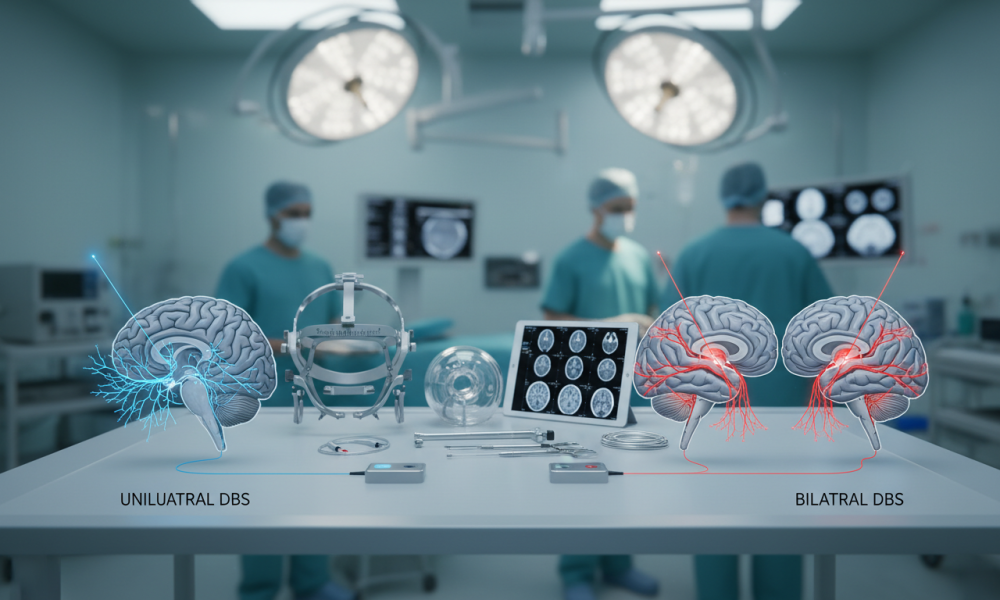
- Why prices differ: extra electrodes and extended operating-room time raise bills for bilateral procedures.
- When unilateral fits: one-sided symptoms may get strong benefit with lower procedural burden.
- Clinical decision: surgeons choose the approach based on symptom pattern and likely outcomes—not finances alone.
Understanding these differences helps patients and families anticipate the financial and recovery demands tied to their specific surgical plan.
Hospital and Surgeon Fee Structures
Hospital billing and surgeon fees shape most of what families see on their final invoice for surgery.
Experienced surgeons and JCI-accredited hospitals often charge higher fees. That reflects added safety, precision, and teamwork for complex care.
Facility charges include operating-room time, imaging, and ward stays. Typical inpatient time ranges from 3 to 10 days and can raise overall expenses.
- What drives fees: surgeon expertise, accreditation, and length of stay.
- Ask about inclusions: follow-up visits, device programming, and rehabilitation sessions.
- Transparent billing helps patients compare value, not just price.
Studies show teams with larger procedure volumes report fewer complications and better long-term outcomes. That can reduce repeat hospital visits and cumulative costs over time.
“Investing in a skilled surgical team influences both immediate results and patient health years later.”
| Fee Component | What it Covers | Typical Impact on Bill |
|---|---|---|
| Surgeon professional fee | Pre-op planning, surgery, immediate follow-up | High for very experienced surgeons |
| Facility/hospital charge | OR time, room, nursing, imaging | Main driver when stays are 3–10 days |
| Post-op services | Programming visits, rehab, outpatient care | Moderate; recurring over first year |
Navigating Insurance Coverage for DBS
Insurance rules shape access to device therapy and often determine whether a patient can move from evaluation to treatment. Coverage in the United States varies by plan, indication, and documentation. Patients and families should expect difference in what parts of the pathway are paid by insurers.
Challenges with Newer Indications
Some payers will fully cover surgery for established conditions such as parkinson disease and essential tremor. Others offer only partial reimbursement. That creates unpredictable out-of-pocket bills for many patients.
- Newer indications like ocd or epilepsy often lack routine coverage because they remain investigational.
- An estimated 2.8 million people in the United States have treatment-resistant depression; for them, DBS is usually not standard and approvals are difficult.
- Patients should work with the hospital billing team to confirm what the plan will pay and what the patient must cover.
- Providing thorough medical records and study data can improve the chance of prior authorization.
Advocacy matters. Many studies show inconsistent policies create real barriers to accessing this therapy. Clear communication, persistence, and documentation help patients move from approval to care.
Financial Implications of Battery Replacement
Replacing an exhausted neurostimulator battery creates recurring financial planning needs for many families.
Patients with non-rechargeable systems typically need battery exchange every 3 to 5 years. That replacement is a surgical procedure. It brings fees for the new battery, operating-room time, and the surgeon’s professional charges.
For people with parkinson disease or ocd, these recurring procedures are an important part of long-term planning. Multiple studies note that replacement surgeries add substantially to lifetime treatment totals.
- Non-rechargeable systems: predictable replacements and repeated hospital bills.
- Rechargeable devices: fewer replacements and lower cumulative charges over many years.
- Ask the hospital for written estimates of future procedures to avoid surprises.
Patients should discuss maintenance scenarios with their care team. Clear planning helps preserve quality of treatment and reduces interruptions to device therapy.
Exploring International Treatment Options
Many U.S. patients now compare domestic care with international centers to stretch limited budgets without sacrificing quality.
Countries such as Turkey, Thailand, and Poland offer similar surgery at roughly 40–60% lower costs than in the United States. These centers often carry JCI accreditation, which signals adherence to global safety and quality standards.
For patients with parkinson disease, going abroad can mean access to experienced teams and bundled packages that include hospital stays, transfers, and lodging. That reduces logistical stress and simplifies planning.
Patients should confirm surgeon credentials, device availability, and follow-up plans before booking travel. Time for recovery and the need for later visits back home must also factor into any decision.
| Factor | Typical Benefit Abroad | Patient Consideration |
|---|---|---|
| Price | 40–60% lower | Verify full package details |
| Quality | JCI-accredited hospitals available | Check surgeon outcomes and referrals |
| Logistics | Packages often include transfers | Plan follow-up care in home country |
Studies support medical tourism as a viable route for many seeking advanced neurosurgical treatment. With careful research, patients can reduce financial burden while maintaining high-quality care.
Benefits of All-Inclusive Medical Packages
All-inclusive medical packages bundle clinical care and travel logistics so patients can focus on healing. These programs present one clear price and fewer administrative hassles.
What is commonly included:
- Pre-operative tests and imaging
- The brain pacemaker device and hospitalization
- Airport transfers, interpreter services, and local support
Why many choose this route: Bundled plans reduce surprises and coordinate appointments, lodging, and follow-up care. Dr. Ali Zirh at Medipol University in Turkey has performed over 1,400 successful procedures and offers these comprehensive packages for patients parkinson disease.
Patients parkinson benefit from streamlined logistics and predictable billing. Choosing an all-inclusive option can lower stress, improve continuity of care, and let families concentrate on recovery rather than travel arrangements.
Evaluating Quality and Safety Standards Abroad
Assessing international hospital standards helps families choose care with confidence. Patients should look beyond price and review certifications, outcomes, and patient support services.
Accreditation matters. Many hospitals in Turkey and Thailand hold JCI or ISO 9001 recognition. These marks show the facility follows established processes for safety and quality.
Third-party rankings offer extra perspective. Platforms such as Bookimed evaluate clinics using patient reviews, success rates, and doctor credentials. That transparency aids practical comparisons.
Look for verified patient testimonials and the neurosurgical team’s case volume. Surgeon training and the number of procedures performed are key indicators of experience and lower complication risk.
- Confirm JCI or ISO 9001 status and ask to see supporting documents.
- Read verified reviews and request outcome data from the clinic.
- Ensure a dedicated international patient office handles language and logistics.
“Thorough research helps patients feel secure about care planned abroad.”
For those exploring options, this guide recommends checking credentials, reading reviews, and considering bundled programs such as treatment in Turkey that include follow-up coordination back home.
Economic Analysis of Treatment Outcomes
Economic studies translate clinical gains into standard units to judge long-term value. Researchers commonly use Quality-Adjusted Life Years (QALYs) to compare therapies.
When surgery leads to meaningful motor improvement and less medication, models often show favorable cost-effectiveness over time.
- QALYs capture both life length and quality, making benefits visible to payers and clinicians.
- Analyses usually use a five-year horizon to include recovery, programming visits, and potential replacements.
- Lower drug use improves long-term economic outcomes for patients parkinson disease and reduces caregiver burden.
Comparisons to standard medical care show that improved daily function and independence drive much of the value seen in studies.
These models help hospitals, insurers, and families weigh immediate investment against years of better health and lower downstream expenses. Patients and providers can use this evidence to plan care that balances clinical benefit with financial sustainability.
Managing Out-of-Pocket Expenses
Small steps—like asking for detailed invoices—make large medical bills easier to manage.
Start by requesting a full cost breakdown. Ask the hospital billing team for itemized fees: surgeon charges, room rates, imaging, and the neurostimulator price. Clear invoices reduce surprises.
Explore financing options early. Many clinics offer payment plans or medical loans. Spreading payments can ease monthly budgets.
- Check whether cash discounts apply for international packages.
- Verify out-of-network insurance benefits and prior authorization rules.
- Set aside a contingency fund for extra hospital days or meds.
- Work with a patient coordinator to compare offers and paperwork.
“Proactive communication with billing staff saves time and prevents unexpected bills.”
| Option | Benefit | Consideration |
|---|---|---|
| Itemized billing | Transparency, easier appeals | Requires time to review |
| Financing / medical loan | Lower monthly burden | Interest and terms vary |
| Cash payment (international) | Possible discount, simpler billing | Upfront funds required |
| Patient coordinator | Navigation help, paperwork | May be limited to clinic hours |
Being well-informed and prepared lowers financial stress and helps patients focus on recovery.
Long-Term Financial Planning for Patients
Planning for ongoing device maintenance helps families avoid surprise bills and focus on health. Start by listing predictable items: battery replacements, follow-up programming visits, and any possible revision surgeries.
Budgeting should include expected timelines. Non-rechargeable batteries often need exchange every 3–5 years. That means a planned surgical episode with known professional and facility fees.
Regular programming visits are smaller, recurring expenses. They add up over years, especially in the first post-op year. Revision surgery is less common but can be costly; patients should account for that contingency.
Integrate these costs into retirement or savings plans. Working with a trusted financial advisor yields tailored strategies that protect other goals while covering medical needs.
- Open a dedicated health savings account for predictable maintenance.
- Ask providers for written estimates of future replacement or revision procedures.
- Consider payment plans or medical loan options for larger, one-time expenses.
| Expense | Frequency | Planning Tip |
|---|---|---|
| Battery replacement | Every 3–15 years (device-dependent) | Save annually into HSA or earmarked fund |
| Programming visits | Several in year one; then periodic | Include in yearly medical budget |
| Revision surgery | Occasional, unpredictable | Maintain emergency fund or insurance rider |
Being prepared gives peace of mind. Proactive financial management is a central part of long-term care planning for people living with implant therapy.
Future Trends in Healthcare Reimbursement
Hospitals and insurers now test payment methods that tie rewards to patient recovery and long-term function.
Value-based care models aim to pay for outcomes, not just volume. This shift creates incentives for better follow-up, fewer complications, and clearer measures of success.
Regulatory advances matter. Breakthrough therapy designations and new clinical trials can speed coverage decisions for novel neurosurgical treatments. As evidence grows, plans may expand what they will reimburse.

Standardized reporting of outcomes and prices will make it easier to compare options. That drives competition on value and encourages hospitals to publish real-world results.
“Greater transparency and stronger trial data help patients and families advocate for coverage.”
Patients should stay informed about changing policies. Better reporting, evolving trial results, and value-focused payments together may improve access and lower long-term financial burden for many seeking advanced neurosurgical care.
Conclusion
In closing, patients deserve clear guidance that balances medical benefit with practical financial planning.
DBS remains a transformative option for many facing complex movement disorders. Understanding device choices, surgical approaches, and insurance rules helps families make informed decisions about brain stimulation surgery.
Exploring international centers and all-inclusive packages can widen access to high-quality care. Long-term planning and open communication with providers reduce surprises and protect recovery.
Stimulation surgery continues to improve as technology and reimbursement evolve. With thoughtful planning and the right team, patients can pursue therapy with greater confidence and support.
FAQ
What is the purpose of deep brain stimulation for Parkinson’s disease?
Deep brain stimulation (DBS) is a surgical therapy that uses implanted electrodes and a neurostimulator to reduce movement symptoms like tremor, rigidity, and dyskinesia when medications no longer control them well. It aims to improve quality of life and reduce medication doses… outcomes vary by patient and disease stage.
How does the procedure work and what does the surgery involve?
The surgery places thin electrodes into targeted brain regions and connects them to a pulse generator implanted under the chest skin. The system delivers electrical pulses that modify abnormal neural signals. The procedure includes pre-op imaging, awake or asleep lead placement, and device programming afterward.
Which medical conditions besides Parkinson’s may qualify for this therapy?
Approved indications include Parkinson’s disease, essential tremor, and dystonia. Off‑label or experimental uses—studied in obsessive‑compulsive disorder (OCD) and some psychiatric or epilepsy cases—are evaluated case by case and may face insurance limits.
What affects the total price of surgery and related care?
Costs reflect pre‑operative testing, imaging, surgeon and hospital fees, device model (rechargeable vs non‑rechargeable), programming visits, and potential complications. Regional hospital charges and surgeon experience also influence the final bill.
Are pre-operative assessments and imaging billed separately?
Yes. Pre-op work often includes neurologic evaluation, neuropsychological testing, MRI/CT scans, and sometimes motion tracking—each billed as separate services. These assessments help confirm candidacy and surgical planning.
How do rechargeable and non-rechargeable systems compare in price and maintenance?
Rechargeable systems typically cost more upfront but reduce the frequency of battery replacement surgeries. Non‑rechargeable devices may be less expensive initially but often require replacement every few years, adding long‑term surgical and hospital costs.
Who are the leading device manufacturers and does brand matter?
Major manufacturers include Medtronic, Boston Scientific, and Abbott. Brand differences affect features like directional leads, MRI safety, and battery options. Choice depends on clinician preference, device capabilities, and patient needs.
What is the difference between unilateral and bilateral procedures in terms of benefit and expense?
Unilateral implantation targets one side of the brain and may address symptoms predominantly on one body side — it generally costs less and involves shorter operative time. Bilateral implantation treats both sides, often offering greater symptom control for widespread problems but increases device and surgical costs.
How are hospital and surgeon fees typically structured?
Fees may be itemized (OR time, anesthesia, implants) or bundled. Academic centers and specialized movement‑disorder teams may charge more but offer multidisciplinary care. Patients should request an itemized estimate before surgery.
Will insurance cover this therapy and what hurdles exist?
Many U.S. insurers and Medicare cover FDA‑approved indications like Parkinson’s and essential tremor when documentation meets criteria. Challenges include denials for newer or off‑label indications and preauthorization requirements; appeals or peer‑to‑peer reviews may be needed.
Are there additional coverage challenges for psychiatric indications like OCD?
Yes. Coverage for psychiatric uses is limited because evidence is still emerging. Patients pursuing treatment for OCD often face stricter criteria, more denials, and may need participation in clinical trials or out‑of‑pocket payment.
How often do batteries need replacement and what are the associated costs?
Non‑rechargeable batteries may last 3–5 years depending on settings. Rechargeable systems can last a decade or longer with regular charging. Replacement requires surgery, operating room time, and device costs, which add to lifetime expenses.
Is it common for patients to consider international treatment to reduce expenses?
Some patients explore international centers for lower package prices or bundled care. While upfront savings are possible, patients should weigh travel, follow‑up care, accreditation, and continuity with local neurologists before deciding.
What should patients look for in all‑inclusive medical packages abroad?
Seek transparent pricing that covers pre‑op work, surgery, device, hospital stay, and at least short‑term follow‑up. Verify the center’s accreditation, surgeon experience, and arrangements for post‑discharge programming and complications.
How can patients evaluate safety and quality standards at international centers?
Check physician credentials, hospital accreditation (JCI or equivalent), published outcomes, and patient testimonials. Confirm availability of multidisciplinary teams and clear plans for emergency care and device servicing after returning home.
Do studies show the procedure is cost‑effective over time?
Economic analyses suggest that for appropriate candidates, improved symptom control and reduced medication costs can offset initial expenses over several years. Long‑term benefits depend on clinical response, device longevity, and need for reoperations.
What out‑of‑pocket expenses should patients plan for?
Expect co‑pays, deductibles, travel, lodging, caregiver costs, and non‑covered services like some imaging or advanced device options. Budgeting for possible battery replacement and programming visits is important.
How can patients plan financially for long‑term care and device upkeep?
Work with social workers and financial counselors to explore insurance benefits, payment plans, and assistance programs. Consider device type (rechargeable vs non‑rechargeable) and factor in future replacement surgeries into long‑term plans.
Are there changes in reimbursement or technology that might affect future expenses?
Advances in device features, longer‑lasting batteries, and expanded clinical evidence may influence coverage policies and pricing. Policy shifts toward value‑based care could also change how payers reimburse multidisciplinary treatment.
Where can patients get reliable information and support when considering this therapy?
Patients should consult movement‑disorder neurologists, certified neurosurgeons, and hospital financial counselors. Reputable resources include the American Academy of Neurology and the Michael J. Fox Foundation for up‑to‑date guidance and patient stories.
Related guides
How Long Does a Dental Implant Procedure Take?
Curious if the journey to a restored smile will fit your life? Many patients wonder about the full…

Best Hair Transplant in Istanbul,Turkey
Could one clinic end years of worry and restore your confidence with a clear, tailored plan?Dr. Serkan Aygin…

What is Zygomatic Dental Implant?
Could anchoring into the cheekbone restore a confident smile when the upper jaw can’t?Zygomatic dental implants offer an…