
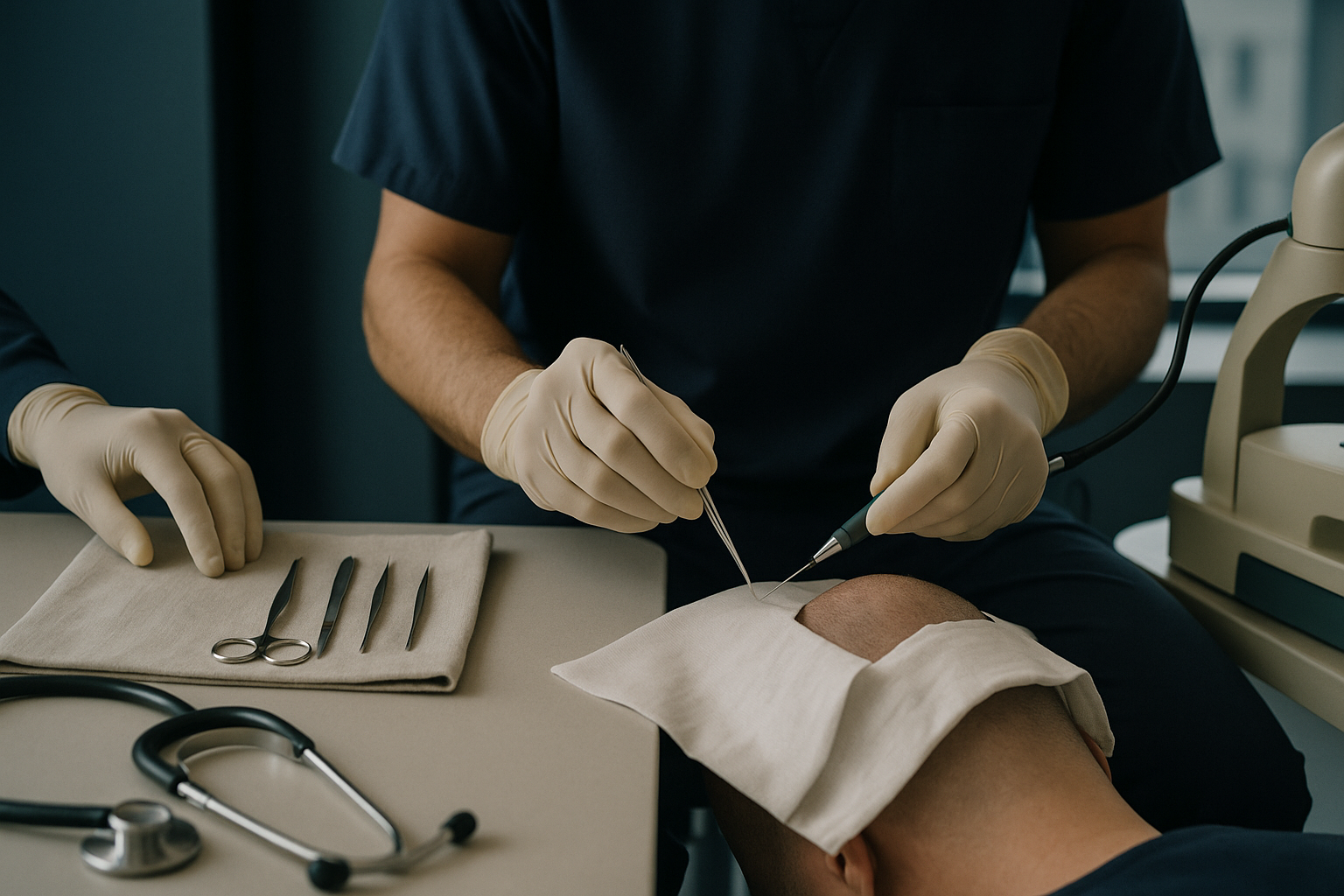
Follicular Unit Extraction (FUE) hair implants have become a popular choice for individuals seeking hair restoration solutions globally. This technique involves the extraction of individual hair follicles from a donor area, which are then transplanted to areas experiencing hair loss. Known for its minimally invasive nature, FUE provides a natural appearance with reduced recovery times.
What is FUE and DHI Hair Transplant?
FUE, or Follicular Unit Extraction, is a hair transplant technique where individual hair follicles are meticulously extracted from a donor site, typically the back of the head, due to its dense hair growth and resistance to balding. These follicles are then implanted into balding or thinning areas. The precision of this method makes it highly effective for achieving a natural look, as the surgeon can carefully place each follicle to mimic natural hair growth patterns. The procedure is minimally invasive, requiring tiny circular incisions that heal quickly without noticeable scarring.
DHI, or Direct Hair Implantation, is an advanced variant of the FUE technique. It employs a specialized pen-like tool known as a Choi Implanter Pen, which allows for a more direct approach. This tool enables the surgeon to simultaneously create a channel and implant the follicle, reducing the time follicles spend outside the body and potentially improving the survival rate of transplanted hair. This method can lead to denser and more precise results, especially beneficial for patients looking to fill in specific areas such as the hairline.
The choice between FUE and DHI typically depends on several factors including the patient’s hair type, extent of hair loss, and personal preferences. FUE might be more suitable for individuals requiring larger areas to be covered due to its efficiency, while DHI could be ideal for those seeking detailed work and density in specific areas. Consulting with a qualified professional who can assess individual needs and provide tailored recommendations is essential for optimal results. Whether opting for FUE or DHI, understanding each method’s nuances and potential outcomes is crucial for making an informed decision.
What is the Difference Between DHI and FUE Hair Transplant?
While both FUE and DHI are effective hair restoration techniques, their primary difference lies in the implantation process. FUE involves a two-step method: first, channels are created in the scalp, and then hair follicles are inserted into these channels. This separation of steps allows for a broader range of follicle placement options, which can be advantageous for covering larger areas. The ability to select the precise location for each follicle enables surgeons to customize the hair pattern to achieve a seamless and natural look.
In contrast, the DHI method utilizes the Choi Implanter Pen, which allows for a more streamlined process. By combining the channel creation and implantation into a single step, the DHI technique offers more precision in the placement of hair follicles. This precision can result in denser hair growth and a more natural appearance, especially in areas like the hairline, where meticulous placement is critical. However, the increased precision and use of specialized tools mean that DHI procedures often require more time and can be more costly compared to traditional FUE.
Potential patients should consider these differences when deciding on a technique. Factors such as the desired outcome, cost, recovery time, and the surgeon’s expertise play a significant role in this decision. Individuals seeking a more natural and dense look with the possibility of quicker recovery might lean towards DHI, while those needing extensive coverage might prefer the efficiency of FUE. Ultimately, a thorough consultation with a hair restoration specialist will help clarify which method aligns best with the patient’s goals and expectations. They can also discuss the procedural intricacies and expected post-operative results to ensure patient satisfaction.
Which Hair Transplant is Best: FUE or DHI?
Determining whether FUE or DHI is the best option for a hair transplant depends largely on individual circumstances and goals. FUE is widely acclaimed for its ability to cover larger areas efficiently with less scarring, making it ideal for those with extensive hair loss. The technique’s efficiency allows for the transplantation of thousands of follicles in a single session, which is beneficial for achieving widespread coverage. It’s particularly advantageous for patients who want to restore hair over larger portions of the scalp quickly and effectively.
On the other hand, DHI’s precise implantation technique makes it particularly suitable for patients who are seeking high-density results in specific areas, such as the hairline or crown. This method is often preferred by those who prioritize aesthetic outcomes and are willing to invest in the potentially higher costs and longer procedure times associated with DHI. The specialized tools and expertise required for DHI can lead to exceptional results in terms of hair density and natural appearance.
Both methods have their advantages and potential drawbacks. FUE is often quicker and less expensive, while DHI offers meticulous placement of hair follicles, appealing to those focused on detail. The best choice should be based on a comprehensive evaluation by a hair restoration specialist. They can assess the patient’s hair type, scalp condition, and desired outcome to recommend the most suitable approach. By understanding each method’s unique benefits and limitations, patients can make an informed decision tailored to their personal needs and expectations. This ensures satisfaction with the final results and a positive overall experience.
Practical Steps for Considering FUE Hair Implants
Before deciding on FUE hair implants, engaging in thorough research and consulting with experienced professionals are crucial steps. Start by identifying reputable clinics that specialize in hair restoration and have certified practitioners. This involves checking credentials, previous work, and patient reviews to ensure the clinic’s credibility and expertise. Such diligence helps in selecting a trustworthy clinic that can deliver high-quality results.
During initial consultations, discuss your expectations, desired outcomes, and any concerns you may have. It’s vital to have a clear understanding of the procedure, potential risks, and post-operative care involved in FUE. This includes knowing about the recovery process, how to care for the transplanted area, and any follow-up appointments to monitor progress. Understanding these aspects helps in setting realistic expectations and preparing for the post-surgery phase.
- Research clinics and surgeons: Verify their certifications and experience in performing FUE procedures.
- Schedule consultations: Meet with multiple professionals to compare their recommendations and approaches.
- Understand the procedure and aftercare: Learn about the surgical process, recovery time, and necessary aftercare to ensure optimal results.
- Evaluate costs and timelines: Obtain detailed quotes to understand what is included in the price and the expected duration of recovery.
Additionally, consider the logistical aspects such as the clinic’s location, travel requirements, and any accommodations needed if the clinic is not local. By taking these steps, patients can ensure they choose the most suitable clinic and treatment for their needs, leading to a successful hair restoration experience. This careful planning is crucial for minimizing stress and facilitating a smooth recovery process.
Realistic Costs and Timelines for FUE Hair Implants
The cost of FUE hair implants is influenced by several factors, including the extent of hair loss, the number of grafts required, the clinic’s reputation, and its geographical location. On average, prices can range significantly, from £2,000 to £15,000. This range reflects not only the procedure’s complexity but also the varying levels of expertise and technology employed by different clinics. Patients should be prepared for these costs and consider financing options if necessary.
Patients should seek detailed quotes during consultations to fully understand what is included in the price. This might cover pre-operative assessments, the surgery itself, post-operative care, and any necessary medications. It’s important to be aware of potential additional costs such as travel, accommodation, and follow-up visits, especially if the clinic is located abroad. Being informed about these expenses allows for better financial planning and avoids unexpected costs.
Timelines for FUE procedures can also vary. The surgery may take several hours, largely dependent on the number of grafts being transplanted. Recovery time is typically short, with most patients able to return to normal activities within a week. However, full results may take several months to become visible as the transplanted hair follicles grow and mature. Patients should plan for follow-up appointments to assess the progress and ensure the transplanted hair is growing as expected.
Understanding these financial and temporal aspects can help patients plan accordingly and set realistic expectations for their hair restoration journey. Consulting with a reputable clinic that offers transparent pricing and clear timelines will aid in making an informed decision that aligns with both budget and personal circumstances. This preparation ensures a smooth process from start to finish, enhancing the overall experience.
Safety and Accreditation Guidance
Ensuring safety and selecting a clinic with proper accreditation are paramount when considering FUE hair implants. Accredited clinics not only adhere to internationally recognized health and safety standards but also employ experienced surgeons who are well-versed in the latest techniques and technologies in hair restoration. This commitment to high standards significantly reduces the risk of complications and enhances patient outcomes.
To verify a clinic’s accreditation, patients should look for certifications from reputable organizations such as the International Society of Hair Restoration Surgery (ISHRS) or equivalent national bodies. These certifications indicate that the clinic follows stringent hygiene protocols and meets specific standards of practice, thereby minimizing potential risks associated with the procedure. Patients can request to see these certifications during their consultation to confirm the clinic’s credibility.
- Check for international certifications: Ensure the clinic holds valid certifications from recognized health organizations.
- Review clinic’s hygiene protocols: Investigate the clinic’s cleanliness and sterilization practices to prevent complications.
- Verify surgeon’s experience and credentials: Confirm the surgeon’s qualifications and track record in performing FUE procedures.
By prioritizing safety and accreditation, patients can make informed decisions and significantly reduce the likelihood of adverse outcomes. This diligent approach helps ensure a successful and satisfactory hair restoration experience, providing peace of mind throughout the process. Patients should feel confident in their choice of clinic and surgeon, knowing they have taken every precaution to ensure a safe and effective procedure.
Conclusion
FUE hair implants offer a viable solution for individuals seeking hair restoration. By understanding the differences between FUE and DHI techniques, considering practical steps, and evaluating costs and safety, prospective patients can make informed decisions. Engaging with certified professionals and prioritizing safety will ensure a successful hair restoration journey. Patients who take the time to research and consult with experts are more likely to achieve the results they desire, enhancing both their appearance and self-confidence.
Proven result
20 to 200 hair-transplant patients a month from Australia
Aesthetic surgery group
Frequently asked questions
What is the difference between DHI and FUE hair transplant?
The main difference is the implantation process. FUE involves a two-step process, while DHI uses a special tool for simultaneous incision and implantation.
Which is better, DHI or FUE hair transplant?
The best option depends on individual needs. FUE is efficient for larger areas, while DHI offers precise follicle placement for denser results.
How much do FUE hair implants cost?
Costs vary but typically range from £2,000 to £15,000, depending on factors like the number of grafts and clinic location.
What should I consider when choosing a clinic for FUE hair implants?
Consider the clinic’s accreditation, the surgeon’s experience, hygiene protocols, and patient reviews to ensure a safe and effective procedure.
Related guides

What Is a Medical Travel Facilitator and Why Use One?
A lower treatment quote can look compelling until you try to compare what it actually includes: surgeon fees,…

What Hospital Accreditation Reviews Really Tell You
A hospital can have polished facilities, prominent surgeons, and hundreds of five-star ratings, yet those signals do not…

International Patient Onboarding Guide for Hospitals
An international patient inquiry is not simply a lead. It is a person weighing a major medical decision…