
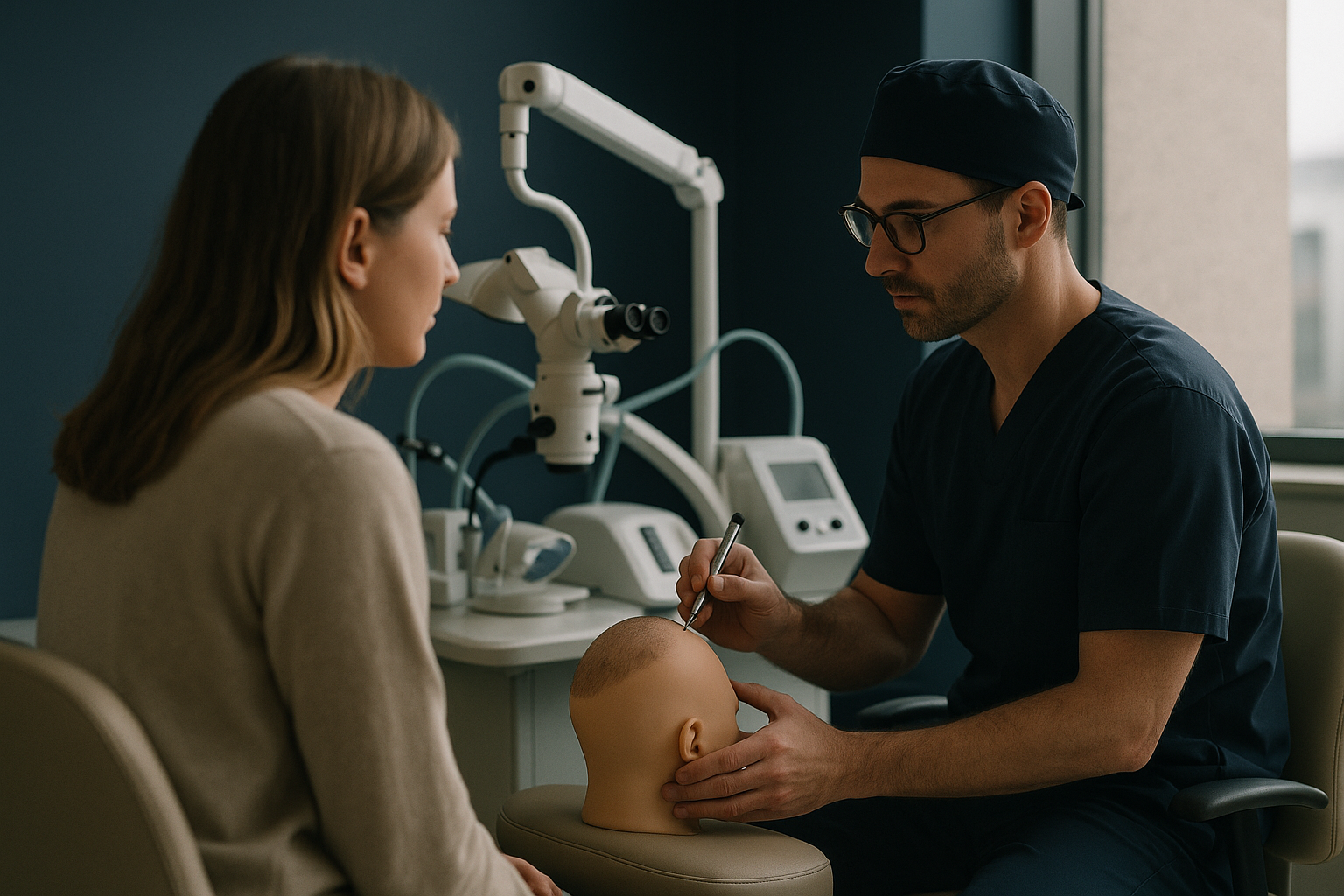
Follicular Unit Extraction (FUE) hair implants have emerged as a popular solution for those seeking to restore hair loss with minimal scarring and natural results. This guide provides a thorough understanding of the procedure, costs, and essential considerations for international patients.
What is FUE Hair Transplant?
FUE hair transplant is a minimally invasive procedure where individual hair follicles are extracted from the donor area, usually the back of the scalp, and implanted into the balding regions. This method is favoured for its natural-looking results and minimal scarring. The precision of FUE makes it ideal for patients seeking to fill in small balding areas or reconstruct their hairline with a natural appearance.
The process involves the use of a small punch tool to remove follicles, which are then meticulously placed into tiny incisions in the recipient area. Unlike traditional strip harvesting methods, FUE does not require sutures, leading to a quicker recovery and less visible scars. The absence of a linear scar makes FUE particularly appealing for individuals who prefer shorter hairstyles.
Patients can expect a natural hairline with results appearing gradually over several months. The procedure is performed under local anaesthesia, making it relatively painless and allowing patients to return to normal activities within a few days. However, it is crucial for patients to follow post-operative care instructions diligently to maximize the success and longevity of the transplanted hair. Following a proper regimen can enhance the quality of the newly implanted hair and minimize potential complications.
How Much Does FUE Hair Transplant Cost?
The cost of an FUE hair transplant can vary significantly depending on the country, clinic, and the number of grafts required. On average, prices range from $3,000 to $15,000 globally. In the United States, the cost typically falls between $4,000 and $10,000, while in countries like Turkey or India, it may be as low as $2,000 to $4,000. Factors influencing cost include the surgeon’s expertise, clinic location, and the complexity of the case.
It’s essential to consider the total package, which may include initial consultation, surgery, post-operative care, and follow-up appointments. Some clinics offer financing options or packages that include travel and accommodation for international patients. These packages can provide significant savings, but it is important to ensure they cover all necessary aspects of the procedure.
Patients should ensure they receive a detailed breakdown of costs during the consultation to avoid unexpected expenses. Comparing prices and services across different clinics can help in making an informed decision. It is also advisable to research the clinic’s reputation and the surgeon’s qualifications to ensure that you are receiving the best possible care for your investment. Never compromise on quality for cost, as this can affect your health and the results of the transplant.
Manual FUE vs. Neograft: Which is Better?
Choosing between manual FUE and Neograft, an automated FUE method, depends on individual needs and surgeon recommendations. Manual FUE allows for more precise extraction and implantation, often favoured by experienced surgeons for challenging cases. This technique enables the surgeon to tailor the extraction process according to the unique characteristics of the patient’s scalp and hair.
Neograft, however, automates the extraction process, potentially reducing the time required for the procedure. It is considered less labour-intensive and may lead to quicker recovery times due to uniform follicle handling. Neograft can be particularly beneficial for patients who require a large number of grafts, as it can significantly shorten the duration of the surgery.
Both techniques aim to produce natural results, but the choice may depend on the surgeon’s expertise and the specific needs of the patient. A thorough consultation can help determine the most suitable method. Discussing the potential benefits and limitations of each approach with your surgeon will ensure you make an informed decision that aligns with your aesthetic goals and medical needs. Ultimately, the right choice will depend on your unique situation and expectations.
Safety and Accreditation Guidance
Ensuring safety during an FUE hair transplant is paramount. Patients should verify that the clinic adheres to international safety standards and is accredited by relevant health authorities. Accreditation from recognized organizations such as the International Society of Hair Restoration Surgery (ISHRS) can be a good indicator of the clinic’s commitment to excellence.
Accreditation ensures that the clinic maintains high hygiene standards, uses sterilised equipment, and employs trained professionals. Researching the clinic’s reputation and previous patient reviews can provide insights into their safety practices. Additionally, look for testimonials and before-and-after photos to assess the quality of the outcomes achieved by the clinic.
It’s advisable to discuss any medical conditions, allergies, or medications with the surgeon to tailor the procedure to your specific needs, minimising potential risks. This open communication allows the medical team to prepare appropriately, ensuring your safety and comfort throughout the procedure. Always prioritize clinics that emphasize patient safety and transparent practices. Prioritizing safety not only enhances the procedure’s success but also ensures peace of mind.
Realistic Timelines for FUE Hair Implants
The timeline for an FUE hair transplant involves several stages, starting from the initial consultation to the final results, usually observed after 12 to 18 months. Initial healing occurs within a week, while new hair growth begins around the third month. It is important for patients to have realistic expectations about the gradual nature of hair regrowth.
Patients are typically advised to follow specific post-operative care instructions, such as avoiding strenuous activities and direct sun exposure, to ensure optimal healing and results. Compliance with these guidelines can significantly affect the success of the transplant and the overall satisfaction with the outcome.
Regular follow-up appointments are crucial to monitor progress and address any concerns. Patience is key, as full results can take over a year to materialise. These appointments allow the surgeon to assess the growth and health of the transplanted hair, making any necessary adjustments to the treatment plan. Remember, each patient’s response to the procedure can vary, so personalized care is essential. An understanding of the timeline helps manage expectations and supports a successful outcome.
Practical Steps for International Patients
International patients considering FUE hair implants should start by researching clinics and surgeons with a strong track record in treating international clients. Language support, travel assistance, and accommodation arrangements are critical factors to consider. A clinic experienced in handling international patients will often have dedicated services to assist with these logistics.
It’s beneficial to have a detailed consultation via video call before travelling, to discuss goals, expectations, and any health concerns. This helps in planning the procedure and understanding the logistics involved. During this consultation, ensure that you discuss the procedure’s details, recovery timeline, and any potential complications.
Patients should also ensure their travel plans accommodate the necessary recovery period before returning home, allowing for any required follow-up care and ensuring a stress-free experience. Consider the time needed to recuperate and attend initial post-operative appointments before resuming normal activities. Proper planning is crucial for a smooth and successful journey toward hair restoration. This foresight helps mitigate stress and ensures a focus on healing and recovery.
Conclusion
FUE hair implants offer a promising solution for those seeking to address hair loss with minimal invasiveness and natural results. By understanding the procedure, costs, and safety measures, international patients can make informed decisions and achieve satisfying outcomes. The key to success lies in thorough research, choosing the right clinic, and adhering to post-operative care instructions. With careful consideration and planning, FUE can significantly enhance both appearance and confidence. The journey to hair restoration is a comprehensive process that combines medical expertise with personal dedication.
Proven result
20 to 200 hair-transplant patients a month from Australia
Aesthetic surgery group
Frequently asked questions
How much does FUE hair transplant cost?
Costs range from $3,000 to $15,000 depending on location, clinic, and graft quantity. Always consider total package costs.
Do most hair transplant surgeons use manual FUE or Neograft?
Both methods are used; the choice depends on the surgeon’s expertise and patient needs. Manual FUE offers precision, while Neograft is automated.
What is FUE hair transplant?
FUE involves extracting hair follicles individually from a donor area and implanting them into balding areas, offering natural results.
How is safety ensured during FUE hair implants?
Ensure the clinic is accredited, maintains high hygiene standards, and employs trained professionals. Discuss health concerns with your surgeon.
Related guides

Turkey Hospitals vs Local Hospitals Compared
A lower procedure quote can get a patient’s attention. It should not make the decision on its own.…

Patient Experience That Drives Trust and Growth
A patient who has already uploaded medical records, compared providers, and arranged time away from work is not…

What Is a Medical Travel Facilitator and Why Use One?
A lower treatment quote can look compelling until you try to compare what it actually includes: surgeon fees,…