

A patient in Chicago searching for a cardiac procedure in Turkey is not simply filling out a form. They are weighing clinical quality, travel logistics, physician credentials, cost, safety, and the risk of making the wrong choice from thousands of miles away. International hospital lead generation must account for that decision process. It is not about producing the highest possible number of inquiries. It is about creating a dependable path from qualified interest to consultation, treatment planning, travel, and admission.
For hospital groups, clinics, and international patient departments, the commercial stakes are significant. A lead that is contacted too late, handled without clinical context, or sent an unclear quote can disappear to another provider within hours. Strong acquisition programs align marketing, sales operations, patient coordination, and technology around one measurable objective: helping the right patient confidently choose the right care provider.
Why International Hospital Lead Generation Is Different
Domestic healthcare marketing often focuses on proximity, insurance acceptance, local reputation, and appointment access. International patient acquisition operates on a different set of expectations. The patient may be comparing hospitals across several countries, paying out of pocket, traveling with family, and evaluating a treatment plan without having met the physician in person.
That creates a higher trust threshold. A polished campaign can generate interest, but it cannot compensate for vague treatment information, delayed responses, inconsistent pricing, or a call center agent who cannot answer the patient’s immediate questions. Marketing must accurately reflect the hospital’s clinical strengths, while the sales and coordination teams must make the next step feel organized and credible.
The best programs also recognize that not every inquiry is ready to travel. Some patients need education about the procedure. Others need medical record review, financing information, a caregiver plan, or reassurance about recovery and follow-up. Treating every lead as a quick sales opportunity usually lowers conversion rates and damages trust.
Build a Patient Acquisition Strategy Around Intent
High-intent international leads rarely begin with a generic search for “medical tourism.” They search for a specific procedure, diagnosis, surgeon specialty, or price comparison. Someone considering hair restoration has different questions, decision timelines, and clinical criteria than a patient seeking orthopedic surgery, bariatric care, oncology treatment, or IVF.
This is why effective international hospital lead generation begins with service-line strategy. Hospitals should identify the treatments where they have a genuine competitive advantage, such as recognized physician expertise, international accreditation, advanced technology, shorter wait times, strong clinical outcomes, or meaningful affordability. The offer must be specific enough for a patient to understand why that hospital is a better fit.
Content and paid search should then match the patient’s level of intent. Early-stage content may explain candidacy, recovery expectations, and questions to ask before treatment abroad. Mid-funnel pages should introduce the care team, facility standards, treatment process, and estimated pricing approach. High-intent campaigns should make it simple to request a case review, speak with an international patient coordinator, or submit medical records securely.
A broad campaign can create volume, but focused service-line campaigns usually produce more qualified conversations. The trade-off is that they require better clinical input, more detailed content, and disciplined reporting. For most hospitals, that investment is worth it because it improves both lead quality and sales efficiency.
Trust Signals Must Answer Real Patient Concerns
International patients are looking for proof, not promotional language. They want to know who will treat them, what standards the hospital follows, how the treatment plan is determined, and what happens if they need support after returning home.
Clear physician profiles, hospital accreditations, procedure-specific information, care pathways, and transparent explanations of what is included in a treatment package all reduce uncertainty. So do real patient stories when they are used responsibly and with appropriate consent. Avoid promises of guaranteed outcomes or overly simplified claims about complex procedures. Credibility is more persuasive than exaggeration in healthcare.
For U.S. patients considering treatment in Turkey, the comparison is especially practical. They may be balancing cost savings against concerns about quality and continuity of care. The hospital or facilitator that explains those issues directly, rather than avoiding them, earns a stronger position in the decision.
Speed to Lead Is a Revenue Issue
Once an international patient submits an inquiry, response time becomes a competitive advantage. A patient may submit requests to multiple providers in a single afternoon. If one hospital responds quickly with a knowledgeable, empathetic message while another waits until the next business day, the first hospital has already shaped the conversation.
Fast does not mean rushed. The initial response should confirm receipt, set clear expectations, and establish a human point of contact. When possible, it should reference the patient’s stated treatment need and explain what information is required for the next stage. A generic message that asks the patient to repeat everything they already submitted creates friction at the moment trust is most fragile.
Call center and telesales teams need healthcare-specific training. They should understand how to qualify intent without practicing medicine, communicate with sensitivity, capture essential case information, and move the patient toward a defined next action. Depending on the procedure, that action may be a physician review, video consultation, diagnostic record submission, or a detailed treatment proposal.
Time-zone coverage also matters. A hospital targeting North America cannot rely solely on office hours in its home market. This does not always require a large round-the-clock team, but it does require service-level standards, routing rules, automated confirmations, and a clear ownership model for every lead.
Connect Marketing Data to the Patient Journey
A lead form submission is only the first measurable event. Hospitals need visibility into what happens afterward: first contact, response time, medical records received, physician review completed, quotation sent, consultation scheduled, deposit paid, travel confirmed, and patient admitted.
Without this view, marketing teams may optimize campaigns for low-cost inquiries that never become viable cases. Sales teams may blame lead quality without seeing that follow-up gaps are the real issue. Leadership may see advertising spend but have no reliable connection between spend and actual revenue.
A healthcare-focused CRM should organize leads by treatment interest, country, language, urgency, source, and journey stage. It should also preserve notes and communications so patients do not need to retell their story every time they speak with a new team member. The right system supports better follow-up while giving management a realistic picture of pipeline value.
At DGS Healthcare, this connection between acquisition, sales support, and healthcare technology is central to sustainable growth. Digital campaigns can attract demand, but conversion improves when every operational handoff is designed around the patient’s next question.
Measure Quality, Not Just Volume
The most useful performance indicators go beyond clicks, impressions, and cost per lead. Hospitals should monitor contact rate, qualified lead rate, medical record submission rate, consultation rate, treatment-plan acceptance, deposit rate, admission rate, and revenue by source and service line.
There is no single ideal benchmark because procedure complexity, patient geography, price point, and clinical eligibility all affect conversion. An elective dental or aesthetic case may move quickly, while a complex surgical case can involve weeks of record review and family decision-making. The goal is not to force every patient through the same funnel. It is to define the appropriate journey for each category and identify where viable patients are dropping out.
Lead source analysis is equally important. A lower-volume channel that produces admitted patients can be more valuable than a high-volume campaign filled with unreachable or clinically unsuitable inquiries. This is why acquisition decisions should be based on contribution to revenue and capacity, not vanity metrics.
Make the Treatment Proposal a Conversion Asset
For many international patients, the treatment proposal is the moment when interest becomes a decision. It should be clear, complete, and personalized. Patients need to understand the recommended procedure, estimated cost, inclusions and exclusions, expected length of stay, required pre-treatment steps, and who will coordinate their care.
A quote sent without context can feel transactional and invite a pure price comparison. A well-prepared proposal helps the patient evaluate value. It positions the hospital’s clinical expertise, care standards, and coordination support alongside the financial details.
Consistency is essential. If the website advertises one experience, the coordinator describes another, and the final quote introduces unexpected costs, conversion will suffer. Marketing claims, sales conversations, and patient documentation must reflect the same operating reality.
Treat Follow-Up as Care Coordination
Many leads do not convert on the first call, especially when travel, financing, or family input is involved. The answer is not indiscriminate pressure. It is timely, relevant follow-up that helps the patient make progress.
A patient waiting to send imaging may need a secure reminder and instructions. A patient comparing options may benefit from a physician profile or a clearer explanation of recovery planning. A patient who has received a quote may need help understanding travel dates, hotel arrangements, or post-treatment support. Each touchpoint should reduce a specific barrier.
That approach protects both patient trust and commercial performance. It also creates a more accurate distinction between patients who need more information and those who are no longer active. Automated workflows can support this process, but they should never replace thoughtful human communication in sensitive clinical decisions.
The hospitals that win international demand are not necessarily those with the loudest advertising. They are the ones that make patients feel informed, respected, and well-guided from the first search to the day they return home. Build your lead generation program around that standard, and growth becomes the result of a better patient experience.
Related guides
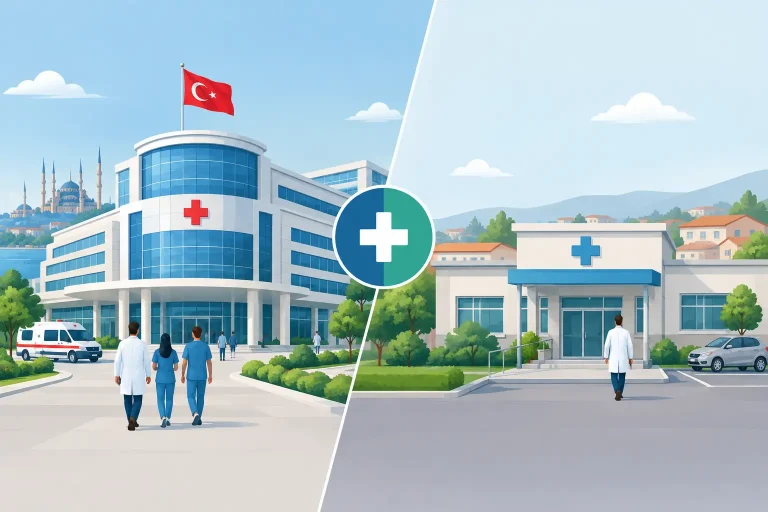
Turkey Hospitals vs Local Hospitals Compared
A lower procedure quote can get a patient’s attention. It should not make the decision on its own.…

Patient Experience That Drives Trust and Growth
A patient who has already uploaded medical records, compared providers, and arranged time away from work is not…

What Is a Medical Travel Facilitator and Why Use One?
A lower treatment quote can look compelling until you try to compare what it actually includes: surgeon fees,…