

Can a later-life procedure really restore a confident look and lasting results? Many men in their 50s and beyond find that a thoughtful hair restoration plan changes more than their scalp.
The modern hair transplant procedure is safer and more predictable than ever. A skilled surgeon assesses the donor area, evaluates graft quality, and places follicles to rebuild a natural hairline and improve scalp density.
Patients report a boost in self-image and often feel more in control of future hair loss when a clear plan is in place. For many, the outcome fits personal goals and daily life with minimal downtime.
Age can be a factor that improves predictability. Older candidates usually have stable patterns of loss, which helps surgeons plan placement and set realistic expectations.
Key Takeaways
- Hair restoration surgery is a viable option for men over 50 seeking to address balding areas.
- Modern transplantation techniques allow precise graft placement for natural-looking results.
- Evaluating the donor area and follicle quality is critical for a good outcome.
- Older patients often have steadier loss patterns, making results more predictable.
- The procedure can improve confidence and long-term appearance with a tailored plan.
Understanding the Feasibility of an Older Man Hair Transplant
Evaluating candidacy begins with two clear factors: the stability of loss and the quality of the donor area. A thorough exam helps set realistic goals and timelines for a successful procedure.
Age as a Factor in Surgical Success
Dr. Asil I. Peretz notes that age alone rarely rules someone out. Men in their 50s and beyond often show steady patterns of loss, which helps surgeons plan graft placement and predict long-term outcomes.
Why Men Seek Restoration Later in Life
Many patients pursue restoration after decades of gradual change. They want natural density, a restored hairline, and a look that fits their life and goals.
- Donor evaluation matters most: quality follicles drive success.
- Older candidates usually have more realistic expectations and higher satisfaction rates.
- Choosing experienced surgeons reduces risk of scarring and improves final density.
Assessing Your Overall Health and Medical History
A clear medical review sets the stage for safe surgery. Before a hair transplant, patients must list all medicines, especially blood thinners such as warfarin or aspirin. These drugs affect clotting and require special planning.
Chronic conditions do not automatically rule out a procedure. Well-managed diabetes or heart disease can still allow successful hair restoration. The surgeon and care team evaluate risks and tailor timing to the patient’s life and goals.
The consultation includes a close exam of the scalp and donor area. Surgeons check scalp health, donor density, and follicle quality to predict realistic results. This step helps avoid surprises during transplantation.
- Disclose all medications and supplements.
- Discuss recent surgeries and medical history.
- Agree on a plan that balances safety and desired outcomes.
Open dialogue about risks and expectations ensures the best path forward for each patient considering hair restoration surgery.
The Role of Donor Area Availability
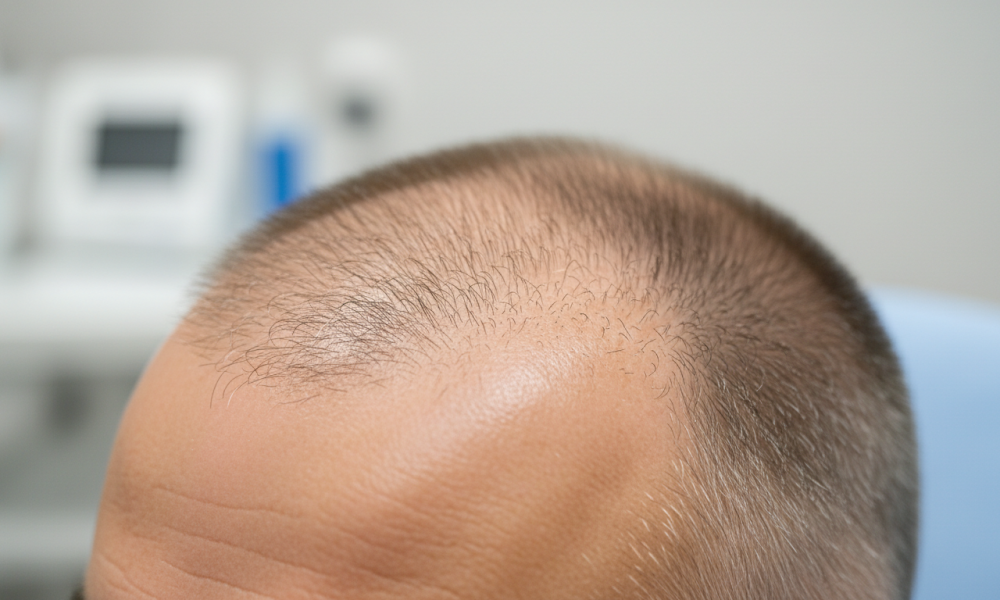
The amount and quality of available donor follicles set the limits for any restoration plan. Surgeons start by counting usable grafts and testing scalp elasticity. This determines how much coverage is realistic for each patient.
Evaluating Scalp Elasticity and Follicle Quality
Good scalp elasticity allows safer extraction of follicles during the procedure. A tight or scarred scalp reduces yield and may change the chosen technique.
Follicle quality matters as much as quantity. Thick, strong follicles offer better density and longer-lasting results. Thin or miniaturized follicles can limit success in areas with visible loss.
- Graft limits guide priorities: surgeons place follicles where they improve appearance most.
- When scalp donor supply is low, body hair may supplement grafts under modern techniques.
- Early donor assessment helps set clear expectations for hair transplant surgery results.
| Donor Factor | What Surgeon Checks | Impact on Results |
|---|---|---|
| Scalp elasticity | Pinch test, scar assessment | Higher elasticity = more extracted grafts |
| Follicle quality | Thickness, growth angle, miniaturization | Better quality = denser coverage |
| Donor supply | Graft count estimate | Limits total coverage and session planning |
Choosing the Right Surgical Technique
Selecting the right surgical approach shapes both immediate recovery and long-term results. The decision guides scar profile, graft yield, and how future loss will be managed. Surgeons match technique to donor quality, pattern of loss, and patient goals.
FUE Benefits for Minimal Scarring
Follicular Unit Extraction (FUE) removes individual follicles. This yields minimal scarring and faster visible healing. FUE suits patients who prefer short hair or who want reduced donor-site marks.
FUT Considerations for Advanced Baldness
Follicular Unit Transplantation (FUT) harvests a strip of scalp and can provide more grafts in one session. It is often recommended for more extensive loss when a larger graft count is needed.
Robotic Advancements in Modern Surgery
Robotic systems improved extraction precision. The ARTAS robotic FUE platform has been in clinical use since 2014. Many surgeons find it increases consistency when harvesting follicles.
- Choice depends on donor supply, scalp condition, and long-term plan.
- Surgeons aim for natural placement to optimize results across the scalp.
- Consider future loss when selecting technique to preserve donor options.
| Technique | How It Works | Best For |
|---|---|---|
| FUE | Individual follicle extraction | Minimal scarring, shorter healing |
| FUT | Strip harvest from donor zone | Large graft needs, advanced loss |
| Robotic FUE (ARTAS) | Computer-guided follicle selection and extraction | Precision harvesting, consistent graft quality |
Setting Realistic Expectations for Your Results
Clear communication about likely outcomes is the foundation of any successful restoration plan. The surgeon will explain what the procedure can achieve given the pattern of loss and donor quality.
Most patients seek a look that suits their current life, not a full restoration to youth. A focus on density and targeted coverage creates a natural, age-appropriate appearance.
The team will discuss how transplantation redistributes existing follicles. It is not a cure for ongoing loss, and future thinning can change long-term results.
“Success is measured by whether the result meets the patient’s goals and feels natural in daily life.”
Open dialogue is essential. Questions about the scalp, donor limits, and expected timeline help align expectations with likely outcomes.
| Expectation Area | What to Know | Practical Outcome |
|---|---|---|
| Density | Limited by donor supply | Improved coverage, not full thickness |
| Hairline | Designed for age and balance | Natural appearance that fits facial features |
| Future loss | May continue over time | Maintenance or staged transplants may be needed |
- Be realistic: surgical plans are tailored, not guaranteed perfection.
- Stay informed: good communication increases satisfaction with results.
Navigating the Recovery and Growth Timeline
Recovery follows predictable stages. In the first few days after surgery, patients commonly see mild swelling or redness. Following simple care instructions speeds healing and reduces discomfort.
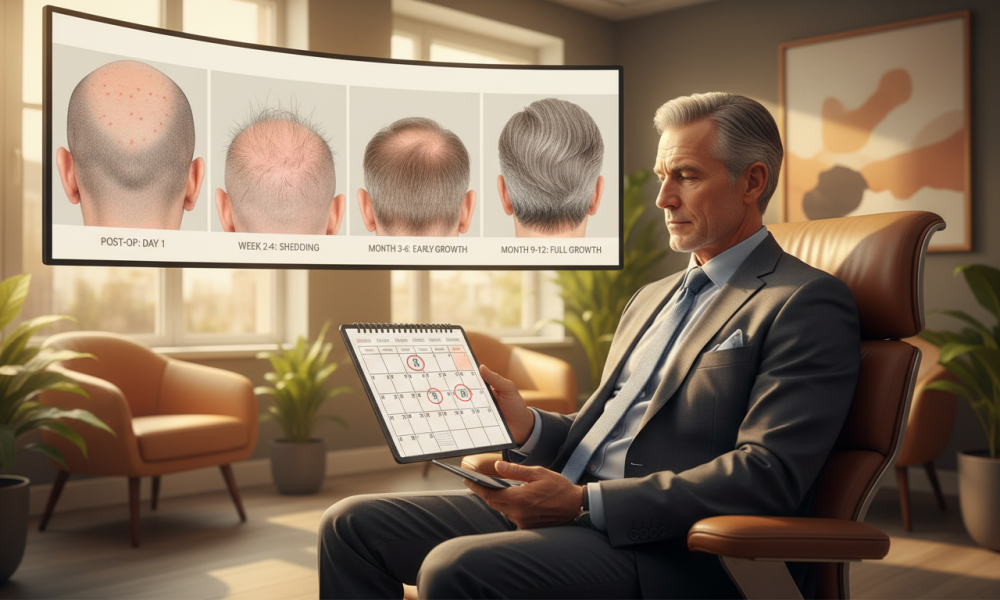
New growth typically starts within 3 to 6 months. Full results usually appear near the one-year mark. During that period, some shedding is normal; it is part of the transplantation cycle.
Patience matters. Avoid heavy lifting and strenuous activity in the early weeks. These steps protect grafts and support steady regrowth.
- Early days: mild redness and simple dressings.
- 3–6 months: initial regrowth becomes visible.
- ~12 months: final results and improved density.
Regular follow-up visits let the surgeon track progress and address any loss concerns. With careful post-op care, men can maximize the success of their hair restoration and feel more confident over time.
Long-Term Maintenance and Future Hair Loss
A durable outcome depends on more than surgery — it requires ongoing attention and medical follow-up.
Medication and routine care are the cornerstones of long-term success. Many surgeons recommend topical Minoxidil and oral Finasteride to slow future loss and support existing follicles.
Consistency matters. Daily adherence to prescribed medications helps protect non-transplanted areas and preserves overall results.
Follow-up protocols
Scheduled visits let the team monitor progress and adjust treatment. Early spotting of new thinning allows timely intervention.
- Yearly exams assess stability and plan any touch-ups.
- Photo documentation tracks change over time.
- Medication reviews check effectiveness and tolerability.
Patients should view a procedure as part of a broader restoration strategy. Ongoing communication with the surgeon and adherence to care protocols protect the investment and help men enjoy longer-lasting, natural-looking results.
The Psychological Impact of Hair Restoration
Regaining a fuller appearance often brings more than cosmetic change—it can shift how a person feels each day.
Many patients report a notable jump in confidence after addressing visible hair loss. Feeling more in control of one’s look can improve mood, social ease, and workplace presence.
Choosing a hair transplant or related treatment often becomes a personal step toward self-expression. The decision can reduce anxiety about appearance and restore pride in daily grooming.
Stigma around restoration has faded. More men of varied age groups now view these procedures as valid options for well-being rather than purely cosmetic choices.
“The emotional benefits of a successful procedure are often as meaningful as the visual change.”
| Benefit | Typical Timeline | Practical Effect |
|---|---|---|
| Confidence boost | Weeks to months | More social engagement, improved mood |
| Sense of control | Decision time to recovery | Less daily stress about loss |
| Professional impact | Months after growth appears | Renewed presence in job settings |
Understanding these emotional effects explains why many seek hair restoration. For more on personal journeys and expectations, read this piece on restoration journeys.
Conclusion
A well-planned surgical approach can deliver natural, lasting improvements even later in life.
For many older patients, a thoughtful path restores appearance and confidence with reasonable downtime. Working with a qualified surgeon ensures placement fits facial balance and donor limits.
Understanding donor availability and setting realistic expectations matters most. The chosen surgery should match scalp supply and the patient’s goals to create a natural outcome.
Long-term care—medication, follow-up visits, and lifestyle choices—protects results over time. Taking that first step can empower a man to regain control of his look and daily life.
FAQ
Is age alone a disqualifying factor for a hair transplant?
No. Chronological age by itself rarely disqualifies a candidate. Surgeons evaluate overall health, scalp condition, donor availability, and realistic goals. Older adults in good health with stable expectations often achieve safe, successful outcomes.
How does general health influence candidacy for surgery?
Health matters. Cardiac conditions, uncontrolled diabetes, bleeding disorders, and certain medications can increase surgical risk or slow healing. A thorough medical history and, when needed, clearance from a primary physician are standard before proceeding.
What role does the donor area play in determining possible results?
The density and quality of follicles in the donor zone determine how many grafts can be harvested without visible thinning there. Scalp laxity, prior scarring, and prior procedures also affect donor usability and final density.
Can older patients expect the same density as younger patients?
Not always. Older scalps may have thinner donor reserves and finer hair shafts. Surgeons tailor plans to maximize natural coverage, often combining strategic placement with conservative density to preserve donor supply for the future.
What is the difference between FUE and FUT for older patients?
Follicular Unit Extraction (FUE) removes individual follicles and typically leaves minimal dot scars, favored by those who prefer shorter hair. Follicular Unit Transplantation (FUT) harvests a strip and can yield higher graft counts in one session but leaves a linear scar. Choice depends on donor needs, scarring preference, and scalp laxity.
Are robotic systems worth considering for surgery?
Robotic-assisted systems can improve precision in graft harvesting and placement for certain cases. They may reduce human fatigue and enhance consistency, but outcomes depend on surgeon skill and case selection rather than technology alone.
How long does it take to see visible improvement after surgery?
Initial shedding of transplanted hair commonly occurs within the first few months. New growth usually begins around 3–4 months, with noticeable improvement by 6–9 months and final results often at 12–18 months.
What recovery issues are older patients likely to face?
Recovery varies. Older patients may experience slower healing, increased bruising, or longer swelling compared with younger individuals. Following post-op instructions, proper nutrition, and avoiding smoking help speed recovery.
Will transplanted hair continue to fall out with future hair loss?
Transplanted follicles from the permanent donor zone are generally resistant to androgenetic loss. However, nontransplanted native hair can continue to thin. Ongoing assessment and, if appropriate, medical therapy help protect existing hair and long-term appearance.
What medications are commonly recommended after transplantation?
Surgeons may prescribe short courses of antibiotics and pain control initially. Long-term, finasteride and topical minoxidil are often recommended to slow further thinning and support transplant results. Medication choices are individualized and consider contraindications.
How many grafts are typically needed for advanced baldness in later life?
Graft requirements depend on the size of the balding area, donor density, and desired coverage. Advanced baldness can require multiple sessions and realistic planning to balance coverage with available donor follicles. A consultation provides a personalized estimate.
Can scarring be minimized during surgery?
Yes. FUE tends to produce small, less noticeable dot scars while careful FUT closure techniques can minimize linear scarring. Good surgical technique and proper aftercare reduce the risk of visible scarring.
What psychological benefits can patients expect after restoration?
Many patients report improved self-esteem, confidence, and social comfort after successful restoration. Counseling or support groups can help set realistic expectations and support emotional adjustment during recovery.
How should patients select a surgeon for a transplant later in life?
Choose a board-certified, experienced hair restoration surgeon with a proven track record treating older adults. Review before-and-after photos, ask about complication rates, and ensure the clinic discusses medical evaluation, follow-up care, and long-term planning.
Are there non-surgical alternatives or complementary options?
Yes. Medications like finasteride and topical minoxidil, low-level laser therapy, platelet-rich plasma (PRP) injections, and cosmetic approaches (scarves, concealers) can delay progression, improve density perception, or complement surgical results.
What long-term maintenance is required after a transplant?
Long-term care may include continued medical therapy, periodic clinic check-ins, and sun and scalp protection. Planning for future hair loss and preserving donor reserves is part of an ongoing maintenance strategy.
Related guides
How Long Does a Dental Implant Procedure Take?
Curious if the journey to a restored smile will fit your life? Many patients wonder about the full…

Best Hair Transplant in Istanbul,Turkey
Could one clinic end years of worry and restore your confidence with a clear, tailored plan?Dr. Serkan Aygin…

What is Zygomatic Dental Implant?
Could anchoring into the cheekbone restore a confident smile when the upper jaw can’t?Zygomatic dental implants offer an…