
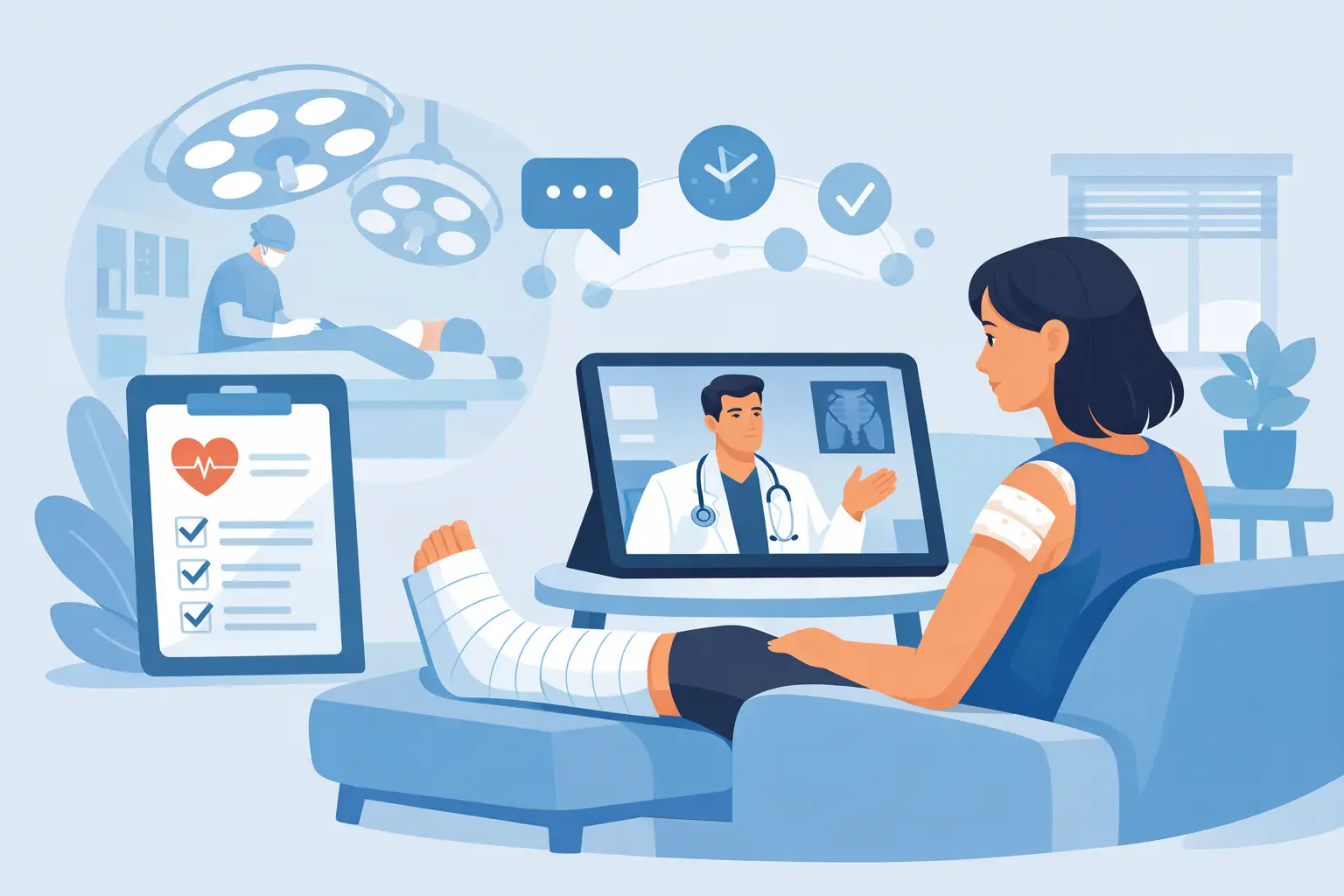
The flight home is often the moment international patients start asking the most practical questions: Is this swelling normal? When can I return to work? Do I need to change the dressing? A well-planned telemedicine follow up after surgery gives patients a direct route back to their surgical team without requiring another international trip. It also helps hospitals maintain continuity of care long after a patient leaves the facility.
For patients traveling to Turkey or another treatment destination, virtual follow-up is not simply a convenience feature. It is part of a safe, coordinated recovery plan. The right model combines clear discharge instructions, scheduled video consultations, access to clinical guidance, and a defined process for urgent concerns that cannot be assessed remotely.
Why virtual follow-up matters after international treatment
Surgery does not end when a patient is discharged. Recovery continues at home, where patients must manage medications, activity restrictions, wound care, nutrition, and follow-up testing. This period can feel more complex for medical travelers, particularly when they are far from the surgeon who performed the procedure.
A telemedicine appointment creates a structured opportunity to assess recovery, answer questions, and identify issues early. Depending on the procedure, the care team may review incision appearance through secure video, discuss pain levels and mobility, confirm medication use, or evaluate symptoms that may require local in-person care.
For hospitals and clinics, this level of continuity strengthens international patient trust. It demonstrates that the provider is accountable for the patient experience beyond arrival, treatment, and discharge. For medical tourism programs, that can support stronger patient satisfaction, better referrals, and a more credible global reputation.
What a telemedicine follow up after surgery can cover
A virtual appointment is most effective when it has a clear clinical purpose. The surgical team should explain what will be reviewed, who will attend, and what the patient should prepare before the call.
In many cases, the first consultation focuses on how the patient is feeling after travel, whether pain and swelling are within the expected range, and whether prescribed medications are being taken correctly. The clinician may ask the patient to show the incision or treatment area in good lighting. They may also review photos sent through an approved secure process if visual tracking is needed between appointments.
Later follow-ups often shift toward function and longer-term healing. After orthopedic surgery, the discussion may include range of motion, physical therapy progress, and safe activity levels. Following bariatric surgery, the team may monitor nutrition, hydration, weight changes, and vitamin supplementation. After cosmetic procedures, follow-up may focus on swelling, scar care, garment use, and whether healing is progressing as expected.
Telemedicine does have limits. A screen cannot replace a hands-on examination, imaging, laboratory testing, or emergency treatment. If a clinician suspects infection, a blood clot, wound separation, uncontrolled bleeding, or another serious complication, the patient should be directed to appropriate local care without delay.
A strong follow-up plan starts before discharge
The best virtual care experience is arranged before the patient leaves the hospital or clinic. Patients should not have to search for a contact person while managing pain, jet lag, or uncertainty at home.
Before discharge, the care team should provide a written plan that includes expected recovery milestones, medication instructions, activity restrictions, and the timing of scheduled virtual appointments. It should also state who to contact outside appointment hours and how the provider will coordinate with a local physician if in-person evaluation becomes necessary.
Patients should leave with copies of essential medical records, including the procedure summary, discharge notes, imaging or test results when relevant, medication list, and the surgeon’s recommendations for ongoing care. This documentation can help a local doctor understand exactly what treatment was performed if the patient needs support after returning to the United States.
For international providers, language access matters as much as scheduling. A patient should be able to explain symptoms clearly and understand clinical instructions without ambiguity. Coordinators, interpreters, and international patient departments play a meaningful role in making that communication reliable.
Preparing for a virtual surgical follow-up
Patients can make the consultation more useful by treating it like a clinical visit rather than a casual video call. Choose a private, well-lit room with dependable internet access. Keep medications, discharge paperwork, recent temperature readings, and a list of questions nearby.
If the provider needs to see an incision, make sure the camera can focus clearly and avoid taking risks to position the device. A family member or caregiver can assist when mobility is limited. Patients should be honest about symptoms, including concerns that may feel minor. A change in pain, drainage, sleep, appetite, or movement can be clinically relevant in context.
It is also reasonable to ask direct questions: What symptoms are expected at this stage? What would make you concerned? When can I shower, drive, exercise, travel, or return to work? Do I need an in-person check with a local provider? Clear answers reduce unnecessary anxiety while ensuring genuine warning signs are not ignored.
Know when virtual care is not enough
Telemedicine is valuable for monitoring, education, and access to the surgical team, but it is not an emergency service. Patients should follow the emergency guidance given by their provider and seek urgent local care when symptoms suggest a potentially serious complication.
Warning signs can vary by procedure, but urgent assessment may be needed for chest pain, shortness of breath, fainting, sudden confusion, heavy bleeding, a rapidly opening wound, severe or worsening pain, high fever, or one-sided leg swelling. Patients should not wait for the next video appointment if symptoms are severe, sudden, or escalating.
The safest approach is a shared-care model. The overseas surgical team retains responsibility for procedure-specific guidance, while a local clinician or emergency department can perform the physical examination and tests that remote care cannot provide. This is especially important for patients with complex medical histories or procedures that require ongoing laboratory monitoring.
What high-quality providers do differently
Not every virtual follow-up program offers the same level of protection. A simple check-in message is not equivalent to a clinically designed continuity-of-care pathway. Patients should look for providers that set expectations before treatment and maintain responsive communication after discharge.
High-quality programs use scheduled follow-up milestones rather than leaving patients to initiate every contact. They have a secure method for sharing medical information, qualified clinical staff available to escalate concerns, and clear protocols for coordination with care teams in the patient’s home country. They also document consultations so the recovery record remains complete.
For hospital groups and clinics serving international patients, follow-up quality is a commercial and clinical differentiator. Patients evaluate the full journey, not only the operation itself. A well-run remote care pathway can reduce uncertainty, protect patient confidence, and help international departments convert a successful treatment episode into lasting trust.
Technology alone does not create that outcome. The operational details matter: appointment reminders that account for time zones, fast routing of questions to the correct clinician, multilingual communication, CRM workflows that do not lose post-treatment cases, and escalation standards that prioritize safety over convenience. These are the systems that turn telemedicine from an added feature into a reliable extension of care.
Making recovery feel connected, not distant
A telemedicine follow up after surgery works best when patients know exactly what happens next and who remains responsible for each part of their care. Before choosing treatment abroad, ask how post-operative consultations are scheduled, how concerns are escalated, and what support is available after you return home.
DGS Healthcare helps patients and provider partners approach the international treatment journey as a connected care experience, with clear communication before travel and practical support through recovery. The right follow-up plan cannot remove every uncertainty from healing, but it can ensure patients are not left to manage those uncertainties alone.
Related guides

Patient Experience That Drives Trust and Growth
A patient who has already uploaded medical records, compared providers, and arranged time away from work is not…

What Is a Medical Travel Facilitator and Why Use One?
A lower treatment quote can look compelling until you try to compare what it actually includes: surgeon fees,…
What Hospital Accreditation Reviews Really Tell You
A hospital can have polished facilities, prominent surgeons, and hundreds of five-star ratings, yet those signals do not…