
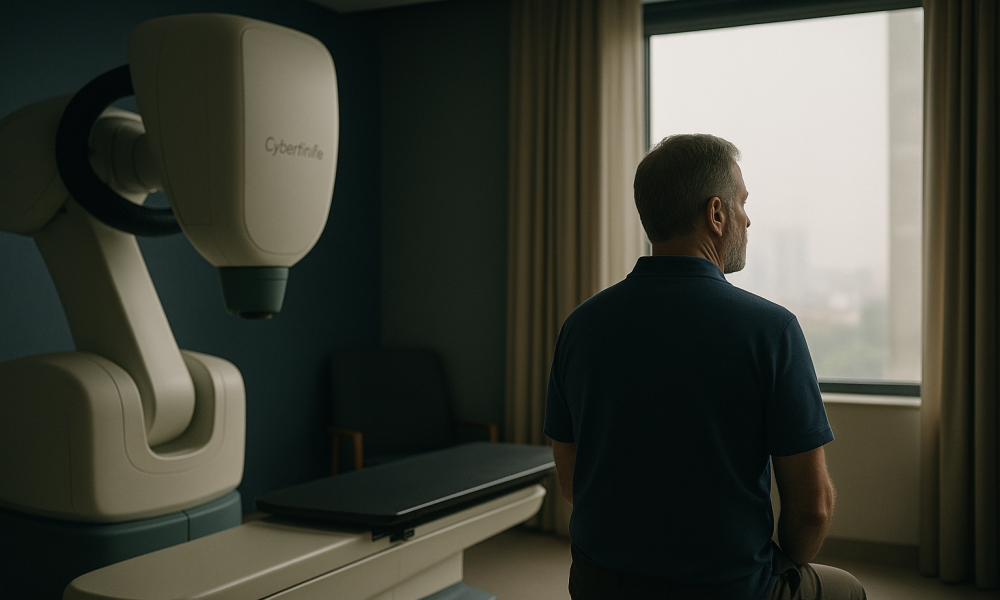
What CyberKnife Treatment is and who it is for
The CyberKnife System is a non-invasive, robotic radiosurgery system used to treat cancerous and non-cancerous tumours, as well as other medical conditions. Unlike traditional surgery, CyberKnife does not require any incisions. Instead, it delivers highly precise beams of radiation to the target area from multiple angles. This precision allows for higher doses of radiation to be used without damaging surrounding healthy tissue. The system is particularly effective for treating tumours located in hard-to-reach areas of the body, as well as for patients who cannot undergo traditional surgery due to their medical condition or the location of the tumour.
CyberKnife is used for a variety of conditions, including brain tumours, spinal tumours, prostate cancer, lung cancer, liver cancer, and some cases of pancreatic cancer. It is also used for treating trigeminal neuralgia and other functional disorders. The system’s advanced imaging capabilities enable real-time tracking of tumour movement, which is crucial for areas of the body that are subject to motion, such as the lungs or prostate.
In Turkey, CyberKnife treatment is becoming increasingly popular due to the availability of state-of-the-art medical technology and highly skilled healthcare professionals. The procedure is typically performed on an outpatient basis, meaning patients can return to their accommodation the same day. This makes it an attractive option for international patients, including those from Canada, who are looking for effective cancer treatment solutions.
While CyberKnife is a powerful tool in the fight against cancer, it is important for patients to understand that it is not a cure-all. Each case is unique, and the treatment plan must be carefully tailored to the individual’s specific medical condition. Outcomes can vary based on factors such as the type and stage of the tumour, as well as the patient’s overall health.
Are you a good candidate?
Determining whether you are a good candidate for CyberKnife treatment involves several considerations. The technology is versatile, but not every patient will be suitable for this type of treatment. Here are some key criteria to consider when evaluating your candidacy for CyberKnife:
- Type of Tumour: CyberKnife is particularly effective for small to medium-sized tumours that are difficult to access surgically or located in sensitive areas. Commonly treated conditions include brain tumours, prostate cancer, and lung cancer.
- Stage of Cancer: Early-stage cancers are typically more amenable to CyberKnife treatment. However, it can also be used in conjunction with other therapies for advanced stages, depending on the specific case.
- Overall Health: Candidates should be in relatively good health to tolerate the procedure. Those with severe underlying health issues may need to explore alternative treatments.
- Previous Treatments: Patients who have undergone previous radiation therapy may still be candidates for CyberKnife, but this will depend on the cumulative dose of radiation received.
- Medical History: A detailed medical history will be reviewed to ensure that CyberKnife is an appropriate option. This includes any previous surgeries and current medications.
- Tumour Location: CyberKnife is ideal for tumours in locations that move with breathing, such as the lungs and liver, due to its real-time tracking capabilities.
- Patient Preference: Some patients prefer CyberKnife due to its non-invasive nature and shorter recovery times compared to traditional surgery.
It is crucial for patients to consult with a qualified medical professional to discuss their specific case and explore all available treatment options. A comprehensive evaluation will help ensure that CyberKnife is the most suitable choice based on your individual medical needs and treatment goals.
The procedure, step by step
CyberKnife is a non-invasive, robotic radiosurgery system used to treat various types of cancer and other conditions. It offers a precise, high-dose radiation treatment without the need for incisions. Here’s a step-by-step guide to what patients can expect during the CyberKnife procedure in Turkey:
- Initial Consultation and Planning: Before the treatment, patients undergo a detailed consultation with a radiation oncologist. This includes a review of medical history, current health status, and imaging studies such as CT, MRI, or PET scans. During this stage, the medical team creates a customised treatment plan tailored to the patient’s specific condition.
- Preparation for Treatment: On the day of the procedure, patients are asked to wear comfortable clothing. They may be given a mild sedative to help relax, although general anaesthesia is not required. Immobilisation devices such as masks or body moulds may be used to ensure the patient remains still during treatment.
- Imaging and Setup: Before the actual radiation delivery, additional imaging is performed to verify the precise location of the tumour. The CyberKnife system uses these images to align the patient with sub-millimetre accuracy, ensuring the radiation targets only the intended area.
- Radiation Delivery: The CyberKnife uses a robotic arm to deliver high-dose radiation beams from multiple angles. This process typically lasts between 30 to 90 minutes, depending on the complexity of the treatment plan. The robot’s flexibility allows it to track the tumour’s movements in real-time, adjusting the beam’s position accordingly.
- Post-Procedure Monitoring: After the session, patients are monitored for a short period to ensure there are no immediate side effects. Most patients can return to their normal activities soon after the procedure, with minimal downtime.
CyberKnife treatments are usually completed in one to five sessions, spaced over several days, depending on the treatment plan. The non-invasive nature of the procedure means there is no recovery time needed compared to traditional surgery, making it an attractive option for many patients.
Recovery timeline
Recovery from CyberKnife treatment is generally swift due to its non-invasive nature. However, patients may experience some side effects, and it is important to follow the care instructions provided by the medical team. Below is a typical recovery timeline:
| Period | What to expect | Care notes |
|---|---|---|
| Day 1 | Most patients feel well enough to resume regular activities. Mild fatigue or nausea might occur, depending on the treatment area. | Rest as needed. Maintain hydration and follow dietary recommendations if nausea is present. |
| Days 2-7 | Fatigue may persist, and some patients report mild headaches or localised discomfort. Symptoms vary based on the treated area. | Avoid strenuous activities. Continue with prescribed medications and attend follow-up appointments as scheduled. |
| Weeks 2-4 | Most side effects, if present, begin to subside. Energy levels typically improve, and patients can gradually return to normal routines. | Monitor for any unusual symptoms. Report persistent side effects to your healthcare provider. Keep attending follow-up visits. |
| One month and beyond | Patients often return to full activity levels. Long-term side effects are rare but possible, depending on the area treated. | Continue regular check-ups and imaging as recommended to monitor treatment success and manage any late-onset side effects. |
Each patient’s recovery experience may vary, so it is crucial to maintain open communication with healthcare providers. They will offer guidance tailored to individual needs, ensuring a safe and effective recovery process.
What it costs: Turkey vs Canada
When considering CyberKnife treatment, understanding the cost implications is crucial. The cost of medical procedures can vary significantly between countries, and Turkey has become a popular destination for medical tourism due to its competitive pricing and quality care.
In Canada, the cost of CyberKnife treatment can be substantial, especially for patients not covered by insurance or those seeking expedited services. The prices can range from CAD 25,000 to CAD 60,000 depending on the complexity of the case and the specific healthcare facility. In contrast, Turkey offers more affordable options, with costs typically ranging from CAD 8,000 to CAD 20,000. These figures, however, are indicative and can vary based on the patient’s condition, the healthcare provider, and the duration of the treatment plan.
| Country | Indicative Price Range (CAD) | Typical Package Inclusions |
|---|---|---|
| Canada | 25,000 – 60,000 | Consultations, treatment sessions, follow-up care (varies by provider) |
| Turkey | 8,000 – 20,000 | Consultations, treatment sessions, accommodation, airport transfers, language support |
It’s important to note that packages in Turkey often encompass more than just the medical procedure itself. They typically include initial consultations, treatment sessions, and follow-up care. Many Turkish providers also offer comprehensive packages that cover accommodation, airport transfers, and even language support, which can be particularly beneficial for international patients.
Prospective patients should thoroughly research and contact multiple providers to get detailed quotes and understand what each package includes. Always verify that quoted prices cover all necessary aspects of the treatment, and be wary of any additional hidden costs. It’s also advisable to inquire about payment plans or financing options that might be available to ease the financial burden.
Ultimately, while cost is a significant factor, it should be weighed alongside other considerations such as the provider’s accreditation, the medical team’s expertise, and the overall quality of care offered. Patients are encouraged to make informed decisions based on a comprehensive evaluation of all these factors.
Risks and how accredited providers manage them
CyberKnife treatment, like any medical procedure, carries certain risks. Understanding these risks and how they are managed is essential for anyone considering this form of therapy. CyberKnife is generally considered safe and minimally invasive, but potential risks include radiation exposure to surrounding healthy tissues, fatigue, skin irritation, and rare complications related to the specific area being treated.
Accredited providers in Turkey adhere to stringent international standards to minimise these risks. They implement comprehensive pre-treatment planning using advanced imaging techniques, such as CT or MRI scans, to precisely map the target area. This meticulous planning ensures that radiation is delivered with pinpoint accuracy, significantly reducing the risk of damage to surrounding healthy tissues.
During treatment, the CyberKnife system continuously monitors the patient and adjusts to any movement, maintaining precision throughout the session. This real-time tracking capability is a critical factor in risk mitigation, as it allows for adjustments without the need for invasive fixation devices, enhancing patient comfort and safety.
Accredited providers also emphasise post-treatment care, which includes regular follow-up appointments to monitor the patient’s recovery and address any side effects promptly. Patients are encouraged to report any unusual symptoms immediately to their healthcare team, ensuring timely intervention if necessary.
- Radiation Exposure: Advanced planning and real-time monitoring help minimise unnecessary exposure.
- Fatigue: Patients may experience tiredness, which is generally temporary and managed through supportive care.
- Skin Irritation: Mild skin changes may occur but are typically self-limiting and treated with topical agents if needed.
- Area-Specific Risks: Depending on the treatment site, there may be specific risks such as swelling or temporary nerve effects, which are carefully monitored.
Choosing an accredited provider with a proven track record in CyberKnife treatment is crucial. Accreditation ensures that the facility meets high standards of care and that the medical staff are well-trained and experienced in managing potential risks. Patients should feel empowered to ask providers about their accreditation status, the qualifications of their medical team, and the protocols in place for managing any complications.
In conclusion, while CyberKnife treatment does carry some risks, choosing an accredited provider in Turkey can help manage them effectively, providing reassurance to international patients seeking high-quality care abroad.
How to choose the right provider
Choosing the right provider for CyberKnife treatment in Turkey involves multiple considerations to ensure quality care and successful outcomes. Accreditation is a critical factor. Look for medical facilities that are accredited by international bodies such as the Joint Commission International (JCI) or the International Organization for Standardization (ISO). These accreditations indicate adherence to global healthcare standards.
Surgeon experience is another key element. The proficiency of the medical team, particularly the radiation oncologist and medical physicist, is crucial for the success of CyberKnife treatment. Inquire about the provider’s history with CyberKnife technology, including the number of procedures performed annually and the specific training of the team. Providers with more than five years of experience and a significant number of procedures typically demonstrate a higher level of expertise.
Aftercare is an aspect that should not be overlooked. Quality aftercare can significantly impact recovery and long-term outcomes. Ensure that the provider offers comprehensive post-treatment support, including follow-up consultations, rehabilitation services if needed, and clear communication channels for any post-treatment inquiries.
Be vigilant for red flags when selecting a provider. Lack of transparent information about the treatment process, costs, or the qualifications of the medical team can be warning signs. Additionally, be wary of clinics that guarantee specific outcomes, as this is not medically ethical. A trustworthy provider will provide realistic expectations based on your specific condition and medical history.
In summary, when choosing a CyberKnife provider in Turkey, prioritize accreditation, surgeon experience, and robust aftercare services, while remaining cautious of any red flags that indicate substandard care.
Planning your trip
Planning your trip to Turkey for CyberKnife treatment involves careful preparation to ensure a smooth experience. Start by creating a timeline for your travel. Ideally, begin planning at least 2-3 months before your intended travel date. This allows ample time for consultations, obtaining medical records, and securing travel documents.
Ensure that your passport is valid for at least six months beyond your planned departure date. Depending on your nationality, you may need a visa to enter Turkey. Canadian citizens can obtain an e-Visa online, which is usually processed within a few days.
When considering the length of stay, plan for an initial stay of about 7-10 days. This duration typically covers pre-treatment consultations, the CyberKnife procedure, and initial recovery. Discuss with your healthcare provider the possibility of needing to extend your stay based on your recovery and any potential complications.
Document preparation is essential. Gather all relevant medical records, including recent imaging studies, pathology reports, and any previous treatment details. These documents should be translated into English if they are not already, to facilitate communication with your Turkish healthcare team.
Follow-up care is an important part of the treatment process. Coordinate with your local healthcare provider in Canada for any necessary follow-up appointments or tests. Some patients may require additional imaging or blood tests to monitor recovery, which can often be coordinated with your local doctor.
In summary, successful planning involves a comprehensive timeline, proper documentation, and coordination with both your Turkish and Canadian healthcare providers to ensure continuity of care post-treatment.
Frequently Asked Questions
What is the typical cost range for CyberKnife treatment in Turkey?
The cost for CyberKnife treatment in Turkey can vary widely depending on the specific medical facility and the complexity of the case. Typically, prices range from £5,000 to £10,000. This range is indicative and should be confirmed with the chosen provider, as it may include pre-treatment consultations and post-treatment follow-ups.
Is CyberKnife treatment covered by Canadian health insurance?
Generally, Canadian provincial health insurance plans do not cover medical treatments received abroad. However, some private health insurance plans may offer partial coverage or reimbursement for international treatments. It is crucial to check with your insurance provider to understand what coverage, if any, is available for CyberKnife treatment in Turkey.
How safe is CyberKnife treatment?
CyberKnife is considered a safe and non-invasive alternative to traditional surgery. It uses advanced imaging and computer technology to deliver precise radiation to tumours, minimizing damage to surrounding healthy tissue. While it is generally safe, like all medical procedures, it carries some risks and potential side effects, which should be discussed with your healthcare provider.
How long does a CyberKnife procedure take?
A typical CyberKnife session lasts between 30 to 90 minutes. The number of sessions required varies depending on the size and location of the tumour. Some patients may need only one session, while others require multiple treatments spread over several days.
What are the potential side effects of CyberKnife treatment?
Common side effects of CyberKnife treatment include fatigue, mild skin irritation at the treatment site, and temporary swelling. These effects are generally mild and resolve within a few days to weeks. Your healthcare provider will discuss these potential side effects in detail prior to treatment.
Do I need to stay in the hospital after CyberKnife treatment?
CyberKnife treatment is typically performed on an outpatient basis, meaning patients do not need to stay overnight in a hospital. After the procedure, you can usually return to your accommodation and resume normal activities within a day, depending on your individual condition and recovery.
What should I bring with me to Turkey for the treatment?
Bring all relevant medical documentation, including imaging studies and pathology reports. It is also advisable to bring a list of current medications, allergy information, and any prior treatment history. Ensure that these documents are translated into English if necessary.
How soon can I travel back to Canada after the treatment?
Most patients can travel back to Canada within a few days after completing CyberKnife treatment. However, it is advisable to discuss your travel plans with your healthcare provider to ensure it is safe to fly based on your individual recovery status and any potential side effects.
What are the common uses of CyberKnife treatment?
CyberKnife is commonly used to treat various types of cancer, including prostate, lung, brain, spine, liver, and pancreatic cancers. It is also effective for treating certain non-cancerous conditions like trigeminal neuralgia and arteriovenous malformations. Your doctor will determine if CyberKnife is suitable for your specific condition.
How do I arrange a consultation with a Turkish provider?
Most Turkish healthcare providers offer online consultations for international patients. You can arrange a consultation by contacting the provider directly through their website or international patient department. This initial consultation will help determine your eligibility for CyberKnife treatment and provide an opportunity to ask any questions you may have.
What follow-up care is needed after returning to Canada?
After returning to Canada, follow-up care typically involves periodic imaging studies and consultations with your local healthcare provider to monitor your recovery and the treatment's effectiveness. Your Turkish provider will usually offer a follow-up plan, which should be coordinated with your Canadian doctor to ensure continuity of care.
Can I combine my treatment trip with a vacation in Turkey?
While it is possible to combine treatment with leisure activities, it is important to prioritise your health and recovery. Ensure that any travel plans do not interfere with your treatment schedule or recovery period. Discuss your plans with your healthcare provider to make informed decisions about any additional travel.